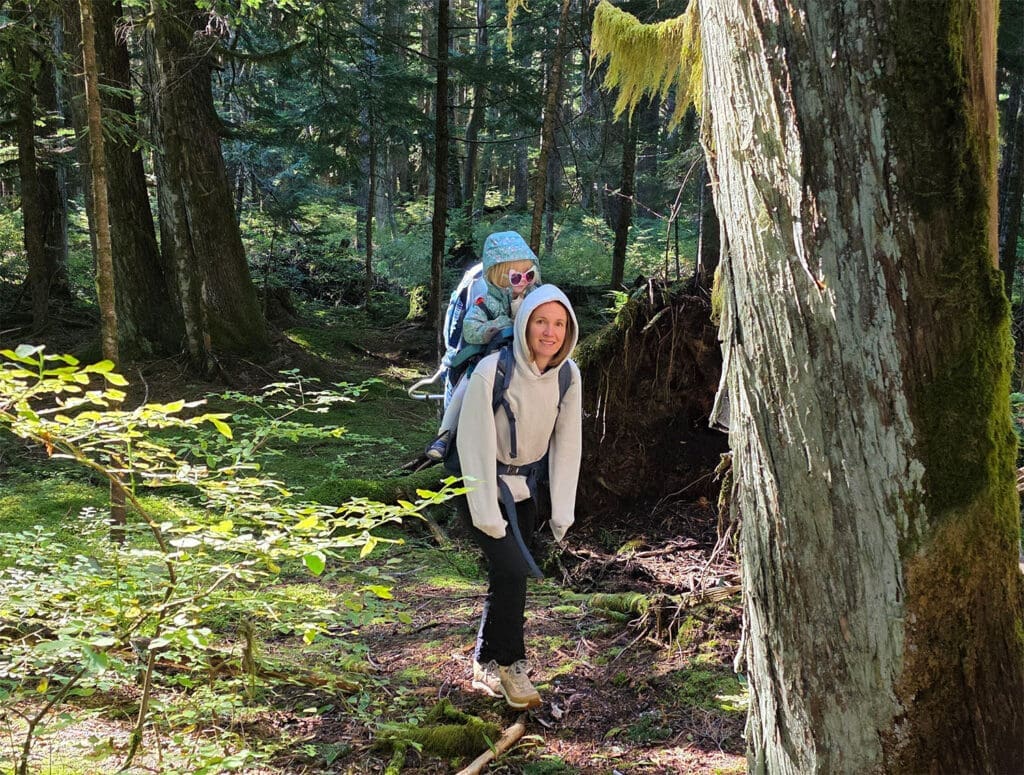
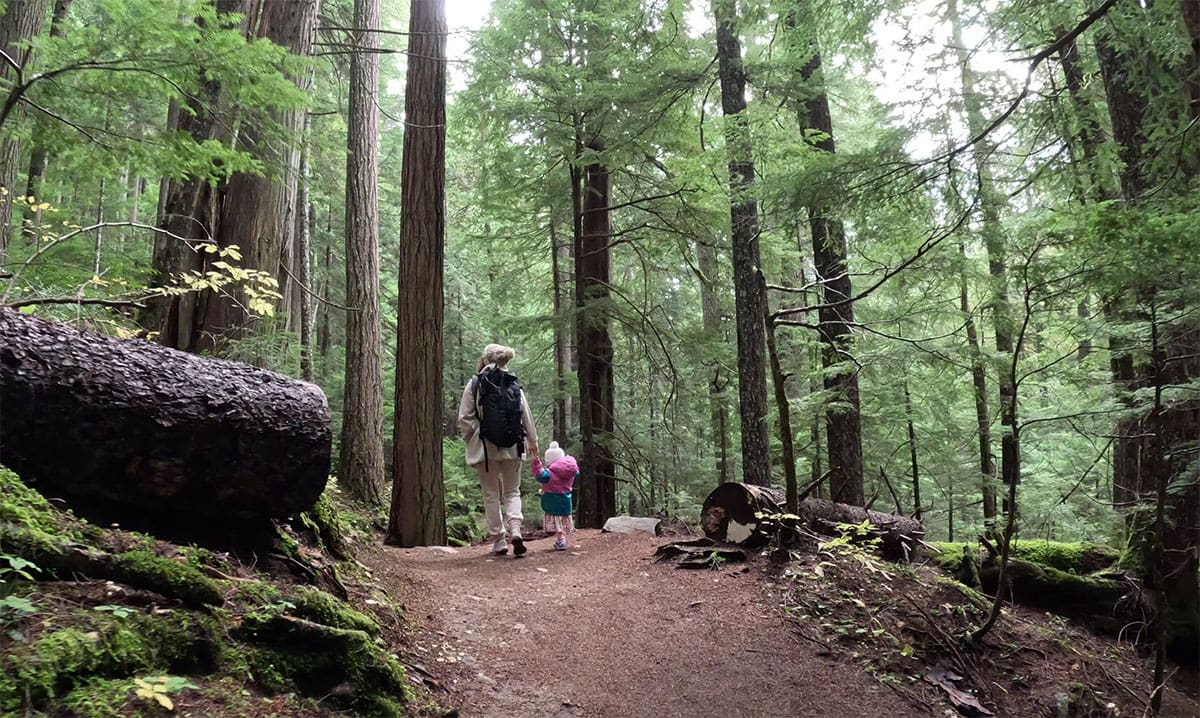
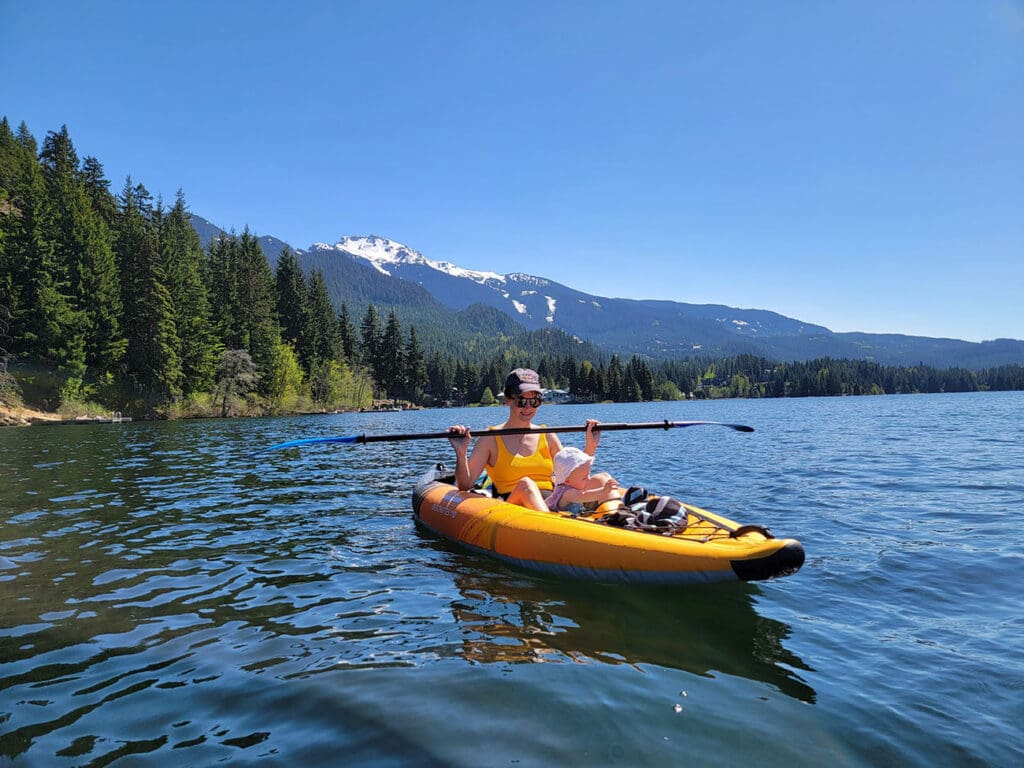
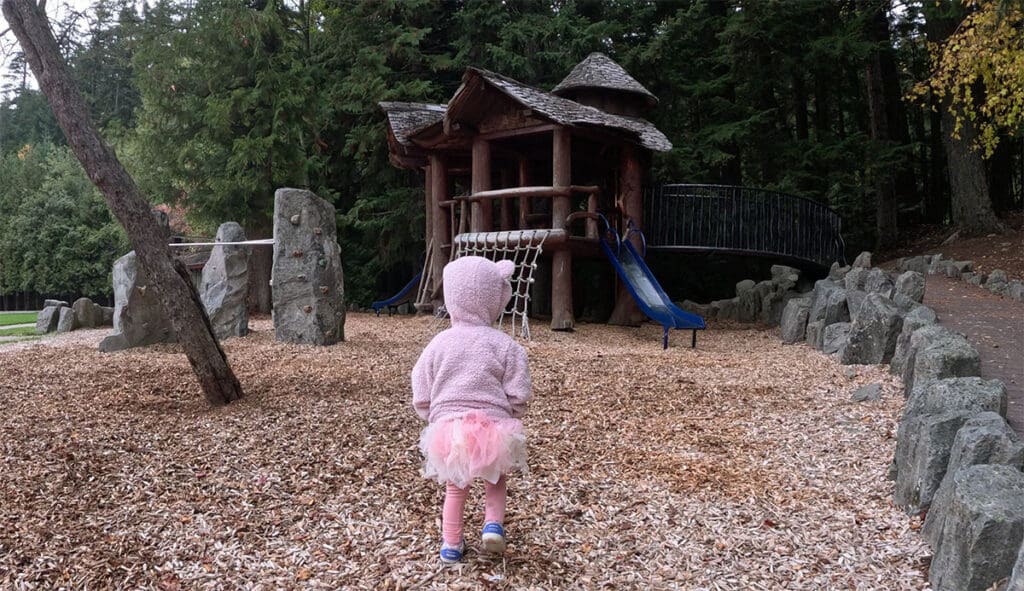
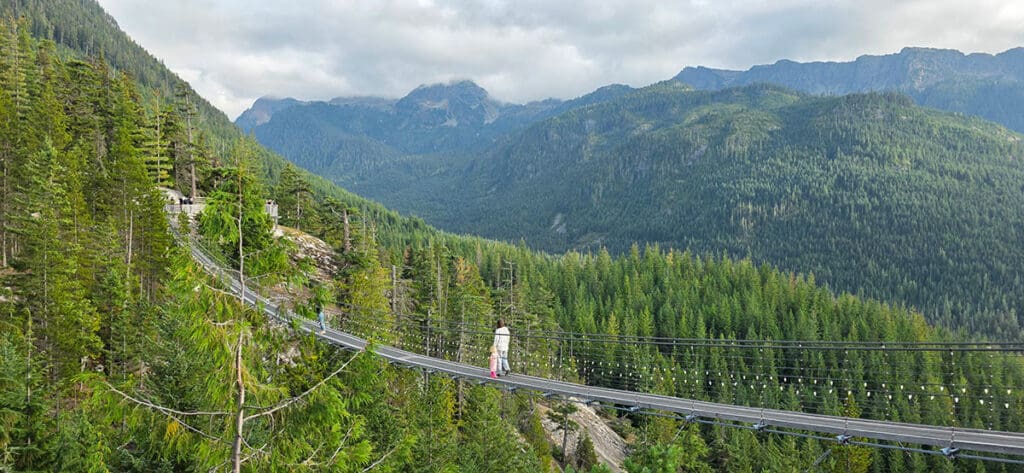
For all the obvious reasons and the fresh air fun, duhh. But maybe it ain’t so obvious when you think of all the work involved, I certainly am no stranger to that all too familiar heavy hurdle. And sure, you can get a good dose of the outdoors by simply going for a walk, hike, picnic, beach day etc., but to really feel the benefits of nature, to feel the weight lift, our family likes to spend some solid time without a solid roof over our heads.
A couple weeks ago, while I was speedily walk-running to keep up with my daughter, biking around in circles around Porteau Cove Campground, she declared how much she loves camping. She then asked me ‘Mama, can we live here at Porteau Cove?’ I wish I could’ve said yes. Instead, I asked her what makes her love it so much, to which she didn’t quite have the words. She responded simply saying, ‘because it’s so beautiful’.
Sure is a real beauty
I am no doctor or child’s psychologist, but I am a mother and once a nature thriving child myself. The benefits to which I believe Daisy felt, are as simple and as complex as her answer.
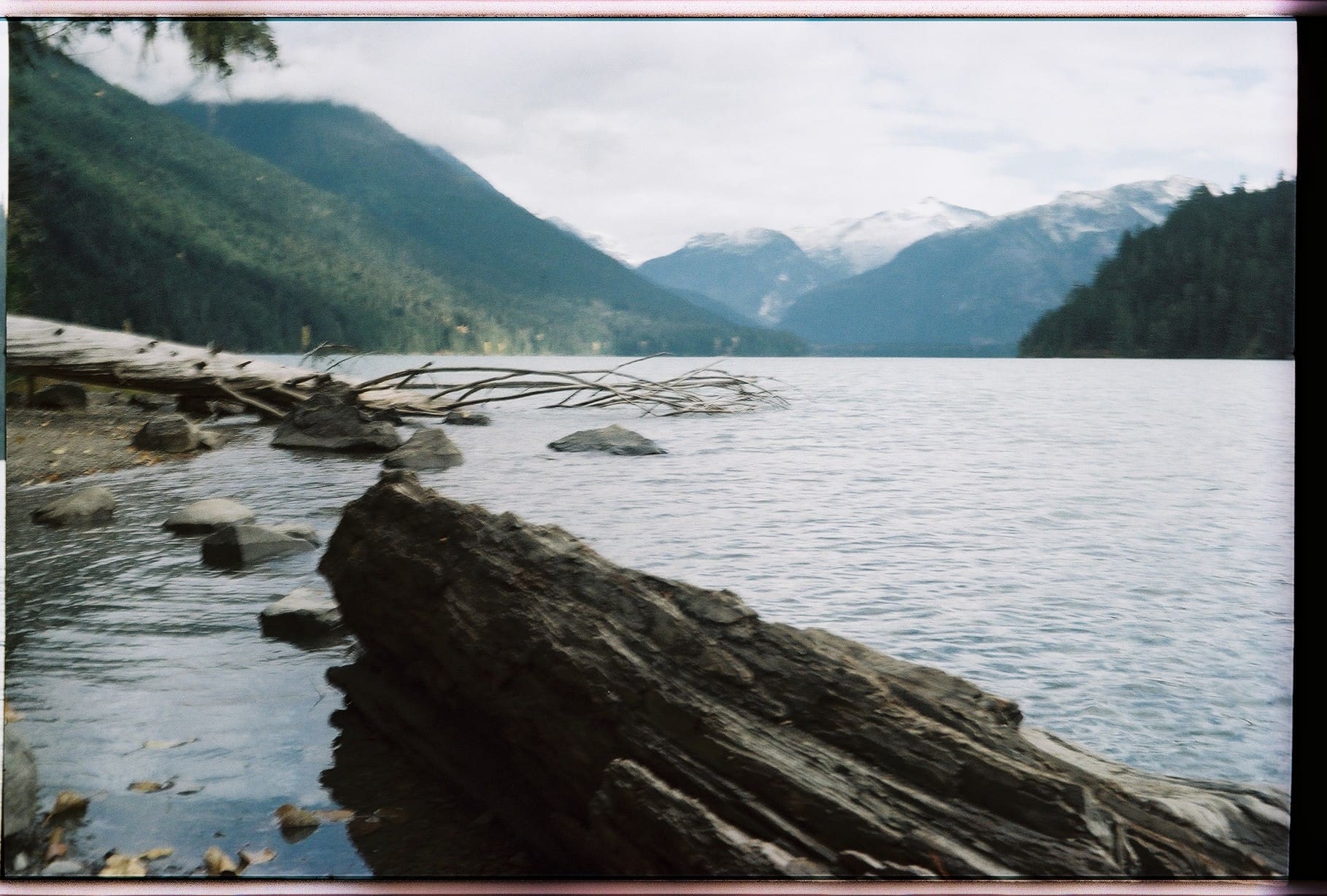
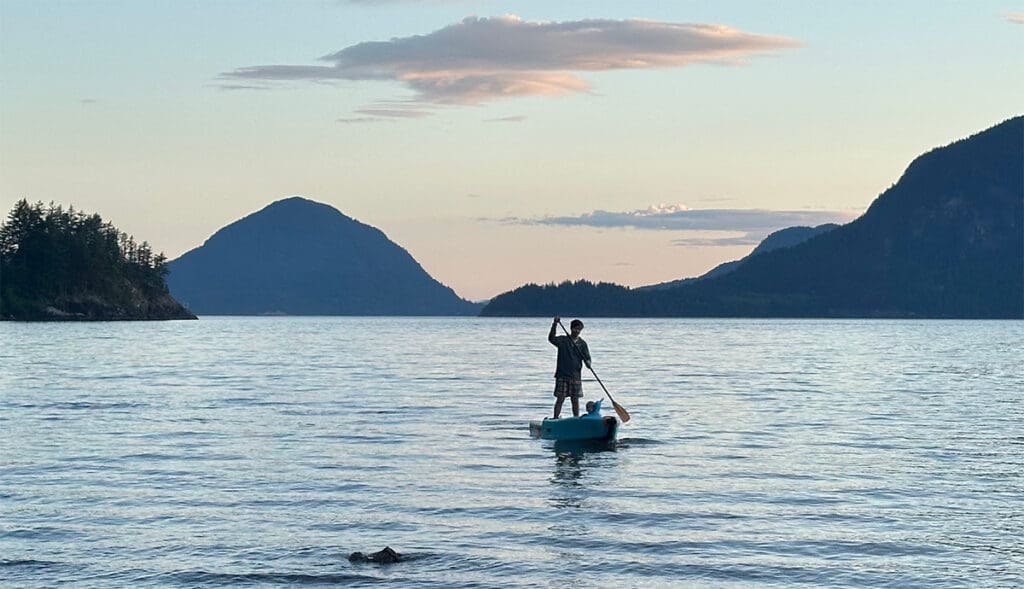
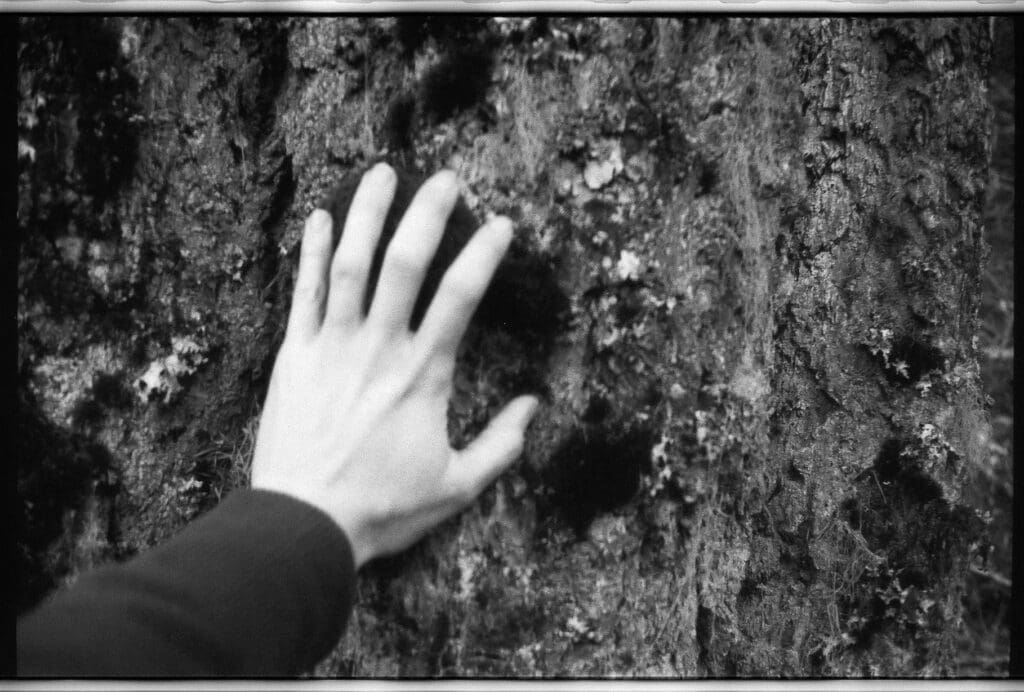
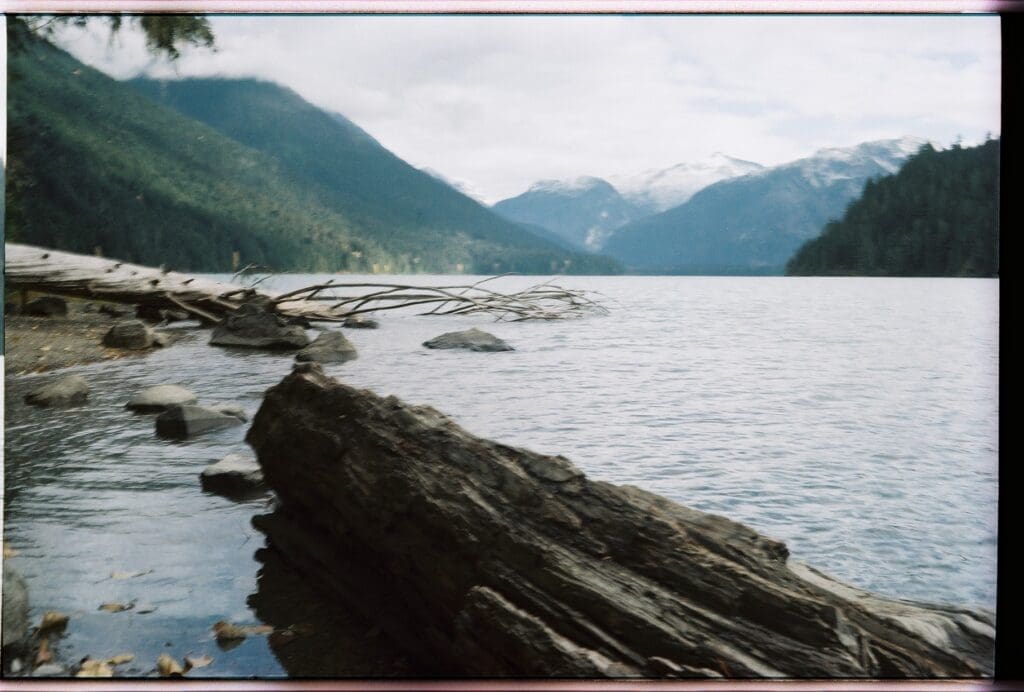
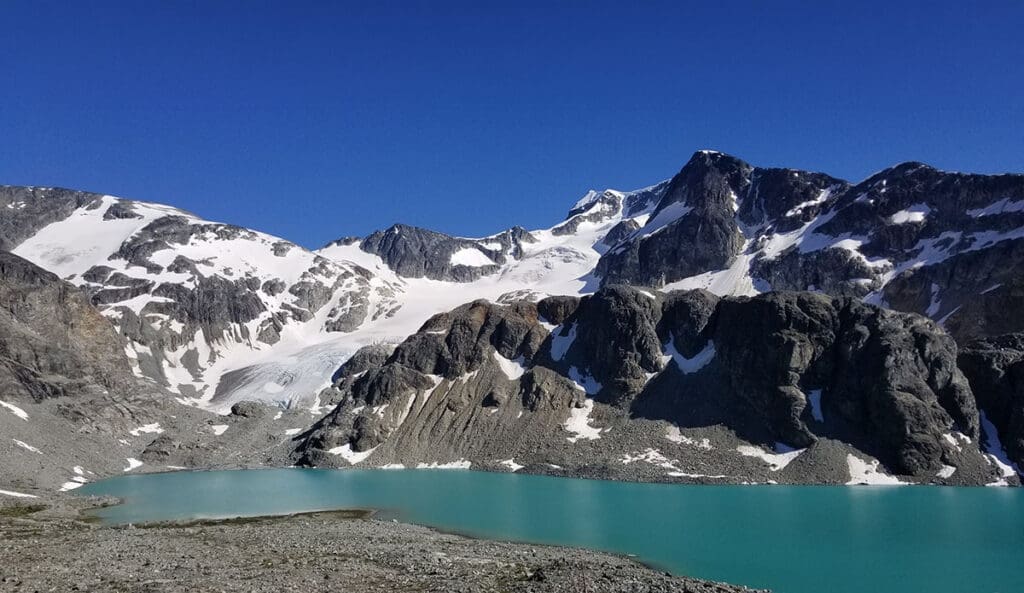
Howe Sound aka Átl’ḵa7tsem (in Squamish) is undeniably beautiful. The steep mountain lined fjord with it’s glacial fed emerald green waters, jagged deep green silhouetted islands, wise old douglas firs and red cedars lining the rocky shoreline. The salty mid-day winds and late summer golden sunsets make way for the star of the show – the night’s sky reflecting off the calm midnight waters. The wind in the trees, the squawk of the nesting bald eagles and barks of boisterous sea lions drown out the noises of the everyday world. Even the hungry creatures, the cute lil’ chipmunks and equally cute (but not cuddly) racoons and camp robbing Stellar Jays bring on the beauty.
This immersion is also undeniably beautiful for our psyches. Our nervous system can relax, we feel more in synch with ourselves and each other, feeding off one anothers ease. The deep sigh evokes, breathing in the fresh air and letting go, regulating on mother nature’s clock.
Their giggles as they bounce around their play tent. Their creativity as they make art from pinecones and rocks. The way the light reflects and twinkles off their soft skin as we play in tide-pools. Their pride after they squat for another ‘wild wee’. It’s all too gorgeous to capture by word. It’s a lived experience that penetrates our beings, along with their growing minds.
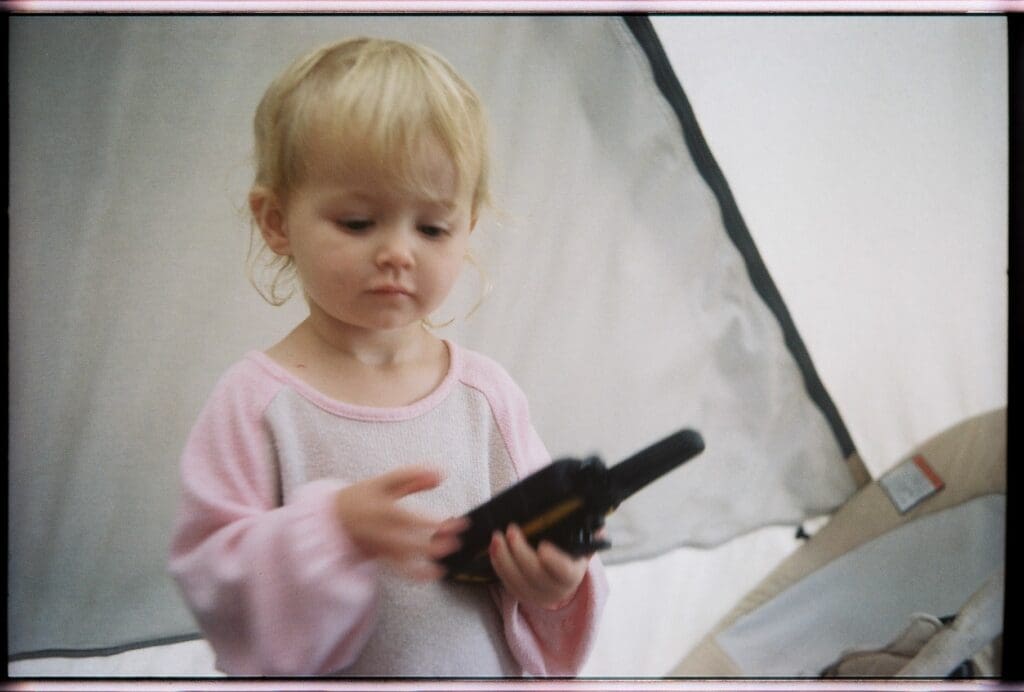
Come in Dada, come in Dada.. Young Daisy, pleasantly pleased playing with a walkie talkie, camping in the rain
Our time together is beautiful. The time to disconnect, to truly connect. The presence that we experience together while camping is unlike anything we can get at home.
Once setup is complete, we are there with the kids. Fully present without the nagging thoughts that accompany us at home. And sure, we still have to make meals and do the dishes, but the kids join us in this process; there are no walls dividing where they’re playing and where we’re ‘working’. The weight is fully released, and the kids feel it. Immediately.
But don’t get me wrong, packing and unpacking from camping can take time and work, a full day on either end, easily, depending on how long the adventure. Sometimes I drag my heels and think the work isn’t worth it, but once we go, there are never any regrets, even if it’s pouring rain – we’re outside.
I have a motto that came to me many years back when I was hesitating on whether or not to go for a hike through the woods. I had a laundry list of things nagging at me, so close to skipping the walk and staying indoors. But as I started out through the trails, my head unloaded, and it became so clear:
‘When in doubt, get out.’
I live by it. If I’m on the fence now, I just go. The puzzle pieces of life magically find their place, once you let go, and let nature be your guide.
And my goodness, it is beautiful. In all the ways. Every single time.
Can we just go ahead and declare everyday as Earth Day? Our beautiful home that homes us all, cares for the diversity of the animals, mammals, insects, humanity. She gives without asking for anything in return, provides the plants that nourish us, the beauty that sparks our imagination and feeds our soul. She cares deeply, and she hasn’t given up on us yet.
Photos by Steve Andrews
Not a day passes where I don’t think about my personal impact, and now, as a mother, our entire family’s. With two extra people in tow, I’m hyper-aware of the essentials required to keep us healthy and safe (gosh, what happens when they become ravenous teenagers?!). But at what point do “essentials” become simple desires for more in this commercial paradise? When do our untamed desires of today become the burden of our children’s tomorrow?
When do our untamed desires of today become the burden of our children’s tomorrow?
Many would say it’s already too late, but we need to hold onto hope. Now, more than ever, we are trying to cull our spending and hone in on true necessity. In my humble opinion, less is certainly more.
We do our best to reward our children with experiences vs things. To get their developing brains excited with time outside, going to the park, the beach, the mountains, the pump track, the slopes. When birthdays come along, I accept donations from neighbours, hand me downs from friends and family, and sometimes buy things from local kids consignment and/or second-hand shops and/or fb Marketplace (and I’m all ears for a good alternative ). If we need to buy something new, we do our research to support companies that share our bottom line – earth first.
Where’s Captain Planet When You Need Him?
This makes me think of the 80/90’s campaigns geared towards kids, to Reduce, Reuse and Recycle. This one is worth a watch. It worked, it’s ingrained in me, and I sure hope kids are learning the same today. Although, with convenience culture at the forefront, acting on impulse with a touch of a button, with same day delivery trucks running rampant about the neighbourhood (the city, the country, the continent, the world(!), it may not be so.
Can we cancel Amazon already? What would Bill and Ted, Socrates and Joan of Arc think of all this? Bogus, heineous! Most non-triumphant. Morally and for the longevity of our loving planet and our children, quit these companies that we know are run by inhumane, royal ugly dudes!! Okay, rant over.
He is richest who is content with the least, for content is the wealth of nature.
Socrates
Part of the Solution
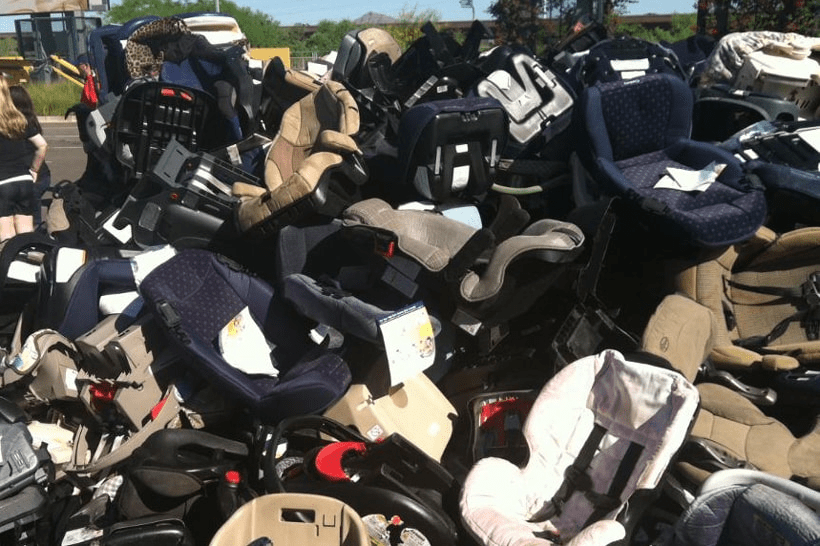
Once things that can’t be passed down have collected enough dust in our garage, we do our best to research how to recycle responsibly. Carseats for example, seems bonkers that they have such a short expiration, but we need to keep our children safe, I get it. All that plastic, polyester, foam and metal, ugh, it hurts to think of how many are sitting in landfills. Look out for specialized local recycling programs which separate plastic, metal, and fabric components.
The “Ugh” of expiring car seats
Check with your local municipality for community zero-waste recycling events that may accept car seats. Also, some retailers offer trade-in programs where you can bring back old car seats for recycling when buying a new one. You can also manually disassemble the seat, removing fabric, padding, and metal buckles to dispose of the components separately, the plastic shell is often recyclable.
I know how busy we all are as parents, but efforts must be made! Markers that have gone dry? Save them up and bring them into Staples where they’ll recycle them for you.
Get creative
Also, with clothes that have been stained and have lost their capacity to be passed down, I use them for cleaning rags. I have also just dusted off my sewing machine, brushed up on my sewing skills (with a local class close to home) and am thinking of using the well loved collection to make bunting for the kids birthday decorations, to make custom blankets/quilts/duvet covers, doll clothes, you name it! Bring on the creativity.
Many communities have sharing libraries. We used to live in Whistler, and the tool library that they had, housed out of my fave thrift shop maybe ever, the Whistler Re-Use it Centre, was clutch.
Our rainy-day sanctuary
It’s safe to say that our kids most loved physical items are books. We spend many-a-rainy-days here in the Pacific Northwest at our local library, the kids love it, and there’s usually story time and different gatherings that help to feel immersed in our community. We also make a point when travelling to search out libraries for that community connection along with fun books to borrow.
Companies we can get behind
There are many responsible companies that are creating their own way, putting earth at the forefront of their decision making. Patagonia is an obvious example, as a certified B Corp and founding member of 1% for the Planet, its hefty investments into environmental organizations and generating of awareness through it’s content creation and film work is commendable. If other companies could follow suit with their unique ownership structure, declaring Earth as its only shareholder, with profits paid as dividends to protect the planet, the earth would certainly be a better place for future generations. Patagonia has a Worn Wear program that allows you to buy and trade used namesake gear, they’ll even repair your gear, no questions asked. They have created fabrics made from ocean waste, recycled and natural materials.
Outerknown, a purpose-driven surf brand built on transparency, circular design and fair labour is another brand to take notice. I also love our local Parade Organics for kids and mama matching cozy jammies.
Earth Day deals
And if you must buy something new this Earth Day, think of these good to do/earth companies. We love Jungmaven, known for using the incredibly resilient natural sustainable fibre of Hemp in all its goods, they’re offering 20% off everything until Sunday with code EARTH2026, and if you want $30 off your first order, use this link (that in turn helps us 😁 ).
One of our absolute favourite brands is PAKA, for so many reasons, primarily the thought and due diligence they take to make quality, natural fibre goods whilst taking care of their communities, the alpaca’s and the planet. This Earth Day, PAKA is offering 20% off sitewide on orders over $150, giving consumers an opportunity to experience the performance and sustainability of natural fibers firsthand.
When in doubt, get out.
As our children grow, we will continue to prioritize getting their dopamine hits from the outdoors, teaching them to wear their badges of dirt under their fingernails and bruises and scrapes on their knees with pride. More time spent outside equals more time caring about what matters most. Nothing, absolutely nada, can ever top the feeling that comes from being immersed in the absolute wonder and magic of the outdoors.
When I was approached to write this guest post, I wondered for a good while what perspective I could add to this wonderful site.
Any organisation with the mission ‘Our goal is to raise the next generation to be mindful of our natural world and to preserve wild spaces’ is something I can get behind. But you seem to have it all covered: fantastic gear and activity reviews, beautiful photography of a stunning landscape, and a powerful, honest philosophy of making the world a better place.
I usually write on Substack, where my goal is to start a conversation around our relationship with the natural world, spread knowledge about the science behind nature connection, inspire people to reconnect with nature, and, perhaps most importantly, to get more nature into kids lives.
But as I browsed through the Excellent Family Adventures site, I found myself thinking, ‘These people get it. There’s no convincing to be done here.’
Outdoor adventures in nature are exactly what we need to be prioritizing when we have kids, not putting off until they are old enough or big enough. The natural world is far safer than our human, urbanized world, when we take the time to show our children how to take joy in it.
Finding joy in nature can take many forms.
But you know this.
Then it clicked. I want to talk to you about why we think of outdoor gear as ‘gear’ at all.
Stick with me.
It makes me so happy that this site exists—that a collection of families has got together to build a resource-sharing project and share their love of the outdoors with other families.
On the other hand, there’s a part of me that feels sad it has to exist. Let me explain why.
My partner and I are trying for our first child at the moment. One of the things we are most excited about is showing them nature—getting to see them experience the first time their little feet touch grass or they dip their hands into a clear mountain stream.
But before being introduced to Excellent Family Adventures, I would have felt quite at a loss to know where to find good information about outdoor gear or activities for kids. I’m sure I would have dug some up, but it would have taken some digging.
Contrast this with information on other kinds of kids’ stuff—toys, TV shows, sports equipment, cute clothes. There’s no shortage of this.
This difference is reflective of what our society values for children and young families. Time out in nature is thought of as an extra, a luxury, a bit of a niche hobby.
This couldn’t be further from the truth. Time in nature is essential for our wellbeing, mood, physical and mental health, and our life satisfaction. It’s even been shown that more nature leads children to be more active and social at school, and improves their academic performance.
It doesn’t have to be the wilderness to enjoy time outside.
I spent five years researching children’s relationship with nature for my PhD. I worked with many primary schools across the UK, which I visited to survey the nature living in their grounds. As well as a niche knowledge of school playground-specific wildlife, this gave me a unique perspective on the sheer range of attitudes different schools hold towards nature.
Some are lucky enough to have sufficient space for a sports playing field, a tarmacked playground (maybe with a climbing frame), and a wilder outdoor area with trees. These schools aren’t forced to make a choice between these activities.
Most, however, are quite pushed for space. This means they are forced to choose between using the outside for sports or free play.
Many schools I visited poured their limited budgets into maintaining the playing field—keeping the grass short, painting the pitch lines, paying for goalposts—that kind of thing. In large part, they have to, since sports is mandated—it has to be provided.
Access to nature, on the other hand, is not necessary at all. The curriculum doesn’t place any kind of focus on learning about the natural world or ecology, and there is no requirement for outdoor learning, which is beneficial for all subjects and wellbeing.
In fact, many teachers I spoke to viewed trees or other aspects of nature as a pain. In the bureaucratic world of education, trees or grass represent hazards—things children could fall off or slip on. So it makes better sense to use their limited budget to cut the trees down or tarmac over the grass.
Who Defines Essential?
Let me bring you back to my point about outdoor gear.
My memory of the required kit list for school is a little hazy since it’s about 20+ years old. I am certain, though, that it included an extensive list of sports kit—trainers, football boots, tracksuits, maybe a tennis racket—but zero requirement to provide wellies or a puddle suit.
What does this say about the activities we, as a society, prioritise for our kids?
Yes, I know, instilling the importance of exercise is important for long-term health.
But exercise doesn’t have to be playing football or hockey. Exercise can be climbing a tree, running around with your friends or, outside of school, hiking or camping.
Let’s face it. How many of us have fond memories of school sports? Most of us do not get our exercise as adults by being a member of a sports team. Most of us are active adults because we walk outside.
Why, then, is it perfectly acceptable to ask parents to fork out a lot of money for sports kit but not for outdoor kit? Why is what you do here—reviewing kit for outdoor adventures with kids—niche and hard to find?
I don’t know what schools are like in British Columbia. But in the UK, the vast majority of those I visited found space for their children’s sports kit bags but not for wellies. Then, they proceed to ban outdoor breaktime when it’s raining because the kids will bring mud back inside with them.
What I’m saying is I think we have our priorities backwards, and you, being parents who value the outdoors, get this.
The School That Got It
I’d like to tell you about one school that gave me great hope. It was only small. It was not rich. But every classroom had a door to a little outdoor patio where there was a wooden rack for wellies and overalls. Every class was responsible for a line of crops in the school’s small vegetable patch.
We don’t need to teach children to care for the natural world. They do this instinctively. But we do need to stop squashing this instinct. How can we expect the next generation to grow into adults who value, respect and care for the natural world if they have always been separate from it, if it is full of danger, if they don’t have the right kit to be able to enjoy being outside in all weathers?
I think nurturing these values at school should be of the highest priority. And research agrees.
Learning To Love Nature
One of my favourite studies on the importance of childhood relationships with nature was done way back in 2006. Researchers interviewed 2,000 adults living in urban areas across the US. Unsurprisingly, childhood experiences in nature were the most important thing in determining whether someone cares about the environment or takes action to protect it as an adult.
This study separated childhood nature experiences into ‘wild’ ones—like hiking or camping, ‘domesticated’ ones—like picking flowers or growing produce, and environmental education, either inside or outside of school. They found that both wild and domesticated nature experiences during childhood were positively associated with pro-environmental attitudes and behaviours as adults.
This means that, if we want people to care about our natural world and value it at the ballot box, we need kids to spend time in nature. They can’t do this without a raincoat, a warm hat and good shoes.
But your average kid, whose parents aren’t necessarily outdoor lovers, is much more likely to own trainers and a tennis racket than they are some good outdoor gear.
All this to say, I’m feel so uplifted that this community and website exist. It lifts my heart that a collection of families values this philosophy enough to start a project like this. It is the most important work.
Buying your children the right kit, taking them for a hike or just toasting some marshmallows with them around a campfire are some of the most important things you can be doing for your children’s love of the natural world and the future of the planet.
Next stop—let’s convince our respective education systems either side of the Atlantic of the same!
Kate Howlett holds a PhD from the University of Cambridge on children’s relationship with nature. You can read more from Kate on her Substack, “Natural Connection“.