Category: Sea to Sky

  • Shannon Falls: The Family Guide to This Sea To Sky Staple

    Shannon Falls: The Family Guide to This Sea To Sky Staple

    Shannon Falls is an easy stopover while going up the Sea to Sky Highway. The massive falls are just minutes from the parking lot, and will give you a glimpse of the massive scale of the Coast Mountains up close.

    Why Stop at Shannon Falls

    The park sits right on the Sea to Sky Highway between Murrin Park and the Sea to Sky Gondola . It’s an easy pit-stop on your way north, as long as it’s not busy. The sound hits you right when you open the car door, and will only get louder as you creep up to it. The best part is that they’re different every time you view them. At 335 metres, it’s the third-highest waterfall in British Columbia, and from the base it’s hard to even see the top.

    In the spring snowmelt or the fall and winter rains, it’s a beautiful sight of nature’s power. In the summer it’s a bit more palpable, and the mist can be cooling on a hot day. The walk from the parking lot to the viewpoints is short and mostly flat. It offers a big reward for very little effort, which is exactly the kind of stop this highway is made for.

    Especially with little kids, this makes for an easy “hike” on a paved, stroller-friendly path. It’s just enough to offer a bit of challenge, but not too much that the whining starts before they get to see what all the fuss is about.

    Getting There & Parking

    Shannon Falls Provincial Park is roughly 2 km south of Squamish on Highway 99, on the east side of the road. The parking lot hasn’t been expanded in line with the popularity, so it fills up extremely quickly in the summer months. The lineups to wait for a spot can get a bit rediculous.

    There’s overflow parking across the street at Darrell Bay if things are too crazy. Totem Hall is also nearby, where local Squamish Nation cultural events often occur. If anything is going on that is open to the public, it’s well worth a visit.

    💲
    Free

    ⏱️
    30 min–1 hr

    👶
    All ages

    🚻
    Flush toilets

    🅿️
    Free lot (fills fast)

    🐕
    On-leash
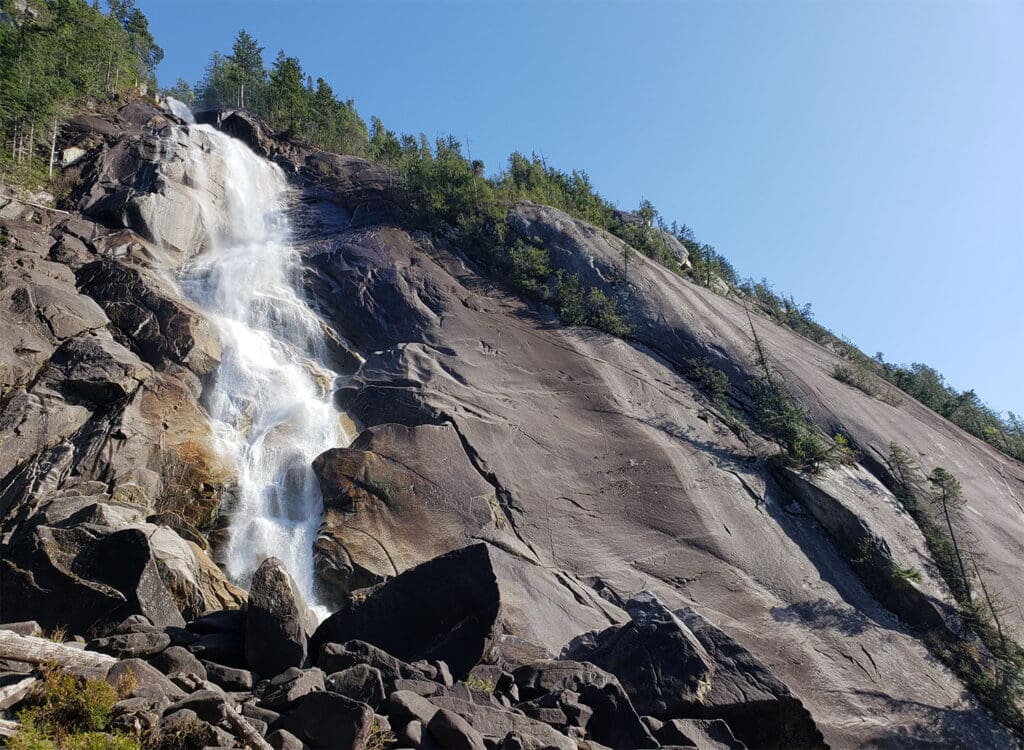
    looking upward at shannon falls from the upper viewpoint
    The view from the upper viewpoint

    The Falls Through the Seasons

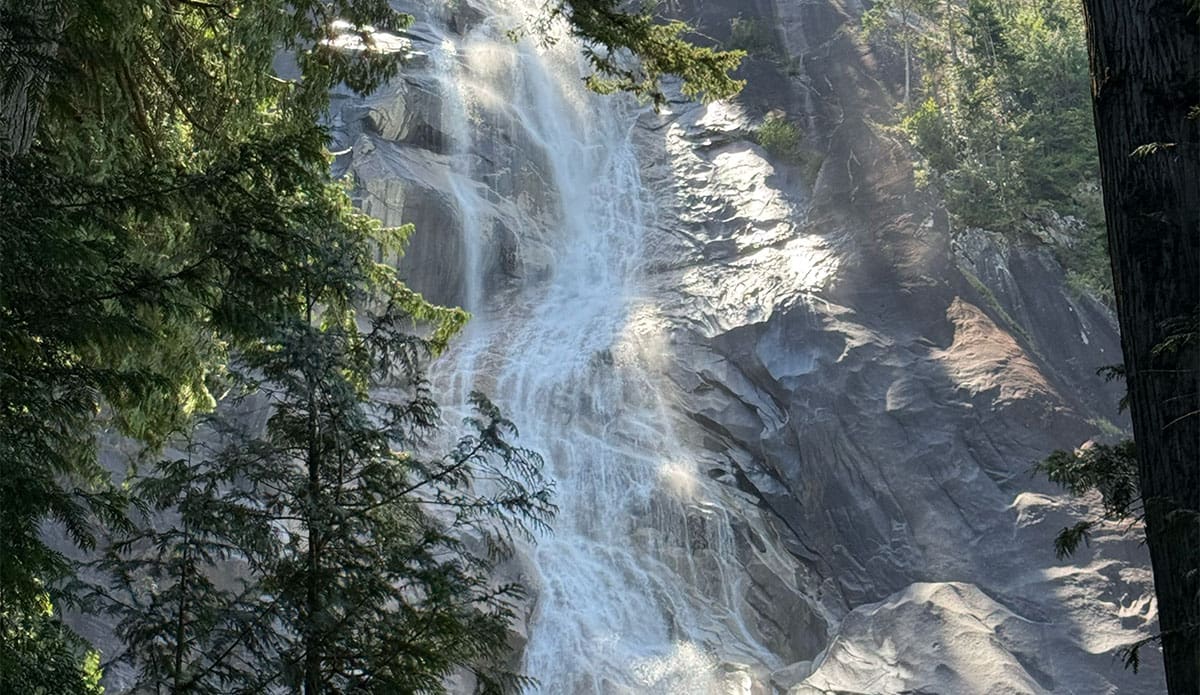
    The falls are never quite the same twice. In spring, snowmelt turns Shannon Creek into a roar and the whole cliff seems to move. In the fall and winter rains it’s nature’s power on full display. Come summer the flow eases off, the falls get more palpable, and on a hot day the mist drifting off the base is the best free air-conditioning on the corridor.

    Hiking to the Top: Read This First

    You can also hike up toward the top of the falls, but be forewarned. No matter how cool it looks on social media, do not swim in the pool up top — even if you think it’s safe. People have died there, and they will continue to die as long as people keep posting about it. It’s no joke.

    This isn’t hypothetical. In 2018, three young travellers slipped at a pool above the falls and drowned. One fell, and the two who tried to help fell after. The granite is slick, the current is stronger than it looks, and there’s no getting back out once the water has you. A photo is not worth it.

    The trail itself is tough for little legs, but a good challenge for kids around 8 and up. It’s easily accessible from the parking lot, just look for signs.

    Good to Know

    • Cost: Free. Day-use only. No camping.
    • Washrooms: Flush toilets on site.
    • Facilities: Picnic areas and a small seasonal concession/info kiosk.
    • Dogs: On-leash at all times; not permitted in park buildings.
    • Stroller call: The base path to the lower viewpoint is mostly flat and manageable; the upper viewpoint has stairs. A carrier is the safer bet if you’re going past the first viewpoint.
    • Cell service: Reliable
    • Best time to visit: Early morning or a weekday. On a summer weekend the lot fills and you’ll be waiting a while to snag a spot.

    Make a Day of It

    Shannon Falls is best strung together with its neighbours. Combine it with a stop at Murrin Park just to the south, or ride up the Sea to Sky Gondola right next door for the big-picture view of Howe Sound.
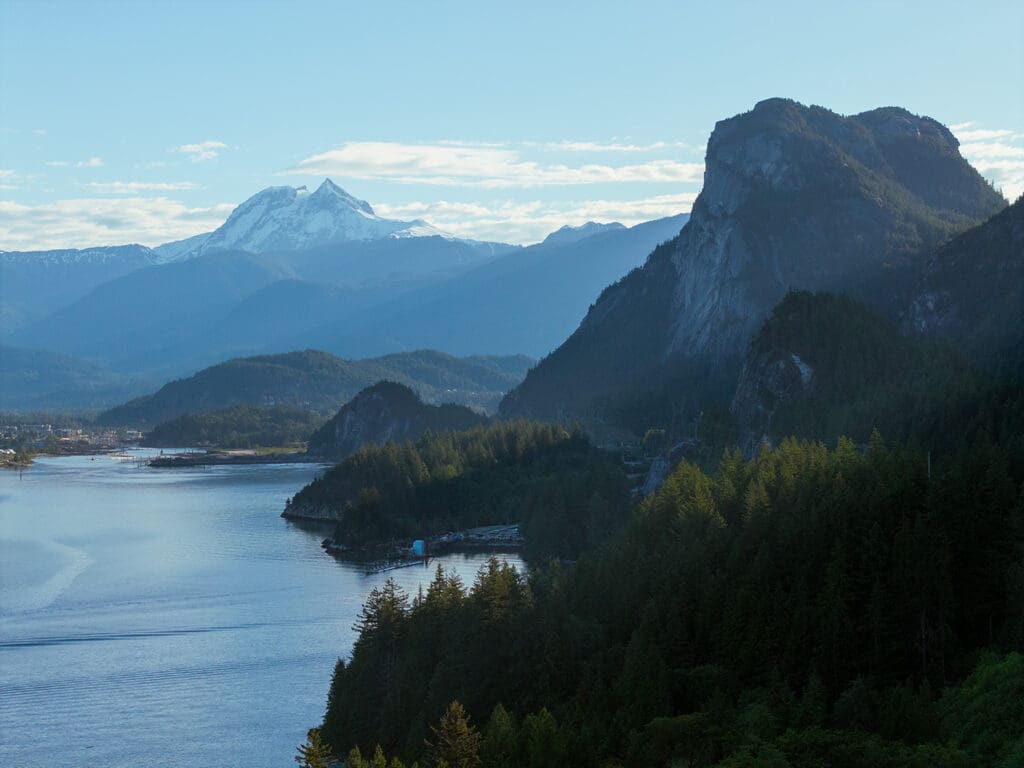
    a view looking northward of the stawamus chief and mount garibaldi

    Planning a Sea to Sky family day?

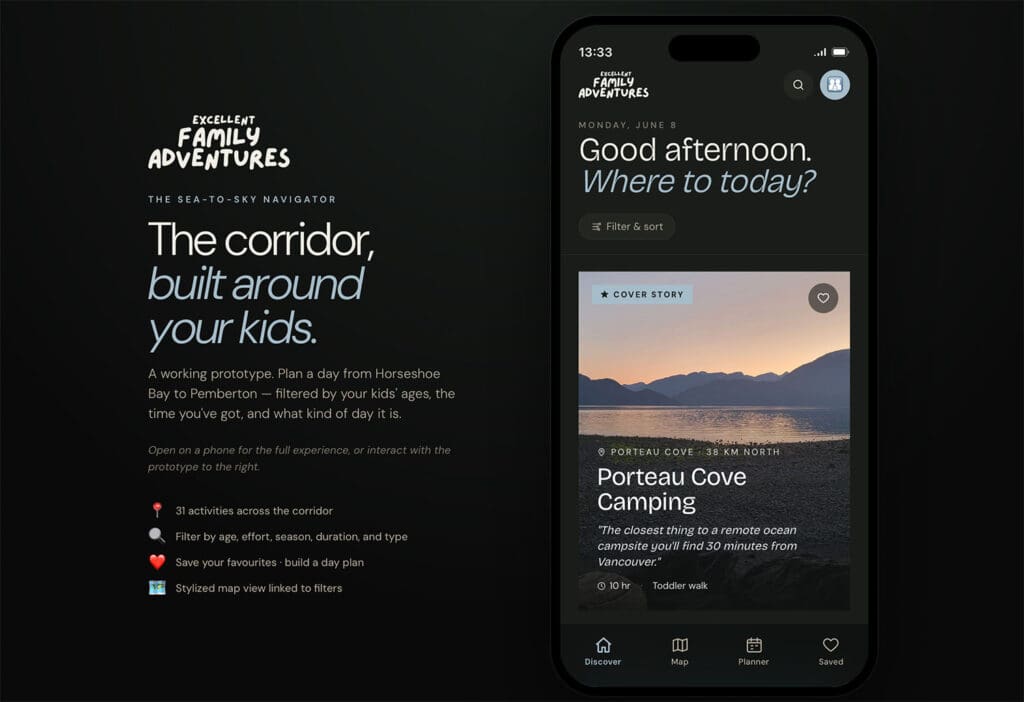
    Grab the free Sea to Sky Family Navigator app we built for families both local and visiting, who want to get the most out of the corridor. It’s packed with honest, kid-tested stops from Horseshoe Bay to Pemberton. You can browse by activity or map, and save your trip plan for a sweet little trip up the Sea-to-Sky.

    Come Back with the Seasons

    This is the type of stop you want to make more than once, especially with little ones. We love being able to show our kids how one spot can change drastically with the seasons. No matter what time of year there is something unique. It’s also one of the few places where it pays to go in the offseason, since the water is usually raging more and the crowds have gone away.
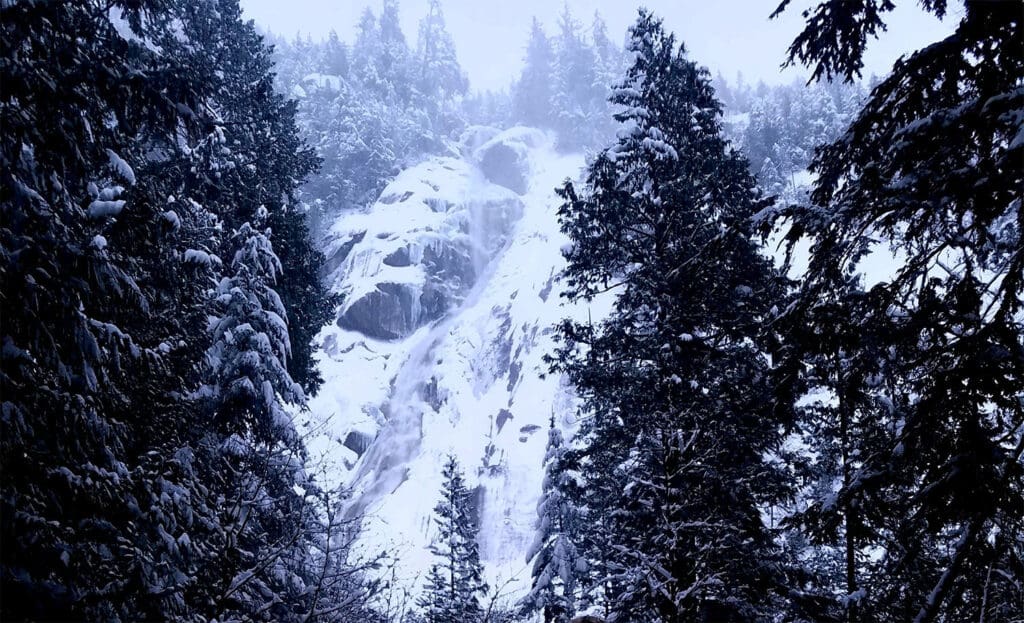
    a view of shannon falls, british columbia in the winter
    It looks pretty cool in the winter, too!

    Shannon Falls FAQ

    How tall is Shannon Falls?

    Shannon Falls drops 335 metres (1,099 feet), making it the third-highest waterfall in British Columbia.

    Is Shannon Falls free to visit?

    Yes. Shannon Falls Provincial Park is free to enter, with free parking and flush toilets. It’s a day-use park. There is no overnight camping, but a campground sits a few hundred meters down the road at Stawamus Chief Provincial Park.

    How long is the walk to Shannon Falls?

    The walk from the parking lot to the viewpoints is short. You can budget about 30 minutes round-trip, which includes some time for pics and some peaceful moments taking it in.

    Can you swim at Shannon Falls?

    No. Swimming in the pools above the falls is extremely dangerous and has killed several people. The rock is slippery and the current is far stronger than it appears. Enjoy the falls from the viewpoints and stay out of the water.

    Is Shannon Falls good for kids?

    The base trail is easy and suitable for all ages, including little ones. The steeper hike toward the top of the falls is a good challenge for kids around 8 and up, but keep everyone well back from the water.
  • Why Camp?

    Why Camp?

    For all the obvious reasons and the fresh air fun, duhh. But maybe it ain’t so obvious when you think of all the work involved, I certainly am no stranger to that all too familiar heavy hurdle. And sure, you can get a good dose of the outdoors by simply going for a walk, hike, picnic, beach day etc., but to really feel the benefits of nature, to feel the weight lift, our family likes to spend some solid time without a solid roof over our heads.

    A couple weeks ago, while I was speedily walk-running to keep up with my daughter, biking around in circles around Porteau Cove Campground, she declared how much she loves camping. She then asked me ‘Mama, can we live here at Porteau Cove?’ I wish I could’ve said yes. Instead, I asked her what makes her love it so much, to which she didn’t quite have the words. She responded simply saying, ‘because it’s so beautiful’.

    Sure is a real beauty

    I am no doctor or child’s psychologist, but I am a mother and once a nature thriving child myself. The benefits to which I believe Daisy felt, are as simple and as complex as her answer.

    Howe Sound aka Átl’ḵa7tsem (in Squamish) is undeniably beautiful. The steep mountain lined fjord with it’s glacial fed emerald green waters, jagged deep green silhouetted islands, wise old douglas firs and red cedars lining the rocky shoreline. The salty mid-day winds and late summer golden sunsets make way for the star of the show – the night’s sky reflecting off the calm midnight waters. The wind in the trees, the squawk of the nesting bald eagles and barks of boisterous sea lions drown out the noises of the everyday world. Even the hungry creatures, the cute lil’ chipmunks and equally cute (but not cuddly) racoons and camp robbing Stellar Jays bring on the beauty.

    This immersion is also undeniably beautiful for our psyches. Our nervous system can relax, we feel more in synch with ourselves and each other, feeding off one anothers ease. The deep sigh evokes, breathing in the fresh air and letting go, regulating on mother nature’s clock.

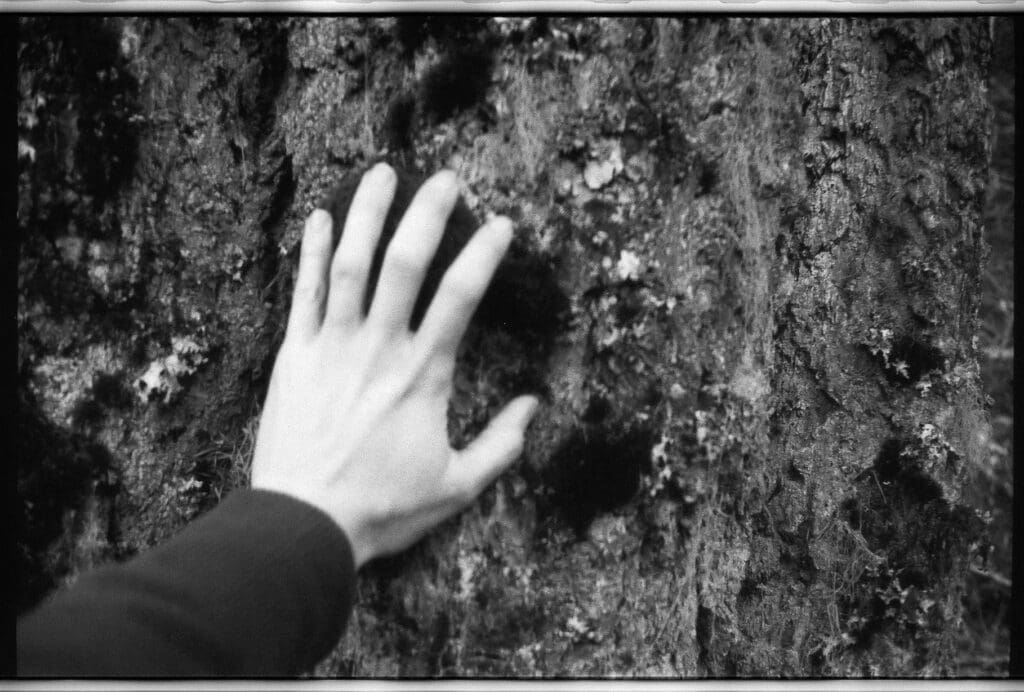
    A hand touching the rough bark of an old growth Douglas Fir

    Their giggles as they bounce around their play tent. Their creativity as they make art from pinecones and rocks. The way the light reflects and twinkles off their soft skin as we play in tide-pools. Their pride after they squat for another ‘wild wee’. It’s all too gorgeous to capture by word. It’s a lived experience that penetrates our beings, along with their growing minds.

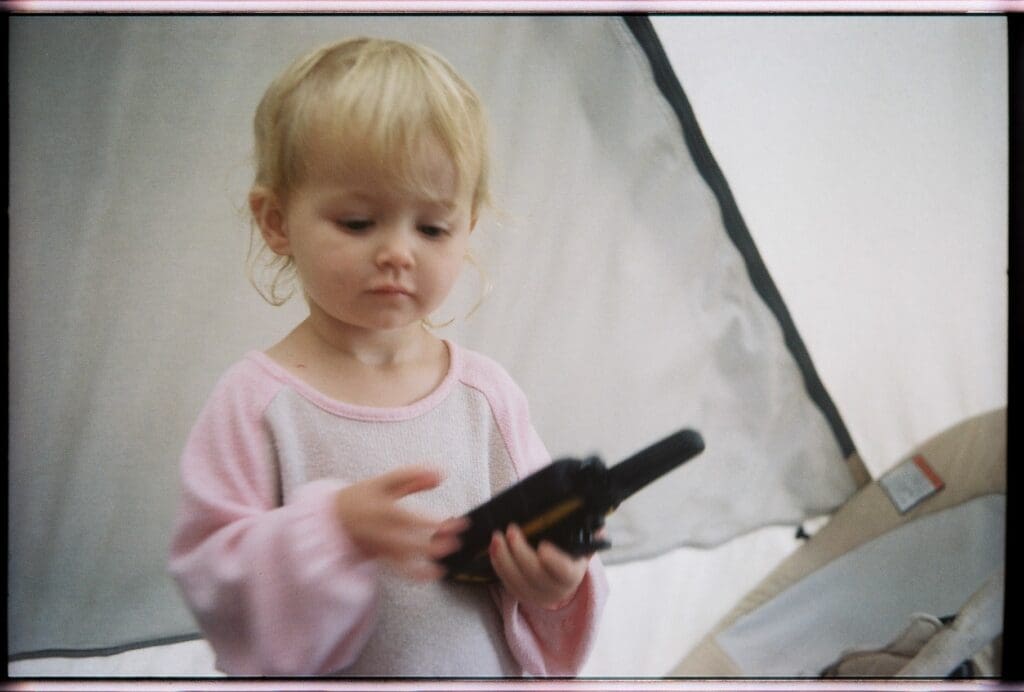
    Toddler playing with a walkie talkie, while taking shelter inside our tent during a rainstorm while camping
    Come in Dada, come in Dada.. Young Daisy, pleasantly pleased playing with a walkie talkie, camping in the rain

    Our time together is beautiful. The time to disconnect, to truly connect. The presence that we experience together while camping is unlike anything we can get at home.

    Once setup is complete, we are there with the kids. Fully present without the nagging thoughts that accompany us at home. And sure, we still have to make meals and do the dishes, but the kids join us in this process; there are no walls dividing where they’re playing and where we’re ‘working’. The weight is fully released, and the kids feel it. Immediately.

    But don’t get me wrong, packing and unpacking from camping can take time and work, a full day on either end, easily, depending on how long the adventure. Sometimes I drag my heels and think the work isn’t worth it, but once we go, there are never any regrets, even if it’s pouring rain – we’re outside.

    I have a motto that came to me many years back when I was hesitating on whether or not to go for a hike through the woods. I had a laundry list of things nagging at me, so close to skipping the walk and staying indoors. But as I started out through the trails, my head unloaded, and it became so clear:

    ‘When in doubt, get out.’

    I live by it. If I’m on the fence now, I just go. The puzzle pieces of life magically find their place, once you let go, and let nature be your guide.

    And my goodness, it is beautiful. In all the ways. Every single time.

    And that’s why we camp.

    Dada packing the weekend's rations
    Dada packed the weekend’s rations 😉

  • Murrin Park: A Short, Sweet Taste of Hiking the Coast Mountains

    Murrin Park: A Short, Sweet Taste of Hiking the Coast Mountains

    Right off the bat, let’s say it: if you want to do a most excellent hike in Squamish and you have the stamina to go up and down 800m in a single session, The Chief is bar none the best route around. But this is a page about family adventures—and more specifically, families with little ones. This hiking guide is for those who want to get the taste of a good coastal BC hike but either don’t have the time or the wherewithal to get too gnarly.

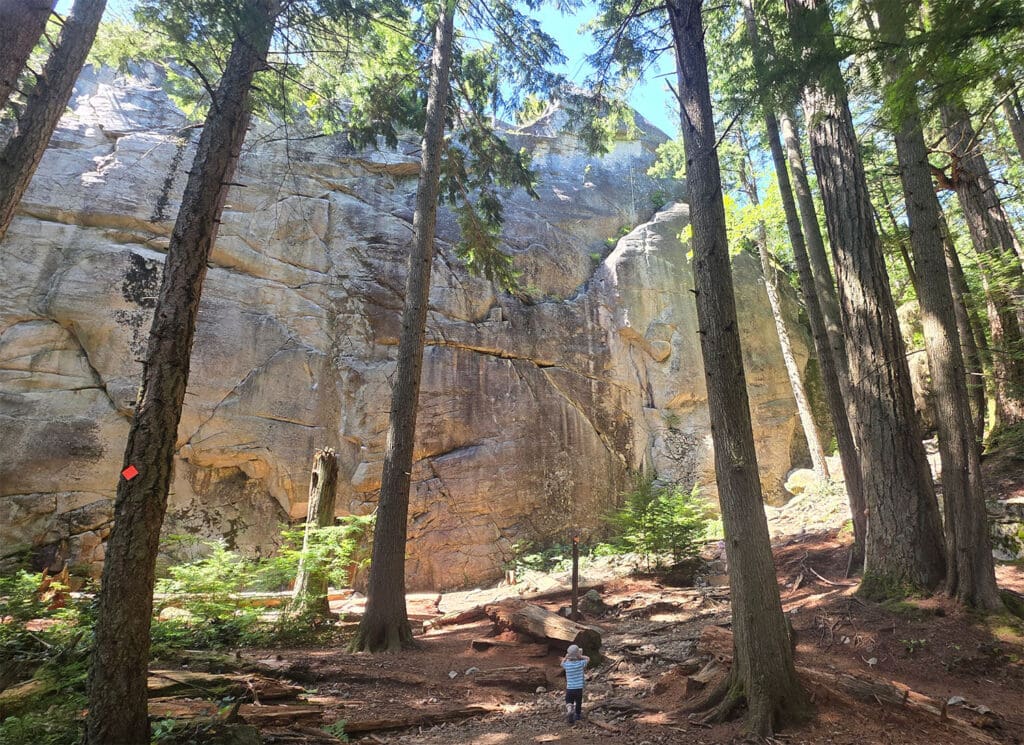
    But if you want righteous views, bodacious groves of old-growth trees, and just enough sweat to remind your heart that a little exercise is most excellent, then may we present to you Murrin Park, just a few kilometers south of Squamish. It’s located right at the top of the hill between Shannon Falls and Britannia Beach, making it a must-stop spot along the Sea to Sky highway.

    a two-year-old hikes in the forest next to a big rocky crag in murrin park near squamish

    Why This Trail Builds Resilient Kids

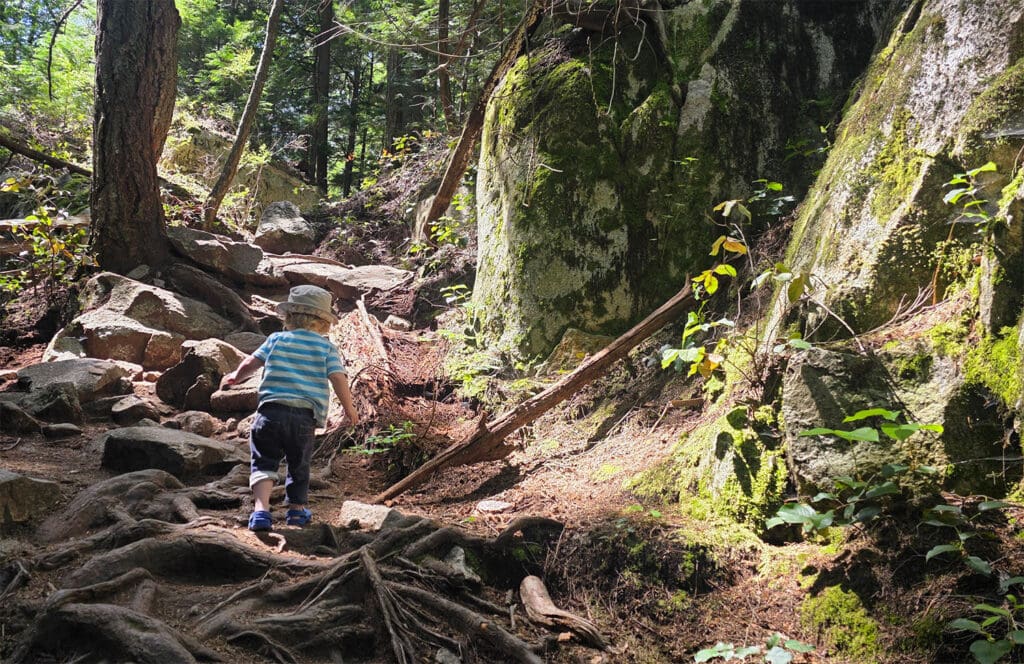
    Living in the Sea to Sky corridor for nearly two decades, I’ve found that getting kids stoked on the outdoors is about finding that perfect reward-to-effort ratio. Taking our kids out here has proven that short, punchy trails followed by a world-class view are the best recipe for building resilience. They get to scramble over roots, navigate varied terrain, and learn the basic life skills of foot placement and pacing, all without the exhaustion that leads to meltdowns.

    It’s also an incredible place to introduce a culture of mountain safety early on. As a backcountry guide, I treat these summer hikes as foundational training. We practice staying together, observing our surroundings, and making smart decisions on uneven ground, which hopefully will stay with them for the rest of their lives.

    a toddler hikes over roots in a rocky section of trail at murrin park in squamish

    The Route & The Rocks

    Rock climbing is regarded as religion in the park. As long as the kids keep a safe distance, there is usually a friendly climber who will happily answer questions from curious minds about their gear and what they are doing. It’s a fantastic way to expose little ones to different outdoor pursuits.

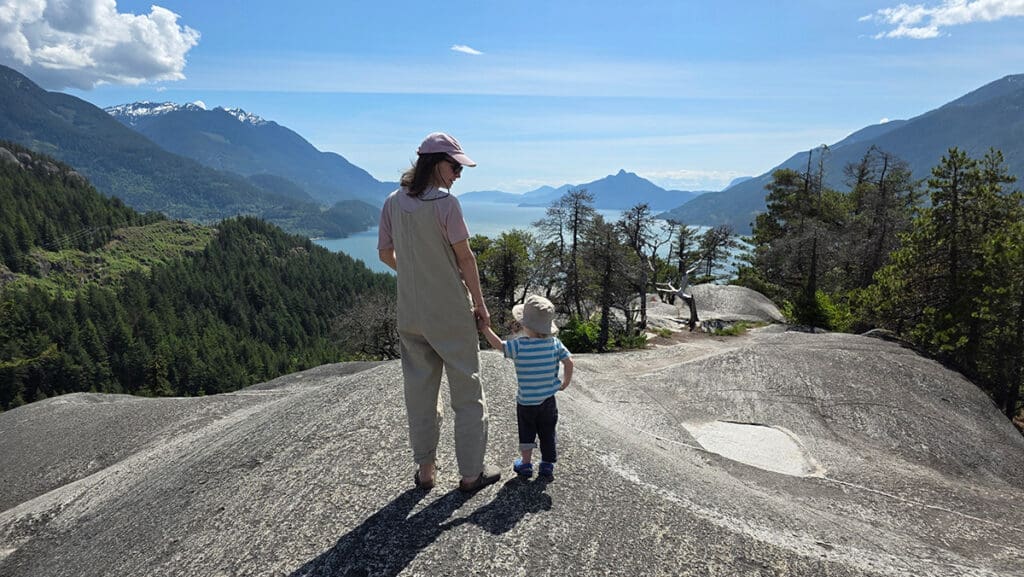
    The loop trail offers excellent panoramic views of Howe Sound, but a quick heads up: if you’re not used to hiking, the way down can be a bit steeper than expected, especially if the kids are tired and want to be carried. It’s not impossible, but it does take some slow, deliberate walking to ensure safety. Strollers are fine at the lake, but you’ll soon want to ditch them for a hiking backpack if you want to get anywhere good.

    a mother and her toddler son look at a viewpoint of howe sound while hiking in murrin provincial park

    The Hard Data: Logistics & Amenities

    • Distance & Elevation: The loop is roughly 1.8km with about 160m (524 ft) of elevation gain. Expect it to take 1 to 1.5 hours.
    • Amenities: There are no running water or food facilities here, so stock up before arriving. There are standard pit toilets located right by the parking lot and halfway along the loop trail.
    • Post-Hike Vibe: There are plenty of picnic tables next to Browning Lake right at the base. Bring snacks or a lunch and make an afternoon of it.
    • Parking: Parking can get pretty nuts on the weekends. Your best bet is to come before noon midweek. (Note: Do not park on the highway shoulder; you will be towed).

    View More Of Our Adventures

    Murrin Park is just one of the many locations that we’ve featured in Toddler-Friendly Hikes in the Sea to Sky.

    If you want to make a day of it, the park is just down the road from Shannon Falls and the Sea to Sky Gondola.

    We also have a ton of gear reviews to help you explore in comfort and practicality, and love to hear from other families who are out there doing it. Or learn more about us where you can also get in touch.

    Visiting the Sea to Sky? Check out our free app

    We made an app to help families visiting the Sea-to-Sky corridor plan their trip more efficiently. Filter by activity, location, and your kid’s age and effort level. Check it out and let us know what you think!

  • Your Honest Guide to Camping At Porteau Cove

    Your Honest Guide to Camping At Porteau Cove

    The reservation process can be stressful. Setting up is never easy. Weather can be hit-or-miss. But that first cup of coffee sitting by the water at low tide while watching the kids turn over rocks and view the life underneath makes every bit of work involved in coming to Porteau Cove worth the effort.

    Where is Porteau Cove?

    Porteau Cove is a popular stop along the Sea-to-Sky Highway 99 between Vancouver and Squamish. But most people just use it as a quick stopover on the way to other places, use the bathroom, maybe unpack a snack, and then move on.

    Camping there, however, is another story altogether. It’s difficult to get a campsite if you don’t book three months in advance, sitting on your computer at 7AM hitting refresh until a spot comes up. This filters out most of the riff-raff, leaving those who know how special the place is to have one of the best waterfront campgrounds in British Columbia, and perhaps even the entire Pacific Northwest.

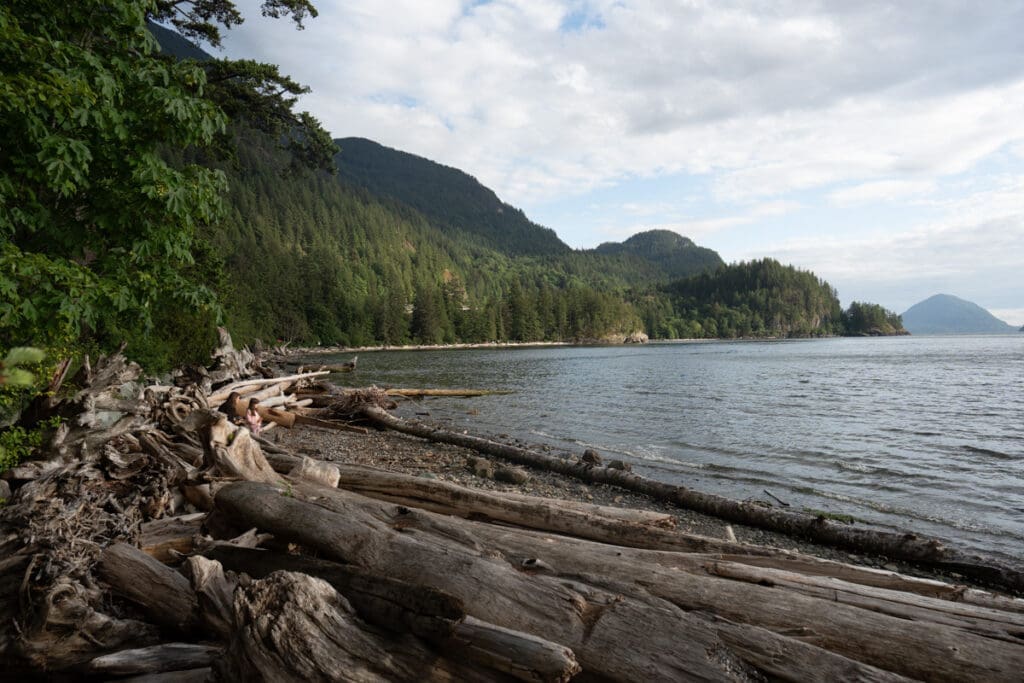
    a view looking southward from the campground at porteau cove provincial park in bc canada

    The Reservation System

    Porteau Cove has exploded in popularity over recent years, and as a result, you can’t just waltz in there and expect to get a campsite. Most of the prime real estate gets gobbled up the moment it becomes available, three months in advance. Booking a site is a semi-stressful process, but thankfully everything else about the experience is pretty straightforward and simple.

    The key is to know what dates you want to go, and be ready to reserve through the BC Parks online reservation system. Make sure you have an account set up before the system opens up to bookings at 7AM, three months before the intended date. Because once 7AM hits, you’ll be battling it out with everyone else trying to get the same spots.

    Not all campsites at Porteau Cove are created equal. The best sites are along the water’s edge, with south and southwest facing views across Howe Sound for ideal evening light. This makes it even more limited for getting the site you want. Summer months are obviously more competitive; as are the weekends. So our tactic is to book for Sundays or the Monday of a long weekend where the highest chances of people leaving are.

    The Best Campsites at Porteau Cove

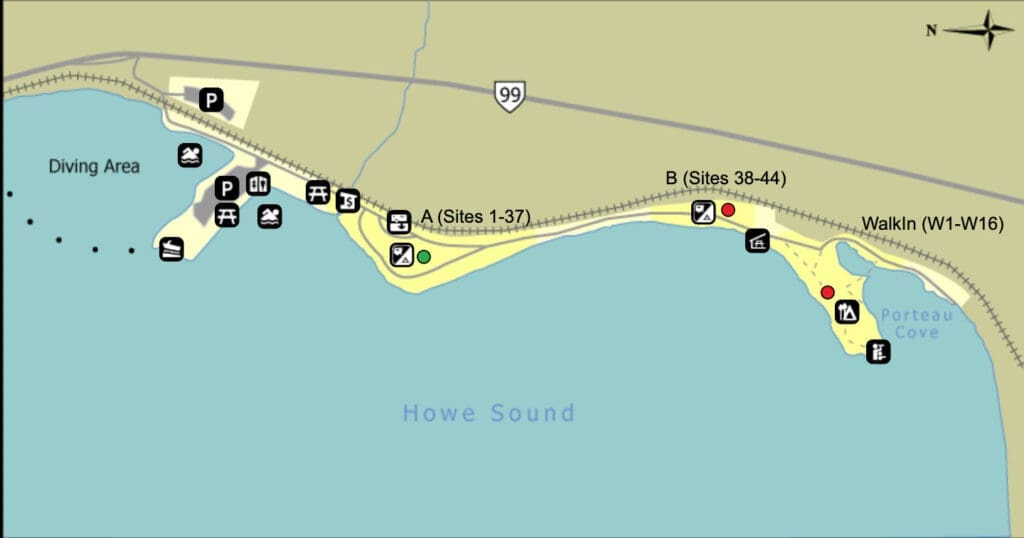
    a map of the different camping areas at porteau cove provincial park in british columbia
    Don’t always trust the green circle…

    Once you have settled on dates, the hard (and perhaps most stressful) part of the booking process begins: finding the right campsite at 7AM online. You first need to choose which zone you’d like: A has the nicest sites by far, but are also the most popular. B has good drive-up views for RV’s. The Walk-in area is pretty good all around but there is a waterfront row, and a non-waterfront row. So if you want the best of the best, go for section A.

    a view of the campsites at section a of porteau cove provincial park
    The one green circle for the entire zone is only available for one night.

    Then, you have to hope that the site you want is the one you’re choosing. Each campsite also has an availability calendar so that you can see if someone is checking out the day you want to check in. Then it’s a game of chance if you can beat someone else to booking at the right moment.

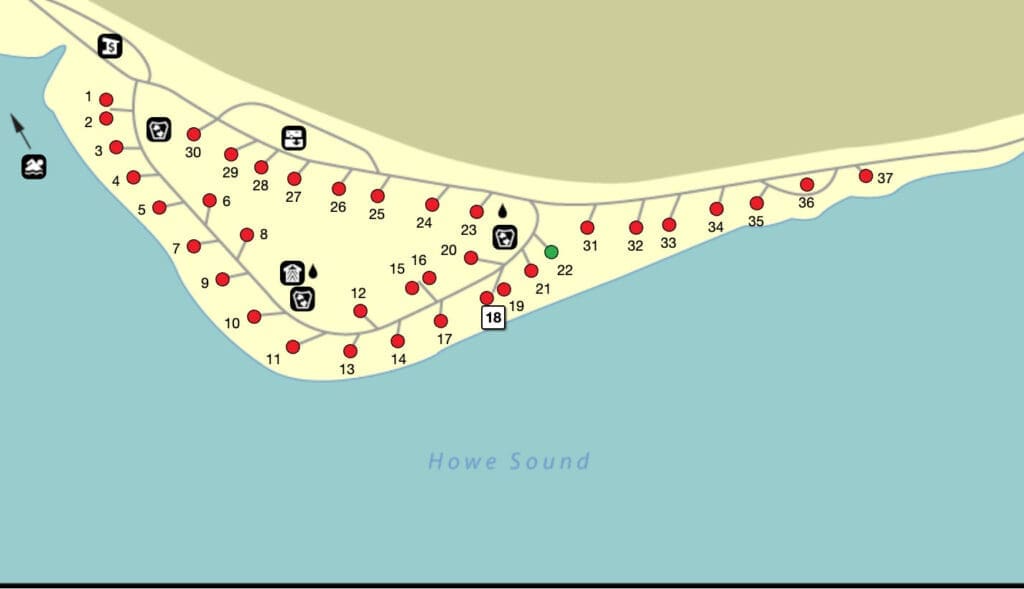
    Campsites #13-22 are probably the best due to their southerly exposure and size. 18 and 19 are double campsites, so larger parties will want to book there for a quality setup. But really, it’s hard to go wrong with anything near the water.
    We are partial to campsite #31 because it has waterfront access, but is also shaded with a nice large spruce tree, which also acts as a wind buffer. And it’s worth noting the wind here, which picks up like clockwork every day around midday. While the oceanfront campsites are nice, they are also exposed to the wind, which is important to keep in mind if you’re staying in a tent.

    Speaking of tents – if you have a large tent that needs staking, the ground in the powered campsites can be incredibly hard. It was a chore staking in our Kodiak 10×10 tent in the hard ground with a heavy mallet. But well worth it once it was in!

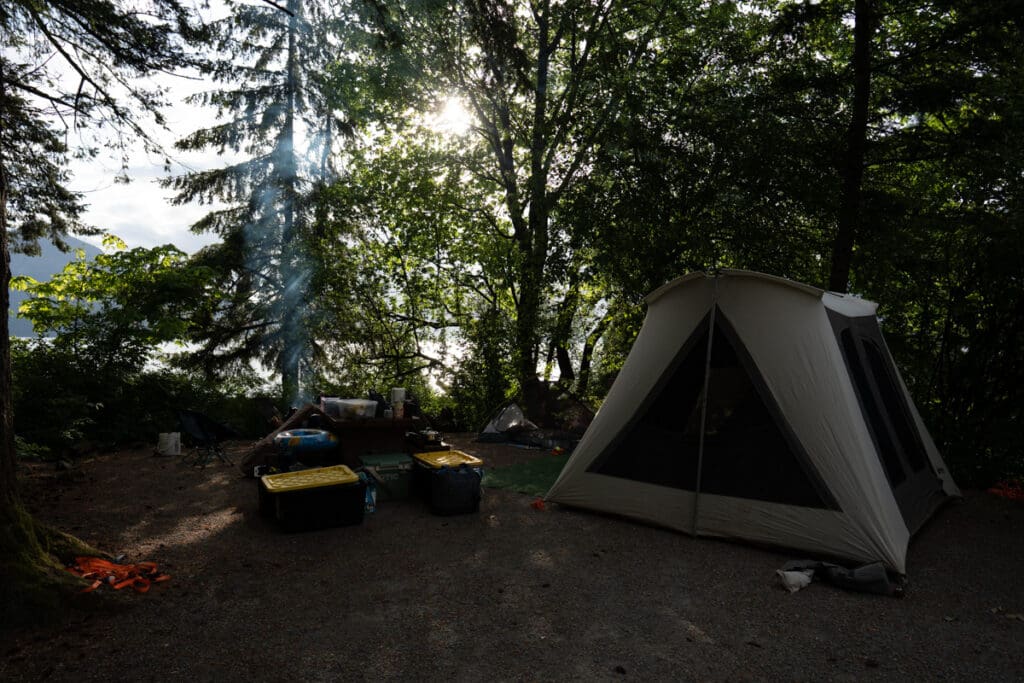
    a campsite at porteau cove provincial park
    Campsite #31 with the shade and beach access.

    The Water

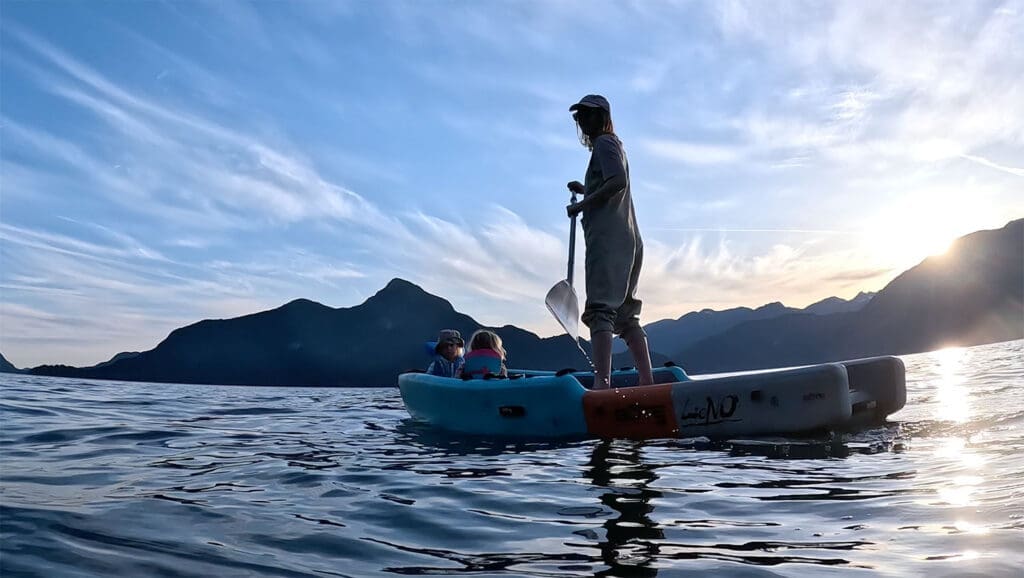
    You don’t get many chances to have a fully serviced campsite next to the ocean, so it’s wise to make the most of it by investing in some sort of watercraft. People bring everything from fishing boats (there’s a boat launch in the public lot) to inflatable paddleboards. Whatever the vessel, it’s worth it to spend some time out on the water.
    We went in springtime where there are massive schools of herring shimmering right beneath the surface. The kids loved seeing them sparkle and move en masse. With the herring comes other species that like to feast on them, so the wildlife viewing while out on the water is quite unmatched.

    Porteau Cove also has a big yin and yang aspect to it with the water conditions. Mornings are generally calm; but by the afternoon the wind can pick up and make smaller boats unenjoyable. So we recommend getting up early and making sure you have some time on the water before it gets too choppy. When it does, there’s the namesake cove at the far end of the walk-in campsites that make it a bit easier to manage with children.

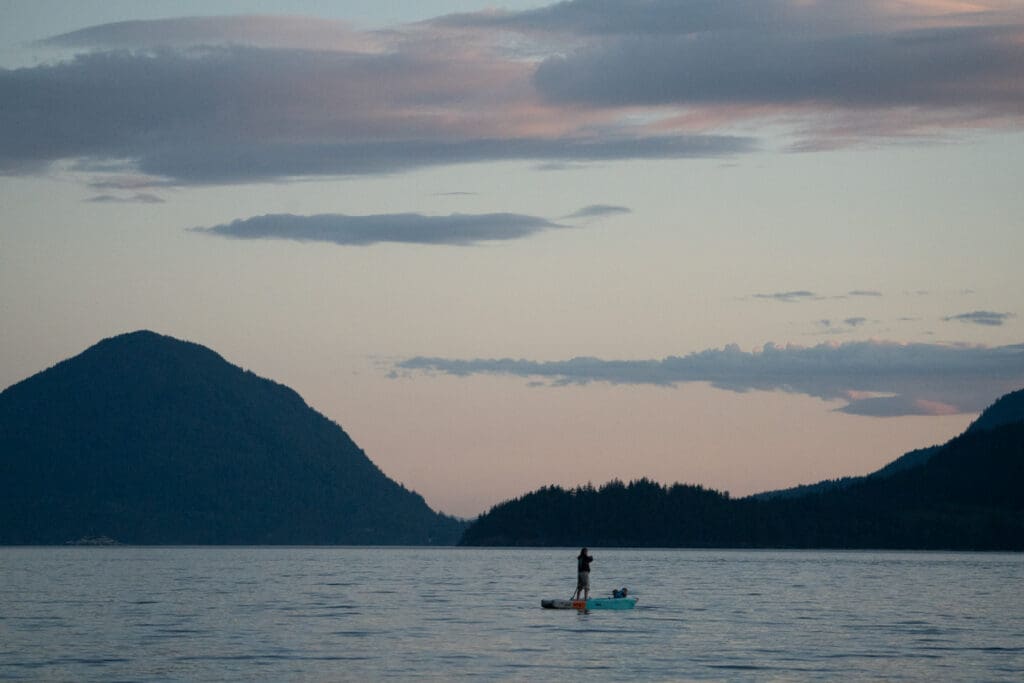
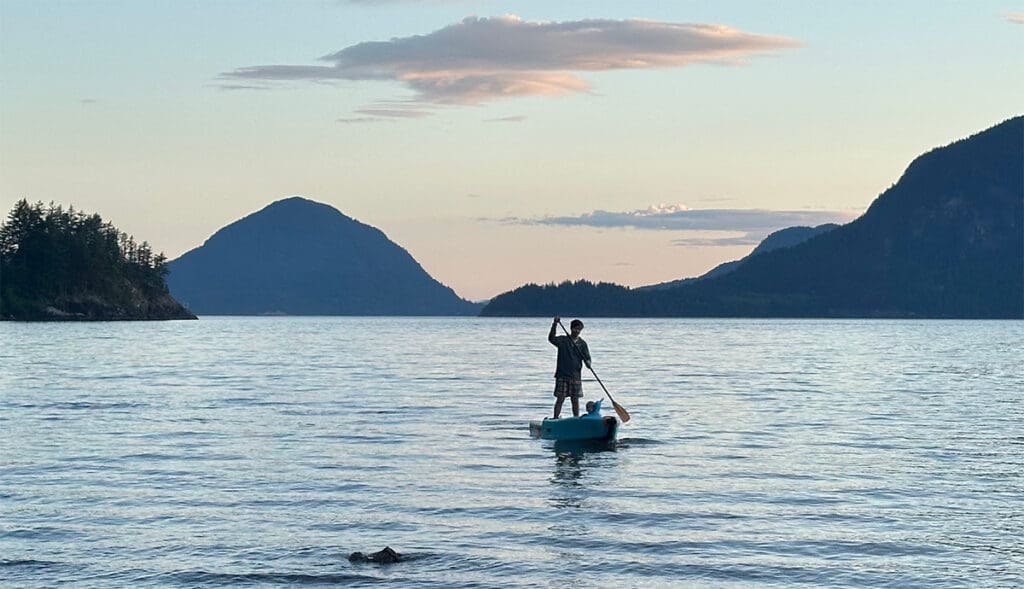
    a woman paddles at sunset on a SUP with her children in howe sound british columbia

    The biggest thing you’ll realize when you touch the water—but is worth a fair warning before you do so—is that it’s cold. Summer can be a bit better, especially from the cove where its a bit more shallow. But with the tide constantly moving and glacier runoff coming from the Squamish River, it’s not a pool in Vegas. It’s more one where you’d want to get in and get out fairly quick.

    The other important fact about the “beach” at Porteau Cove is that its rocky, and in some spots peppered with barnacles. So a good pair of water shoes will go a long way to increasing enjoyment both above and below the tide line.

    Speaking of tides—it can fluctuate quite a bit here. While it may be tempting to set up shop at low tide close to the water, make sure you can be light and able to move quickly. It’s not so quick that you’ll have to panic, but enough where if you leave the gear unattended for a few minutes, there’s a chance it’ll be floating by the time you get back.

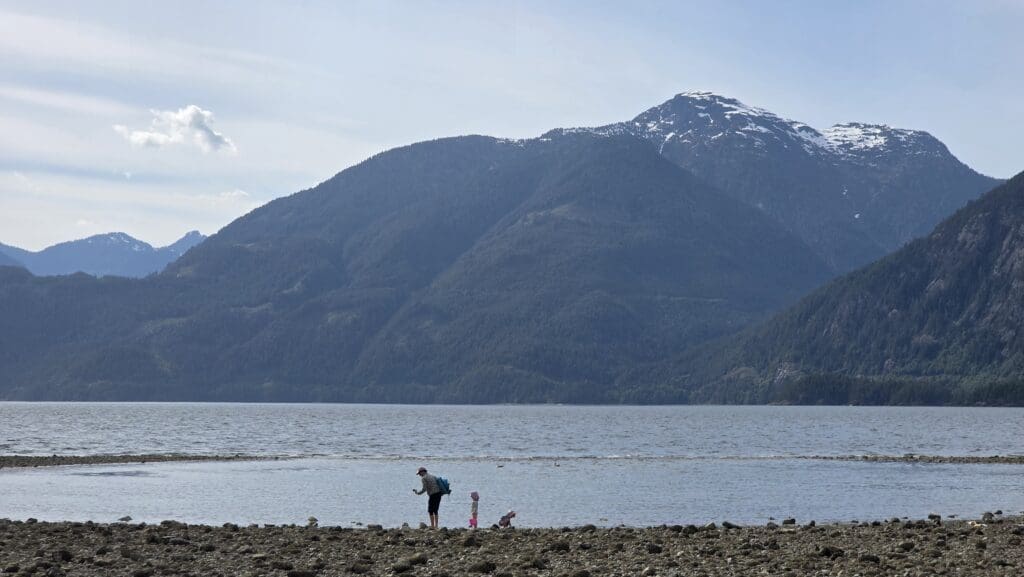
    a family explores the beach at low tide at porteau cove provincial park

    The Vibe

    If I had to give the camping experience at Porteau Cove a tagline it would probably be something like “The Most Accessible Nature Experience Near Vancouver”. It really is something special to be only a half hour from the city and feel like a world away. Aside from the highway sounds (which isn’t totally negligible, but the mind does begin to filter it out), you feel pretty remote despite being along a major thoroughfare.

    At night is where it really stands out as a special place to visit. When the ocean is calm and the starlight flickers on the surface, you almost feel like you can touch the sky. The light pollution is minimal, especially when looking north. And speaking of looking north—it’s a fantastic spot to view the northern lights with the coast mountains silhouetted along the jagged horizon.

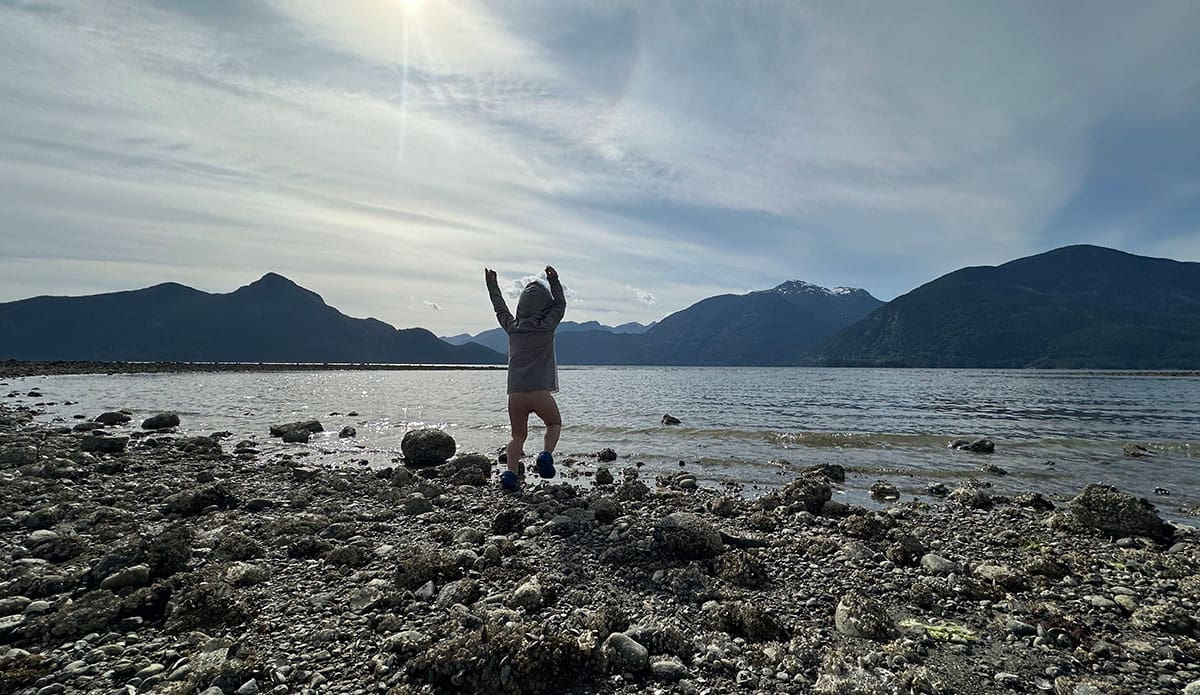
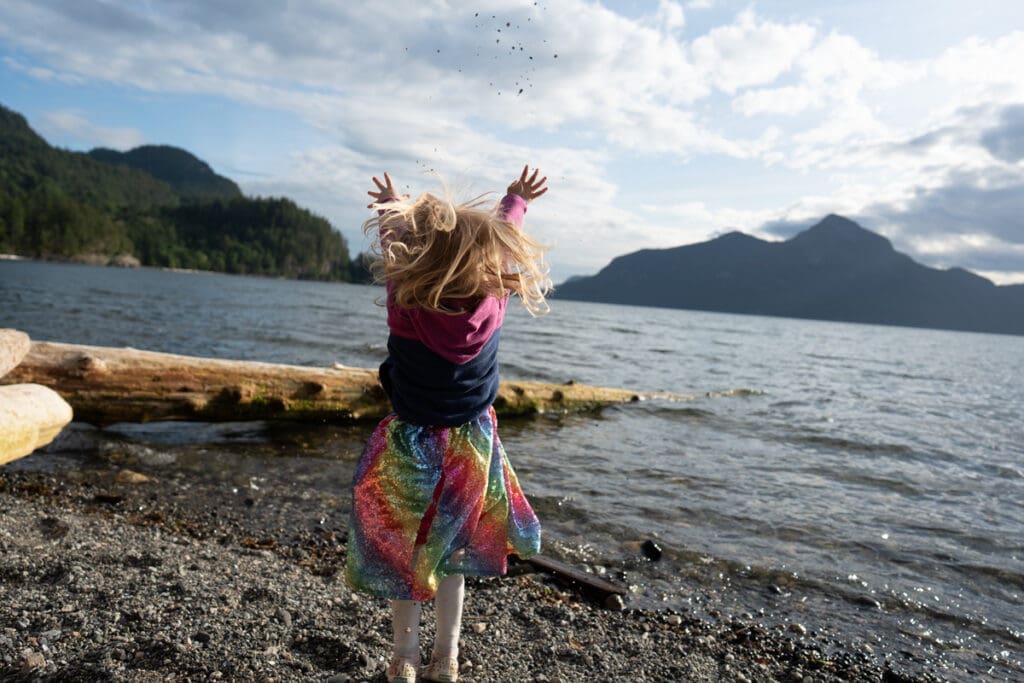
    a girl throws rocks into the ocean at howe sound, british columbia

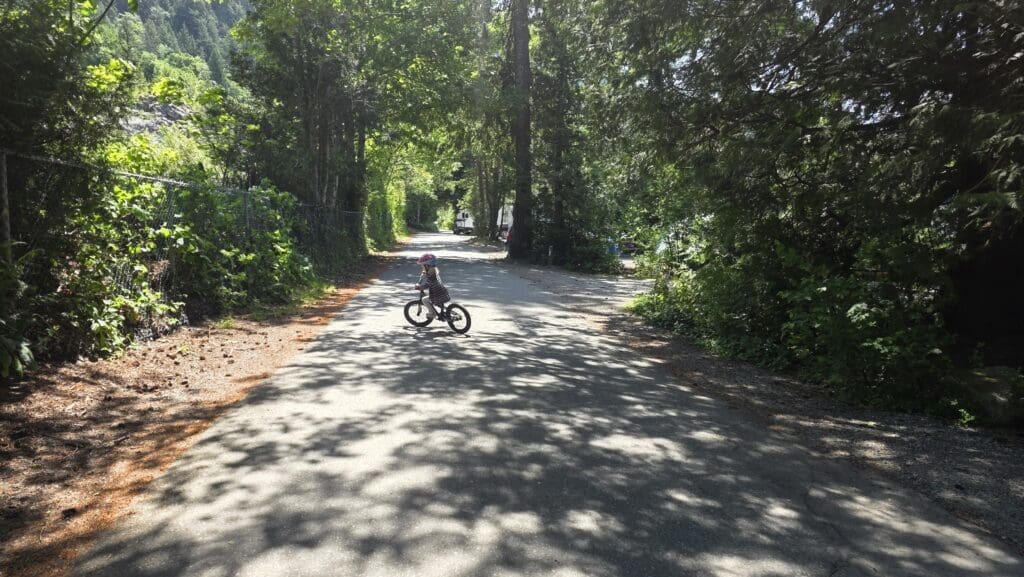
    But daytime has its own special feeling to it, especially with kids as they explore the campground in relative safety. Our little ones love the flat grade of the road where they can zip up and down without fear of getting run over. Cars do still go along the road, but it’s so infrequent (especially in the afternoon) that we give our kids a bit more leeway to explore than when at home in the neighbourhood.

    a child rides her bike in the campground at porteau cove provincial park

    A Luxurious Bonus: Renting a Sauna

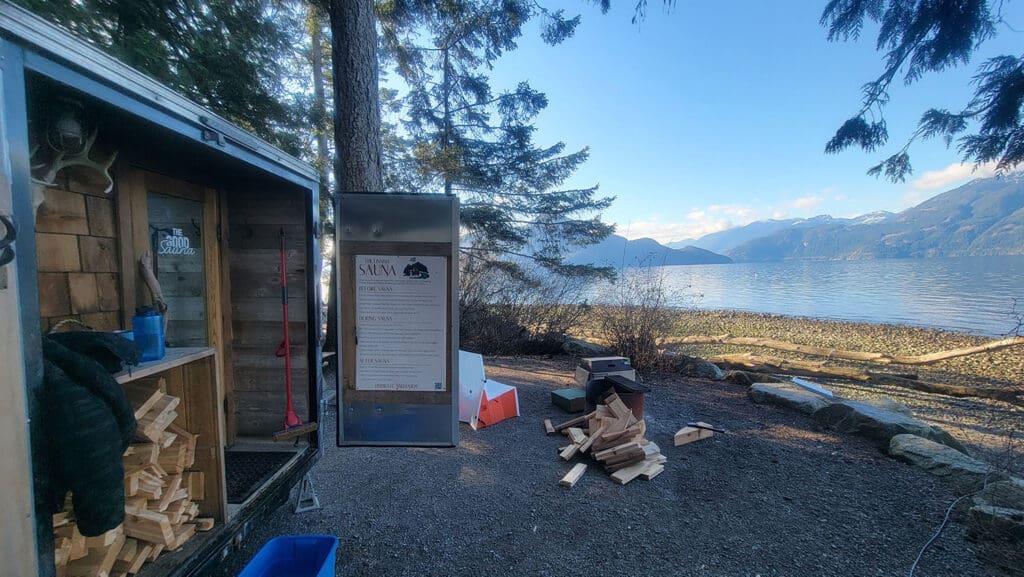
    And if you really want to improve the vibe for the campsite (and make friends with your neighbours) we recommend a bit of a splurge and getting a sauna delivered. This is dependent on if there’s a fire ban, but if not, there is nothing like stepping out of a hot sauna and into the ocean… and then rinse and repeat. Our friends as The Finnish Sauna Co. would be happy to get you sorted. This is also something you should book ahead for, especially over the weekend. But it’s well worth the effort, especially if you have a few people to pitch in for the costs.

    a sauna at seaside's edge at porteau cove in howe sound, british columbia.

    Important Facts About Porteau Cove

    There are a few things to know if you do end up having the luck to get a campsite:

    • As of now, the water is unsafe for drinking/cooking, so pack in your own water.
    • There are showers available but they get busy in the morning, so plan on a shower in the early morning or late afternoon.
    • Campfire bans do go into effect when it’s dry. Be sure you check ahead of time to avoid disappointment, or bring a propane fire pit along if you can’t go without a campfire.
    • You can buy firewood and ice at the welcome station, but you’ll have to drive to Britannia Beach (only 5-7 minutes north) to get anything else, or further to Squamish if you really need to stock up properly.
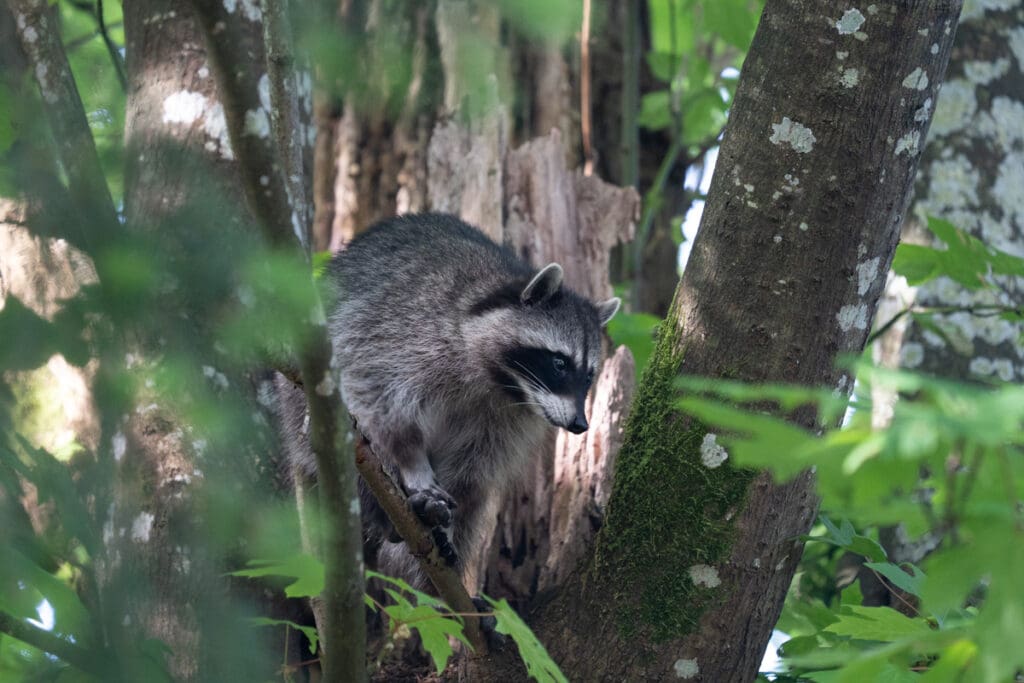
    • The animals here love human food, so be sure to stash any unattended food in the car. Racoons are particularly daring at night and will wait for the right opportunity. Birds and squirrels will hover around during the day. The staff will give you a warning if you leave food out, and reserve the right to kick you out if you don’t follow the rules.
    a racoon sits in a tree
    The classic Trash Panda

    To Sum it Up…

    There aren’t many places where you can camp so close to the ocean where you have 3 million people only a half-hour away. It’s easy to see why it’s so popular. Although it can be a bit of effort to reserve a campsite, I promise it’s worth it.

    Porteau Cove is well worth the journey, no matter if you’re coming from just down the road (like us) or are an international visitor renting an RV and touring around BC. It’s well worth the advance planning and hopefully you’ve found this guide in enough time for you to play campsite roulette at 7AM, 3 months before your stay.

    a woman paddleboards at sunset with her children on the bow

    There is much more to see and do along the Sea to Sky Highway, and we’ve got more great guides for you to check out. First thing you should do is check out our Sea to Sky Family Navigator web app which can get you the lowdown and help you plan a trip a bit more easily. Then maybe check out all the wonderful hikes for toddlers available in the Sea to Sky. We also have a free Wildlife Bingo for the kids if you would like to keep them occupied while travelling.

    We will see you out there!

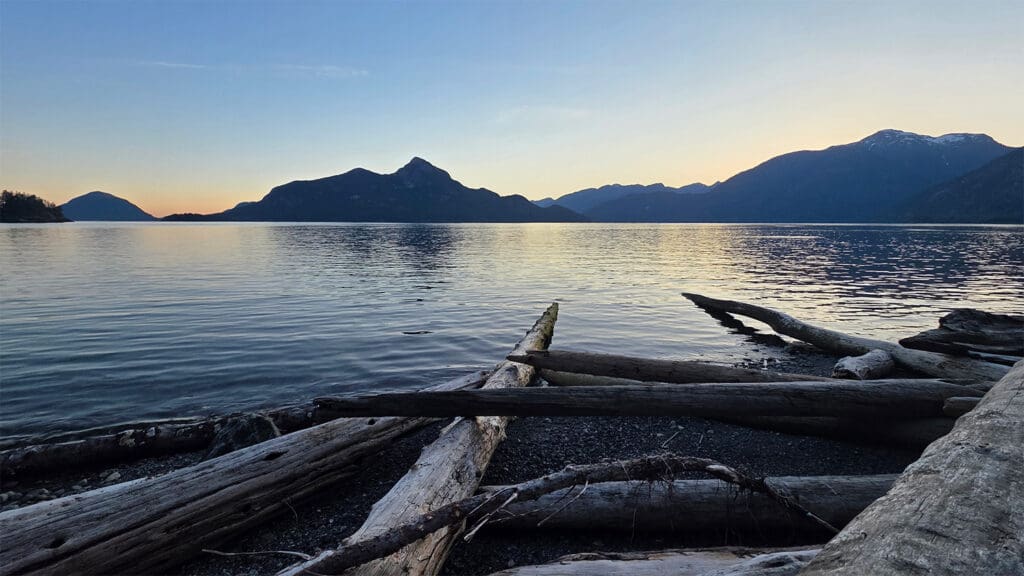
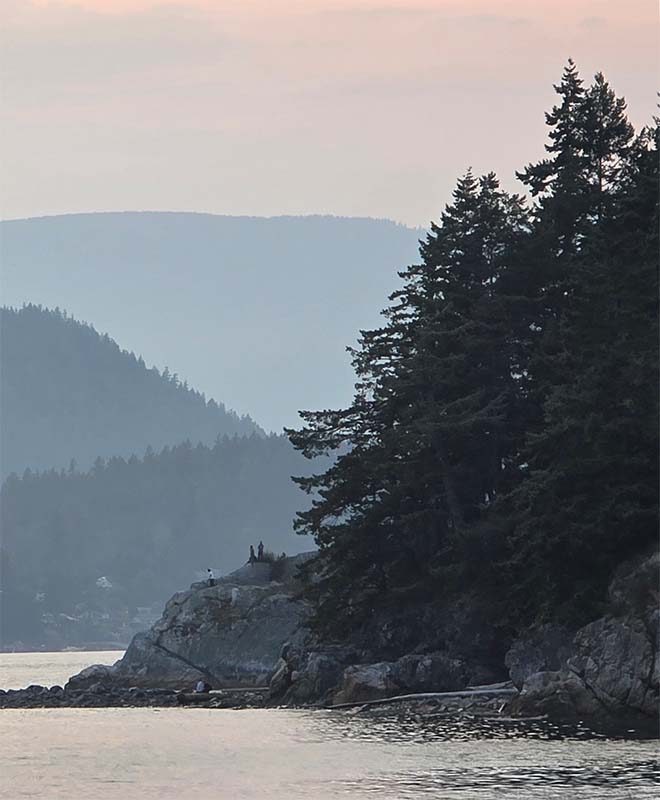
    looking southward at Porteau Cove provincial park at sunset

    Want to Find More Great Spots? Check Out Our Free App

    We made an app to help families navigate the Sea to Sky corridor a bit better. Check out the Sea to Sky Family Navigator app to plan your trip and find spots based on map, activity, location, and more! The best part, it’s free!

  • Cheakamus Lake: An Iconic Hike in Whistler

    Cheakamus Lake: An Iconic Hike in Whistler

    Note: This trail is currently undergoing maintenance, with the reopening scheduled for summer 2026.

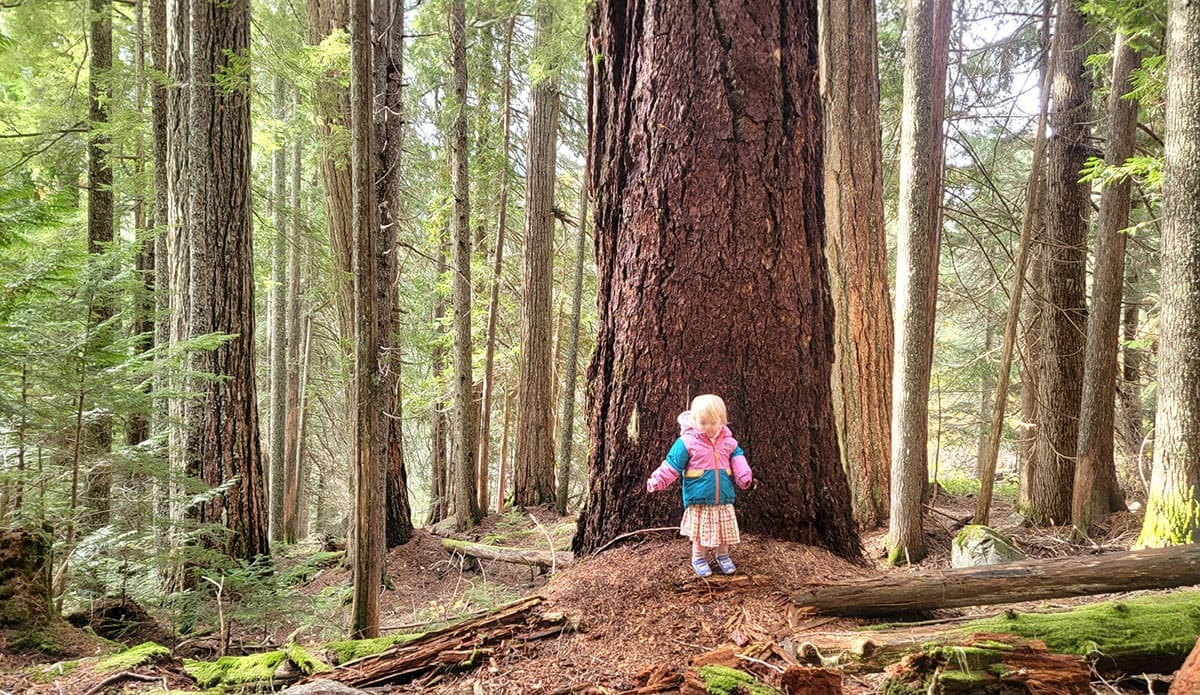
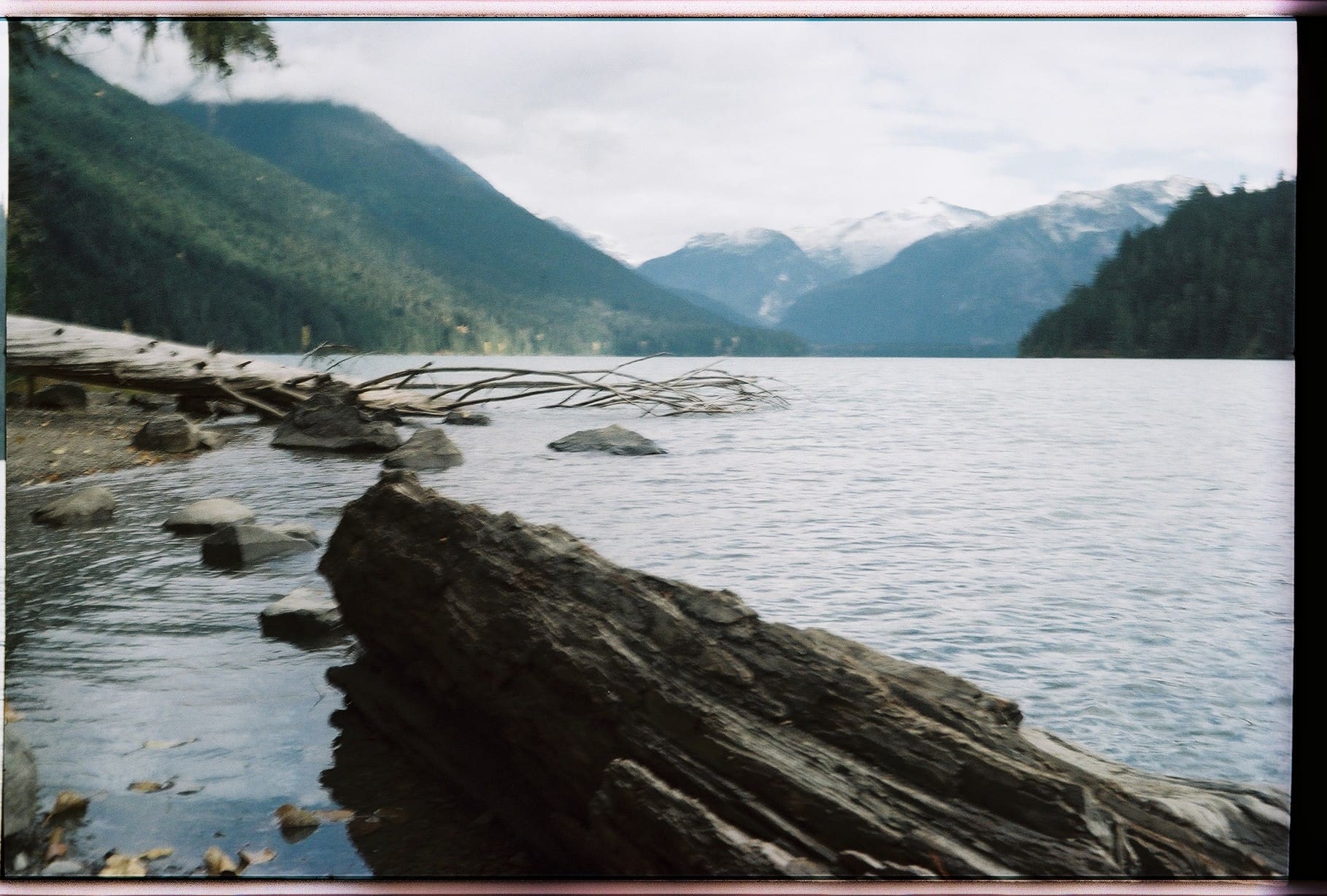
    There are very few places you can visit where its residents live over 10 times longer than humans. Cheakamus Lake is a step into the ancient. The stillness here carries a weight; the striking feeling that the life around you existed long before you arrived, and will remain long after. The forest starts on the lower slopes of Whistler mountain, extending far into the wilderness where few humans have ever set foot.

    Quick Stats:

    • Difficulty: Easy/Moderate (Mostly flat, but long for small legs).
    • Best For: Families seeking old-growth immersion without a massive climb.
    • Seasonal Note: The road is usually snow-free from late May through October. In early June, the forest is at its most vibrant and “mossy.”

    The Trail In

    The trail starts at the end of the Cheakamus Lake Road, a 8km winding road that you take from the highway at the first lights when you get to town from the south. The road can get dusty in the summer, so watch your speed.

    From the parking lot, it’s 3km to the lake. The first 1km is probably the steepest and most un-interesting as the area has been logged in the past. But once you hit the old-growth forest (and you’ll know when you do), it’s a surreal feeling. You step through a curtain of boughs to enter a biome that is teeming with life energy—if you’re willing to slow down to listen.

    The Forest

    The sheer size of these trees is what stands out the most. Very few people have actually spent time in an ancient forest, and it shows. I firmly believe that the more time people spend in forests like these, the less disharmony we would all have.

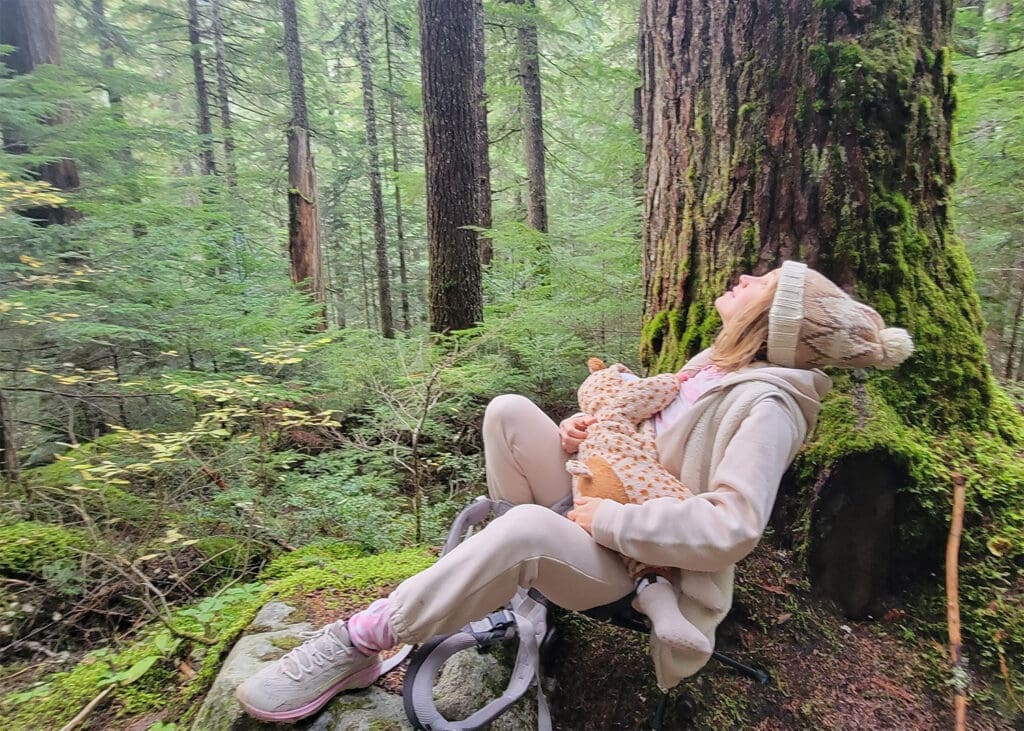
    a woman breastfeeds her baby while next to a large douglas fir tree on the trail to cheakamus lake in garibaldi provincial park.
    Nice spot for a snack!

    Arriving at the Lake

    About 1km from the lake, you begin to see the Cheakamus River that the lake feeds. That is the sign that you are close. Several branches of the trail get close to the river, but with little ones you’ll still want to stay a ways away for their safety. But soon enough, you will see the first view of the lake; and what a view it is.

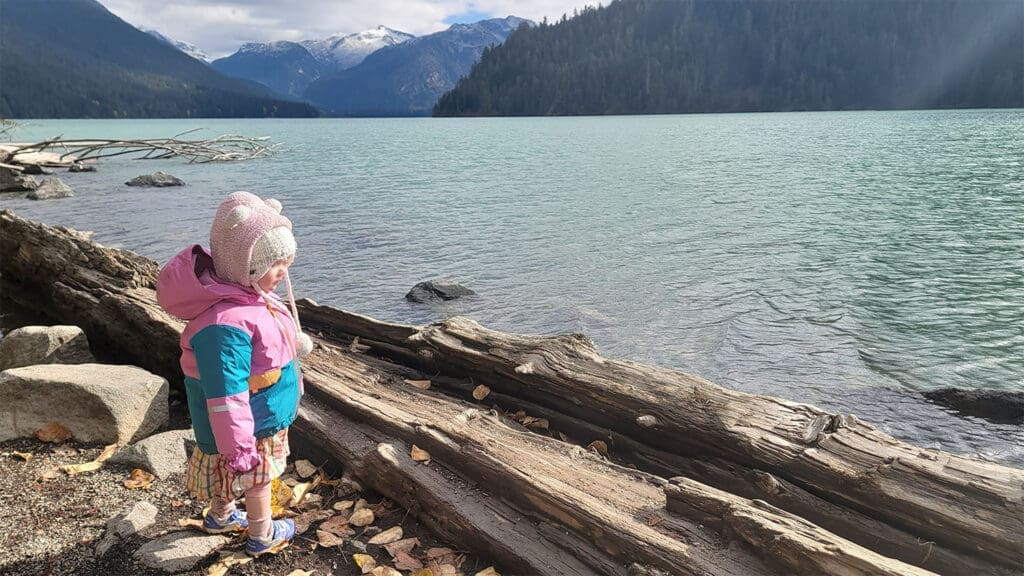
    A toddler looks over cheakamus lake in garibaldi provincial park, bc canada

    The stunning turquoise hues come from the silt that the glaciers grind up, known as “glacial flour”. On a sunny day it refracts the light to a vibrant display that is much more stunning in person than any photo could capture.

    The backdrop behind the lake showcases the wilderness of Garibaldi Provincial Park; an untamed backcountry area that is legendary for mountain exploration, given how close to civilization it actually is.

    As beautiful as the lake is, it’s also extremely cold. The same glacier melt that causes the bright hues is also just above freezing…. so even on a hot day it’s a quick in-and-out to say you’ve done it type of thing. There are plenty of non-glacier lakes near Whistler to hang out at if you want to spend some time in the water.
    The trail continues to wind around the lake to the far end; but after that, you’re on your own. If you’ve made it this far with kids, it’s probably a good time to head back. That is, unless you’re camping!

    Camping at Cheakamus Lake

    There are two campgrounds at Cheakamus Lake, both require reservations in advance. They have some cleared ground, a food cache, and outhouses, but not much else. If you have a wagon that would make things easier to haul stuff in—especially with kids.

    But the experience you have at these sites is vastly different from the more glitzy frontcountry campsites that BC parks operates. Many times (especially mid-week or the offseason), your group will be the only ones there.

    That solitude comes with a responsibility though. Cheakamus Lake is black bear habitat, and while encounters are rare, the odds go up tremendously if you leave food out. Once a bear becomes conditioned to human food, they will seek it out, and become aggressive. This is what the food caches are for. So make sure that you use them if camping out.

    Helpful Info

    Getting There & Parking

    • Access: Turn off Highway 99 at the Cheakamus Lake/Function Junction intersection. Follow Cheakamus Lake Road for 8km.
    • Road Conditions: It’s a gravel forestry road. While generally fine for 2WD vehicles, it’s notorious for “washboard” ripples and potholes. Take it slow, especially if the kids are prone to carsickness.
    • Parking: The lot is at the very end of the road. It fills up early on sunny weekends, so aim to arrive before 9:30 AM or after 3:00 PM for the “golden hour” light.

    Permits & Fees

    • Day-Use Passes: For the 2026 season, BC Parks requires a free day-use pass to park here from mid-June through mid-October. You can reserve these starting at 7:00 AM two days before your visit at the BC Parks website.
    • Camping Fees: If you’re staying overnight, reservations are mandatory year-round. It’s $10 per adult and $5 per child (6–15) per night, plus a small reservation fee.
    • No Dogs Allowed: Since this is Garibaldi Provincial Park, pets aren’t permitted on the trails or in the campgrounds to protect the local wildlife.

    Timing the Adventure

    • Trail Distance: It is a flat 3km (1.8 miles) from the parking lot to the first lake access point (Cheakamus Lake Campground).
    • Budgeting Time: * The “Hiker” Pace: 45 minutes each way.
      The “Family” Pace: Budget 1.5 to 2 hours each way. This accounts for the “First Kilometer” climb, stopping to look at the massive Douglas Firs, and the inevitable “I found a cool rock” breaks.
      Full Experience: Plan for 4–5 hours total if you want to enjoy a picnic and some shoreline exploring.

    What to Pack

    • The “Lake Layer”: Even if it’s 25°C in Whistler, the lake creates its own microclimate. Bring a light windbreaker or fleece for when you reach the shore.
    • Bear Safety: This is active Black Bear country. Carry bear spray in an accessible spot (not buried in your pack) and make sure the kids know to stay close and keep the “chatter” up while walking. More information on how to be Bear Aware.
    • Water & Food: There is no potable water at the trailhead or the lake. Bring a filter if you’re camping, or pack at least 1.5L of water per person for a day trip.
    • Footwear: The trail is wide and “wagon-friendly” (if you have one with rugged off-road wheels), but roots can be slippery. Sturdy sneakers or hiking shoes are better than flip-flops.

    A Note on Respect

    This trail goes through some of the last accessible old-growth forest in British Columbia. It’s a sad, sobering statistic, but one that ushers even more urgency that we need to protect this area from harm. This means following Leave No Trace principles, and staying on the trail.

    It also means respecting other people’s desire to be in nature and leaving loud speakers at home, packing out what you pack in. As the saying goes: Take only photographs, leave only footprints.

    Good stewardship helps set a good example for our children, so that they grow up doing the same. Eventually that energy will spread, and hopefully our society will begin to value places like these more. That is our hope, at least.

    Enjoy This Place of Wonder

    Hiking to Cheakamus Lake is one of the best activities for families in Whistler, and one I have been showing my kids since they could barely see past the ends of their noses. They absolutely love it, and so do us parents. It’s a place I often take people visiting to help immerse them in the power and beauty of an old-growth forest.

    Yes, the lake is a nice photogenic destination on the hike, but to me, it’s all about that feeling you get when you walk into the ancient forest. It’s hard to describe in words, but it’s a feeling that you can’t get out of you and sticks with you. And in doing so, hopefully it reinforces a desire to make sure places like this can thrive for many more generations and centuries to come.

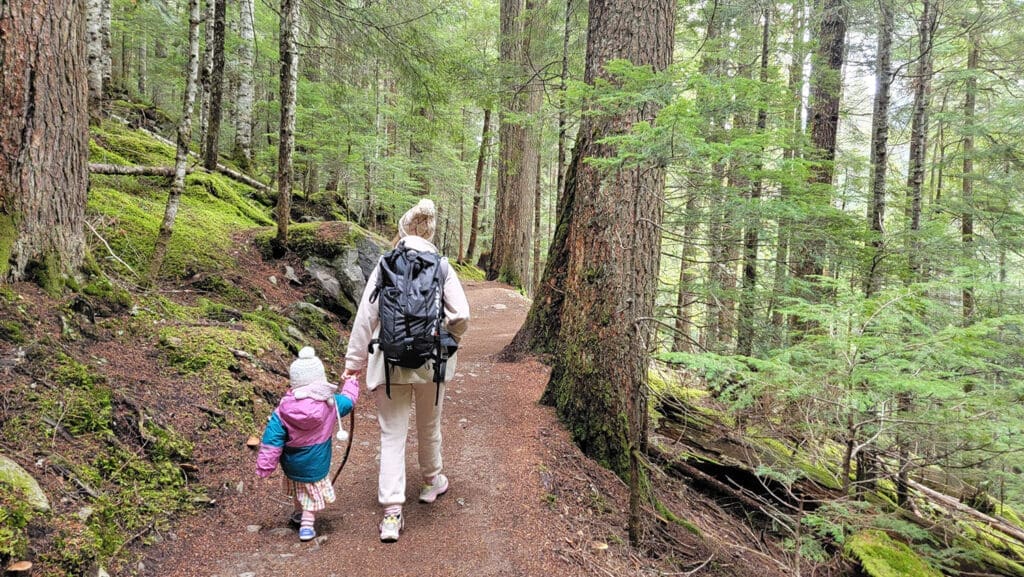
    a mother hikes with her daughter through the forest on the cheakamus lake trail in garibaldi provincial park, bc, canada

    Thanks for reading until the end! If you liked this, check out some of our other hikes for toddlers in the Sea-to-Sky. See you out on the trails!

    Helpful Links

    BC Parks Info Page on Cheakamus Lake

    Cheakamus Lake Campground Reservations – Be sure to choose “Backcountry Camping”

    Day Use Passes – Available 2 days before your visit

    Want to Find More Hiking Spots? Check Out Our Free App

    a screenshot of the sea to sky navigator trip planner app

    We made an app to help families navigate the Sea to Sky corridor a bit better. Check out the Sea to Sky Family Navigator app to plan your trip and find spots based on map, activity, location, and more! The best part, it’s free!


  • The Family Guide to Whytecliff Park

    The Family Guide to Whytecliff Park

    We have a blessing in life to live near one of the great parks in Metro Vancouver: Whytecliff. At the very edge of the continent, where the mainland of BC separates Howe Sound from the Salish Sea. There sits a small peninsula surrounded by multimilllion dollar estates, but with a significant portion of it made public for all to enjoy.

    Of all the parks to encapsulate coastal British Columbia, Whytecliff may be it. There are other marquee parks throughout Metro Vancouver, but nowhere else can you get a beach, rocky cliffs, a renowned scuba-diving site, and forested hikes all in one area. It’s marks the beginning of the Sea to Sky region, and is well worth a visit if you’re in the area.

    Whytecliff Park At a Glance

    Location: End of 7000 block Marine Drive, West Vancouver (just west of Horseshoe Bay)
    Park Size: 15+ hectares
    Cost: Free entry / Pay parking year-round (West Van residents can get annual pass)
    Washrooms: Yes — main building 7am–9pm, portable toilets at south lot
    Concession: Open daily 11am–7pm (burgers, smoked meat, ice cream, housemade snacks)
    Dogs: Not permitted on trails
    Transit: Bus 257 Horseshoe Bay Express or 250 from downtown Vancouver (with 1-2k walking after the stop)

    Why Families Love This Park

    • Swimming beach that gets fun wave action from passing BC Ferries
    • One of Canada’s first Marine Protected Areas, home to over 200 marine animal species — real wildlife, not a zoo!
    • Playground, tennis courts, playing field, and heated washrooms
    • Harbour seals are commonly spotted in the water; orcas have made rare appearances
    • Café on site means you don’t need to pack everything
    a telephoto view of the beach at Whytecliff park with bowen island in the background

    Whyte Islet: A Tidal Island To Get In Sync With Nature

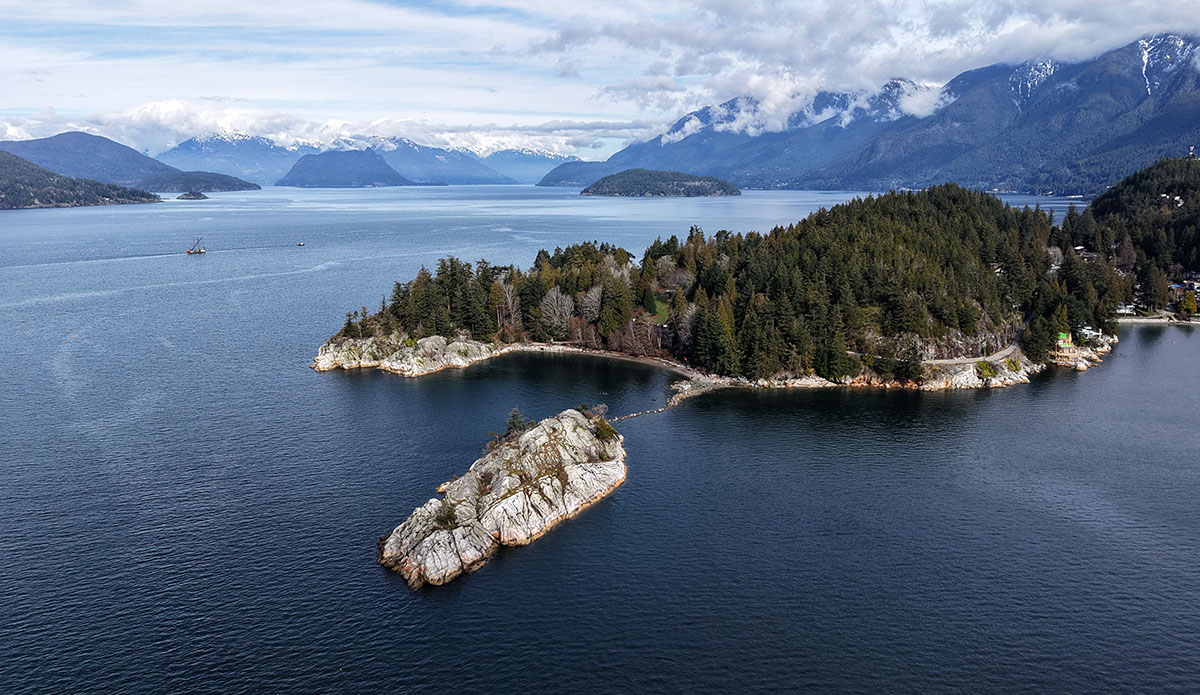
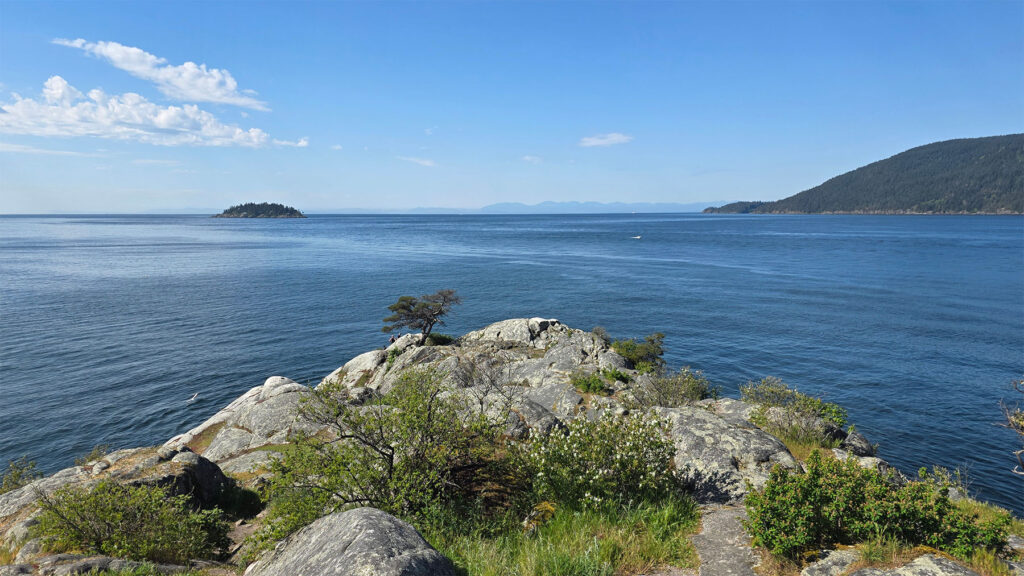
    Out in the bay from the beach at Whytecliff is Whyte Islet. This rocky outcropping is a tiny mountain that starts deep below the surface, revealing the peak of it at water’s edge. Hiking out here provides those who get there with a remarkable view across the Salish Sea toward Vancouver Island.

    A view looking southward from Whyte Islet toward the Salish Sea and Vancovuer Island on a clear sunny day
    The view from atop Whyte Islet looking across the Salish Sea to Vancouver Island

    The cool thing about Whyte Islet is that it’s a tidal island—meaning at high tide it’s an island, and at low tide it’s a peninsula. This is important in that it makes you have to plan your trip out there, especially if walking out during an incoming tide. There have been many people needing to get help coming back because the path they took ended up underwater.
    But fear not, as the tide table is easy enough to read. You can get a fresh tide table on the Candian Government’s DFO website, or check out what it’s doing right now:

    The whole exercise of planning for the tides becomes a great lesson to kids to help them (and even us parents) understand the Earth’s natural rhythms a bit better. Knowing the tides is a part of many seafarer’s lives, but something the land lubber in us loses sight of. Flexing that muscle is good for both the brain and the wild heart.
    The Playground at Whytecliff

    The park has a moderately sized playground which is spread out for different ages to have their own space. Big kids will like the large swing set, but the rest of the equipment is meant for the younger (under 10) set. A small dinosaur-shaped apparatus welcomes the tots, while a larger structure with two slides and a few ways to climb up give our toddlers plenty to be entertained by.

    There are also nearby tennis/pickleball courts, and a large field for games—although nothing is level and it all slopes down toward the ocean.

    Hiking/Walking Trails

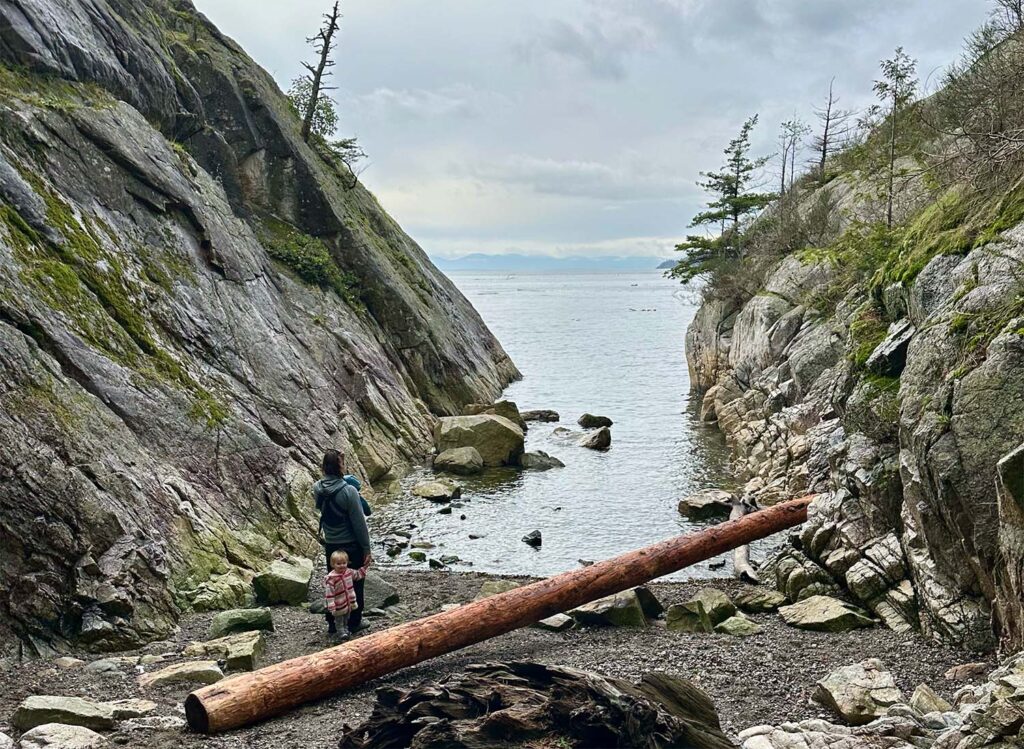
    Whytecliff has an impressive array of different trails that have been carved out over time. Depending on how old your kids are you might want to keep them on a short leash; as the trails can get dangerously close to a cliff’s edge. But there are plenty of trails—both near the water and in the forest—that will be both entertaining and challenging for kids and adults alike.

    The coastal trails are best explored with grippy soles that can grip to the granite rocks, allowing you to get a little bit further out. But if there are small kids or people with difficulty balancing, you can take a nice paved path down to the waterline, and it just so happens to go past the concession stand. The concession isn’t anything to write home about, but can ease a tantrum if emotions get hot.

    a father and daughter explore the coastline of british columbia at whytecliff park
    The shoreline is full of tidal pools and all kinds of treasures.

    For those who crave a bit more exercise, It’s well worth a jaunt across Marine Drive where the park continues up the same ridgeline that juts into the ocean forming Whyte Islet. From there you can easily spend an hour or so getting the heart rate up while at the same time getting immersed in the Douglas Fir, Western Red Cedar, and Coastal Hemlock forest that makes British Columbia stand out. While sweeping vistas may be limited, the forest is the draw, and there’s a reason why the Japanese practice forest bathing: it calms the nervous system and grounds us in our surroundings better than almost anything.

    It’s a favorite spot for locals to take their dogs, so just be careful if you have curious little ones that they don’t end up with some discarded dog poo. I always thought it was strange that people bag up their dog poo and leave it on the ground, but maybe in this situation it’s the better option…

    The Best Lunch Spot Around

    Toward the western edge of the park are a few parking spots if you’re lucky enough to get them, but is a bit like winning the lottery on a hot summer’s day. But right above that is a public area with a picnic table that could be one of the most beautiful lunch spots on earth, and certainly one of Vancouver’s best. There you can whale watch right from the point and see a multitude of birds and seals passing through the channel.

    Parking at Whytecliff

    Because it’s such an amazing spot, it gets busy, and there are far too few parking spots to meet the demand. The park itself has a few dozen spots with a few more across Marine Drive in the woods.

    But none of that matters on a weekend where it can get so busy that they will close down the road at Marine Drive and Nelson Ave in an attempt to curb the congestion. Because of this, we highly recommend getting to the park before 9AM (9:45 at the latest) on weekends in the summer, lest you get turned away.

    Come Back Often

    Some people may be here for a short time, visting once—and that’s great. I hope this small guide entices you to visit. But the magic comes when you visit Whytecliff across the seasons. There is something unique about each phase of the year: Herring spawn in the spring, Humpback Migrations, Summer beachcoming, and winter storms. The moods of the park will entice you to visit again and see what each season is all about.

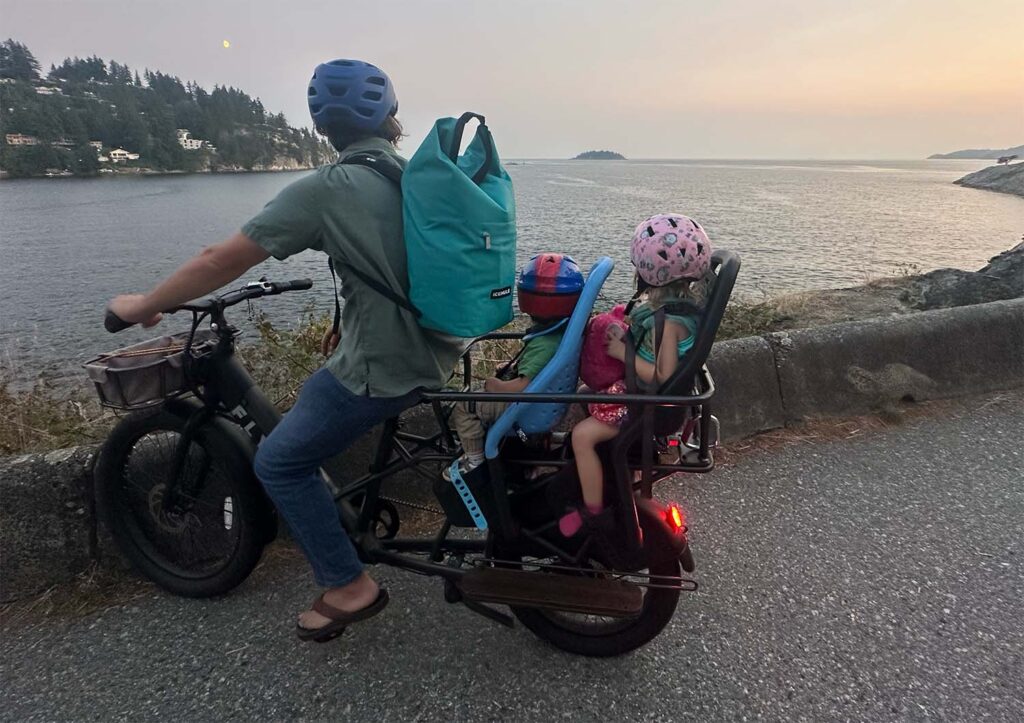
    a father and two children look out at the sunset from the edge of whytecliff park while seated on a cargo e-bike
    Don’t forget to catch the sunset!

    Want to Find More Great Spots in the Sea to Sky? Check Out Our Free App

    a screenshot of the sea to sky navigator trip planner app

    We made an app to help families navigate the Sea to Sky corridor a bit better. Check out the Sea to Sky Family Navigator app to plan your trip and find spots based on map, activity, location, and more! The best part, it’s free!
    And if you would like to see other great beaches near Vancouver, check out our guide to the Best Family-Friendly Beaches In and Around Vancouver, BC.