Tag: beach

  • Is the New Heights/OluKai Flip Flop Collab Worth the Premium Price Tag? A Review of the Mea Ola Nu’u

    Is the New Heights/OluKai Flip Flop Collab Worth the Premium Price Tag? A Review of the Mea Ola Nu’u


    Heads up: This review contains affiliate links. If you buy through one, I may earn a small commission at no extra cost to you — it helps keep these reviews free to read. It never changes my verdict. Read my Gear Review Policy. — Steve

    I’m not as big of a football fan as I once was. Family life has certainly cut into leisure time. So when I heard that OluKai, a brand known more for the waterman’s ethos of Hawaii, was collaborating with NFL stars Travis and Jason Kelce, I kinda went “meh,” and wondered if this collab was genuine.

    Then I tried the sandals out. And whatever the reasoning behind the collab aside, the reality is that it’s a damn fine pair of flip flops. The leather is what you’d expect with OluKai, but the big difference is the footbed. Maybe having some of the top athletes in a sport that has them abusing their feet designing some leisure footwear wasn’t such a strange idea, after all.

    As a dad, comfort is key, and so is quality, although both come at a premium. So were they worth the $160 price tag? Read on to find out!

    New Heights x OluKai Mea Ola Nuʻu: The Verdict

    Bottom line: It’s a lot to spend on a sandal, but the full-grain leather and rugged outsole mean it’ll last. It’s the type of sandal that gets better with age, as long as you aren’t the amphibous type.

    Pros

    • ✓ Full-grain leather that softens and shapes to your foot instead of wearing out
    • ✓ The footbed is noticeably more supportive underfoot than a flat foam flip-flop
    • ✓ Grippier than it looks: rubber traction pods set into a leather-wrapped outsole
    • ✓ The football details stay subtle, but is a nice touch.

    Cons

    • ✕ $160 USD is a lot of money for a pair of flip flops
    • ✕ It’s a beach sandal you shouldn’t swim in. OluKai builds the Mea Ola for dry sand and shorelines, not soaking
    • ✕ Sizing guidance conflicts between OluKai’s own page and its Amazon listing (see The Facts, below)
    • ✕ Limited edition, men’s sizes only, one colorway
    The Specs

    Price$160 USD
    ColourwayDark Java / Tan (single limited-edition colourway)
    SizesMen’s US 7–15, whole sizes
    UpperFull-grain leather
    LiningSoft microfiber
    Toe postHandsewn
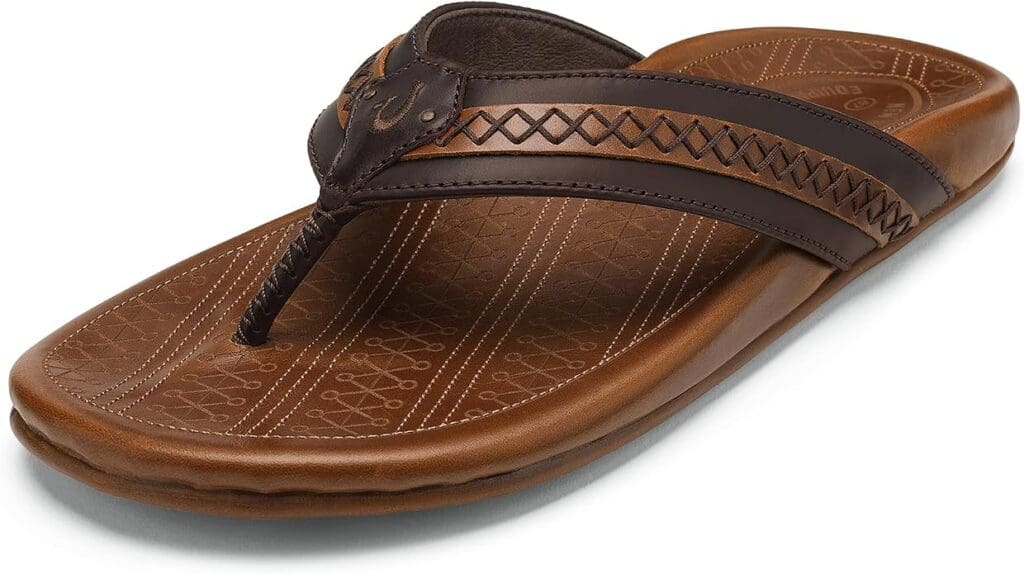
    FootbedContoured leather footbed with laser-etched New Heights artwork and embroidered logo accents
    Midsole / outsoleCompression EVA midsole, with spotted rubber outsole on top of leather.
    FitOluKai’s product page lists it true to size, standard width, standard arch. OluKai’s own Amazon listing for the same sandal says it runs small and narrow with a high arch, and recommends sizing up. See the sizing note below.
    Weight17 oz (pair)
    Water useBuilt for dry sand and shorelines; prolonged water contact can damage the leather
    Warranty1 year from date of purchase
    AvailabilityLimited edition, while supplies last

    Specs verified August 3, 2026. Prices drift — check before you buy.

    A note on sizing

    OluKai gives two different answers depending on where you shop. The product page on olukai.com says the Mea Ola NuÊ»u fits true to size with a standard width and arch. OluKai’s own Amazon listing for the same sandal says it runs small and narrow with a high arch, and tells you to order a size up. I found it to be fairly standard for me, and ordering a size up would have been way too much underfoot. As someone who oscillates between a size 10 and 9.5, the 10 was actually slightly big, but a 9.5 would probably have my toes creeping over.

    How I tested them

    I’ve been wearing these over the past few months in a classic west coast summer. I’m not taking them hiking or anything, but wearing them on the day-to-day when it suits. I try to not

    Notable Features of the Mea Ola Nuʻu

    • Full-grain leather upper. It breaks in rather than breaks down, and darkens where your foot touches it. OluKai says the leathers here nod to vintage pigskins and old-school helmets. It’s a nice touch.
    • Contoured footbed with real arch shape. This is what separates it from a $20 rubber flip flop: there’s structure under the arch, so your foot isn’t doing all the work. The result? I can wear these all day without the usual foot pain from cheap sandals.
    • Leather-wrapped outsole with rubber traction pods. The outsole truly is grippy and a step above (no pun intended) a cheap, flimsy plastic outsole. But the sporadic use of it means you still get some flex in the step, and it doesn’t feel clunky. It’s a great compromise.
    • Handsewn toe post and microfiber lining. The toe post is the first thing to fail on a cheap sandal. This one is stitched, not glued, and lined so it doesn’t saw at your foot.
    • The New Heights details. Laser-etched footbed artwork, stitching that echoes football lacing, gold foil signatures from both brothers, and a “New Heights Equipment Co.” stamp. Subtle enough that nobody at the beach is going to clock it as merch. But it’s there for the fans who appreciate some details.
    • One-year warranty, and a B Corp behind it. A portion of every purchase goes to Hawaiian nonprofits through OluKai’s Ama foundation.
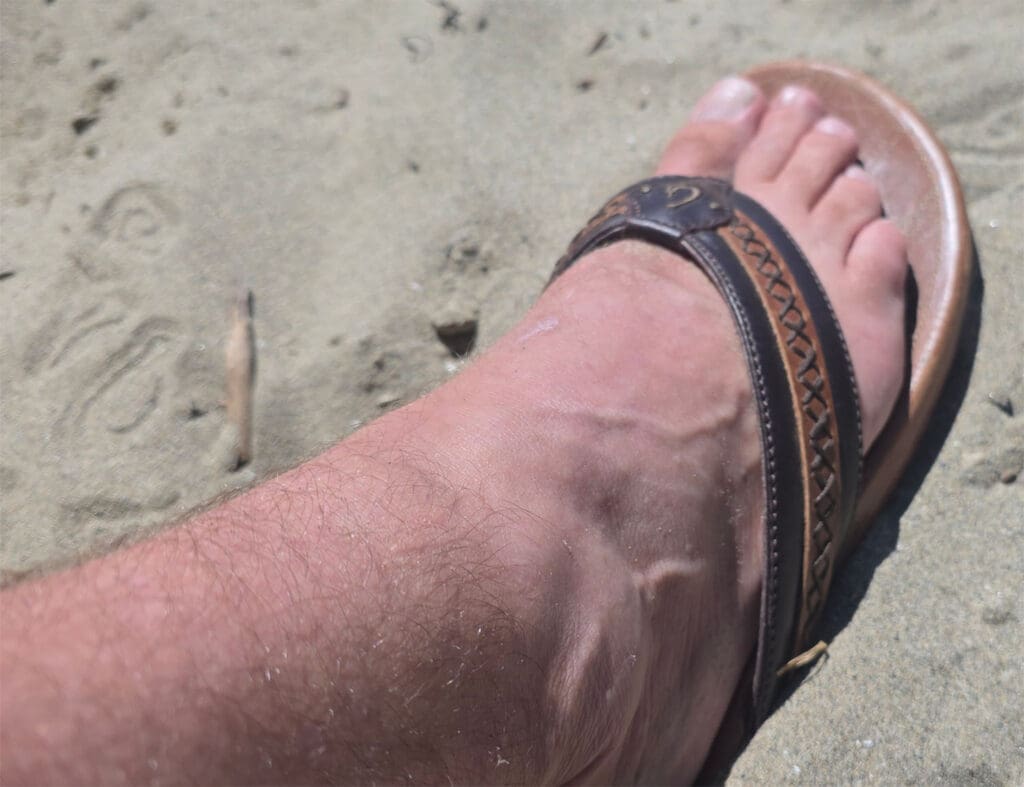
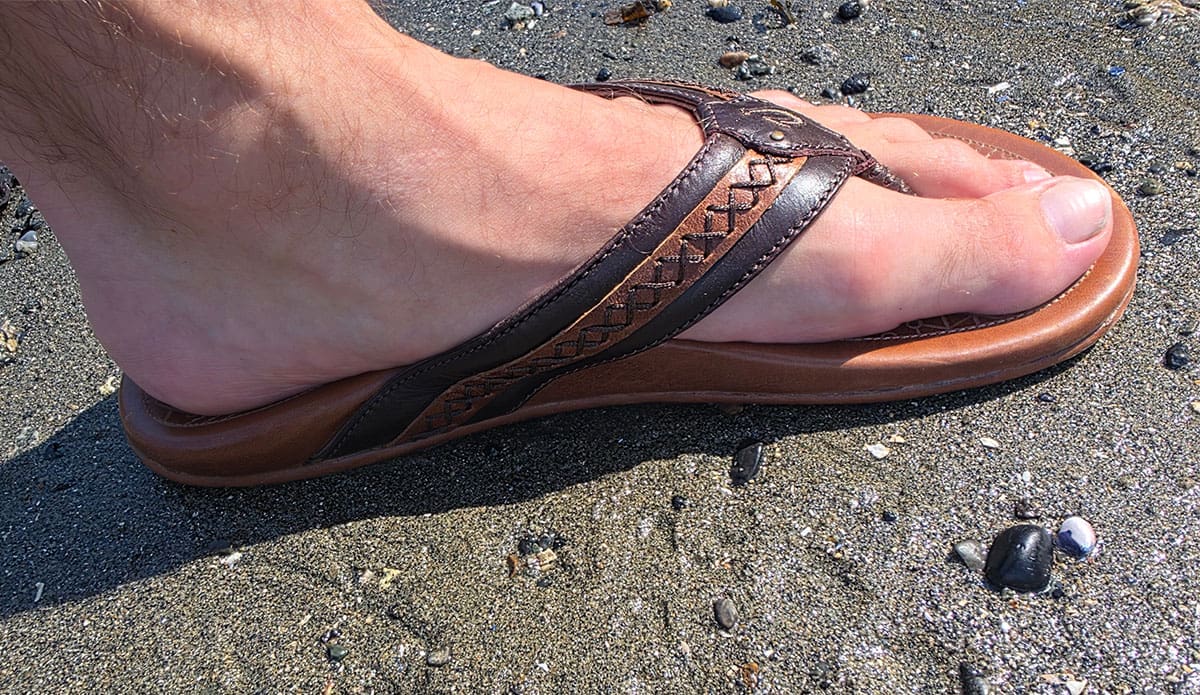
    the olukai mea ola nu'u sandals in the sand
    The pigskin stiching on top is the big standout feature that separates this version from the standard Mea Olua Nu’u

    Drawbacks

    • The price. $160 USD buys a lot of sandal, and it also buys a lot of other things. This only makes sense if you’re the kind of person who keeps footwear for years and takes care of it along the way.
    • It’s leather, so it needs care. Rinse it in the ocean all summer and you’ll get a fraction of the life out of it. OluKai is explicit that the Mea Ola is made for dry sand and shorelines, not swimming.
    • Sizing is a coin flip online. Two official sources, two different answers. Order from somewhere with free returns, just to be safe.
    • Limited edition. One colourway, men’s sizing only, and when it’s gone it’s gone.
    • Not vegan, not synthetic. Leather upper, leather footbed, top to bottom. The only rubber is at the very bottom of the outsole.

    Who This Is For

    Buy them if you want a sandal that will still be in the rotation in five years. This isn’t the typical “dad shoe.” It’s a notch above and is perfect for a gift to show you really care about a guy. If they’re a football fan, and especially a fan of the Kelce brothers, it’s a no-brainer. If they aren’t the type to change out of their workboots… even better, and maybe this set of premium leather slippahs will help them do the trick.

    Yes, it’s expensive, but a lot of things are these days, and it’s got more utility than a fancy golf shirt that probably costs around the same.

    Who Should Skip This

    Skip them if your sandals live in the water. If you’re spending the summer at the lake, launching a boat, or handing them to a kid who will absolutely wear them into the ocean, buy something synthetic and stop reading. Leather will lose that fight to water, especially over time. Skip them if you don’t use animal products, because there’s no synthetic version of this sandal. And skip them if you’re the kind of buyer who replaces flip flops every June for twenty bucks and is perfectly happy doing it: the whole argument for the Mea Ola NuÊ»u is longevity, and if you don’t care about longevity, you’re just paying for leather.

    Final Thoughts

    I went in skeptical about a celebrity collab and came out with a sandal that gets more comfortable with each wear. The Kelce details are probably something peole will eithe gravitate to or avoid, but they’re not the reason to buy it. The leather, the footbed and the outsole are and those are all OluKai’s, collab or not. Make no mistake, it’s a lot to spend on a sandal. But the quality craftsmanship and rugged outsole means it’ll last.

    Leather isn’t for everyone, but it’s the type of sandal that will only get better with time, and should last for a very long time if you know how to take care of them.

    Frequently Asked Questions

    Are the OluKai Mea Ola Nuʻu sandals worth the money?

    At $160 USD they cost roughly eight times a drugstore flip flop, so the math only works if you keep them for years. The full-grain leather, contoured footbed and stitched toe post are built to be kept. If you’re hard on sandals or you swim in them, you won’t see that value.

    Do the OluKai Mea Ola Nuʻu run true to size?

    OluKai recommends sizing up, however I found them to be pretty true to size, or even a hair larger than usual. Shopping for foot sizing is always a bother, but if you can’t try them out in person before buying, make sure you can return them. Amazon is a clear winner here for that reason… love ’em or hate ’em, their return policy allows you to give them a try.

    Can you wear OluKai leather sandals in the water?

    Not really. OluKai describes the Mea Ola as built for dry sand and shorelines, and warns that prolonged water contact can damage the leather. If you want an OluKai you can soak, look at their synthetic or water-ready models instead.

    Did Jason and Travis Kelce actually design the sandal?

    It’s a collaboration, not a ground-up design. OluKai built it on its existing Mea Ola platform. It’s a sandal Jason Kelce has worn for years, and they reworked the materials and detailing with football references: vintage pigskin leathers, lacing-style stitching, gold foil signatures and a “New Heights Equipment Co.” stamp. The comfort underfoot is OluKai’s, not the Kelces’. Like any collab, it’s more just a way for a brand to reach a new market. Whether or not it’s enough for you to want to pony up dough for depends on if you like the style or not.

    Is the New Heights x OluKai collab still available?

    It launched in June 2026 as a limited edition, sold while supplies last, in one colorway and men’s sizing only. Check current stock before you get your hopes up.
  • The Best Family-Friendly Beaches in and Around Vancouver BC

    The Best Family-Friendly Beaches in and Around Vancouver BC

    Believe it or not, Vancouver has amazing beaches.

    Locals may not want this known, but it’s not exactly a secret. We’re on the coast, after all. And while our summers aren’t long, they do get hot: It’s not uncommon (and getting even more common, for better or for worse) to have 30 degree days.

    With an array of beaches and only so many good days in the summer, it might seem daunting to figure out which beach is best to take your family. These are our favourites due to the ability to park the car, nearby amenities, beauty, and aren’t too city-fied where you worry about what the kids might find underneath the sand.

    Our Favourite Beaches: The List

    Second Beach

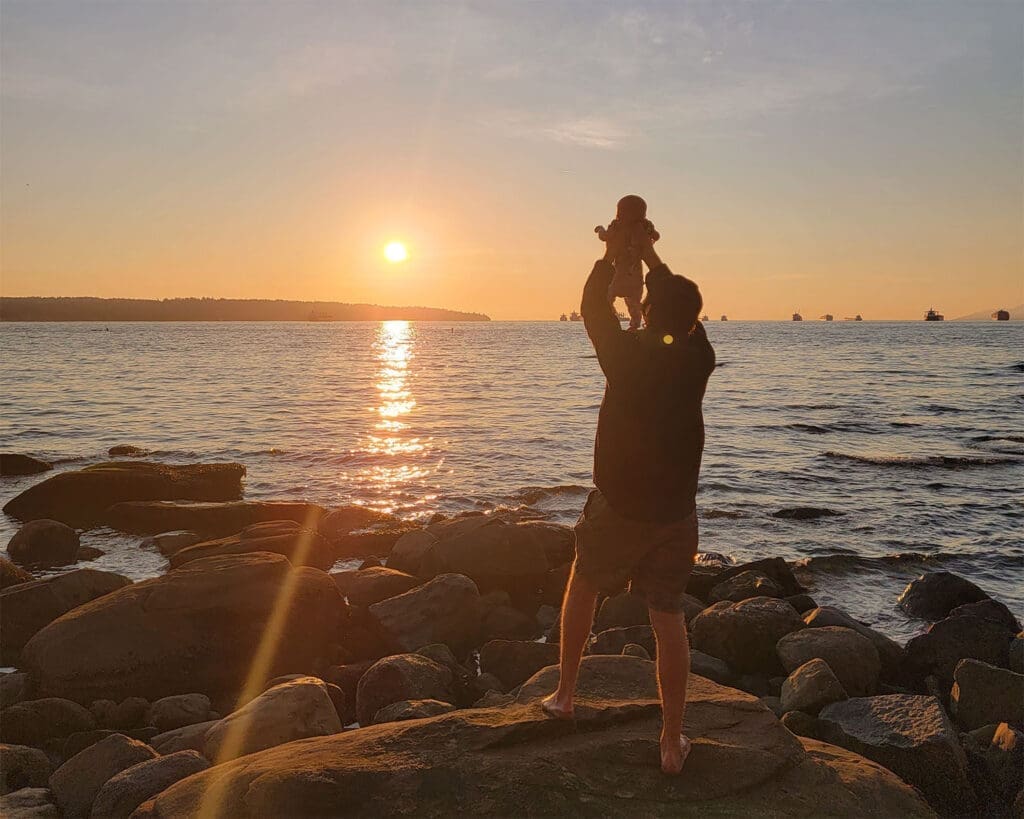
    a father raises his baby into the sky at second beach in vancouver, looking at the sunset
    Every dad has at least one “Lion King” shot… right?

    English Bay is probably the most popular beach in Vancouver due to its proximity to downtown and west-facing sunset views. But that also means that it’s incredibly busy and noisy, which doesn’t make it the best to have small kids playing in the sand.

    But just a little further down the road—or more preferably, the seawall—Second Beach provides a much more mellow experience. Housed inside Stanley Park, this beach has southwest views of Point Grey The beach itself isn’t much in comparison to the size of English Bay but it’s all the other amenities nearby that really entice the kids, such as a pool, two playgrounds, a giant field, and concessions.

    Third Beach

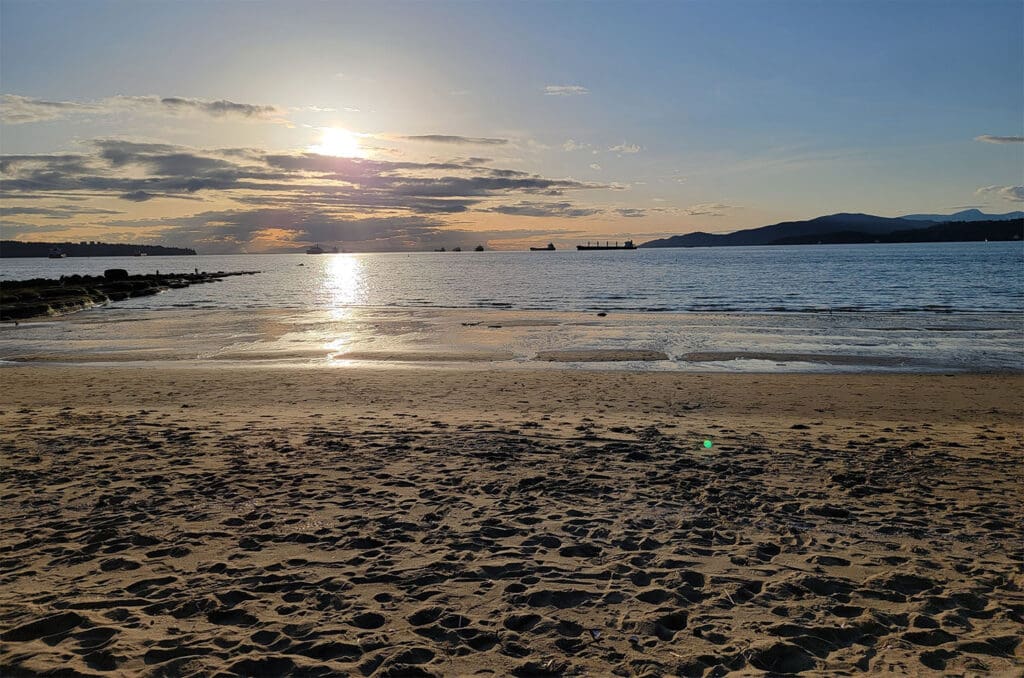
    a view looking over the ocean from Third Beach in Vancouver BC

    Just a little bit further down the seawall (or closer on the right hand, if you’re driving on Stanley Park Drive) is Third Beach. This is the farthest west you can go on the downtown Vancouver peninsula, and thus, the best place to watch the sunset. In the summer the sun stays out late into the evening, giving Third Beach a warm vibe and great destination to kick off the warm summer nights.

    Tuesday nights are home to the legendary drum circle, which is kid-friendly although a ceremonial flower is burned and consumed often. And while its legal in Canada, some visitors might still be taken with surprise at its prevalence. But the smell of weed aside, the drums are a fun way to collectively and spontaneously groove with a large number of people. This is something that needs to happen more often in day-to-day life, in our opinion. But once a week in the summertime is a good start.

    Ambleside Park

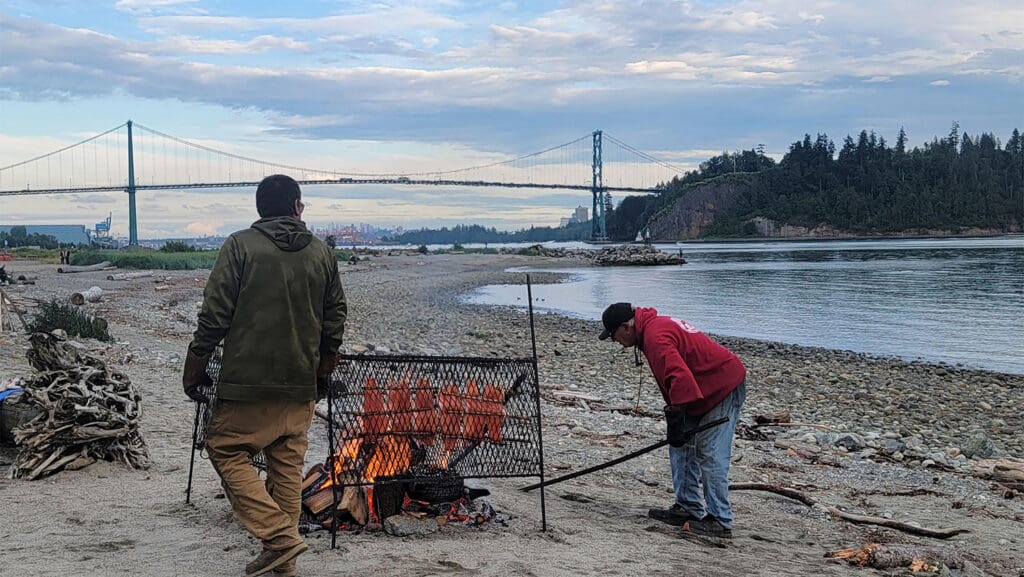
    two men cook salmon over the fire at ambleside beach in vancouver bc
    The Squamish Nation hosted a salmon cookout on the beach for Indigenous People’s Day.

    Just across the Lions Gate Bridge from Stanley Park is Ambleside Park, which borders the Squamish nation’s Capilano reserve (or “rez” as the locals call it). In fact, teh border between the two lands is nonexistent on the beach, hopefully signifying a bit of a metaphor to our ongoing reconciliation efforts between nations.

    The beach extends from 13th street in West Vancouver to the Capilano River on the rez. The water will fluctuate between calm mornings and windy afternoons with associated waves. Nothing is too big though because Vancouver Islands blocks any open ocean swell. Still, you might not want to wear loose hats on a day in the sun.

    The playground here is good for various ages, although sometimes the merry-go-round can get a bit chaotic in numbers. If the big kids outnumber the little kids you might want to opt for the group swing that might be a bit more mellow for the crew.

    The park also has a really fun pitch and putt course where the smaller kids can at least have a few putts while the big kids and grown ups take their shot at this par-3 seaside classic.

    There is also a cafe nearby as well as a skate park, basketball court, and soccer fields that are only busy on weekends and pretty mellow the rest of the time.

    Caulfield Park

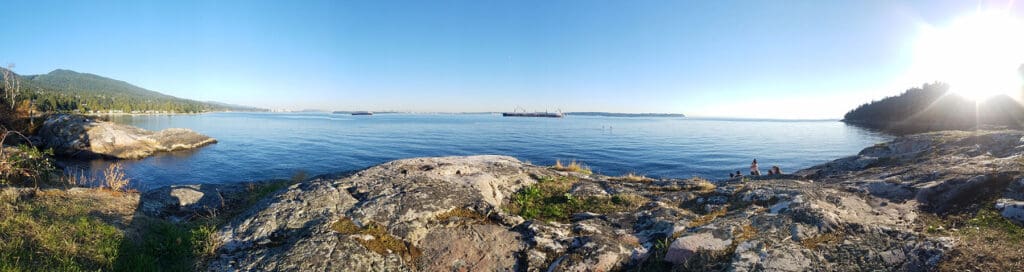
    a panoramic view of Vancouver from the rocks at Caulfield Park

    This one is a bit hidden and off the radar, and risking getting a wincy eye from the people who live nearby, we have to recommend this beach for something different. It’s hidden away on a tiny turnoff from Marine Drive in West Vancouver, and opens up a park with some nice seaside shore-walking trails. On one end is Caufield cove which has a nice sandy beach that fluctuates in size with the tides.

    It’s nice and quiet (most of the time) and gets excellent afternoon sun, but peak times mean parking is impossible. Taking a bus is probably the best option for the least headache.

    Hot Tip: For situations like these we have a whole list of the best beach bags so that riding a bus to the beach doesn’t seem like a chore.

    Whytecliff Park

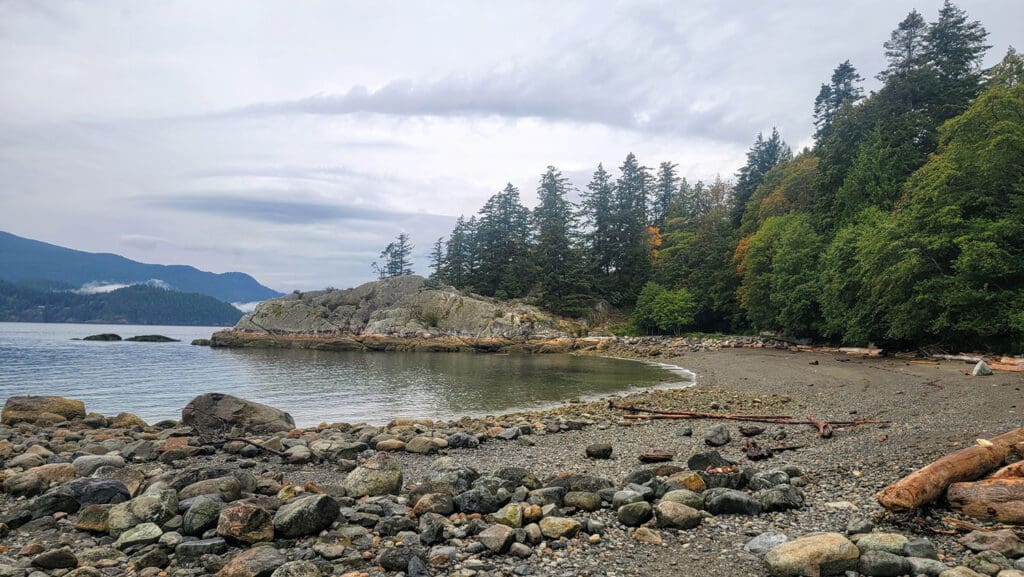
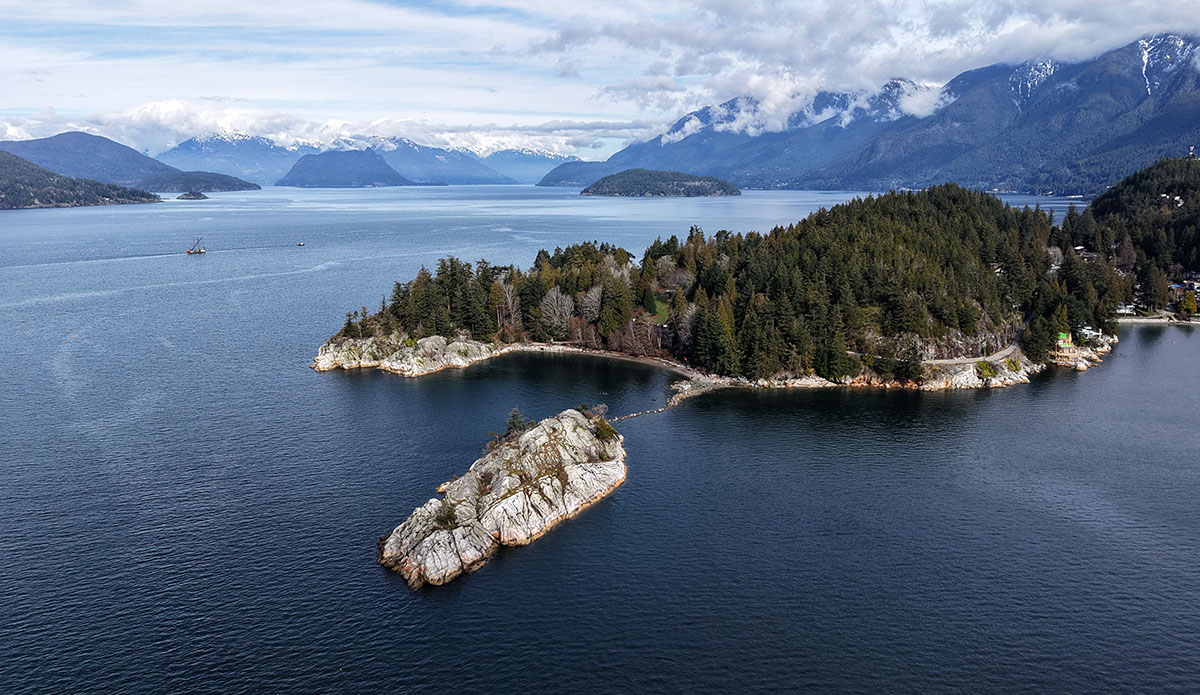
    a view of the beach at Whytecliff 
Park in West Vancouver, British Columbia

    At the far end of Marine Drive, past the village at Horseshoe Bay and winding past some quite impressive estates, is La Fin Du Monde… the end of the North American continent, the Coast Mountains, and Whytecliff park. This municipal park has a forested area on the far side of Marine Drive and a seaside area as well.

    There are so many good things to say about this park, not only because it’s close to home for us and we are regulars, but because it truly is a gem. Many people know this though, and it gets quite busy on summer weekends—so much so, that Marine Drive gets blocked off for residents only to help control the traffic. So get there early, if you can.

    The beach itself is fairly rocky but has perfect southern exposure to the Salish Sea and Vancouver Island. Whyte Islet is a fun little excursion that becomes an island at high tide, so plan accordingly. It’s also a popular scuba diving spot that excites our kids.

    If you’re really lucky, you’ll spot whales right from the beach. Orcas, Humpbacks, and Gray whales are often sighted here.

    Lions Bay Beach

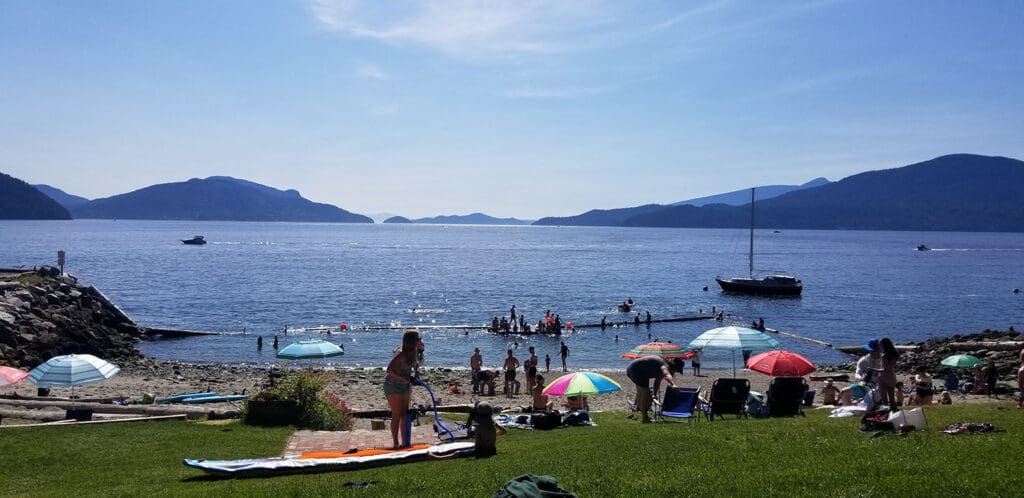
    a view of Howe Sound from Lions Bay beach park

    This beach is just a 10 minute drive from Horseshoe Bay at the beginning of the Sea-to-Sky Corridor, which is a region straddling highway 99 up towards Whistler and beyond. It’s easily one of the most beautiful drives on Earth, and we are lucky that it is also in our backyard.

    Lions Bay beach is a gem of a location and while the sand is trucked in, the views are au natural and oh-so inspiring, especially late in the afternoon. This beach was recently renovated with upgrades to the bathrooms and acessibility, making it even easier to make a nice setup for several hours while the kids have a safe place near the water to play in.

    Like everywhere else, it can get pretty busy on the weekends so get there early if that’s all you can swing. But mid-week it’s pretty mellow, especially in the mornings or early afternoon.

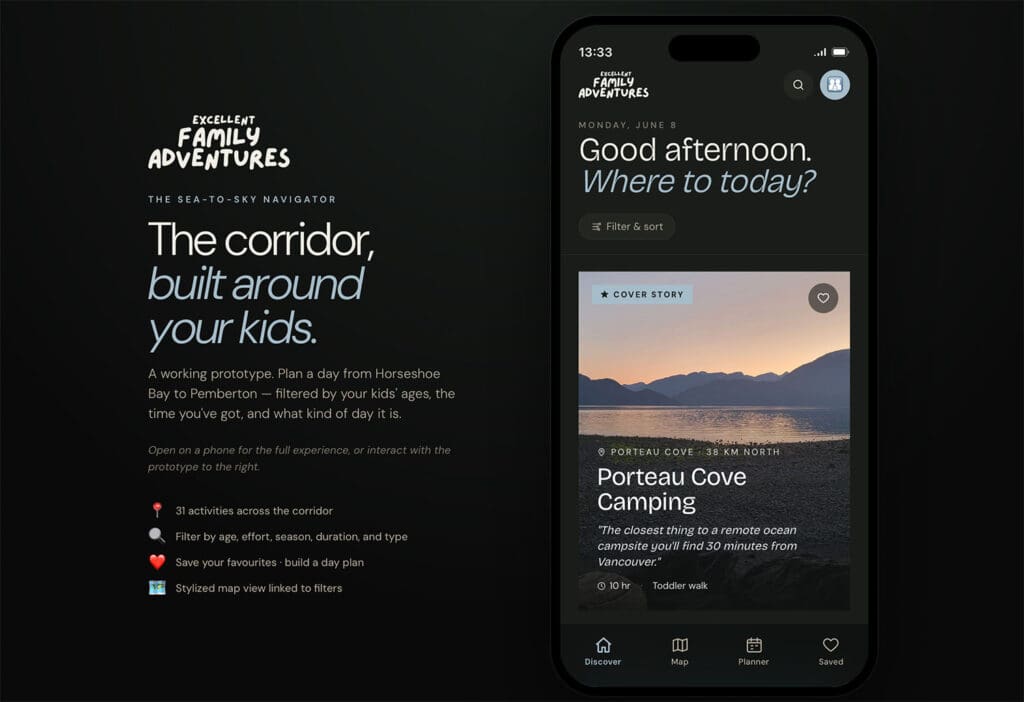
    If you are exploring more of Howe Sound, check out our free app, the Sea to Sky Family Navigator.

    Spanish Banks

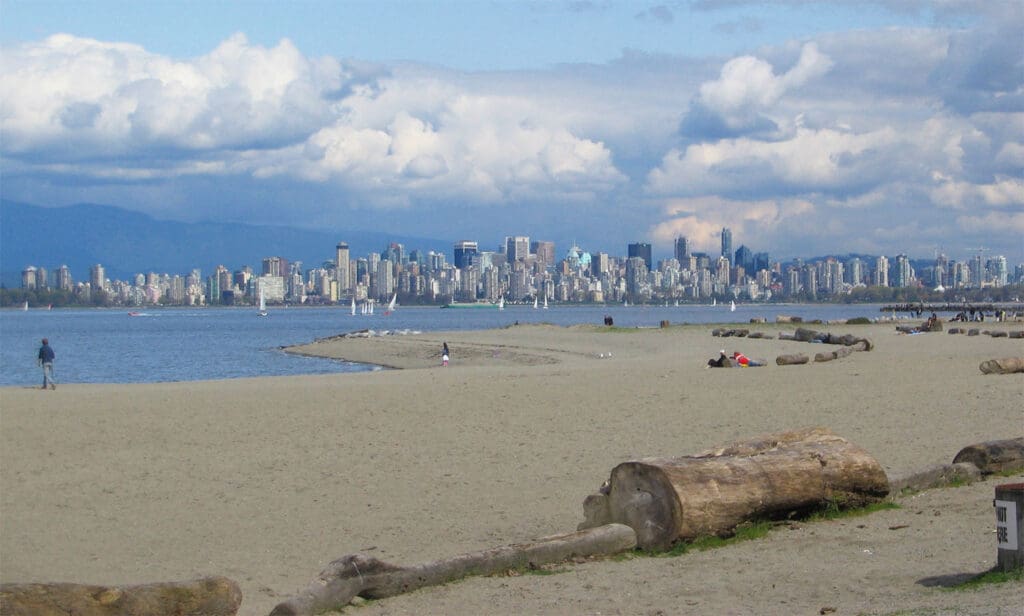
    a view of downtown Vancouver from Spanish Banks beach
    Image credit: Jester7777 on Wikipedia

    Way out on the northwestern end of Point Grey, past the more popular (and more crowded) Kitsilano and Jericho beaches, is Spanish Banks. Space is the name of the game here with an expansive beach that ends up being pretty vast when the tide is out, thanks to the shallow tidal flats that extend several hundred meters from where the water comes in at high tide.

    This is the beach you want to get to for large gatherings, or just to post up a shade tent, barbecue, and make a day out of it. The shoreline is safe and shallow for kiddos to play around in without fear of getting swept out. Although, that said, please use caution if it’s really windy out, which can happen!

    White Rock

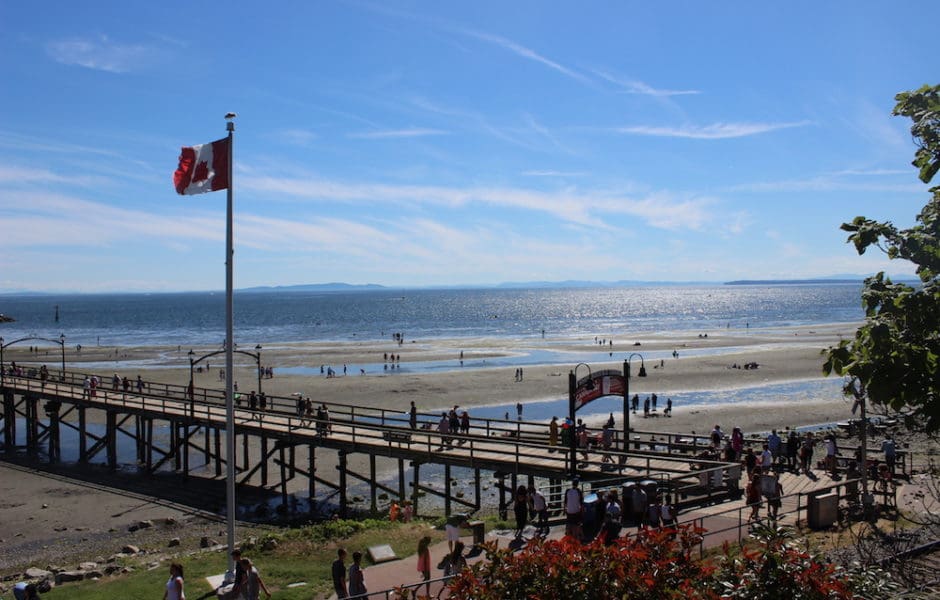
    the beach and pier at white rock, bc, canada
    Image courtesy Explore White Rock

    If long, expansive tidal flats are your thing, then White Rock is the place to go. It’s about an hour south of downtown Vancouver next to the US Border, which makes it a perfect first-stop for those coming up from the states. The little beachside village vibe is worth a stroll and a few scoops of ice cream, of which you’ll have several options. The pier makes for a nice part of the walk too, as is the barefoot squish out into the distance when it’s low tide. Just don’t go too far lest the border guards from the USA take interest in your whereabouts! It’s pretty clearly marked, though.

    Practical Tips for Visiting Vancouver Beaches

    Get there early

    We really don’t get a ton of summer months in Vancouver, so when the sun shines, people flock to the beaches. So it can get crowded, which is why you want to get there early, post up, and make a day of it, if possible.

    Avoid driving if you can

    Ideally you will want to take public transit, because parking is always an issue in Vancouver (not to mention expensive). So if you can pack a good beach bag, all the better for getting around.

    Water shoes are handy

    Because we don’t get open ocean swell, many of the beaches truck in their sand. This means that below the tide line, the sand disappears quickly and the shore becomes rocky, so it can be a bit of a danger on the feet. Water shoes solve this problem. We love the ones from Native shoes for the kids. They stay on pretty easy and are great both in and out of the water.

    Keep Exploring!

    We have a ton of other great recommendations for families who want to get the most of adventuring in and around Vancouver. Check out some of our favourite posts for hiking with toddlers in the Sea to Sky, driving up further to visit Whistler, or camping at Porteau Cove. Whatever you do, remember to be excellent to each other!

  • The Family Guide to Whytecliff Park

    The Family Guide to Whytecliff Park

    We have a blessing in life to live near one of the great parks in Metro Vancouver: Whytecliff. At the very edge of the continent, where the mainland of BC separates Howe Sound from the Salish Sea. There sits a small peninsula surrounded by multimilllion dollar estates, but with a significant portion of it made public for all to enjoy.

    Of all the parks to encapsulate coastal British Columbia, Whytecliff may be it. There are other marquee parks throughout Metro Vancouver, but nowhere else can you get a beach, rocky cliffs, a renowned scuba-diving site, and forested hikes all in one area. It’s marks the beginning of the Sea to Sky region, and is well worth a visit if you’re in the area.

    Whytecliff Park At a Glance

    Location: End of 7000 block Marine Drive, West Vancouver (just west of Horseshoe Bay)
    Park Size: 15+ hectares
    Cost: Free entry / Pay parking year-round (West Van residents can get annual pass)
    Washrooms: Yes — main building 7am–9pm, portable toilets at south lot
    Concession: Open daily 11am–7pm (burgers, smoked meat, ice cream, housemade snacks)
    Dogs: Not permitted on trails
    Transit: Bus 257 Horseshoe Bay Express or 250 from downtown Vancouver (with 1-2k walking after the stop)

    Why Families Love This Park

    • Swimming beach that gets fun wave action from passing BC Ferries
    • One of Canada’s first Marine Protected Areas, home to over 200 marine animal species — real wildlife, not a zoo!
    • Playground, tennis courts, playing field, and heated washrooms
    • Harbour seals are commonly spotted in the water; orcas have made rare appearances
    • Café on site means you don’t need to pack everything
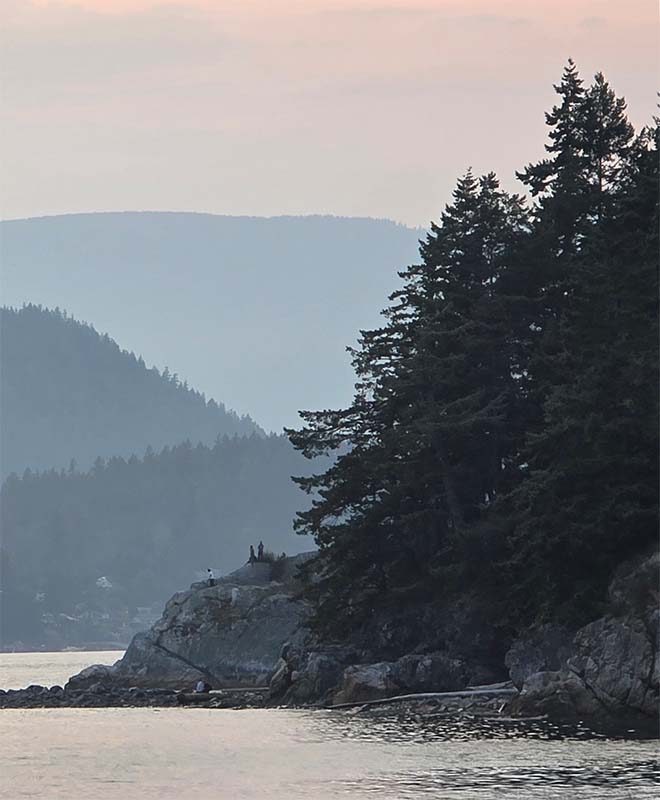
    a telephoto view of the beach at Whytecliff park with bowen island in the background

    Whyte Islet: A Tidal Island To Get In Sync With Nature

    Out in the bay from the beach at Whytecliff is Whyte Islet. This rocky outcropping is a tiny mountain that starts deep below the surface, revealing the peak of it at water’s edge. Hiking out here provides those who get there with a remarkable view across the Salish Sea toward Vancouver Island.

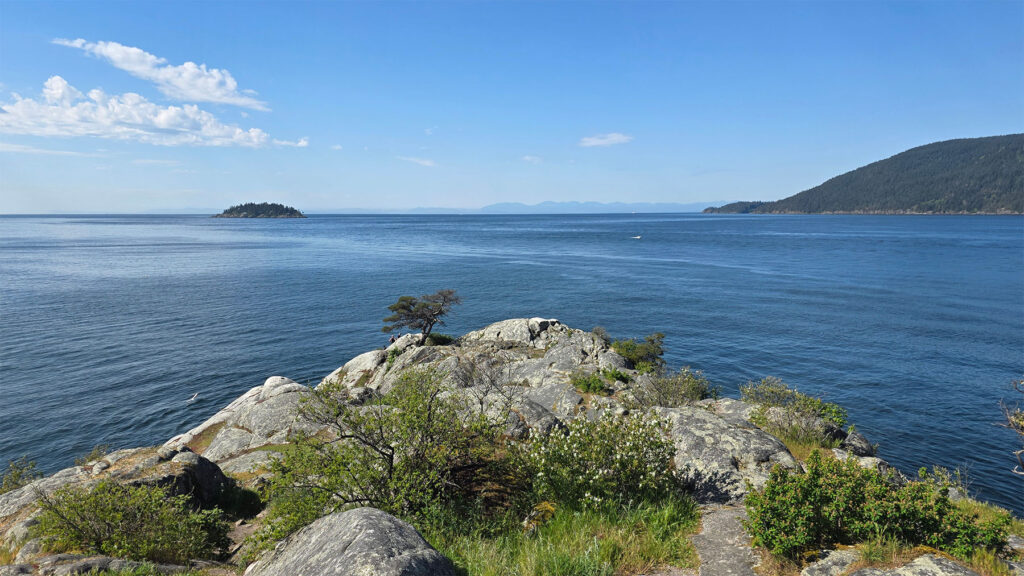
    A view looking southward from Whyte Islet toward the Salish Sea and Vancovuer Island on a clear sunny day
    The view from atop Whyte Islet looking across the Salish Sea to Vancouver Island

    The cool thing about Whyte Islet is that it’s a tidal island—meaning at high tide it’s an island, and at low tide it’s a peninsula. This is important in that it makes you have to plan your trip out there, especially if walking out during an incoming tide. There have been many people needing to get help coming back because the path they took ended up underwater.

    But fear not, as the tide table is easy enough to read. You can get a fresh tide table on the Candian Government’s DFO website, or check out what it’s doing right now:

    The whole exercise of planning for the tides becomes a great lesson to kids to help them (and even us parents) understand the Earth’s natural rhythms a bit better. Knowing the tides is a part of many seafarer’s lives, but something the land lubber in us loses sight of. Flexing that muscle is good for both the brain and the wild heart.

    The Playground at Whytecliff

    The park has a moderately sized playground which is spread out for different ages to have their own space. Big kids will like the large swing set, but the rest of the equipment is meant for the younger (under 10) set. A small dinosaur-shaped apparatus welcomes the tots, while a larger structure with two slides and a few ways to climb up give our toddlers plenty to be entertained by.

    There are also nearby tennis/pickleball courts, and a large field for games—although nothing is level and it all slopes down toward the ocean.

    Hiking/Walking Trails

    Whytecliff has an impressive array of different trails that have been carved out over time. Depending on how old your kids are you might want to keep them on a short leash; as the trails can get dangerously close to a cliff’s edge. But there are plenty of trails—both near the water and in the forest—that will be both entertaining and challenging for kids and adults alike.

    The coastal trails are best explored with grippy soles that can grip to the granite rocks, allowing you to get a little bit further out. But if there are small kids or people with difficulty balancing, you can take a nice paved path down to the waterline, and it just so happens to go past the concession stand. The concession isn’t anything to write home about, but can ease a tantrum if emotions get hot.

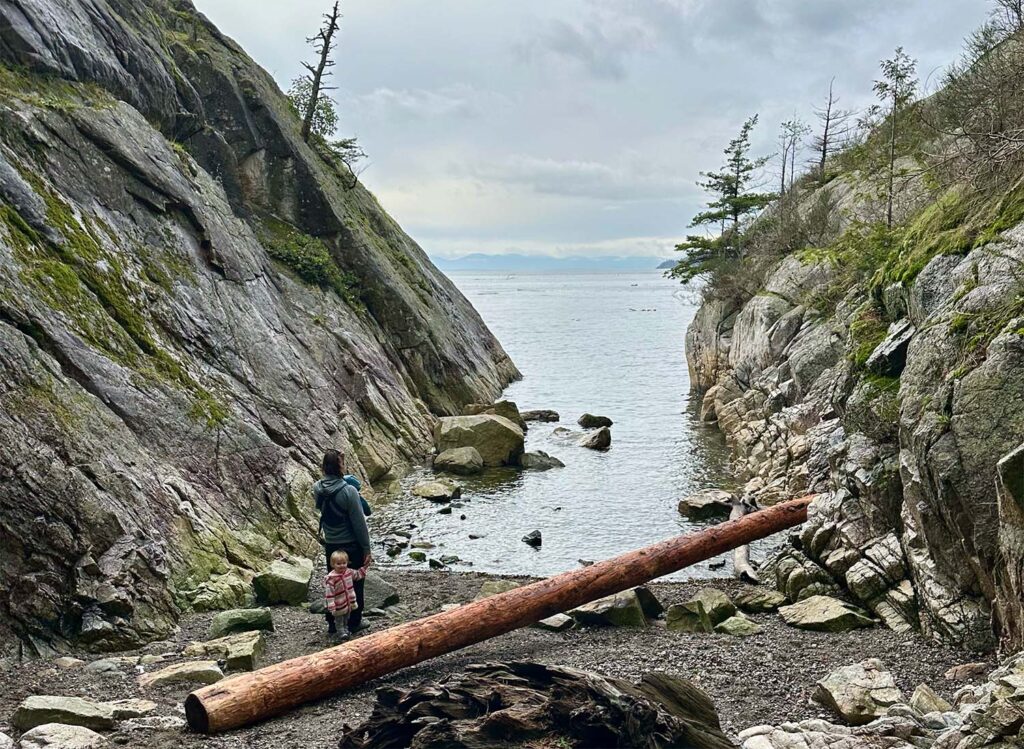
    a father and daughter explore the coastline of british columbia at whytecliff park
    The shoreline is full of tidal pools and all kinds of treasures.

    For those who crave a bit more exercise, It’s well worth a jaunt across Marine Drive where the park continues up the same ridgeline that juts into the ocean forming Whyte Islet. From there you can easily spend an hour or so getting the heart rate up while at the same time getting immersed in the Douglas Fir, Western Red Cedar, and Coastal Hemlock forest that makes British Columbia stand out. While sweeping vistas may be limited, the forest is the draw, and there’s a reason why the Japanese practice forest bathing: it calms the nervous system and grounds us in our surroundings better than almost anything.

    It’s a favorite spot for locals to take their dogs, so just be careful if you have curious little ones that they don’t end up with some discarded dog poo. I always thought it was strange that people bag up their dog poo and leave it on the ground, but maybe in this situation it’s the better option…

    The Best Lunch Spot Around

    Toward the western edge of the park are a few parking spots if you’re lucky enough to get them, but is a bit like winning the lottery on a hot summer’s day. But right above that is a public area with a picnic table that could be one of the most beautiful lunch spots on earth, and certainly one of Vancouver’s best. There you can whale watch right from the point and see a multitude of birds and seals passing through the channel.

    Parking at Whytecliff

    Because it’s such an amazing spot, it gets busy, and there are far too few parking spots to meet the demand. The park itself has a few dozen spots with a few more across Marine Drive in the woods.

    But none of that matters on a weekend where it can get so busy that they will close down the road at Marine Drive and Nelson Ave in an attempt to curb the congestion. Because of this, we highly recommend getting to the park before 9AM (9:45 at the latest) on weekends in the summer, lest you get turned away.

    Come Back Often

    Some people may be here for a short time, visting once—and that’s great. I hope this small guide entices you to visit. But the magic comes when you visit Whytecliff across the seasons. There is something unique about each phase of the year: Herring spawn in the spring, Humpback Migrations, Summer beachcoming, and winter storms. The moods of the park will entice you to visit again and see what each season is all about.

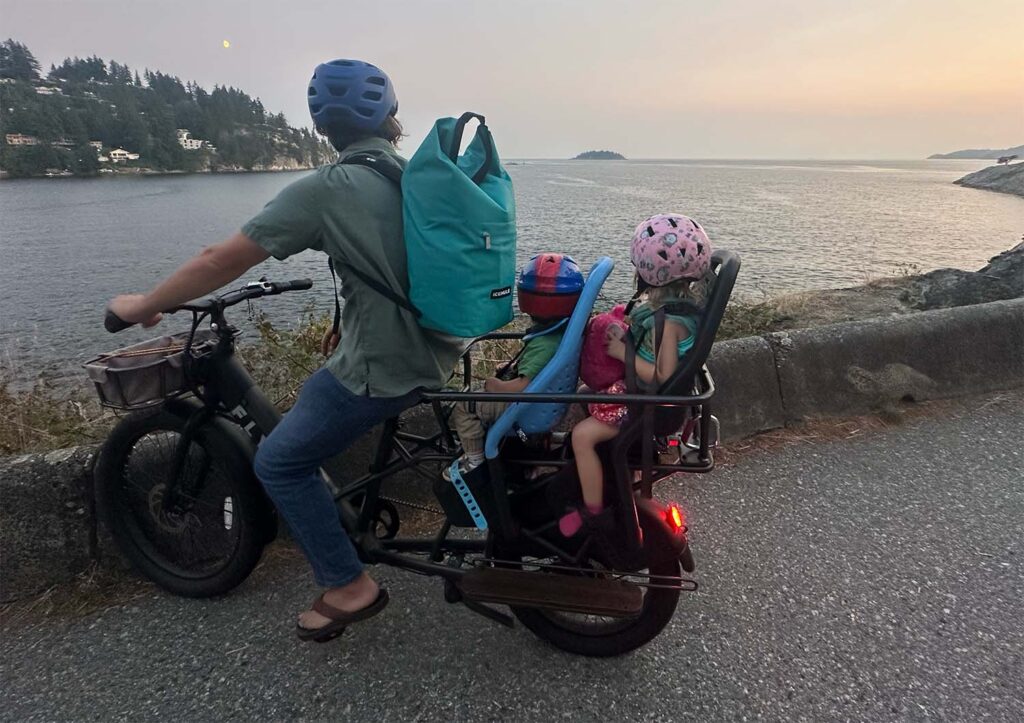
    a father and two children look out at the sunset from the edge of whytecliff park while seated on a cargo e-bike
    Don’t forget to catch the sunset!

    Want to Find More Great Spots in the Sea to Sky? Check Out Our Free App

    a screenshot of the sea to sky navigator trip planner app

    We made an app to help families navigate the Sea to Sky corridor a bit better. Check out the Sea to Sky Family Navigator app to plan your trip and find spots based on map, activity, location, and more! The best part, it’s free!

    And if you would like to see other great beaches near Vancouver, check out our guide to the Best Family-Friendly Beaches In and Around Vancouver, BC.

  • Yeti Camino 35 Carryall Tote Review

    Yeti Camino 35 Carryall Tote Review

    One of the coolest things about the YETI Camino Carryall bag is the weight capacity. At 300lbs, it stands up to YETI’s reputation for being virtually indestructible. at 30 lbs, that means my toddler is well under the weight limit.

    I’d be lying if I said that I didn’t carry her in this bag when times got tough. It’s much easier than dealing with someone who refuses to walk and becomes dead weight in their arms. Plus, she actually likes it and thinks it’s a ride.

    And the bag? It’s awesome. We’ve reviewed a bunch of beach bags, and this one wins in the durability department. We use it all the time, both around our home base in Vancouver and at our second home on the North Shore of Hawaii. it is our go-to for beach and pool activities, and after two years, still has every seam in place. Will you and your family like it as much? Read on to find out the good and bad of it all.

    We take pride in only recommending products we actually use and enjoy. We never take payments for sponsored posts, but use commissions on referrals to help pay the bills. You can read more about our gear review policy here.

    Yeti Camino 35: First Impressions

    Bottom Line: Virtually indestructible, easy stash-and-go simplicity

    Capacity: 35L, with gear loops for extra storage
    Handles: Large and small
    Self-Standing: Yes

    Pros: Wide opening, stands on its own, super durable
    Cons: No ability to seal the top

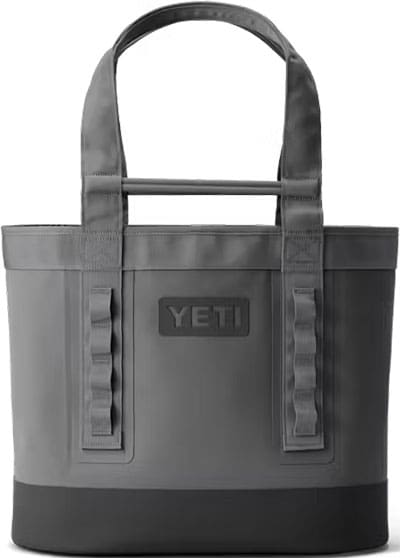
    a studio image of the yeti camino carryall beach tote

    We live about a five-minute walk to the beach, and even then, it can sometimes feel overwhelming. The best way we’ve found to reduce the overwhelm is reducing the time from “let’s go to the beach” to when we are actually out the door. Having a bag ready and packed has been the game-changer everyone should seek out.

    With two toddlers at home, we do need more than others, especially since one is still in diapers. But the beauty of the beach is that it’s one of the world’s best babysitters. So other than snacks, towels, sunscreen, some water, and a change of clothes, you don’t need a whole lot else.

    The best part of this bag (in this humble writer’s opinion) is how it keeps its shape and you can toss stuff in and pull them out in seconds. Some may find it too rigid, but we don’t pack this bag away. It’s ready by the door the moment that we decide to go, before anyone has a chance to think twice.

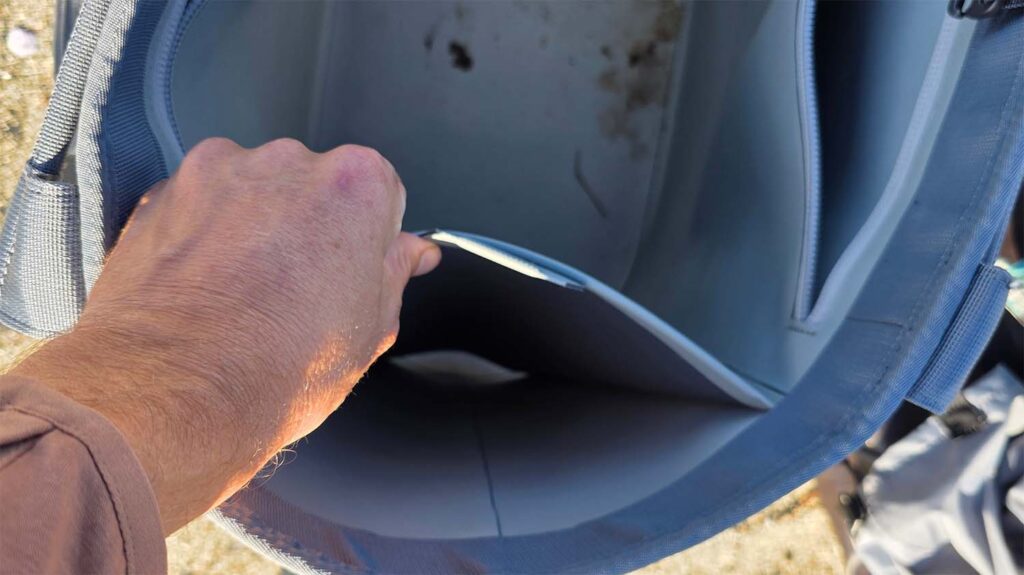
    The two internal zip pockets provide excellent shelter for valuables or anything we really don’t want to get wet. It’s not as convenient as the main pocket, but there are two internal pop-out pockets that can house some wet gear, a water (or wine) bottle, or a book to keep you from digging to the bottom when its needed.

    What Fits (And What Doesn’t)

    We run a pretty lean beach kit and the 35L swallows all of it without complaint. The one thing we don’t house in here is diapers. We keep those in a dedicated fanny pack that lives alongside the Camino, with a small emergency stash tucked into the internal pockets just in case. If you’re not in the diaper stage, you’ll have even more room to play with.

    The internal pockets are fine for small items, but don’t expect a lot of organizational structure. This bag is built for throwing things in and pulling them out fast, not for finding your car keys at the bottom.

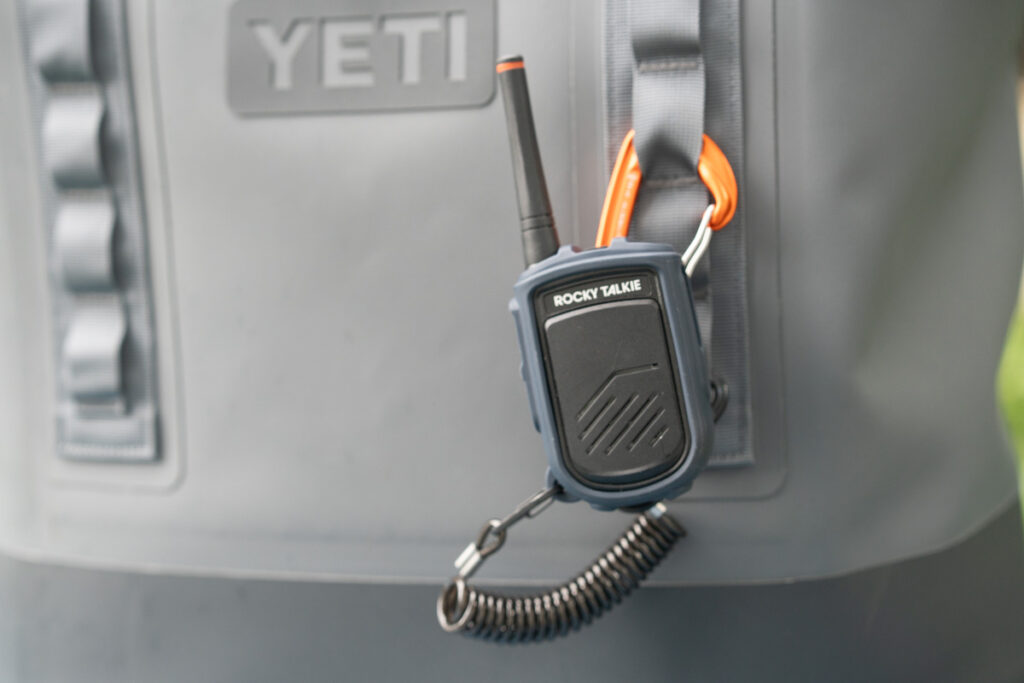
    a rocky talkie radio attached to the outside of the yeti camino carryall beach tote
    A radio is a great use case for attaching something to the outside.

    The Wide Mouth Problem

    Here’s the honest con: it’s not that the bag can’t handle water, it’s that the top is completely open to it. The exterior sheds splashes well enough, but if a wave catches you off guard or someone cannonballs nearby, whatever is sitting at the top is fair game. It’s a trade-off — the same wide mouth that makes packing effortless is the reason you’ll want to be thoughtful about where you set it down at the beach.

    a user looks into their yeti camino bag and opens the side pocket for demonstration.
    The side pockets fold in when used, and are out of the way when you don’t need it.

    Different Sizes

    We have the 35L version but it also comes in 20L and 50L versions if you want something smaller or larger. Any family larger than 4 might need the larger version. A single adult or a couple will probably do fine with the 20.

    Durability and Cleaning

    Two years of weekly beach trips and it still looks like itself…mostly. The exterior cleans up well with a rinse, and the top strap has held its shape throughout. It does carry a bit of a lived-in look at this point, but for a beach bag, it would feel out of place if it was spotless. Nobody is buying this to keep it pristine. You’re buying it because it can take a beating and keep showing up.

    Is It Worth the Price?

    The Camino isn’t cheap, but it lasts. What you’re paying for is gear that doesn’t ask to be babied. If your equipment gets thrown in trunks, dragged across sand, and stuffed full of wet towels on a regular basis, you’ll find the price makes sense over time. A $30 canvas tote will do the job for a season, if you’re lucky. This one just keeps going. The internal zipper pockets are worth it just to keep your valuables from getting destroyed by sand and salt water.

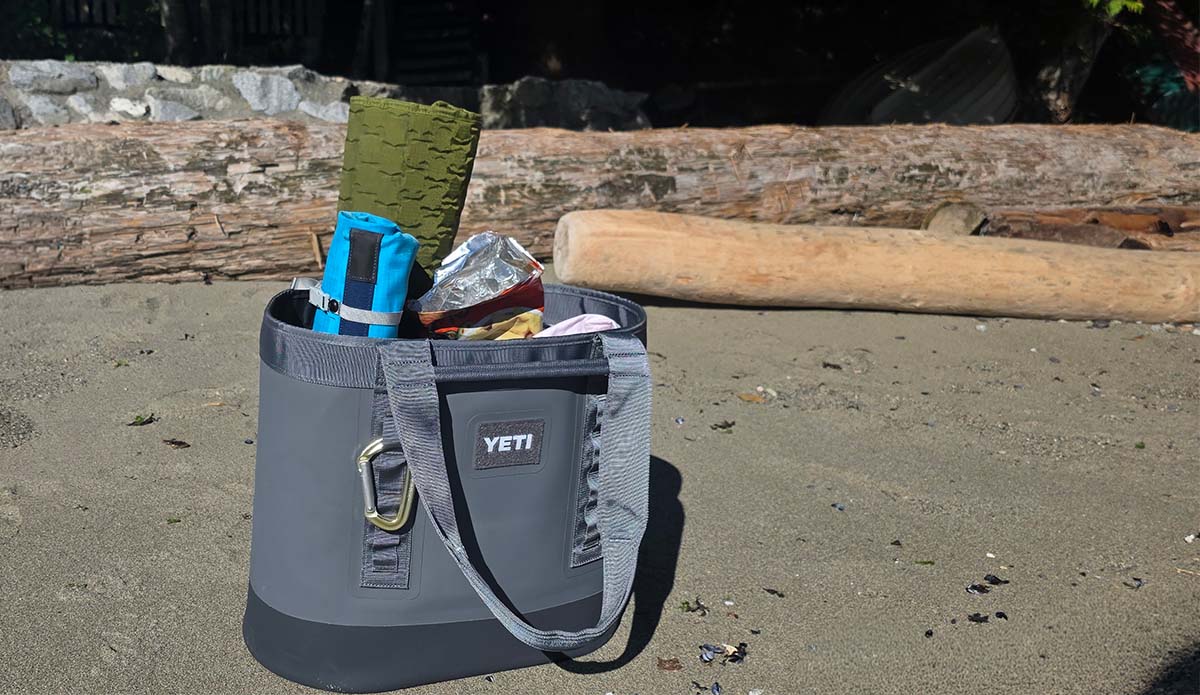
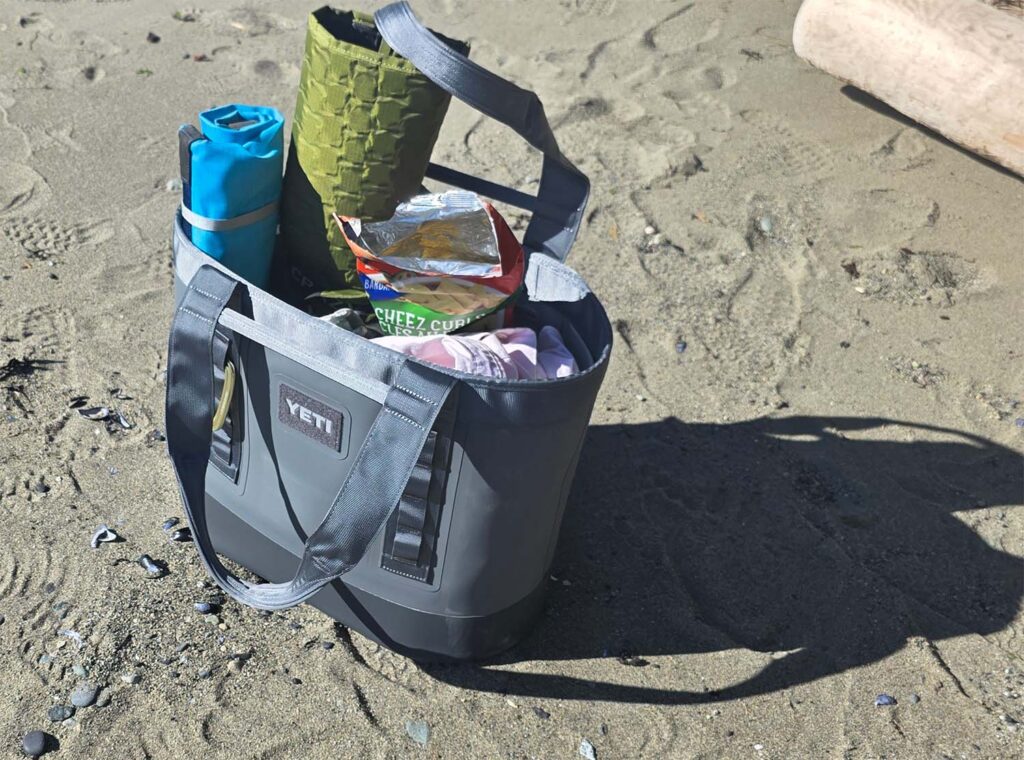
    a yeti camino 35 tote stands upright on the sand during a beach outing.
    You’ll appreciate the self-standing feature when you have an open bag of snacks!

    Final Thoughts

    For those with a bit of budget to make beach life easier, we really enjoy the simplicity that the Yeti Camino Carryall Tote adds to our lives. It is one thing to want to go to the beach when the sun comes out, and it’s another thing to get all the pieces together. So if you are the type that is impulsive and spontaneous, you’ll do well with a bag that is ready to go, lasts long, and can carry your kid home when they run out of juice.

    Thanks for reading! You can check out more of our excellent gear reviews if you’d like.

  • Cotopaxi Allpa 60L Gear Tote Review: A Staple of Beach Adventures

    Cotopaxi Allpa 60L Gear Tote Review: A Staple of Beach Adventures

    The secret to a good beach tote is in the details. Anyone can grab an oversized bag and stuff it with anything and everything they want to haul down for an afternoon on the sand. But there are a few excellent beach bags out there that go above and beyond to help families stay organized with piles of necessary stuff: snacks, diapers, extra clothes, towels, money… Not that you need me to go through a list that you already know.

    There are a few bags we found to rise to the top, but one bag clearly stood out as one of the best all-around beach totes for its well-thought out design, water resistance, and the fact that it comes from a good company doing good things in the world.

    It’s Cotopaxi‘s Allpa 60 Gear Hauler Tote, and it really is a remarkable piece of equipment. We’ve been using it for our family for nearly three years now and while we can’t speak to any improvements, the original is still going strong without anything falling apart. We’ve taken it all over and even included it in our checked luggage beach kit.

    Read on to find out what we like about it, what’s not so good, and who might enjoy it the most.

    Cotopaxi Allpa 60 Gear Hauler Beach Tote: First Impressions

    Size: 60L

    Handles: Small and large handles in center, side handles for easy grabbing/moving

    Pockets: Several mesh pockets on inside, weather resistent zipper pocket on outside

    Attachments: External gear loops

    Closure: Two buckles

    Self-Standing: No


    On first sight, the bag didn’t look like much. It looked durable, sure, but was it worth the expense? Even without diving into the features, the durability was enough for second pause. The water resistant (but not submersible) exterior felt like it could withstand a beating. The handles are solid, giving you both the option to carry by hand or use the longer loops to throw over the shoulder. but it was inside that really made me take notice.

    Lined all around the inside of the bag are mesh pockets that allow you to place smaller items out of the way. This has become invaluable for diapers, extra clothes, and snacks. The outside pocket is great for valuables, as it has a zipper and is part of the water-resistant exterior.

    But when it really shined was when we finally started packing everything in there. It’s like it keeps on going. And just when you think you can’t pack in anything else… you can add extras onto the gear loops. Excessive? Perhaps. But if you truly want to master the art of the beach day, you’ll want to carry everything in one load from the car. And this bag will allow you to do that, and not explode when you do get to the beach.

    Notable Features of the Cotopaxi Allpa Gear Hauler Beach Tote

    We pretty much already went through this section but I’ll outline it in a bit further depth. The big standout feature in this beach tote is the water-resistant exterior. Nearly three years on and it’s still holding up strong. And if the tide comes in (I know this from experience), it’ll provide enough protection until you wisen up.

    Another great feature that helps with packing is the internal buckles that hold the bag together when it’s packed full. The straps will cinch tight to keep items from splaying out too far, and in doing so, makes it easier to carry.

    But the big feature wiht this bag is the many options you have to line the bag with smaller items that won’t get mixed up with the general population. This is great for when you need to reach for a snack or drink to quell a meltdown… and being able to know exactly where that item is in those critical seconds will be a lifesaver.

    Looking inside the Cotopaxi allpa beach tote with the inside pockets in view
    The inside pockets are a huge game changer compared to a standard beach tote.

    Drawbacks

    There isn’t really much that we can say about this bag that is a bad thing. I guess if I had to get pedantic, I’d say that while the exterior is great, it’s not fully waterproof… and you feel like it should be with how rigid it is. I haven’t seen it soak through, though… and for the most part it’ll repel enough water. Dry bags do exist, so this is probably a good intermediary before that, as long as you’re not out in the rain.

    The bag also doesn’t stand up on its own, which makes packing easier but can be a pain if it topples over at the wrong moment. Most of the time it stands up well, but there have also been times where I forgot to buckle the inner straps and things started to splay out. It just takes a bit of learning and mindful packing to make sure it doesn’t topple over the moment you set it down.

    Final Thoughts

    The Allpa 60L Gear Hauler tote has fast become an essential part of beach days, pool days, and any time you need to toss a ton of gear into the bag really quickly. We’ve all been there… meltdown occurs or an emergency happens and we need to book it as fast as we can. This tote makes packing in a hurry super easy. The fact that you can open it wide and get everything out just as easy is excellent, and it cinchs tight to make it easy to carry. You can tell that this is a well thought-out bag from a great company that does a lot of good out in the world. You can’t say that about many companies these days.

    We’re big fans and know that most families will appreciate something that lasts longer and makes their lives easier, and we have a hearty recommendation to try this one out!

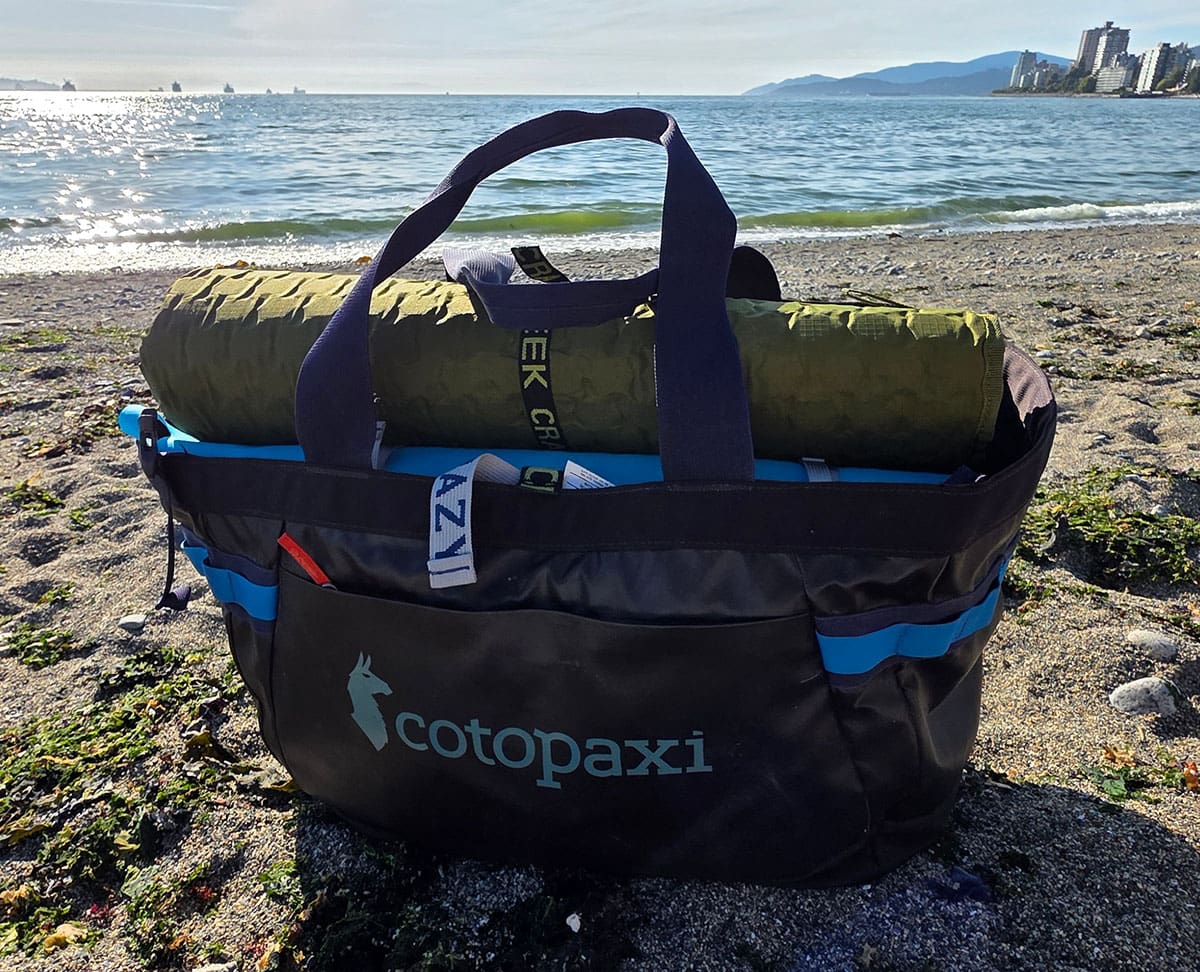
    a beach blanket and gear layed out to demonstrate how much the Cotopaxi gear hauler tote can carry
    Everything you see here could fit inside the tote.

    Thanks for reading! We offer plenty of gear reviews to help mindful families choose gear that will last a long time and goes further than just making some shareholders wealthy. We follow a gear review policy to ensure we can stand behind our recommendations. We use affiliate links to help pay the bills, but never compromise our word for selling out. All of our reviews come from the heart.

  • How to Pack A Complete Family Beach Setup in Your Checked Baggage

    How to Pack A Complete Family Beach Setup in Your Checked Baggage

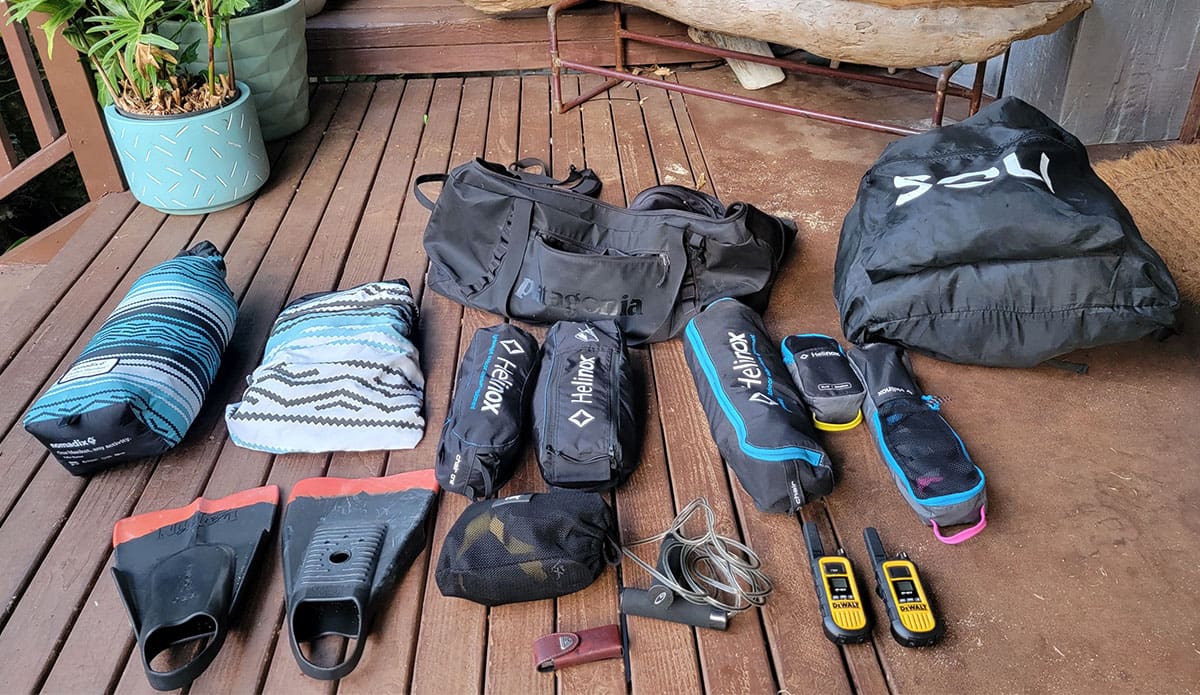
    We saved over $1000 by not renting beach gear in Hawaii last year. A bold claim, yes, but if you see how much we packed into a 100L duffel below, it’ll start to make sense.

    One of the most surprising expenses on a beach vacation is renting beach gear. If you get the good stuff, you’ll be paying $50-100 per day. And if you cheap out, you will probably end up with gear that is a pain to lug around and set up.

    By making an upfront investment and bringing your own gear, it’s possible to have a complete beach setup that will last many years, ensuring that no matter where you go, the family will have a comfortable time all day at the beach. And being able to maximize beach time is what we’re all about! So read on to find out more on the ultimate beach setup that can fit on one checked bag.

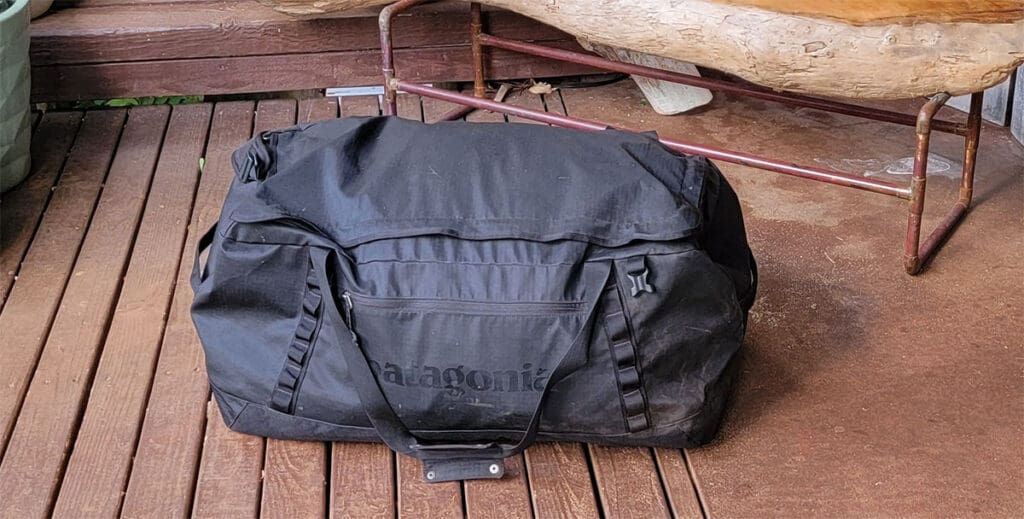
    a patagonia black hole duffel bag fully loaded for the beach
    It really is amazing how much can fit inside a 100L duffel bag!

    The Math: Why Checking a Bag is Cheaper Than Renting

    Beach days require a bit of gear if you want to spend all day out there. You’ll want shade, blankets, towels, a beach tote, chairs, and a cooler as a minimum. Companies exist that rent beach gear, but even a basic package can be $60 per day, with more premium offerings like shade fetching up to $200 per day.

    Instead, you can check a duffel bag full of your own beach gear, and have it be under the 50lb limit. If it goes over, the $100 oversize fee is still much cheaper than renting a daily rate.

    Read on to see what we pack that made our two weeks in Hawaii a bit more affordable, thanks to our own gear that will last for many years to come.

    Our Complete “Beach Day in a Duffel” Packing List

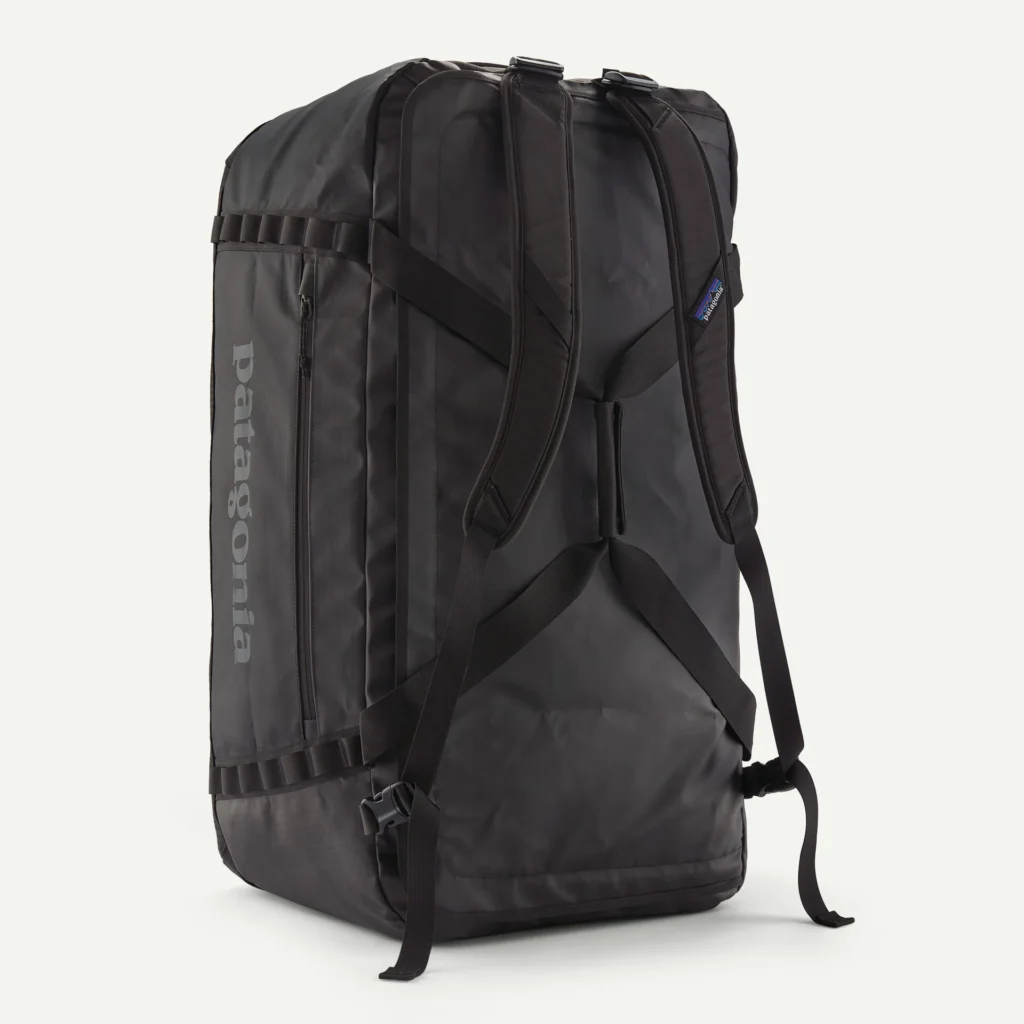
    The Transporter: Patagonia Black Hole Duffel

    a studio image of the Patagonia Black Hole duffel bag

    Weight: 3.5 lbs

    It’s essentially indestructable and can be tossed around without worry of too much damage. The recycled, PFAS-free materials is weather resistant yet strong enough to take a beating. Plus, without any hard frame to content with, it’s really light. It also gets good bonus points for packing up into its own pocket when not in use to stay out of the way.

    The bag also has two backpack style straps for relatively easy carrying. Alternatively, it’ll fit nicely on the luggage cart. It’s pretty amazing how much you can pack into the bag when you start getting into it.


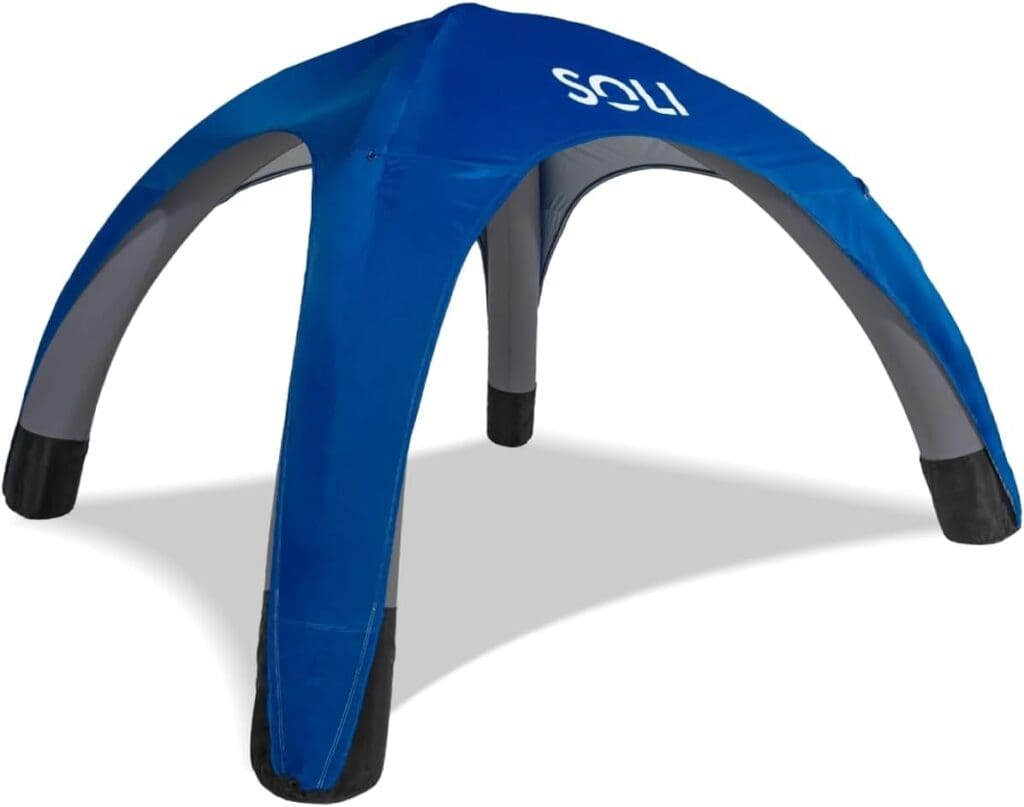
    The Shade: Soli Air Canopy

    a studio rendering of the soli shade canopy for beach days

    Weight: 18 lbs

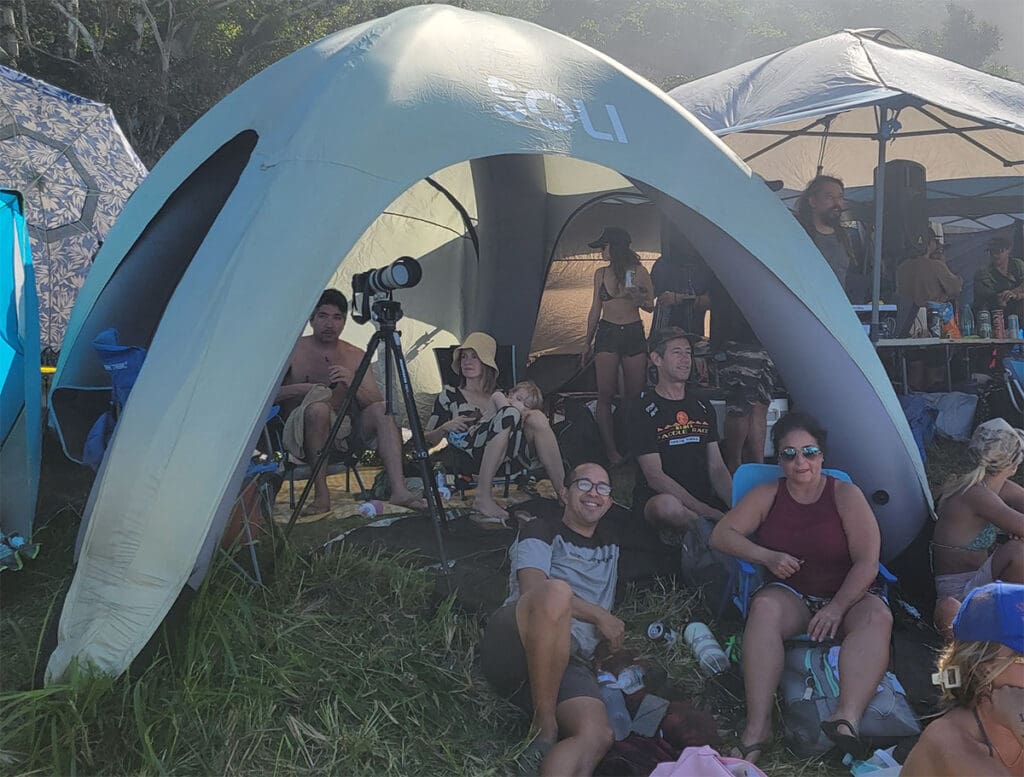
    This is our powerhouse when on the road. It does take up a bit of space, but it’s well worth it to have your own shade canopy to use on demand. Being inflatable, it has no frame so it packs up super well. It also helps it be more resistant to the wind. We love this thing, and it’s helped maximise our time on the beach when the sun is shining hot up above. Especially with little ones, it’s important to stay out of the sun midday. This makes it so we don’t have to pack up and leave, we can just have a nap in the shade. Doing so allows us to go to more remote places, away from crowds who are lugging big pop-up shade canopies or need to stay close to vegetation midday.

    a shade canopy filled with people during the eddie aikau surfing event at waimea bay, hawaii
    We made a ton of friends during the Eddie Aikau surf contest at Waimea Bay with our Soli air canopy!

    The Seating: Helinox Chairs

    the helinox chair one [re] for beach days

    Weight: Approx. 2 lbs each

    There are a ton of options for packable chairs out there, but we are big fans of Helinox. The chairs are well made, pack up easily, and are relatively lightweight at around 2 lbs a piece. There isn’t much bad to say about these chairs… we’ve been using them for years and they hold up well. They do get a bit sun bleached, but think of that as a bit of a badge of honour to show that they are actually getting use.

    We are fans of the Beach Chair and Chair One [re], (see our review of the Chair one [re] here)but any of their models are worth getting. The Chair Zero is the lightest, while the Beach Chair is low to the ground, perfect for toddlers to get in and out of (and not topple over, either).


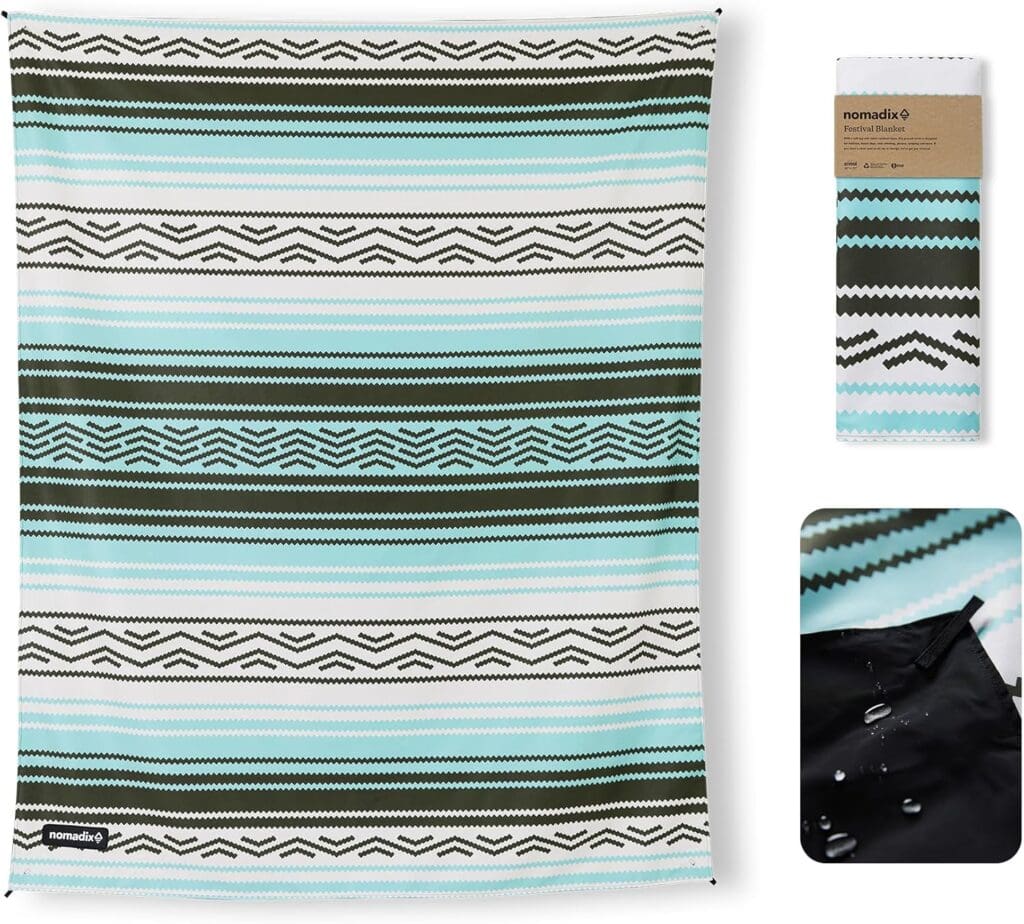
    Blankets: Nomadix Puffer Blanket and Festival Blanket

    a studio image of the nomadix festival blanket

    Weight: 3 lbs

    The festival blanket is easy for sand management, while the puffer blanket can double as a bit of body warmth when it’s windy and you come out of the water. Both of them pack up nice and small, and weigh next to nothing. If you have to choose between the two, the puffy blanket is lighter while the festival blanket is more versatile.


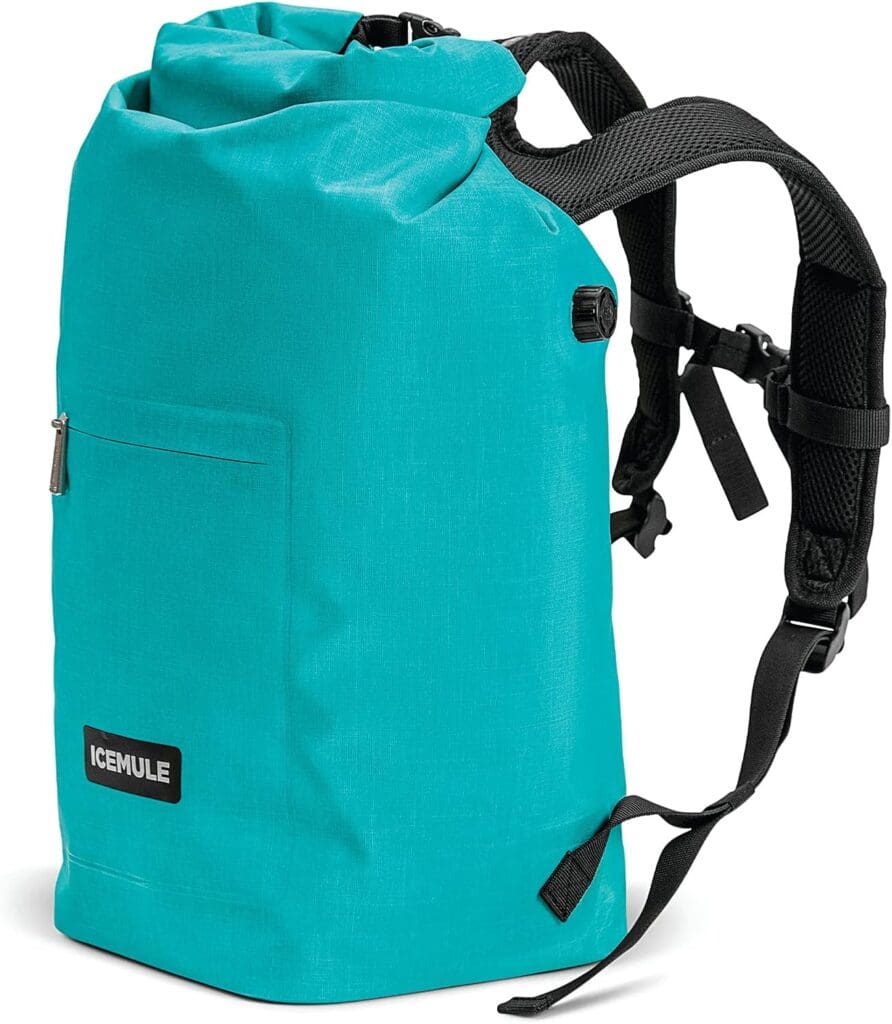
    The Cooler: Icemule Jaunt

    a studio image of the Icemule Jaunt cooler backpack

    Weight: 2.2 lbs

    Doubling as a waterproof dry bag that floats, the Icemule Jaunt keeps drinks and food surprisingly cold, while at the same time being able to pack away into the duffel with minimal space. It weighs only 1kg, which is pretty darn good for a cooler.


    The Day Bag: Cotopaxi Allpa 60L

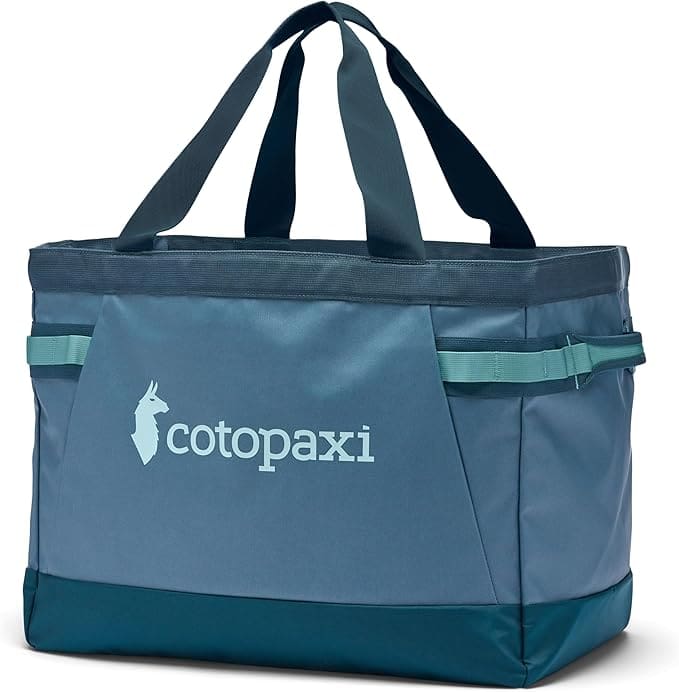
    the cotopaxi allpa gear hauler tote

    Weight: 1.5 lbs

    The Allpa is one of the top picks in our list of the Best Beach Totes for good reason. It fits a ton of stuff, offers multiple pockets on the lining, is weather resistant, and has gear loops on the outside for extra attachments. All in all, it’s a secret weapon at the beach, and allows you to organize your stuff. It’s also great if you just want to have a lighter kit without taking the entire duffel’s worth to the beach for days when it’s not an all day mission on the sand.

    We also did a more in-depth review of the Cotopaxi Allpa if you’d like to know why we loved it.

    (Budget Alternative Tip: If you are slowly building your kit and don’t want to invest in the Cotopaxi just yet, a heavy-duty reusable IKEA blue bag packs completely flat and makes a surprisingly great, sand-proof beach hauler in a pinch!)


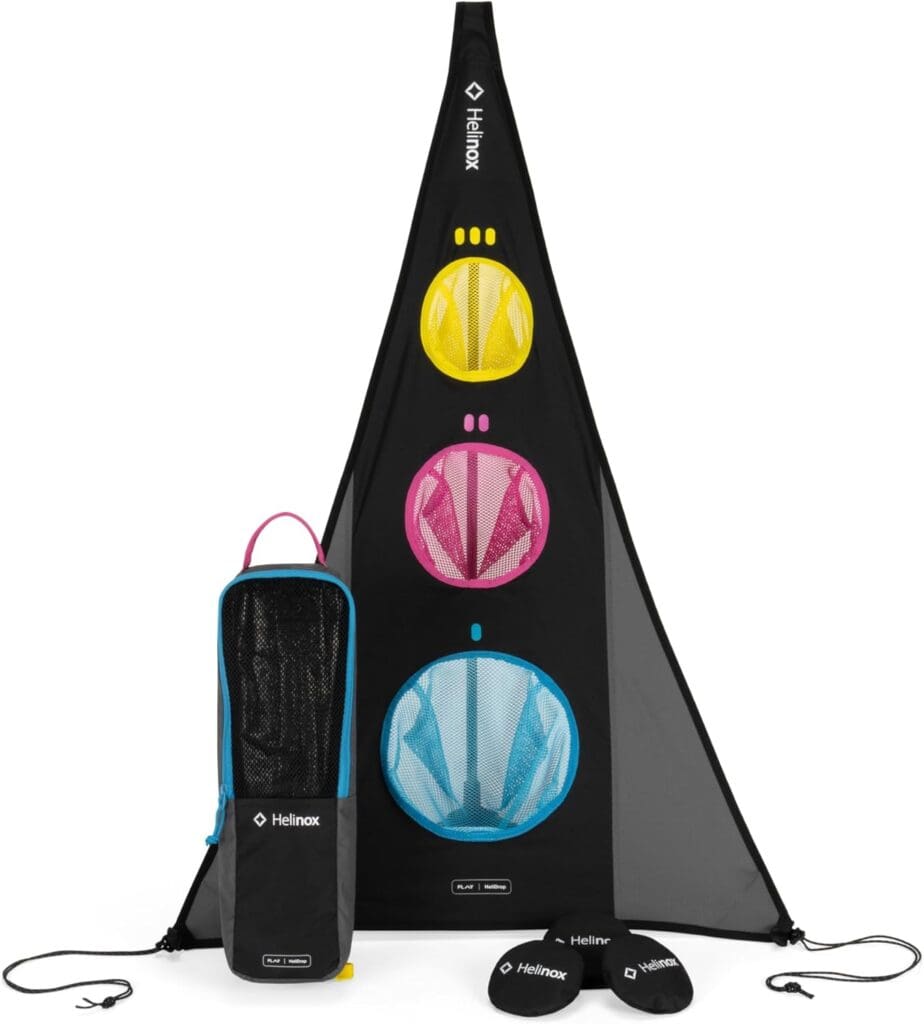
    The Entertainment: Helinox PLAY Backcountry Games

    the helinox helidrop beach game

    Total Weight: 2 lbs

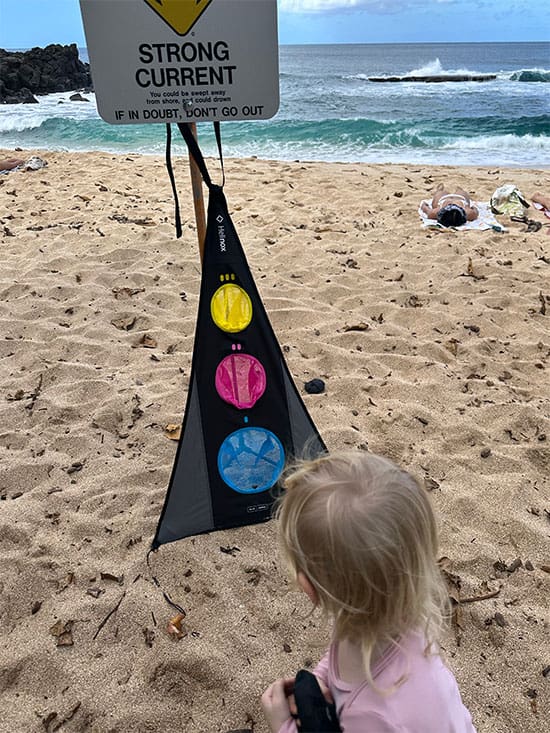
    Traditional beach toys like massive plastic buckets take up too much volume. Instead, we pack Helinox PLAY Backcountry Games, which use the same ultralight shock-cord frames as their chairs. They keep the kids entertained for hours. HeliDrop is one of our favorites, where all ages can find a bit of challenge, even the littles.

    a young girl plays helidrop by helinox on the beach in hawaii
    We let her cheat a bit…

    Don’t Forget To Bring a Towel! (Or Two)

    a studio image of the nomadix beach towel

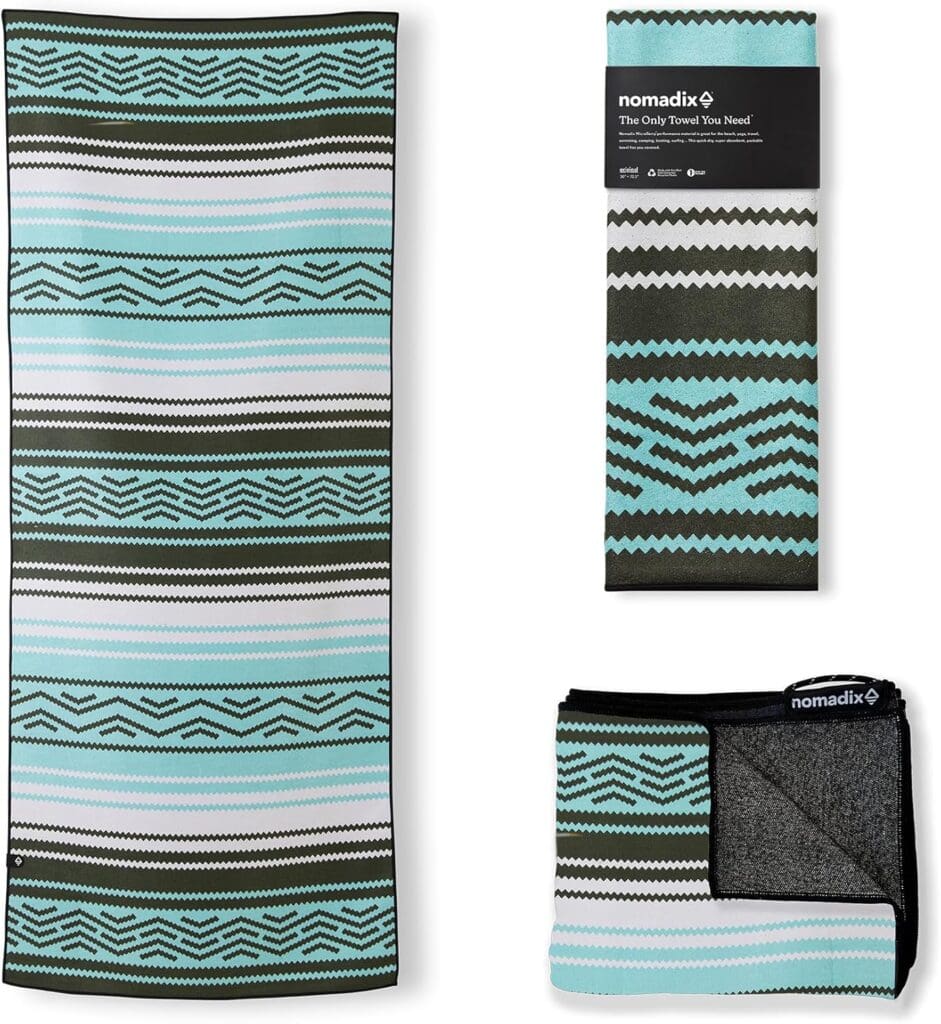
    Towels are essential, but a normal beach towel is large and heavy. Our family loves the sand-resistant, rolls-up-small, stylish-looking towels from Nomadix. It might not be as warm and cozy as a cotton towel, but the ability to compress small and fit in the duffel with everything else makes them a big hit. Plus, they are made from recycled waste, so you can feel good about helping remove stuff from the ecosystem rather than adding to it.


    Workout Gear

    There was even room in the bag for some workout gear. Dad got to pack his TRX and Jump Rope to stay fit while everyone got to lounge on the beach. It’s a nice addition for those who don’t want to let vacation time ruin a good routine!

    The Final Weigh In:

    • Patagonia Duffel: 3.5 lbs
    • Soli Canopy: 18 lbs
    • 3 Helinox Chairs: 6 lbs
    • Nomadix Blankets: 3 lbs
    • Icemule Cooler: 2.2 lbs
    • Cotopaxi Tote: 1.5 lbs
    • Helinox Games: 2 lbs
    • Total Core Weight: 36.2 lbs! > This leaves almost 14 pounds for towels, sunscreen, and dad’s workout gear before hitting the 50lb airline limit.

    Final Thoughts: Minimizing Overwhelm

    There’s no doubt that it’s a bit of an investment in time and money to put together a beach getaway kit that you can put in your checked luggage. But once you’ve got it, you’ve got it, and you have a stress-free beach setup no matter where you fly.

    Always check the limits of the airline you’re flying on in case there are different restrictions, however you can usually bet on a 50lb weight limit on major airlines. And if your beach vacation is actually a road trip, then weight isn’t as much of an issue. Still, it’s nice to set the duffel as the limits so that you don’t overpack. 100L is quite a bit of volume, especially if packing well.

    Our goal is always to make sure that you have an excellent family adventure, full of memories and good times, learning and growth for the whole family. If you would like to know more, please sign up for our mailing list and stay tuned to more great tips, ideas, and getaways. We hope to see you out there!