Once in a while, you get to test a totally new innovation and see how it stacks up to the establishment it claims to be beating. I’ve just spent the past three months testing out the Unrestricted cooler on our family adventures: hiking, camping, and biking around the Sea to Sky region of British Columbia. And while the bag isn’t breaking any ice-retention records, it does its job extremely well for a day trip as a mobile snack station and cool-drink provider. It also stays relatively watertight.
Read on for why this earned a spot in our regular rotation as the best low-bulk backpack cooler we’ve tested for day missions.
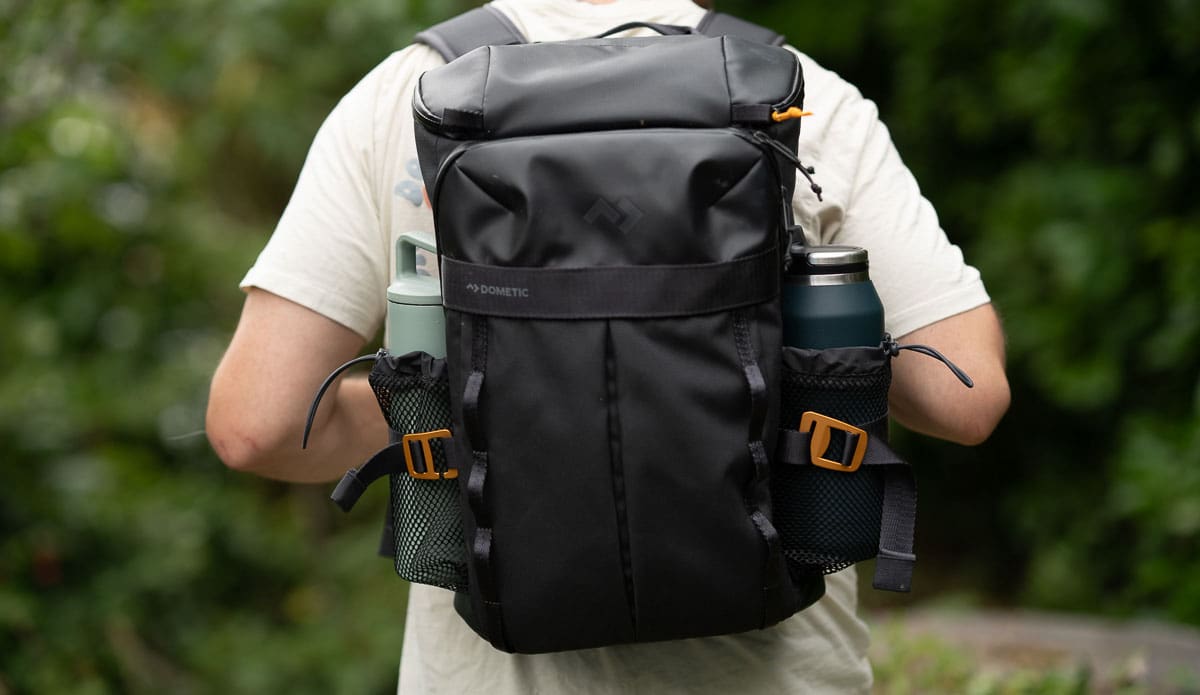
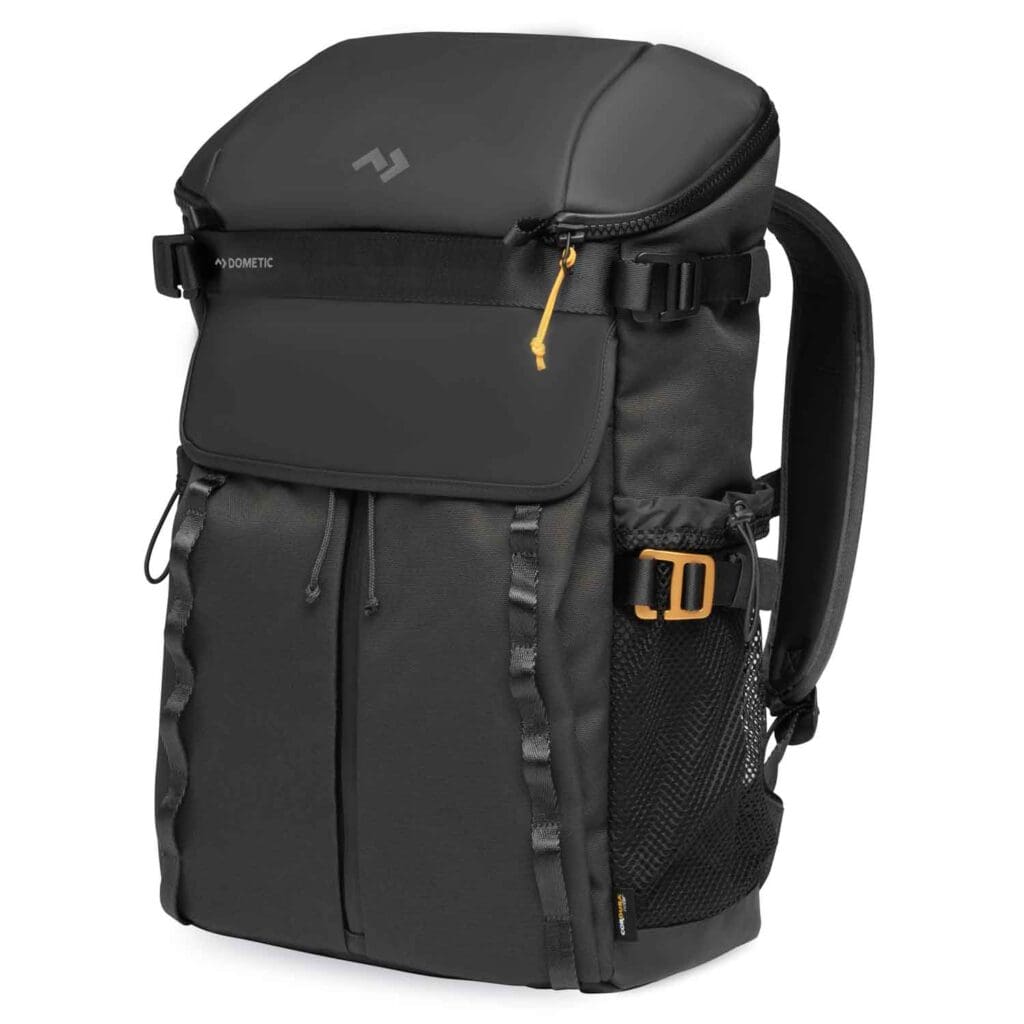
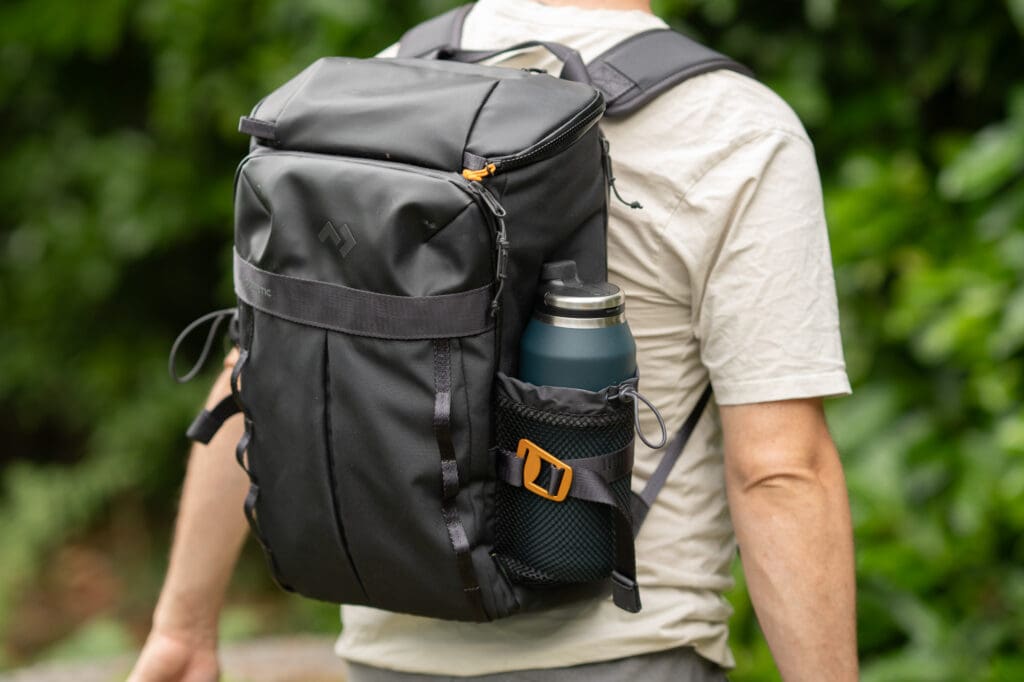
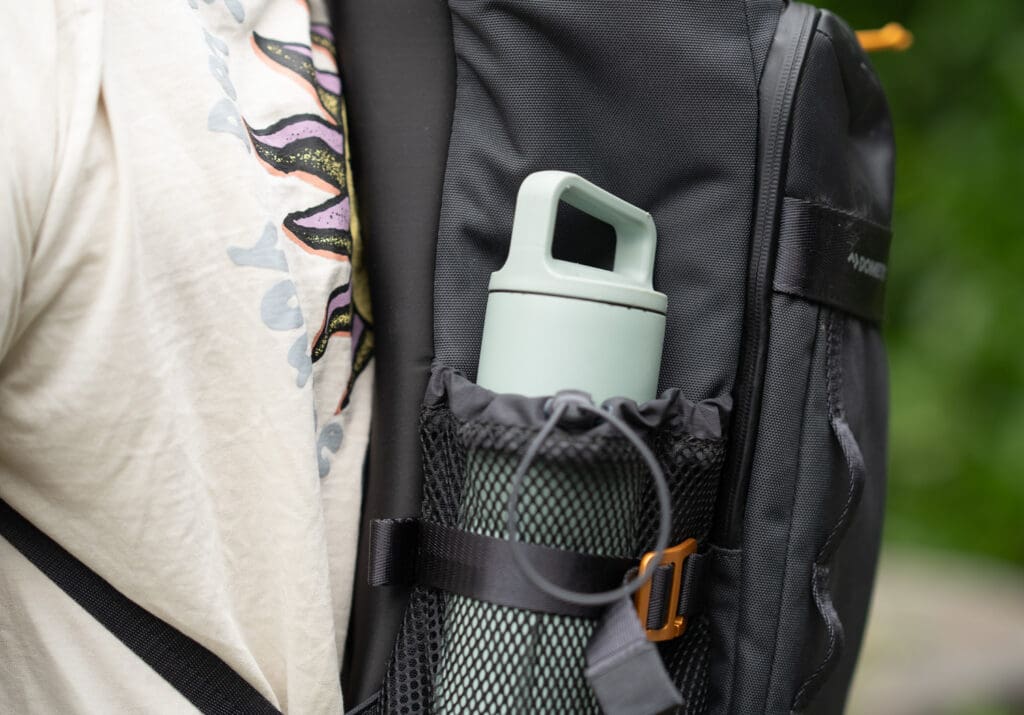
The first thing that struck me about the Unrestricted is that it doesn’t present itself as a backpack cooler. No bulky, boxy shell, no “I’m carrying beer to the beach” silhouette. It reads as a normal daypack, right down to the integrated laptop sleeve, and that’s the whole point: it’ll moonlight as a carry-on or a commute bag on the days it isn’t keeping lunch cold.
You can’t tell it’s a cooler from the outside!
Why I trusted the insulation before I packed it
Before I even knew what it was, I brought a PrimaLoft-lined shirt with me on an expedition to Mount Logan while filming for Nat Geo. One of the older crew members was ribbing me for not having a puffy jacket as a midlayer, but he soon got pretty quiet when I’d stand around camp in comfort without a massive parka on. It was the only thing that worked as a good insulating layer where I didn’t feel overheated, and when I did sweat, it didn’t become a soggy mess. So when I saw the same insulation wrapped around a cooler, I was pretty confident that it’d do well.
How it held up from the car to the trail
Over three months we ran it through a proper Sea to Sky gauntlet: a hot summer car ride up to Whistler, lake-to-lake along the Valley Trail with the Chariot in tow, a few nights camping at Porteau Cove, and a string of day missions to Squamish. Through all of it, our food and drinks stayed properly refrigerated. The catch is that the cold only stays put if you keep it zipped. Leave it gaping open at the picnic table and you’ll feel the difference pretty quickly.
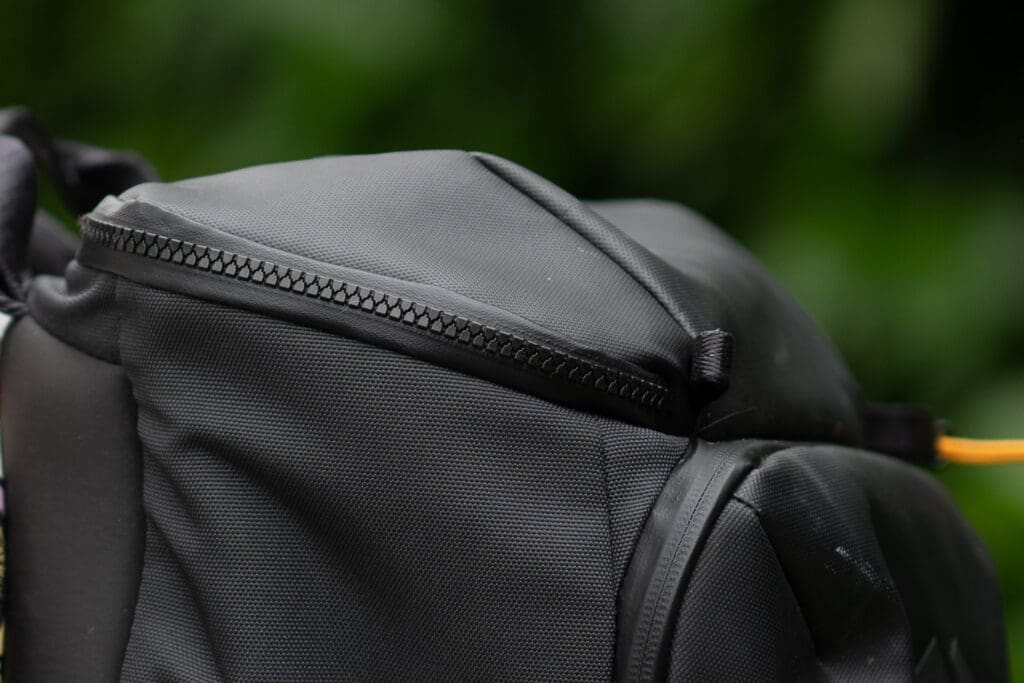
The zippers are robust enough to help seal out the heat, but just make sure you zip them all the way!
The size-to-insulation sweet spot
Let’s be honest about the cold retention: it doesn’t match something like the IceMule Boss, or even a Yeti backpack cooler. But both of those are cumbersome. The Unrestricted has a better size-to-insulation ratio, which makes an excellent sweet spot that’s good for a day, but not so good for a week, if that makes sense. For the kind of day-tripping a family actually does, that trade is the right one, and the compact package is exactly why it ends up coming along.
The ice pack situation
The clip-on Connect Ice pack isn’t that exciting. I usually just used gel freezer packs instead, which did the job for less. That said, if you’re in a pinch and don’t want to pay five bucks for a bag of ice that’s far more than you need, the system is a tidier option than dumping raw cubes in. Just know it’s sold separately, so factor that into the price.
Buy it if you want a day-trip cooler that carries like a normal pack and doesn’t have the bulk of a Yeti or an IceMule. It’s the right call for hikers, bikers, paddlers, and beach-bound families who value a smart size-to-insulation ratio. If genuinely recycled materials matter to you, the PrimaLoft story here is the real thing, not a sticker.
Skip it if you need ice to survive a multi-day trip. This is a day cooler, full stop, and a hard-sided chest will serve you better for car-camping a week out. Ultralight backpackers counting grams will find it heavier than they’d like for the volume, and bargain hunters will balk at the premium price. And if you assumed the cooling packs came in the box, know up front that they don’t.
Final Thoughts
The Dometic Unrestricted is the soft cooler that finally solved the problem of looking and carrying like a soft cooler. For day missions a little further out of reach, it’s a fantastic mobile snack station and cold-drink provider. It’s versatile enough to double as an everyday pack, built from materials I’m happy to stand behind, and watertight enough to trust. It won’t win an ice-retention contest against a hard cooler, and the separately sold ice packs aren’t anything special, but for a family that wants one civilized way to keep food and drinks cold on the trail without the bulk, this one earns its spot on trips a little further out.
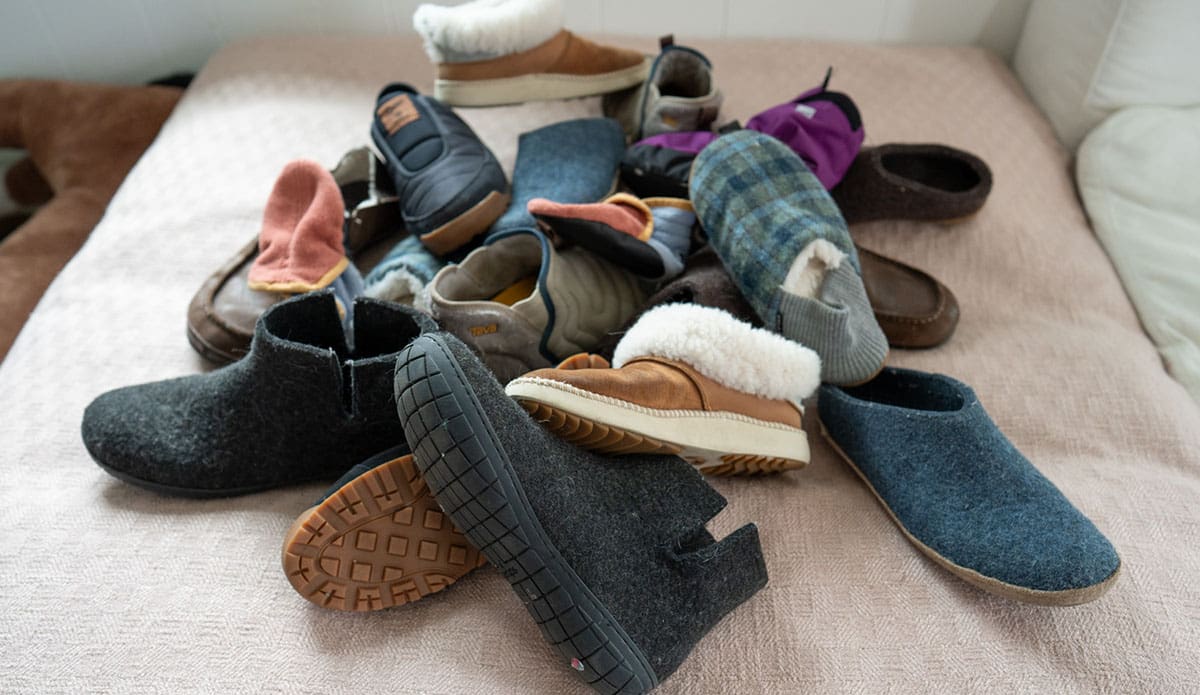
With all the beautiful chaos of life at home and on the road, comfortable feet may be the most consistent gift you can give yourself (or a loved one) for starting or ending a great day. Wherever life takes you, a good pair of slippers can be an ideal bridge between bedtime and whatever adventures await.
Over the past few years we’ve been offered sliippers to test, and have sought our our own, along the way. We have come to learn that the best slipper is definitely one you have on compared to cold or overheated feet.
We’ve tested the good, the bad, and the dreamy in damp campsites, alpine huts, Hotels of varying cleanliness, Hawaiian Lanais, and at our home in British Columbia to give this list to anyone who needs the best slipper for wherever on earth you may be. Here are our top slippers for both kids and adults, broken down by where they shine the brightest.
We care about the recommendations we make. We sometimes (not all the time) use affiliate links to help keep the site running. Every item here has been hand-tested through years of professional outdoor work and surviving weekend trips with my own toddlers. Learn more about our Gear Review Policy here.
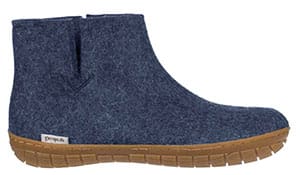
Style: Boot or Low cut Weight: Upper Material: Wool Sole: Rubber (Leather option found below)
Pros: Next level comfort, warmth, breathability Cons: Minimal arch support
Glerups are legendary for a reason. The Danish staples of comfort only get better the more you wear them, as long as you don’t blaspheme by wearing socks.
By opting for the boot-cut version with the natural rubber sole, you get a travel shoe that can confidently step out onto a wet hotel balcony without ruining the base. Since it’s made from 100% natural, itch-free wool, they breathe beautifully and naturally fight odors.
They are designed to be worn without socks, molding perfectly to the shape of your foot over time for a custom fit.
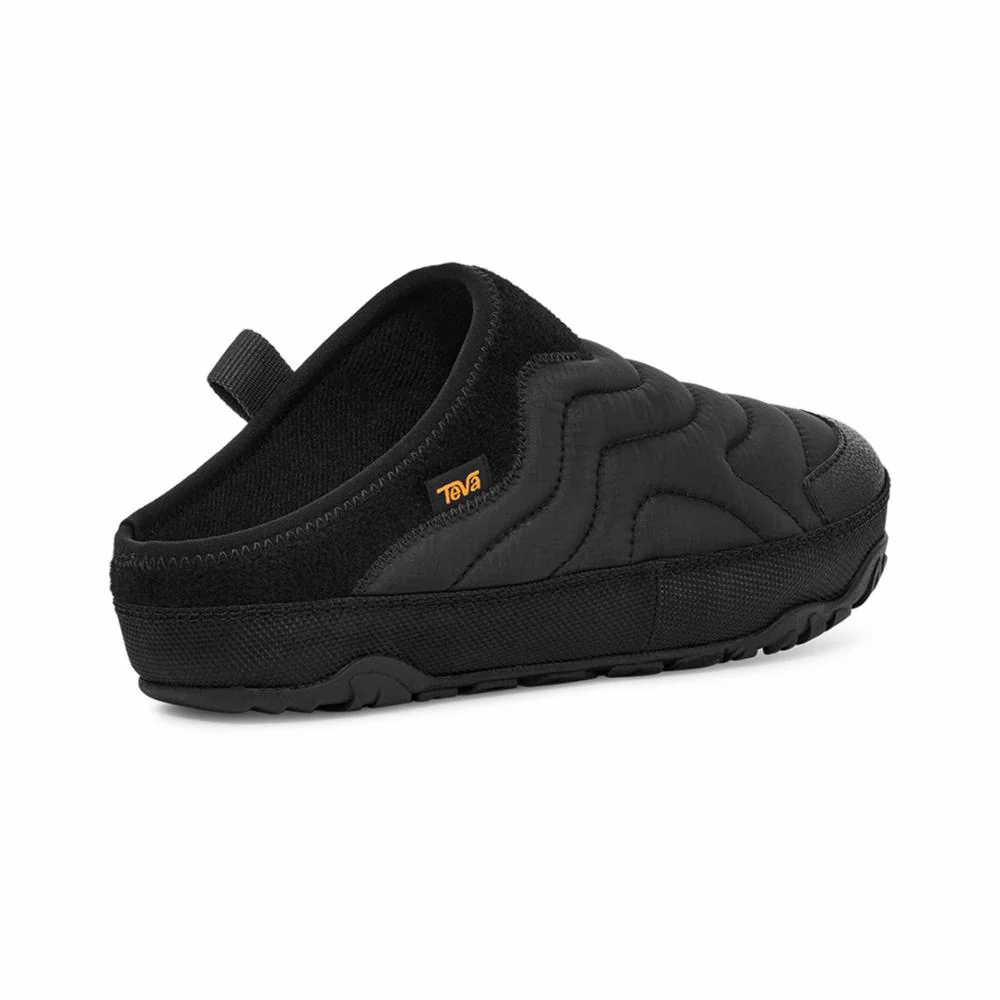
Style: Slip-on Weight: 17 oz Upper Material: Polyester Sole: Rubber
Pros: Great around the campsite, soft midsole Cons: Foam and polyester aren’t as breathable as natural materials
These are the ultimate campsite companions. We are keeping these right by the tent door for our upcoming stay at Porteau Cove because they seamlessly bridge the gap between a cozy slipper and a durable outdoor shoe. The footbed features a massive 30mm ULTRA-COMF foam insole that feels like walking on a marshmallow. It’s warm, and that might be its biggest drawback in warmer climates. But for cold-weather camping, it gives you something other than boots to wear but won’t be shy on the trail if there’s a bit of walking to get to an outhouse or water source.
The quilted ripstop upper is treated with TevaRAPID RESIST, making water bead right off, while the tough rubber outsole easily handles gravel, dirt, and damp grass. Although we are featuring the low-cut version, we actually tried the boot version, but it seems to be discontinued. That was probably because the higher cut can be a bit tedious for getting on and off, so the lower-cut version addresses our most critical feedback. Other than that, its’ an excellent go-to for camping out. It’s available in both men’s and women’s styles.
Pros: Exceptionally warm for a low-cut, lightweight slipper Cons: Being discontinued 🙁
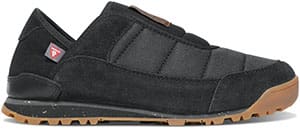
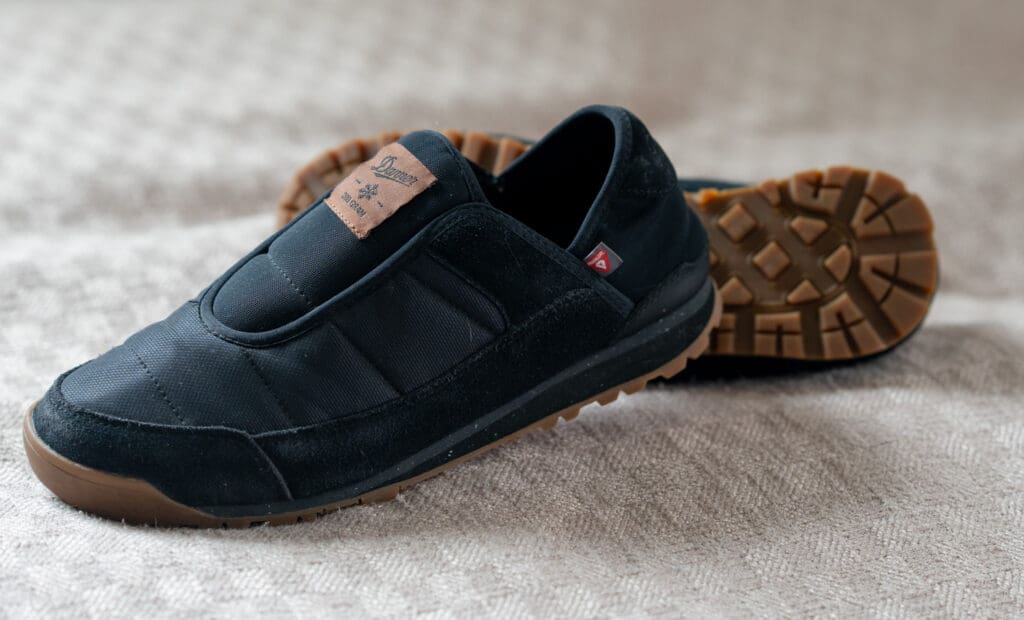
Word on the trail is that Danner might be phasing these out, so if you see them on sale, grab them immediately. They are a powerhouse of warmth with a sleek, low-profile design. Packed with 200G PrimaLoft® Gold insulation, they trap heat perfectly even on freezing mornings.
The collapsible heel is an absolute lifesaver when you need to slide them on hands-free while holding an armful of firewood. Plus, the retro waffle outsole utilizes a FrostTrekker compound for serious grip on icy ground.
DEAL ALERT! Although this model is being discontinued, it’s being offered at a huge discount on the Danner store.
Style: Boot or Low cut Weight: 1.5 lb/pair Upper Material: Ripstop Polyester Sole: Rubber with Gel insole
Pros: Drawcord closure keeps heat in Cons: Not good for walking too far
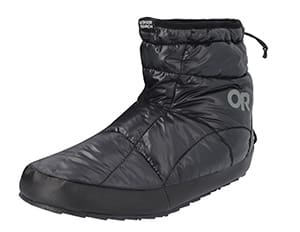
Having packable booties is a must for winter escapes in faraway cabins, or even car/RV camping where space is limited. These booties are a staple for backcountry skiing, but family trips are just as essential for saving space in the pack.
The weather-resistant exterior easily sheds light snow and accidental coffee spills while keeping your feet toasty. While it’s not exactly what we’d call durable, it is great for quick romps outside or when getting out of tight boots and taking a load off at the end of the day. They definitely are a cold-weather type bootie, so they will probably sit in storage for summer. But even cool nights at the beach will be nice with these, especially since they repel sand quite easily.
Travel slippers blend the need for packability with not looking like a total hobo in a hotel lobby (but being oh-so-comfortable). We chose these options on both comfort and practicality.
Best For: Airport security and long-haul flights ✈️
Style: Mule Weight: 18 oz Upper Material: Leather Sole: EVA/Rubber
Pros: Soft comfort, Durable sole for outdoor use Cons: Doesn’t pack up well
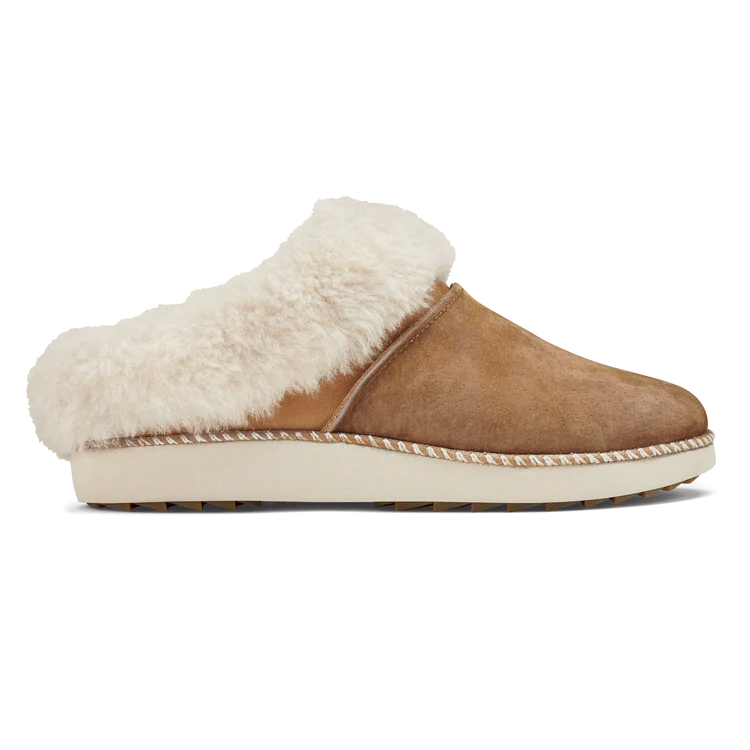
Olukai offers some of the best premium comfort for any shoe. Their marketing tells us it’s like “walking on wet sand”, and after about two years in one of the slippers, I can confirm that it does feel like it molds to your foot in the same manner. It’s more than just hype, it’s a fantastic fit that only gets better with time.
The Ku’i speaks to the ladies, and while it may not be small and packable to be ideal for travelling, it’s worth a bit of extra bulk and weight to keep moms happy! The rubber sole lets you get away with walking around outside, something mom loved while visiting the Nita Lake Lodge in Whistler. And if you’re on a plane for more than three hours, it’s nice to have a pair of slippers that you can still walk quite a bit in… at least to get to the baggage claim to put on some “real” shoes.
The toughest choice on these are whether to have them inside or outside.
Airports aside, these are also great at home, and with the durable outsole you can go for neighbourhood walks without wrecking them.
OluKai also makes great options for men. We are fans of the Moloa leather slippers, which are actually excellent for packability in contrast. The shearling/leather combo is oh-so comfortable, and with the collapsable heel, you can fit them into your back packet if you really wanted to. But the shape-melding sole that gets better with time is a feeling that has us hooked.
Sometimes we need every cubic inch of luggage space possible, especially if carting around babies or toddlers who take up the bulk of luggage (their stuff, not them!). Here are some of the best slippers that pack up easily.
Pros: Soft comfort, Durable sole for outdoor use Cons: Faux Fur gets a bit hot, no arch support
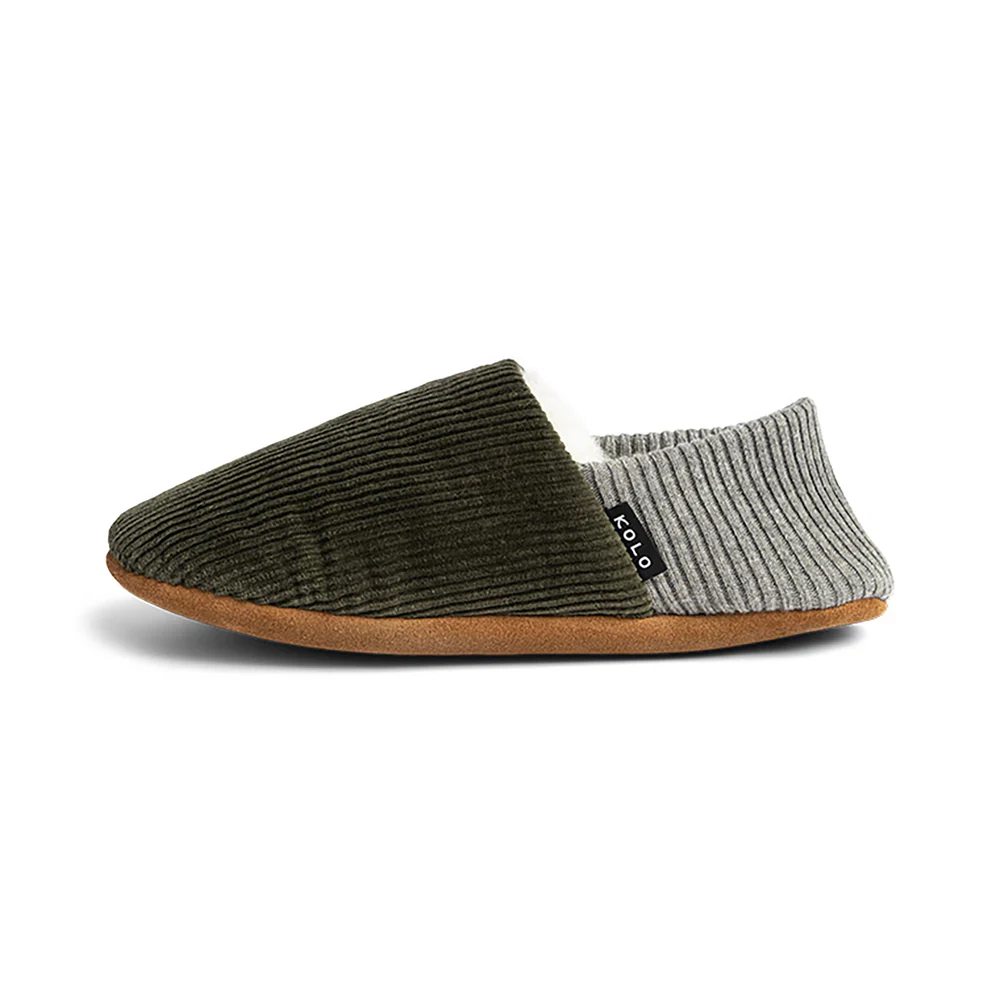
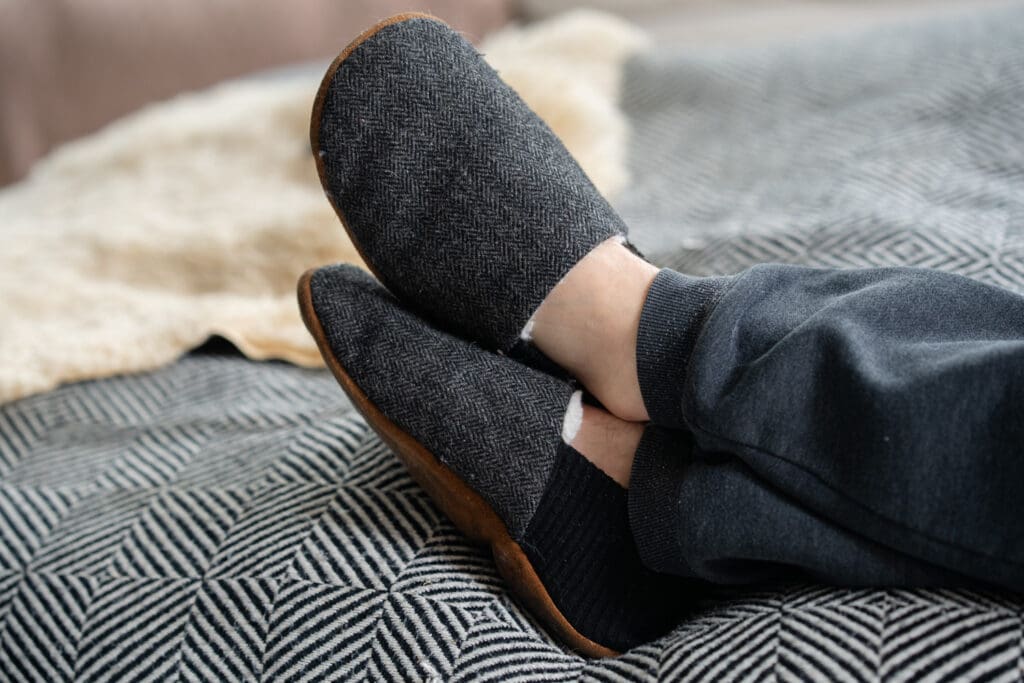
These slippers are marketed as “house shoes” – and they definitely go well around the house. But where they outshine others in this list is how well they can pack up, thanks to the flexible suede sole. While it doesn’t offer a ton of support, the hopes are you’ll be having your feet up relaxing for most of the time you’re wearing these, not bearing weight.
The suede sole feels nice and light underfoot but beware if you wear them around messy toddlers as whatever they drop on the floor will end up ingrained into the sole. That’s a big reason why we prefer these on the road more than at home… but if you don’t have little ones spilling everything all the time, these are like durable socks that only get more comfortable the more you wear them.
Style: Mule Weight: 475 g Upper Material: Wool Sole: Leather
Pros: Super soft yet durable, shape conforms to your foot. Cons: Slippery on wet hardwood
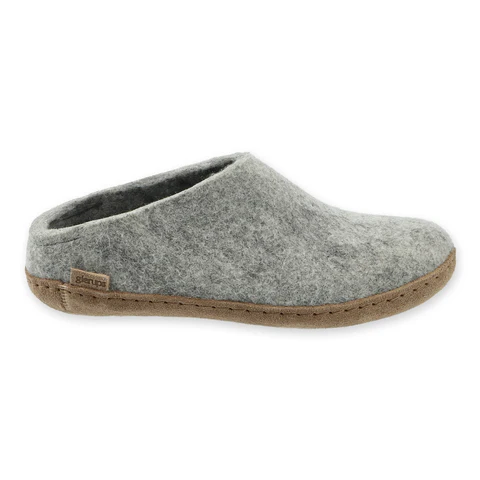
While the rubber-soled Glerups are great for travel, the low-cut slipper with the leather sole is the ultimate indoor-only slipper. The natural wool keeps your feet incredibly warm without ever letting them overheat or sweat.
They are absolutely perfect for keeping your feet warm on cold concrete floors while tinkering in a basement workshop or making coffee on a frosty morning.
As great as these are, they aren’t ideal if you have little ones that spill things. They stain easily and get super slippery when in contact with water. This is from painful experience… as great and comfortable as they are, they are best for carpets if toddlers are wreaking havoc around the place.
Pros: Easy to slip on, fits many sizes, fun colours Cons: Not great outdoors, poor traction
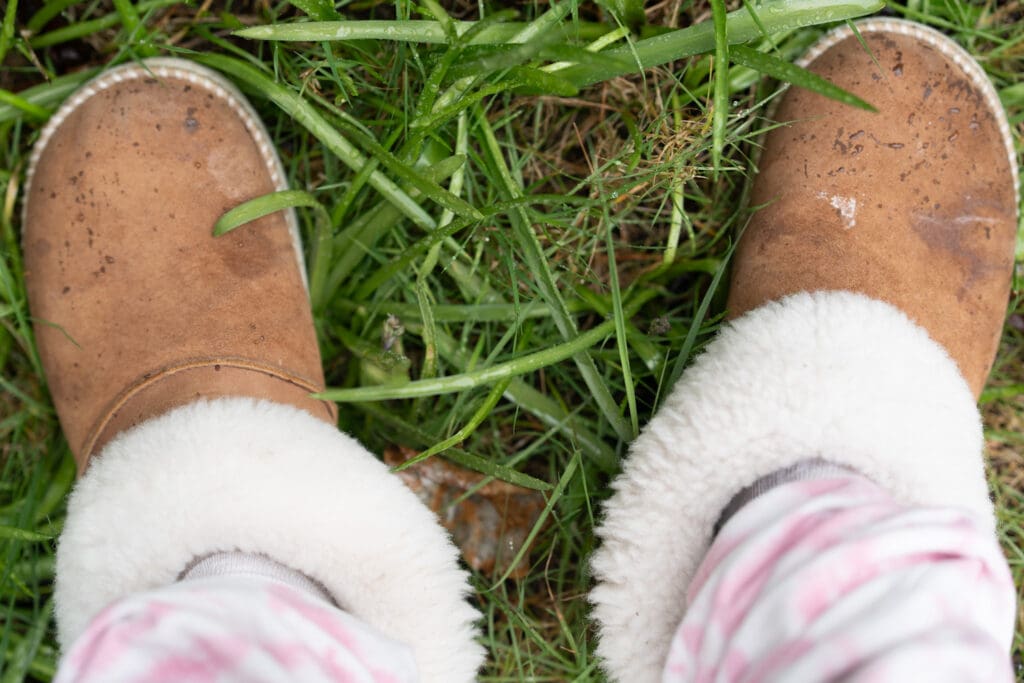
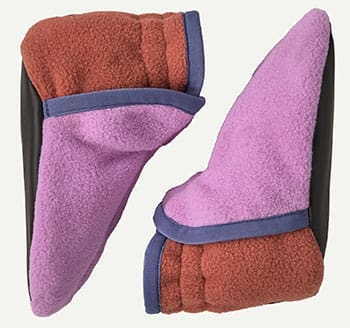
Patagonia has a massive line of kid’s gear, and these little booties are an affordable option for warmth at night when the socks are dirty, the boots are off, but the kids aren’t ready to go to bed.
There’s not much to the Synchilla Booties, but kid’s don’t really need bells and whistles, just something to keep their feet warm and toasty, with a little bit of protection. They pack up super small, and are just a hair larger than socks, but have a durable enough sole to protect their feet from rocks and dirt.
We love the fact that Patagonia offers a lifetime repair guarantee, although chances are they will grow out of them first. But they will hold up through many generations of hand-me-downs, and are an easy-to-pack staple of a camping kit for kids.
Pros: Good closure, high cuff Cons: Bottom can wear out
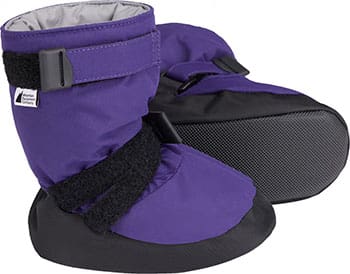
If you are a Canadian family, you likely already know and love Mountain Equipment Company (MEC). Their “Toaster” line is legendary for keeping little ones warm during brutal winters, and these booties are no exception.
The biggest selling point here is the design: they feature a higher cuff with an adjustable hook-and-loop closure at the ankle. This means they actually stay on kicking toddler feet, a major win for parents. They are highly insulated and weather-resistant, making them the absolute perfect piece of gear to slide onto your kids’ feet before packing them into a sled or a hiking carrier for a frosty morning walk.
They do wear out though, so unless you’re a fan of duct tape, you’ll need to do some reinforcing if you plan on doing some hand-me-downs.
How We Tested The Best Slippers For Travelling and Camping
We are an adventurous family, as you might have guessed by the name of this site. But even more than just adventurous, we actually care about the planet and the companies that do better to improve the communities they serve. So a big part of our test is to only recommend companies with a bit of integrity to them.
Everyone here is at least making some efforts toward being more sustainable than others, even if not perfect, quite yet.
We are based in British Columbia, where the winters are cold enough to warrant some extra warmth on the feet. We also live in an old house that was built in the 1940’s, and the wood flooring can be cold without some warmth underneath. So although we tested these outside as well, the majority of the testing was done at home in our old house, the cold floor to tell us if it’s good or not.
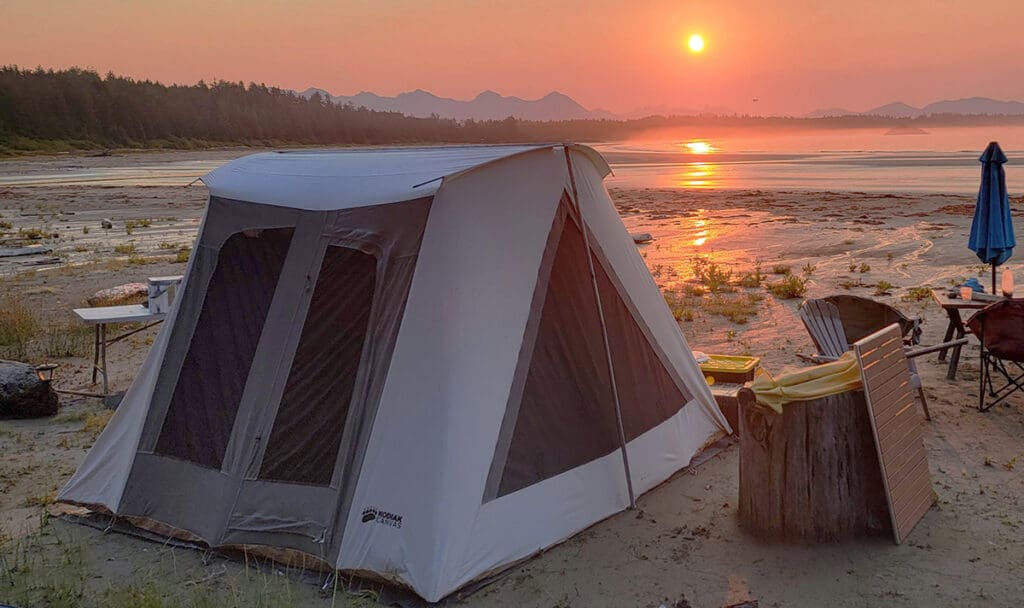
But we enjoy camping, and being cozy on flights too, so we would always have a pair of slippers along from the ride, whether going to Whistler or camping in our Kodiak tent at on Vancouver Island.
A pretty good testing ground for beach slippers, if you ask me!
Buyer’s Guide: Choosing the Perfect Slipper
With so many premium options on the market, narrowing down the right pair comes down to where you plan to use them the most. Here is what we look for when testing slippers for our adventures:
Packability and Weight
If a slipper takes up as much room as a hiking boot, it is going to get left behind. Options with flexible uppers and collapsible heels rise to the top of the list. Materials like PrimaLoft insulation, down, and natural wool are incredibly warm but can be squished completely flat in the corner of a duffel bag.
The Outsole: Rubber vs. Soft Leather
This is the biggest deciding factor. If you plan to wear these outside of a tent or across a wet campsite, you absolutely need a rubber outsole. However, if you are strictly looking for indoor comfort or adopting a shoe-free sanctuary at home, a soft leather or suede sole will be much quieter and gentler on hard floors. That said, rubber will grip better on certain surfaces, especially if you’re like us and have toddlers spilling all sorts of things in strange places.
Material: Natural Vs. Synthetic
The big decision when choosing which slipper has a lot to do with material. Generally speaking, wool is often the winner for the comfort department. But not everyone likes the feeling of wool, and prefers synthetic materials. Synthetic can be warm but doesn’t always breathe as much. Ultimately it depends on your foot, any allergies you may have, and personal preference. But in our opinion, nothing beats good wool, as long as it comes from a responsible source.
The “Slip-On” Factor
When you are holding a sleeping toddler or an armful of firewood, you do not want to be bending down to wrestle with your footwear. A good camp or travel slipper should slide on completely hands-free. We highly favor designs with a drop-in heel.
Slipper FAQ
A few questions we get asked the most about choosing, packing, and living in a good pair of slippers.
Can you wear slippers through airport security?
You can, and a slip-on pair makes the whole shuffle through standard screening faster since you’re not lacing anything up. The catch is the floor — airport tile is filthy, so we lean toward a pair with a real rubber outsole like the OluKai Ku’i or Glerups rubber sole that you won’t mind walking on, rather than a soft suede sole you’d rather keep clean. Bonus: they’re already on your feet when you board, so there’s nothing to dig out of the overhead bin.
Should you wear wool slippers with or without socks?
Without — at least for Glerups, which are designed to be worn barefoot so the wool can mold to your foot over time for a custom fit. Wool also naturally fights odour and breathes, so sweaty feet are rarely an issue. If you’re someone who can’t go sockless, a synthetic or fleece-lined pair will feel more familiar.
Are wool or synthetic slippers better?
It comes down to your feet and what you’re doing. Wool is our pick for all-around comfort: it’s warm without overheating, breathes well, and resists odour as long as it’s responsibly sourced. Synthetics like PrimaLoft are seriously warm, shed water and packable bulk better, and suit anyone who finds wool itchy, but they don’t breathe as well, so they can run hot. For camping and cold mornings we reach for synthetic; for everyday wear we reach for wool.
Rubber sole or leather sole — which should I get?
This is the single biggest decision. If you’ll ever step outside. A wet campsite, a hotel balcony, a quick trip to the car and you want a rubber outsole for grip and weather resistance. If it’s strictly an indoor, shoes-off-at-the-door slipper, a soft leather or suede sole is quieter and gentler on hardwood. One warning from experience: leather soles get genuinely slippery on wet floors, so they’re not ideal if toddlers are spilling things around the house.
How do you pack slippers without taking up luggage space?
The key is to get a flexible upper and a collapsible heel. Those two features let a slipper squish flat into a corner of your bag. Insulation matters less than you’d think for packing: PrimaLoft, down, and wool all compress well. Our most packable picks are the Kolo House Shoes, the OluKai Moloa (the collapsible heel folds it down small), and the Outdoor Research Tundra Trax booties for cold-weather trips.
How do you keep slippers on a toddler’s feet?
You need a high cuff and a closure. Plain slip-on booties get kicked off in seconds, but a bootie with a tall ankle and a hook-and-loop strap like the MEC Toaster actually stays put on a wriggling kid, which is what you want before loading them into a sled or carrier.
How do you clean wool slippers?
Very carefully. Spot-clean with a damp cloth for everyday marks, and for a deeper clean, hand wash in cool water with a wool-safe detergent and let them air dry away from direct heat. Skip the washing machine and never put wool in the dryer. Heat and agitation cause it to felt and shrink. Treat them well and a good wool pair lasts years.
Are slippers really worth packing for a trip?
For us, that’s an enthusiastic yes. They take up almost no room with the right pair, and after enough red-eye flights, cold hotel floors, and frosty campsite mornings, we’ve found that warm, comfortable feet genuinely cut down on travel fatigue for the whole family. It’s a small luxury that punches above its weight.
Final Thoughts: Don’t Skip the Slippers
When packing for a family trip, it is easy to view slippers as an unnecessary luxury that takes up precious cargo space. But after navigating countless red-eye flights, cold hotel floors, and frosty mornings at the campsite, we can confidently say that investing in comfortable footwear reduces travel fatigue for the whole family.
Grab a pair that fits your travel style, toss them in your bag, and enjoy quality comfort no matter where you put your feet up to relax.
Which pair fits your family’s travel style best? Let us know in the comments below, and don’t forget to subscribe to our newsletter for more honest gear reviews and outdoor family travel hacks!