Tag: review

  • Is the New Heights/OluKai Flip Flop Collab Worth the Premium Price Tag? A Review of the Mea Ola Nu’u

    Is the New Heights/OluKai Flip Flop Collab Worth the Premium Price Tag? A Review of the Mea Ola Nu’u


    Heads up: This review contains affiliate links. If you buy through one, I may earn a small commission at no extra cost to you — it helps keep these reviews free to read. It never changes my verdict. Read my Gear Review Policy. — Steve

    I’m not as big of a football fan as I once was. Family life has certainly cut into leisure time. So when I heard that OluKai, a brand known more for the waterman’s ethos of Hawaii, was collaborating with NFL stars Travis and Jason Kelce, I kinda went “meh,” and wondered if this collab was genuine.

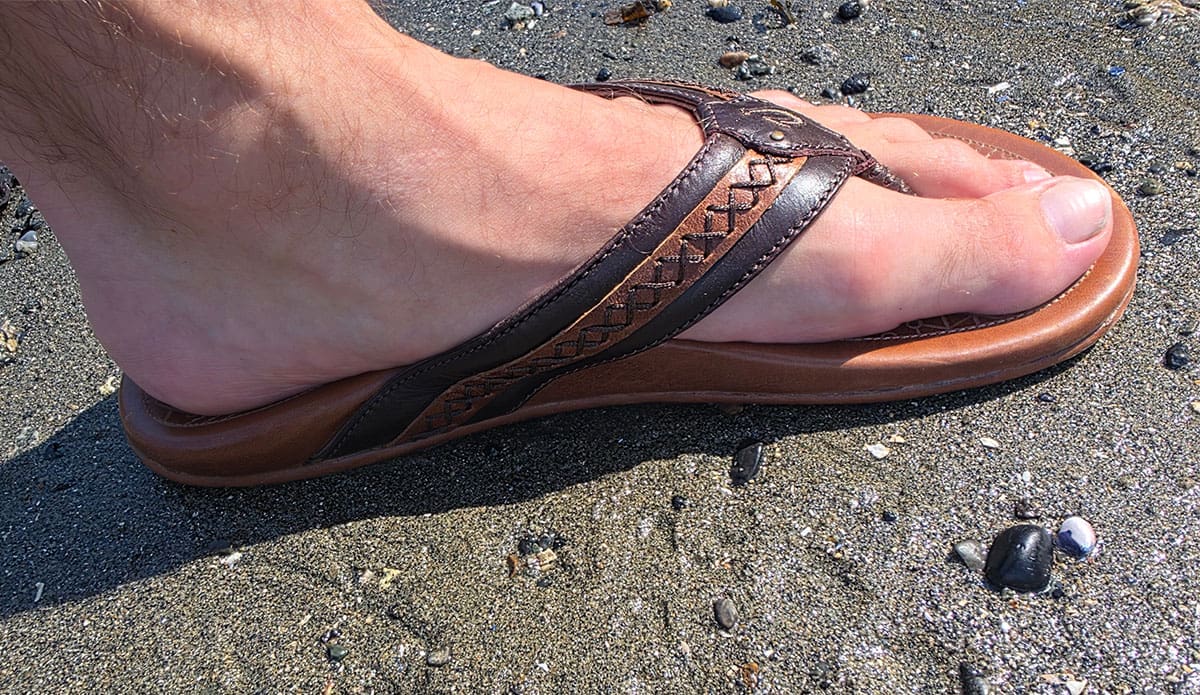
    Then I tried the sandals out. And whatever the reasoning behind the collab aside, the reality is that it’s a damn fine pair of flip flops. The leather is what you’d expect with OluKai, but the big difference is the footbed. Maybe having some of the top athletes in a sport that has them abusing their feet designing some leisure footwear wasn’t such a strange idea, after all.

    As a dad, comfort is key, and so is quality, although both come at a premium. So were they worth the $160 price tag? Read on to find out!

    New Heights x OluKai Mea Ola Nuʻu: The Verdict

    Bottom line: It’s a lot to spend on a sandal, but the full-grain leather and rugged outsole mean it’ll last. It’s the type of sandal that gets better with age, as long as you aren’t the amphibous type.

    Pros

    • ✓ Full-grain leather that softens and shapes to your foot instead of wearing out
    • ✓ The footbed is noticeably more supportive underfoot than a flat foam flip-flop
    • ✓ Grippier than it looks: rubber traction pods set into a leather-wrapped outsole
    • ✓ The football details stay subtle, but is a nice touch.

    Cons

    • ✕ $160 USD is a lot of money for a pair of flip flops
    • ✕ It’s a beach sandal you shouldn’t swim in. OluKai builds the Mea Ola for dry sand and shorelines, not soaking
    • ✕ Sizing guidance conflicts between OluKai’s own page and its Amazon listing (see The Facts, below)
    • ✕ Limited edition, men’s sizes only, one colorway
    The Specs

    Price$160 USD
    ColourwayDark Java / Tan (single limited-edition colourway)
    SizesMen’s US 7–15, whole sizes
    UpperFull-grain leather
    LiningSoft microfiber
    Toe postHandsewn
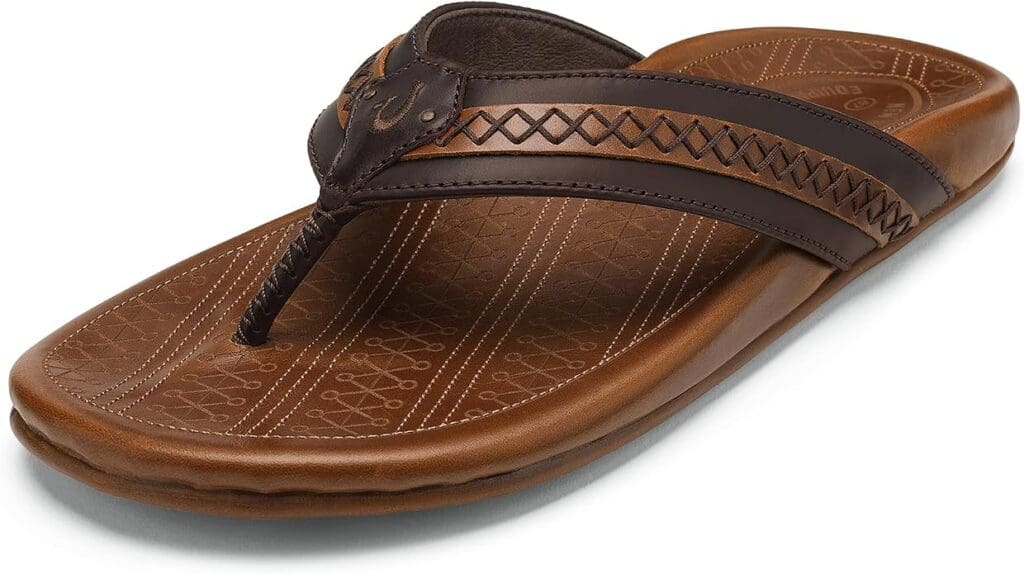
    FootbedContoured leather footbed with laser-etched New Heights artwork and embroidered logo accents
    Midsole / outsoleCompression EVA midsole, with spotted rubber outsole on top of leather.
    FitOluKai’s product page lists it true to size, standard width, standard arch. OluKai’s own Amazon listing for the same sandal says it runs small and narrow with a high arch, and recommends sizing up. See the sizing note below.
    Weight17 oz (pair)
    Water useBuilt for dry sand and shorelines; prolonged water contact can damage the leather
    Warranty1 year from date of purchase
    AvailabilityLimited edition, while supplies last

    Specs verified August 3, 2026. Prices drift — check before you buy.

    A note on sizing

    OluKai gives two different answers depending on where you shop. The product page on olukai.com says the Mea Ola Nuʻu fits true to size with a standard width and arch. OluKai’s own Amazon listing for the same sandal says it runs small and narrow with a high arch, and tells you to order a size up. I found it to be fairly standard for me, and ordering a size up would have been way too much underfoot. As someone who oscillates between a size 10 and 9.5, the 10 was actually slightly big, but a 9.5 would probably have my toes creeping over.

    How I tested them

    I’ve been wearing these over the past few months in a classic west coast summer. I’m not taking them hiking or anything, but wearing them on the day-to-day when it suits. I try to not

    Notable Features of the Mea Ola Nuʻu

    • Full-grain leather upper. It breaks in rather than breaks down, and darkens where your foot touches it. OluKai says the leathers here nod to vintage pigskins and old-school helmets. It’s a nice touch.
    • Contoured footbed with real arch shape. This is what separates it from a $20 rubber flip flop: there’s structure under the arch, so your foot isn’t doing all the work. The result? I can wear these all day without the usual foot pain from cheap sandals.
    • Leather-wrapped outsole with rubber traction pods. The outsole truly is grippy and a step above (no pun intended) a cheap, flimsy plastic outsole. But the sporadic use of it means you still get some flex in the step, and it doesn’t feel clunky. It’s a great compromise.
    • Handsewn toe post and microfiber lining. The toe post is the first thing to fail on a cheap sandal. This one is stitched, not glued, and lined so it doesn’t saw at your foot.
    • The New Heights details. Laser-etched footbed artwork, stitching that echoes football lacing, gold foil signatures from both brothers, and a “New Heights Equipment Co.” stamp. Subtle enough that nobody at the beach is going to clock it as merch. But it’s there for the fans who appreciate some details.
    • One-year warranty, and a B Corp behind it. A portion of every purchase goes to Hawaiian nonprofits through OluKai’s Ama foundation.
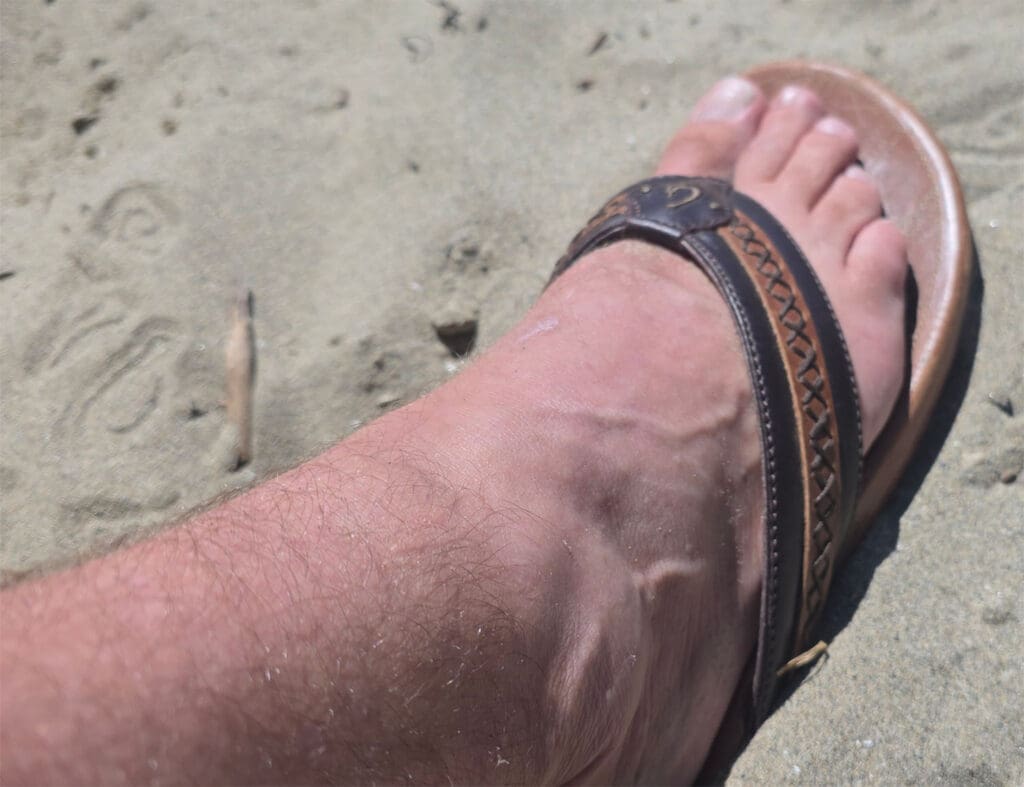
    the olukai mea ola nu'u sandals in the sand
    The pigskin stiching on top is the big standout feature that separates this version from the standard Mea Olua Nu’u

    Drawbacks

    • The price. $160 USD buys a lot of sandal, and it also buys a lot of other things. This only makes sense if you’re the kind of person who keeps footwear for years and takes care of it along the way.
    • It’s leather, so it needs care. Rinse it in the ocean all summer and you’ll get a fraction of the life out of it. OluKai is explicit that the Mea Ola is made for dry sand and shorelines, not swimming.
    • Sizing is a coin flip online. Two official sources, two different answers. Order from somewhere with free returns, just to be safe.
    • Limited edition. One colourway, men’s sizing only, and when it’s gone it’s gone.
    • Not vegan, not synthetic. Leather upper, leather footbed, top to bottom. The only rubber is at the very bottom of the outsole.

    Who This Is For

    Buy them if you want a sandal that will still be in the rotation in five years. This isn’t the typical “dad shoe.” It’s a notch above and is perfect for a gift to show you really care about a guy. If they’re a football fan, and especially a fan of the Kelce brothers, it’s a no-brainer. If they aren’t the type to change out of their workboots… even better, and maybe this set of premium leather slippahs will help them do the trick.

    Yes, it’s expensive, but a lot of things are these days, and it’s got more utility than a fancy golf shirt that probably costs around the same.

    Who Should Skip This

    Skip them if your sandals live in the water. If you’re spending the summer at the lake, launching a boat, or handing them to a kid who will absolutely wear them into the ocean, buy something synthetic and stop reading. Leather will lose that fight to water, especially over time. Skip them if you don’t use animal products, because there’s no synthetic version of this sandal. And skip them if you’re the kind of buyer who replaces flip flops every June for twenty bucks and is perfectly happy doing it: the whole argument for the Mea Ola Nuʻu is longevity, and if you don’t care about longevity, you’re just paying for leather.

    Final Thoughts

    I went in skeptical about a celebrity collab and came out with a sandal that gets more comfortable with each wear. The Kelce details are probably something peole will eithe gravitate to or avoid, but they’re not the reason to buy it. The leather, the footbed and the outsole are and those are all OluKai’s, collab or not. Make no mistake, it’s a lot to spend on a sandal. But the quality craftsmanship and rugged outsole means it’ll last.

    Leather isn’t for everyone, but it’s the type of sandal that will only get better with time, and should last for a very long time if you know how to take care of them.

    Frequently Asked Questions

    Are the OluKai Mea Ola Nuʻu sandals worth the money?

    At $160 USD they cost roughly eight times a drugstore flip flop, so the math only works if you keep them for years. The full-grain leather, contoured footbed and stitched toe post are built to be kept. If you’re hard on sandals or you swim in them, you won’t see that value.

    Do the OluKai Mea Ola Nuʻu run true to size?

    OluKai recommends sizing up, however I found them to be pretty true to size, or even a hair larger than usual. Shopping for foot sizing is always a bother, but if you can’t try them out in person before buying, make sure you can return them. Amazon is a clear winner here for that reason… love ’em or hate ’em, their return policy allows you to give them a try.

    Can you wear OluKai leather sandals in the water?

    Not really. OluKai describes the Mea Ola as built for dry sand and shorelines, and warns that prolonged water contact can damage the leather. If you want an OluKai you can soak, look at their synthetic or water-ready models instead.

    Did Jason and Travis Kelce actually design the sandal?

    It’s a collaboration, not a ground-up design. OluKai built it on its existing Mea Ola platform. It’s a sandal Jason Kelce has worn for years, and they reworked the materials and detailing with football references: vintage pigskin leathers, lacing-style stitching, gold foil signatures and a “New Heights Equipment Co.” stamp. The comfort underfoot is OluKai’s, not the Kelces’. Like any collab, it’s more just a way for a brand to reach a new market. Whether or not it’s enough for you to want to pony up dough for depends on if you like the style or not.

    Is the New Heights x OluKai collab still available?

    It launched in June 2026 as a limited edition, sold while supplies last, in one colorway and men’s sizing only. Check current stock before you get your hopes up.
  • Glerups Slipper Review

    Glerups Slipper Review

    Best slippers on the block?

    This may be entirely unnecessary, pretty sure these slippers write their own review, but today, is (always) the day to give praise where praise is due.

    As I arise from bed on this dreary, Tuesday morning, with a few pairs of slippers to choose from, without thought or hesitation, my feet gravitate towards these baby’s. Every. Single. Time.

    Let’s take a look at why Glerups are my queen in the kingdom of slippers.

    What makes them the best?

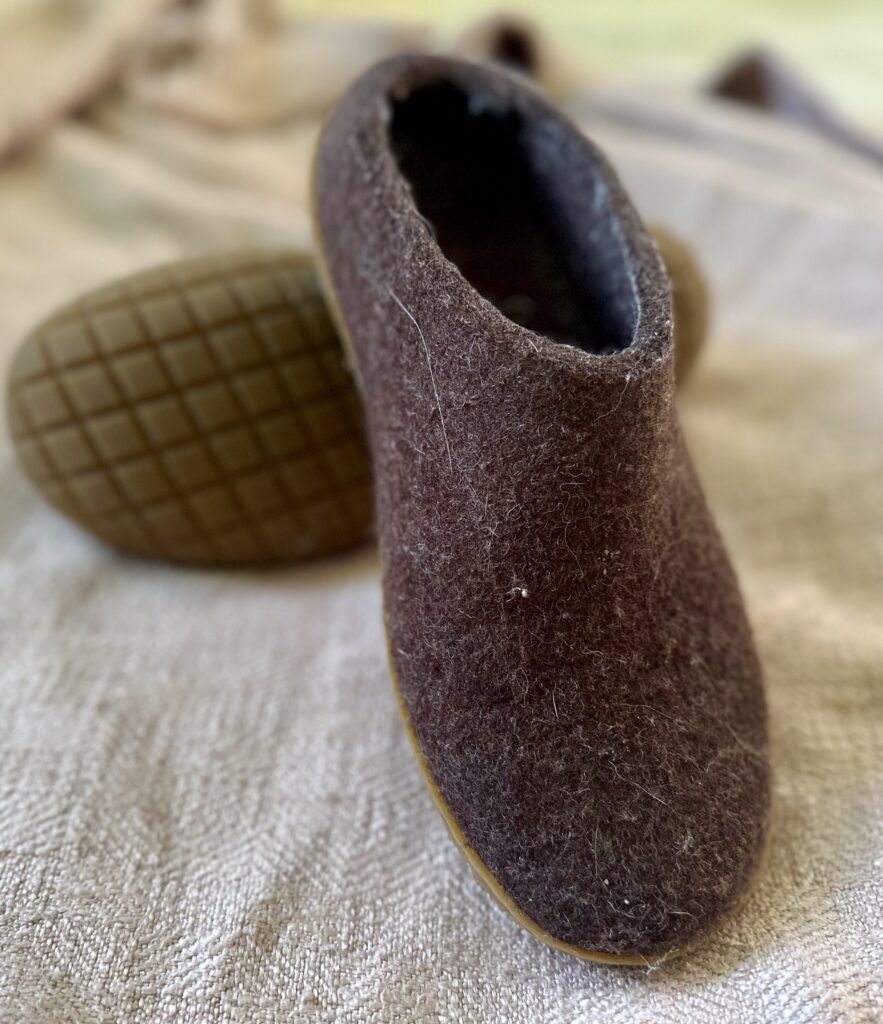
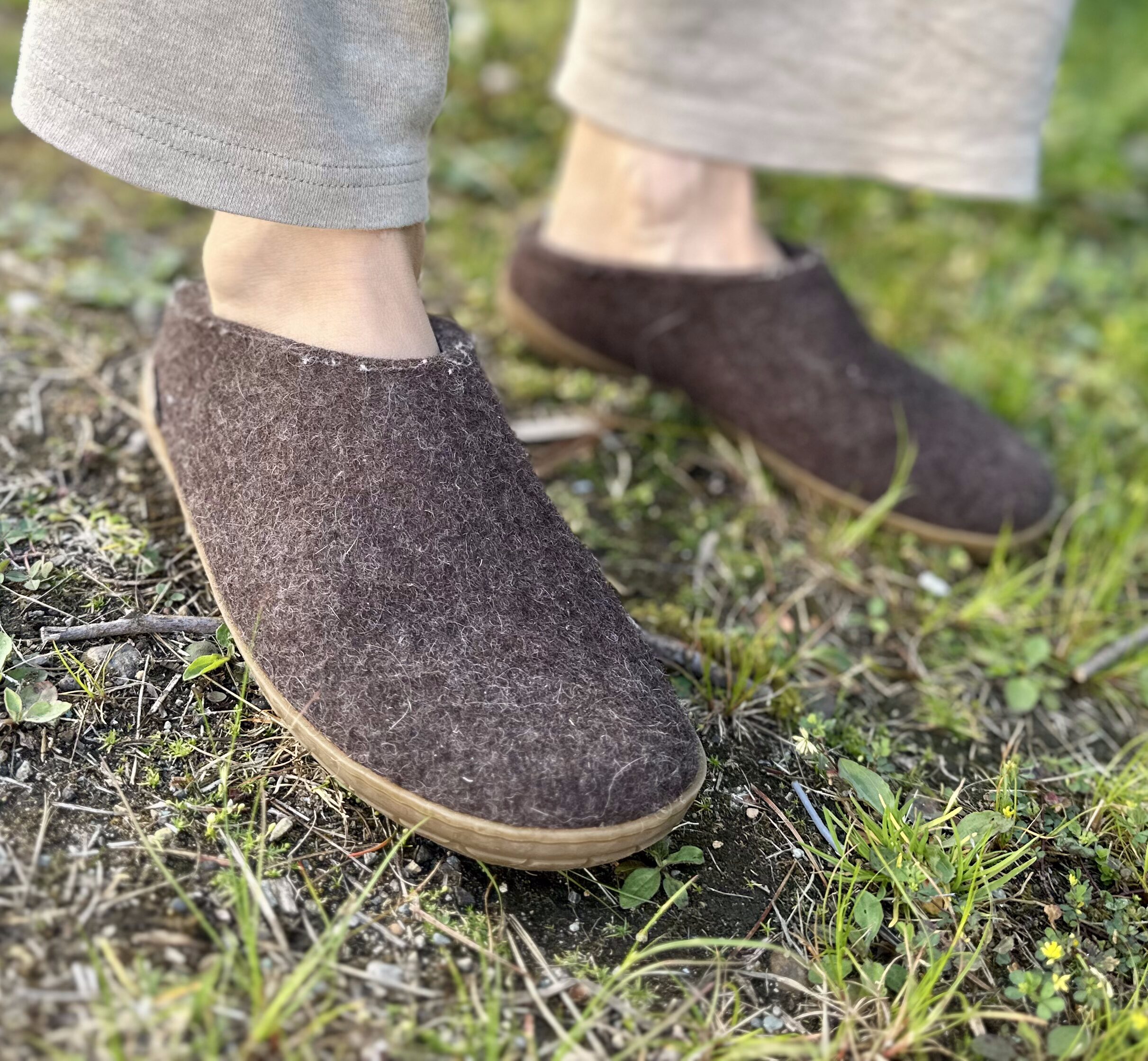
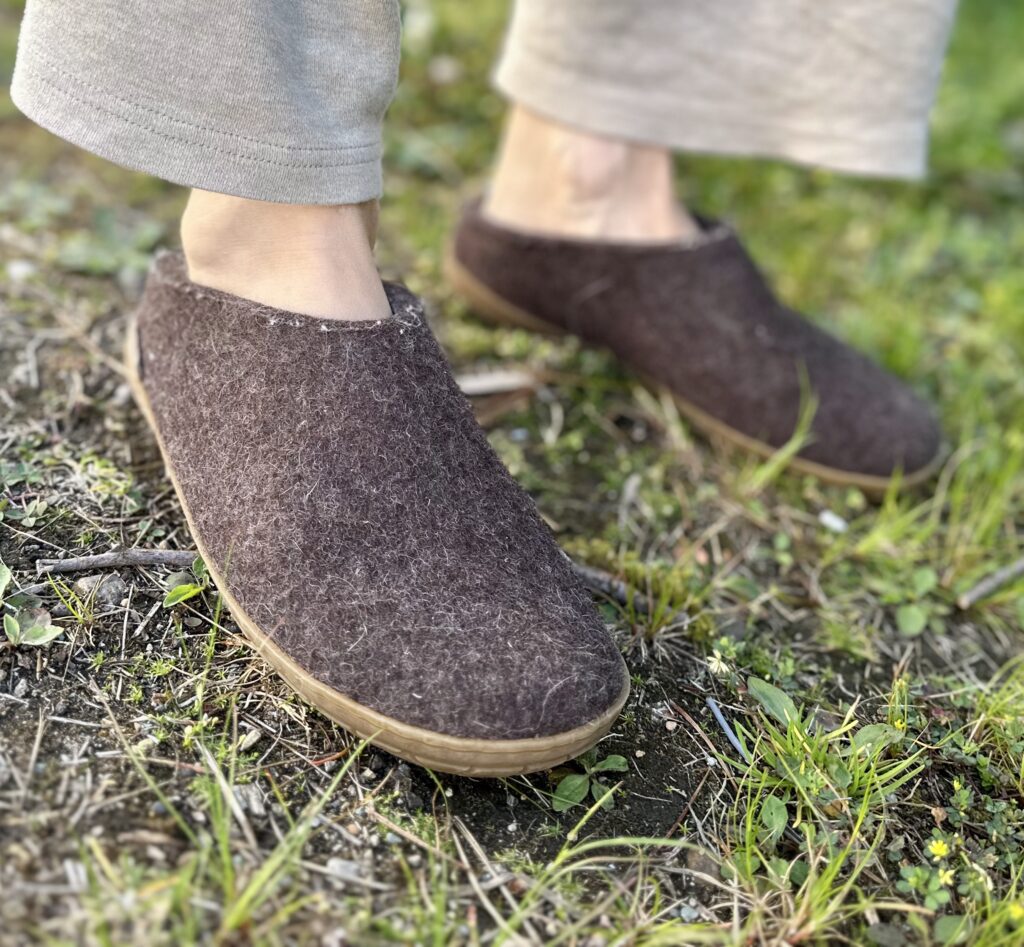
    Comfort. Over a few wears, the felted wool shapes to the contours of your feet, it also keeps it’s shape, and doesn’t cave in or expand drastically over time. The wool is miraculously itch free, as my skin is usually super sensitive to all things that go ‘baaah’. The wool acts as a temperature regulator, keeping your toes toasty in winter and cool as a cuke in summer. And if you have stinky feet? No worries, these won’t absorb the smell, they’ll also work as a barrier, so your SO’s nose doesn’t need to fret when they see you coming close.

    Not only do they fit like a glove, the felted wool worn in just so (on my feet), the company is one of the good ones. They make one product, and they make that one product, imo, perhaps better than anyone else. Hailing from Denmark, notoriously known for it’s great design, these slippers are Scandinavian simple, chic and practical.

    Earth-First

    In addition to their incredibly thoughtful design, these slippers are created with the environment at the forefront of the entire circular design process, from the sheep to your feet.

    Utmost care goes into all the materials, the animals and plants these slippers hail from. They carry the highest standard for humane animal care with their leather souls and wool, using Certified Responsible Wool (traceable to the exact location and farm it originated from), Forest Stewardship Council Certified natural rubber souls (zero harm caused from it’s source – the Hevea tree), and chrome-free leather. The slippers are also meant to completely break down after their (long) lifespan on your feet, rather than (most) other slippers that use petroleum and synthetic elements. Through their Project Zero Waste, Glerups upcycle all their scraps to make other handy things. They also don’t outsource, having complete control of their energy usage (solar power) and employee treatment. Go Glerups!

    From sheep to feet. Photo courtesy of Glerups

    “…It takes time to make a pair of glerups. We don’t rush the process, but rather, we take our time. My parents spent many years testing and developing our product. They put a lot of hard work and many hours into glerups. All the way from the sheep to your feet. We take extreme pride in the fact that we own our own factory, partner with honest and caring farmers, and have eyes on every step of our value chain… My parents started glerups this way and their legacy will never be forgotten.”

    – Jesper Glerup

    With all that said, I’ll share a few pros to why my unconscious and conscious both choose Glerups.

    Glerups Slip-on: The Facts

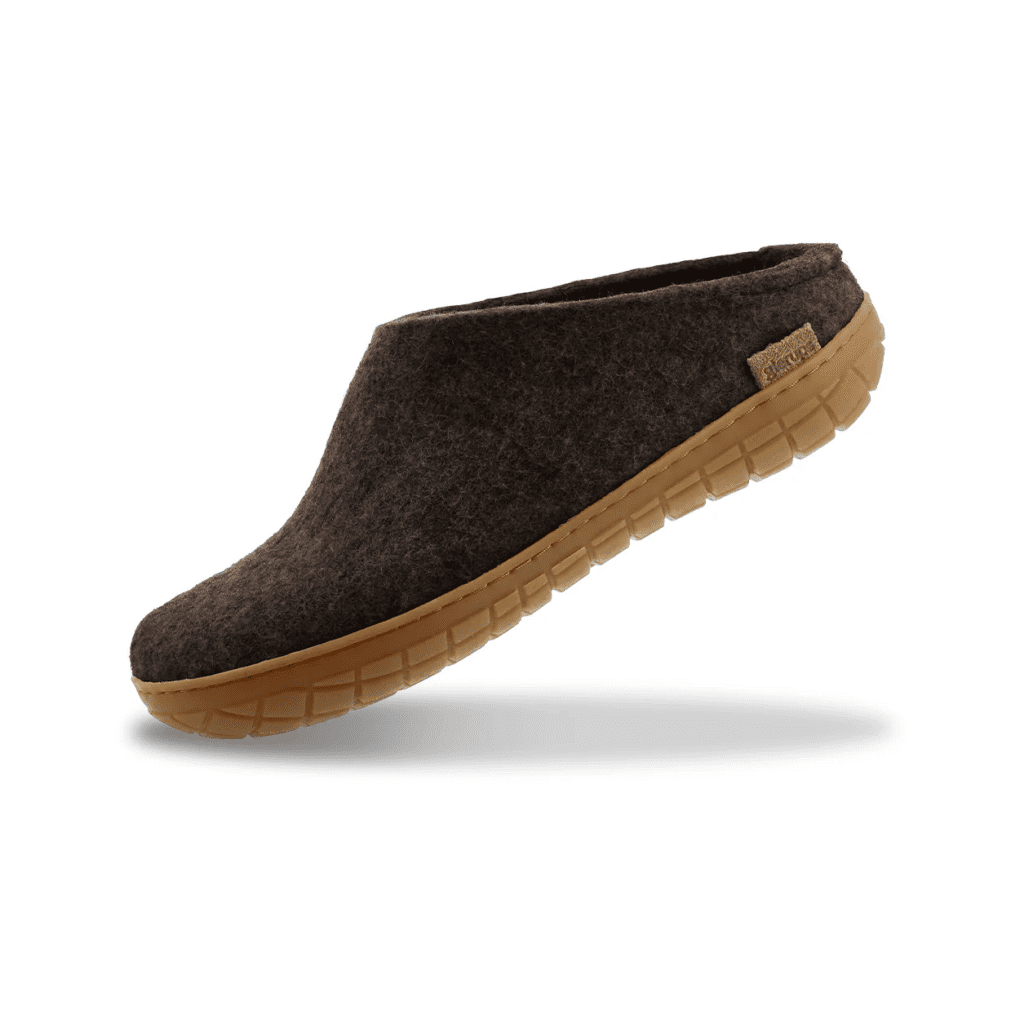
    My go to, the Glerups Slip-on with natural rubber sole – honey – Chestnut
    Price (as reviewed)$119.95 (cdn)
    Upper100% pure, natural wool (available in 3 styles – slip on, shoe and boot)
    Lining / footbed100% pure, natural wool
    OutsoleNatural rubber (also available in leather for less $$)
    FitTrue to size
    WarrantyFully guaranteed against defects in materials and workmanship – without guarantee or expectation of service life

    Specs verified June 11, 2026. Prices drift — check before you buy.

    First Impressions out of the Box

    They’re beautiful, so pristine, so clean, slightly stiff. The rubber soul is rounded rather than flat, feeling off at first. But just wait, give it time, and soon, once the wool footbed molds to your feet, you’ll be pleasantly pleased.

    Over Time

    If these slippers could time travel in a time travellin’ phone booth, they would. Hailing from the current owner’s parent’s, they feel timeless. Nanny Glerup created her first booty for her husband, Ove, back in in 1970. In 1985 they moved to their own farm and reared their own lustrous Gotland Sheep, registering the company in 1993 to keep up with the demand of their friends and family. That’s 33 years the company has been going strong, and they’ll most likely be around for Nanny’s great great great grandchildren.

    Now, over time through the life of my slippers? I’ve had them for over 8 months, they have formed to my feet, and are delicously comfortable. Sometimes I forget I’m wearing them and omit to change into shoes when going to do errands. There is a little pilling around the opening, and if you have fuzzy animals, the felt attracts fur. Both not a big deal imo, if you have spare time away from your toddlers or whatever beckons, both can easily be pulled away.

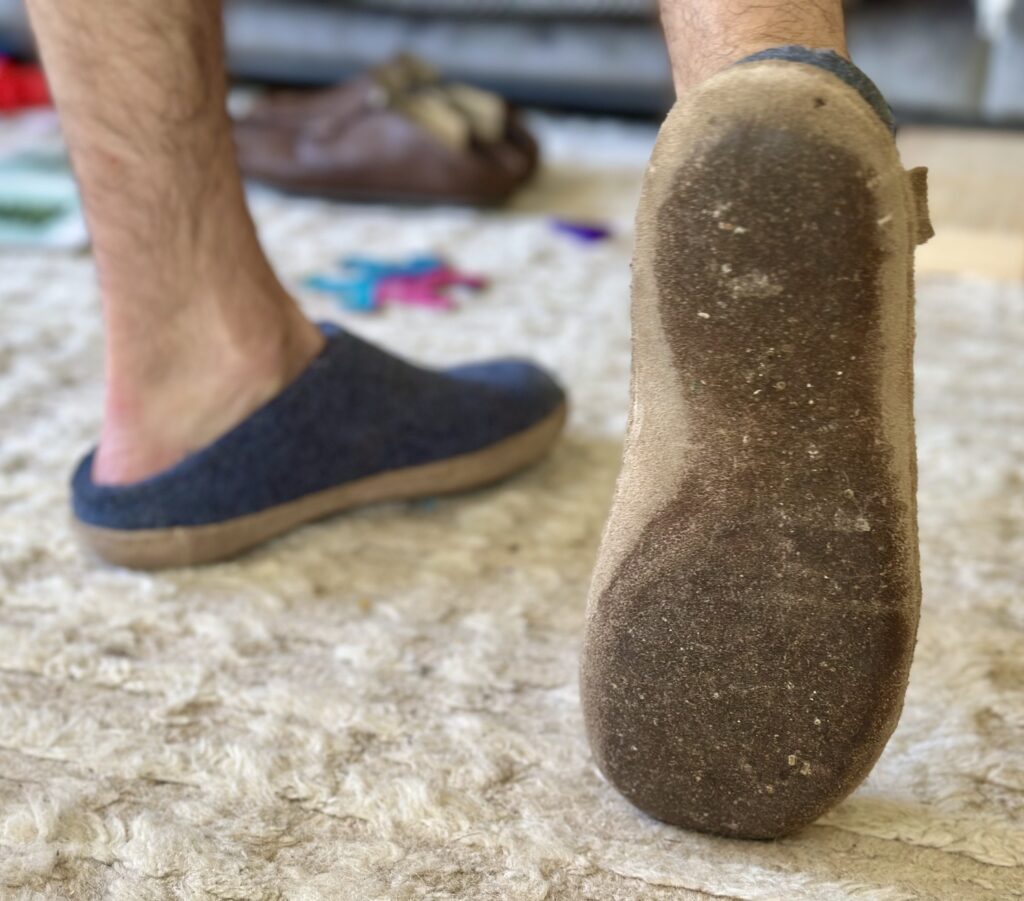
    If you buy the leather soles, know that there is an awkward teenage break in phase where everything seems to stick to the bottom. With more wear and tear, this eventually hardens and smooths out. You can see this in the image below, nearing the end of their sticky adolescence.

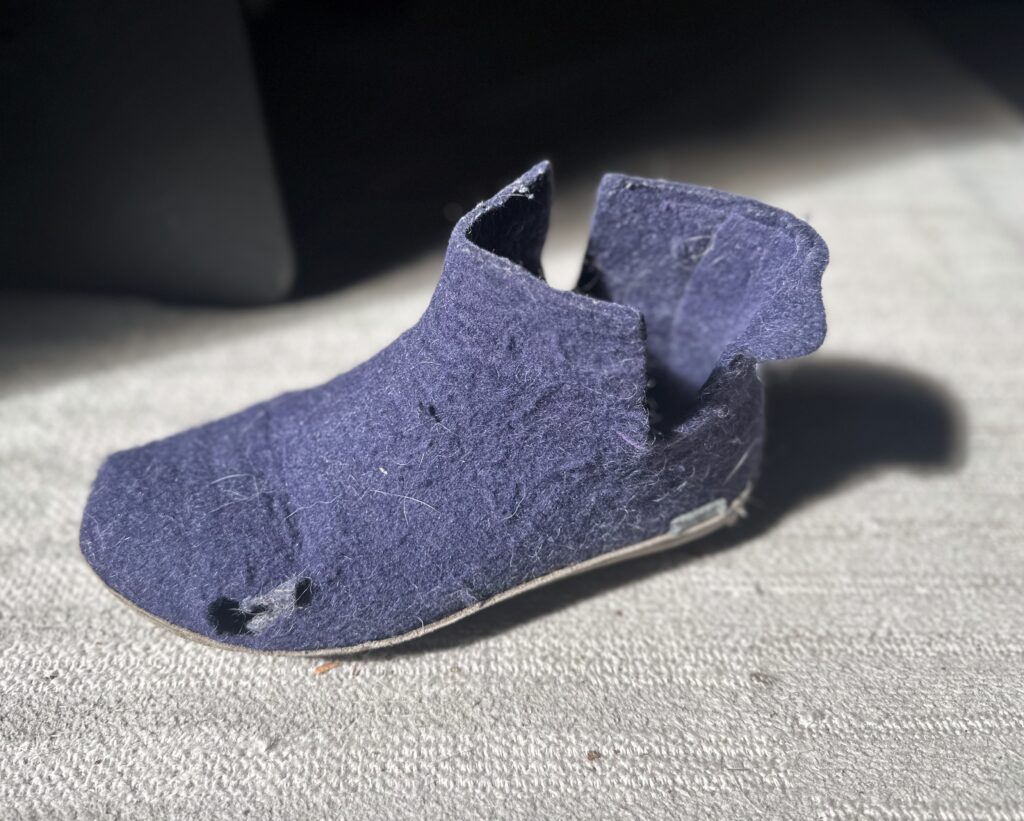
    I snuck a pic of my sister’s ride or die Glerups, and this is how they look after 8 years. She put these slippers on my radar, as she wore them nearly every single day for the first 5 years of their life. She holds onto them to wear during the cool and damp winter months. Here, you can see how they naturally break down and will eventually return to the earth they came.

    A work of art, non? If you could describe what love looks like to an alien, maybe, it would be this.

    Final Thoughts

    We’ve got some good experience with Glerups and can report that these slippers hold up well over time. Steve (my co-creator in this lil’ family adventure) rated his Glerups as Best for Travel and Best Slippers for the Home in his review of the best slippers for camping, travel, and home. More reason to stand by my best slipper on the block testament. We simply love them, in our everyday and on our adventures. Perhaps now is the time to see for yourself, dude/dudette.

    Party on Glerups!

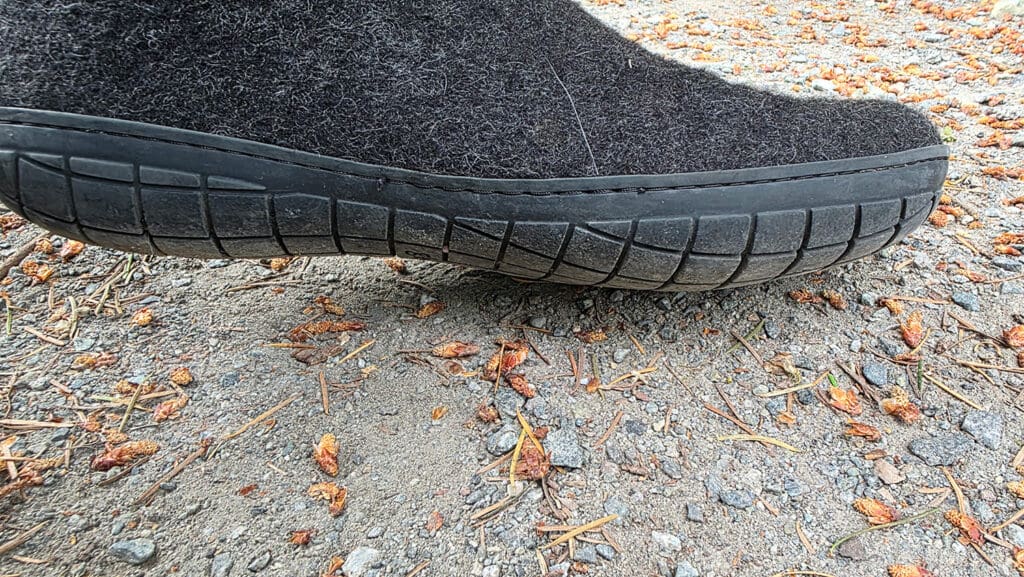
    looking on the underside of the glerups boot slipper with rubber sole
    The rubber sole version makes outdoor adventures much more palatable.
  • Kodiak 10×10 VX Canvas Tent Review: A Family Camping Palace

    Kodiak 10×10 VX Canvas Tent Review: A Family Camping Palace

    Before having kids, I was a minimalist when it came to camping. Light, fast, and easy were my guiding principles. After having kids, that changed. One of the first items I got was the Kodiak Canvas 10×10 VX tent. And while it’s not light, setup is actually pretty fast and easy. Maintenance, though, isn’t what I’d call easy, and being canvas it definitely needs a bit more love than your average nylon tent to stay up to snuff. But if you take the steps, you’ll have an incredible shelter that will become cherished in the family for many adventures to come. Let’s break it down a bit further, below.

    Kodiak Canvas VX Tent: First Impressions

    ProsCons
    RoomyHeavy
    Great windowsExtra care to maintain
    Built to lastCanvas can be prone to mold

    The first thing you have to know about a Kodiak Flex Bow tent is that it’s not light duty by any means. At 60 lbs, it’s not going to be attracting any of the ultralight crowd. But that’s a whole other market anyway. Those people probably aren’t bringing kids along, either, or if they do, their kids will end up swinging the other way when they are older and only want to go camping in RV’s. Heh, heh. Maybe not, but the thought of doing anything ultralight with children sounds like far too much planning than anyone I know with kids can handle.

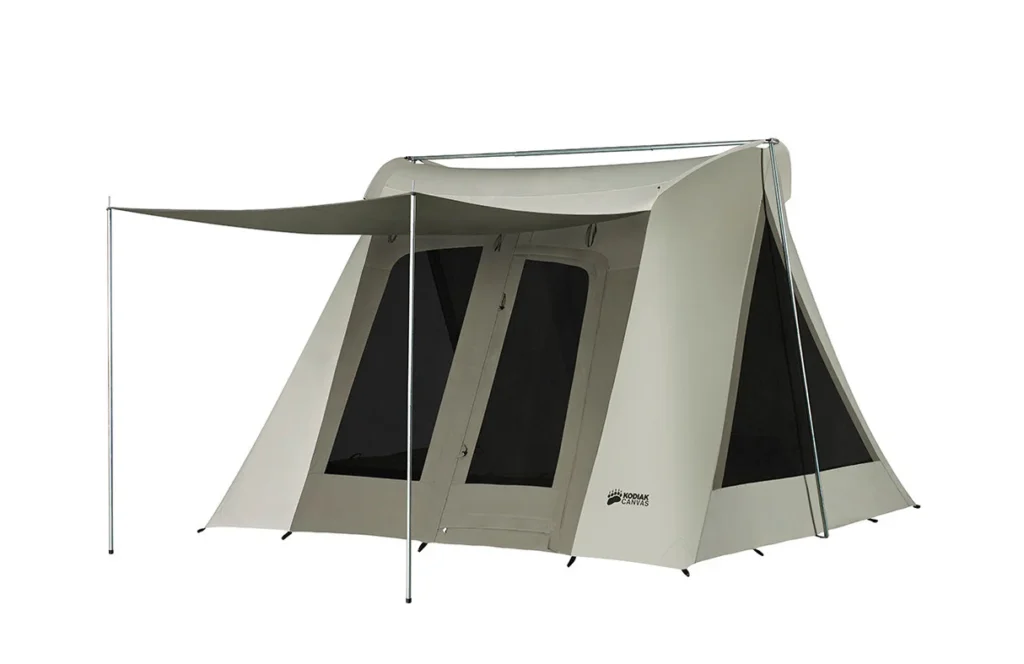
    Once you get the heaviness out of the way, you’ll also notice a lack of poles, although the poles it does come with are quite heavy-duty. If you have never used a flex-bow tent, you’re in for a treat. It really only takes one time to learn how to set it up, and from then on the setup process is remarkably fast. Basically, you set up the roof by putting it under tension using the heavy-duty rods, and add the side supports. Make sure it’s properly staked for the tension to work properly. But that’s it. You can realistically have the whole thing setup in less than 10 minutes, assuming the campsite is already clear.

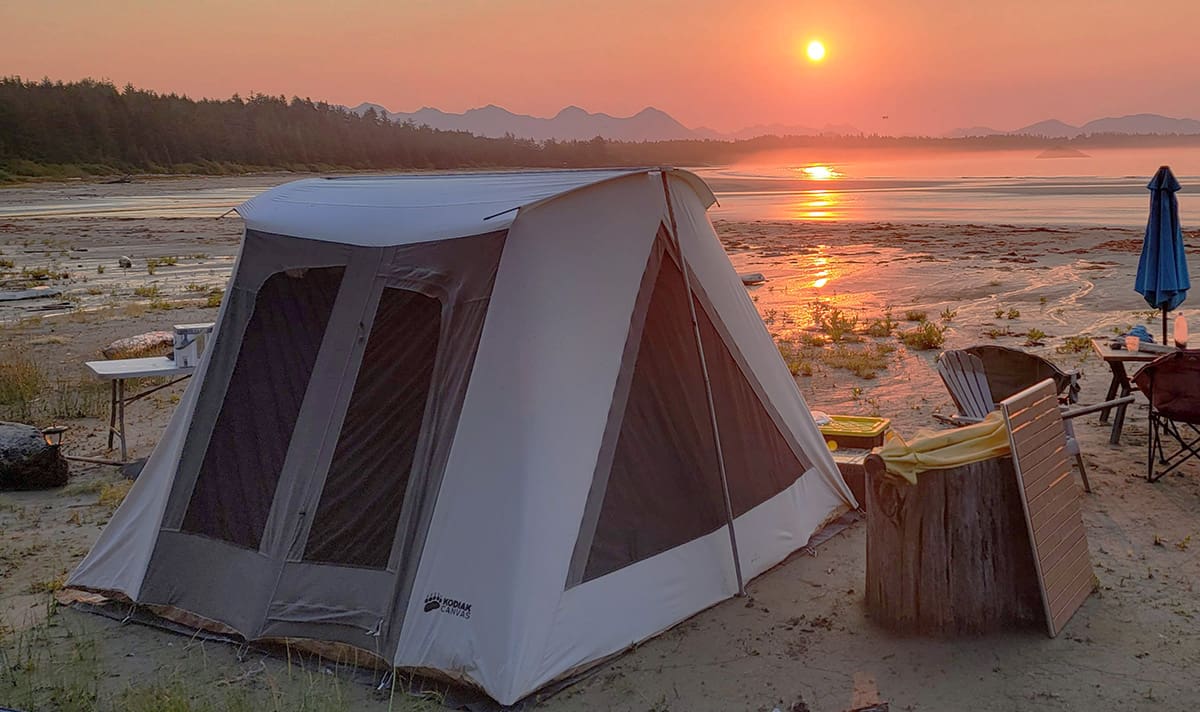
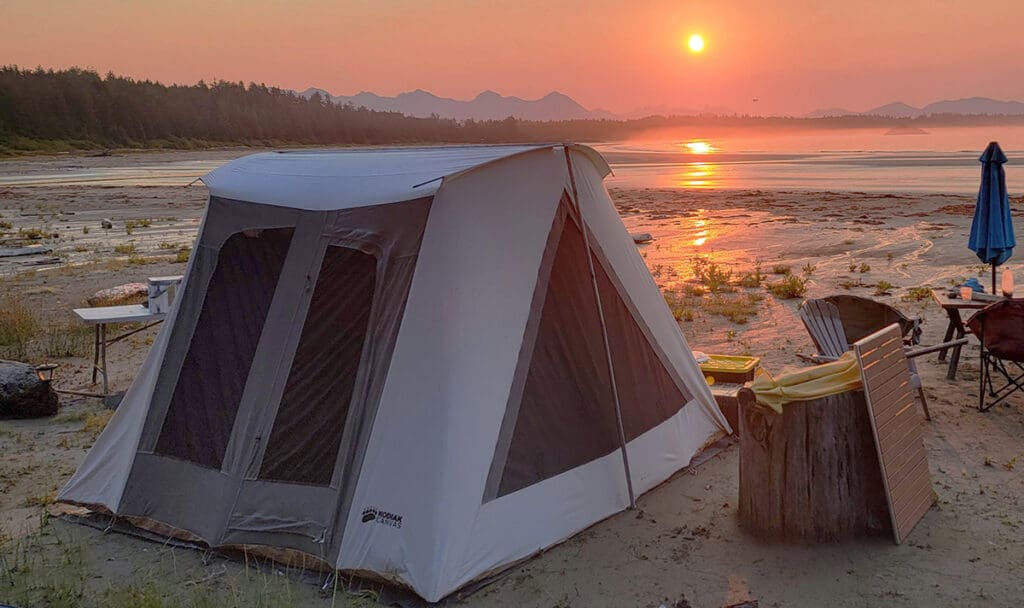
    a campsite on the beach at sunrise with the kodiak flex bow tent

    Notable Features of the Kodiak Canvas Flex-Bow Tent

    You can find the features by the name of the tent. The first one is in the material: canvas. Being made of waterproof duck canvas adds a heavy-duty element to the tent that you can’t find in nylon or any other synthetic material. Sure, it costs a pretty penny, but you will also find it incredibly rigid and supportive, no matter the weather happening outside. We have successfully used it in rainstorms where it rained over 1 inch in 12 hours, on top of dry playa desert surface, at Burning Man. If anyone heard of the infamous rains at the event in 2023, we were there, and the Kodiak kept us dry. The thick floor also lends to that, and the fact that it rises up to give a bit of a bathtub protection from water coming in was a huge advantage when the rain started filling in. We were safe, and would have been for another few inches of flooding.

    The other part of the name that stands out is the flex bow. This is the main feature that gives the tent its shape and provides a solid support where the staked-out tent can spread out from. It’s an ingenius design and isn’t exclusive to Kodiak, but the use of their premium materials means it’ll be durable and long-lasting.

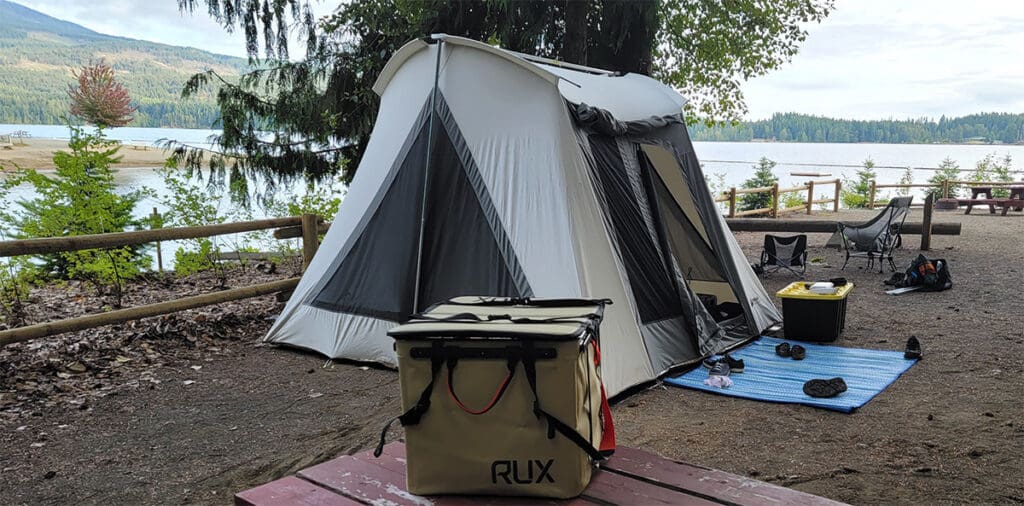
    a kodiak tent in a campground next to a lake
    A tent like this makes car camping with kids a breeze.

    Drawbacks to the Kodiak Canvas Tent

    The weight was already mentioned, so it doesn’t need to be expanded upon. But it’s heavy. So car camping is the only realistic use for this tent, especially if you have kids in tow.

    The other main drawback to the tent is the canvas material. It definitely needs a bit more TLC than your average synthetic material tent. If you pack the tent up wet, you’ll need to set it back up at home to fully dry out before packing it up, which could take up to a day… and may not happen if you’re in a wet climate such as the Pacific Northwest in winter. You’d need a heated shed or something for it to dry out properly. So it’s not for everyone, especially if you don’t want to deal with soggy gear at the end of a camping trip. But if you have the space to dry it out and don’t mind the step, it isn’t a huge deal to work with.

    Also for a large tent you have a huge footprint to deal with, so unless you’re at a prepped campsite it will be extra work to prep. Not a big deal, but it’s definitely something to keep in mind.

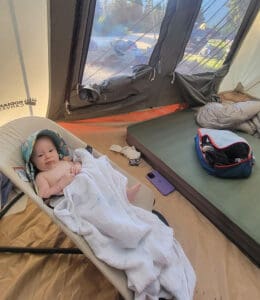
    a baby sits inside a canvas tent
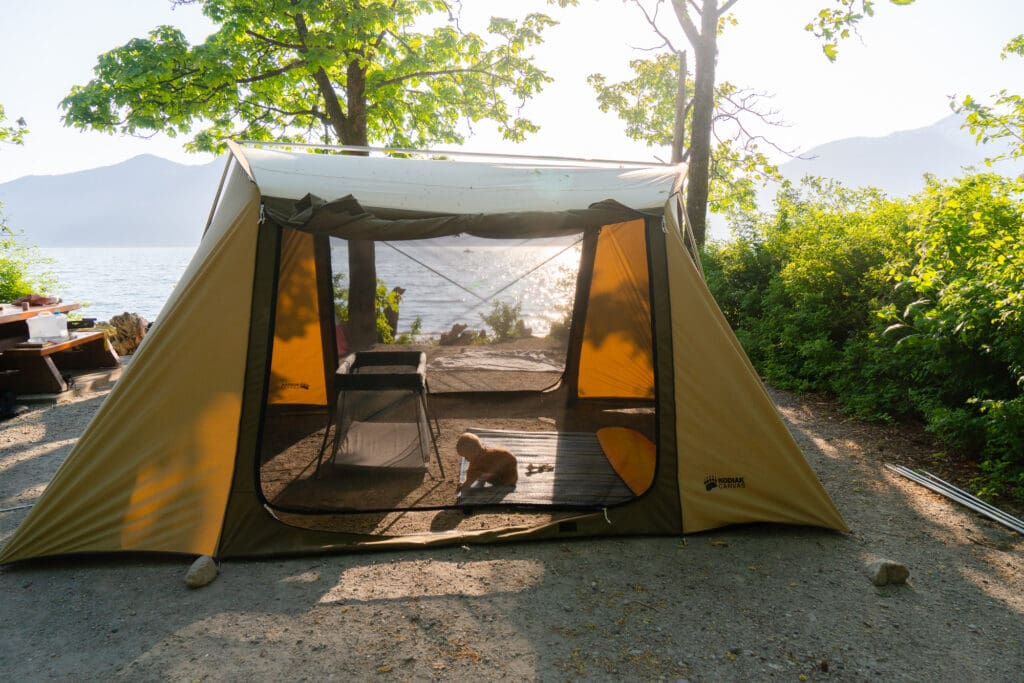
    a baby plays inside a kodiak utility tent
    The Utility Tent is a great option for an additional shelter.

    Final Thoughts

    Kodiak’s canvas flex-bow tent is a beast. But with the added weight and bulk comes a roomy and spacious shelter that you can stand up in, fit a queen sized mattress inside with room to spare, and enjoy protection from the elements. The VX version has massive windows that zip down for extra pretty views, as well as airflow. It’s not one tent to rule them all, but if you have an extended stay and want to camp in comfort, we found this to take the cake for convenience, durability, and great living space.

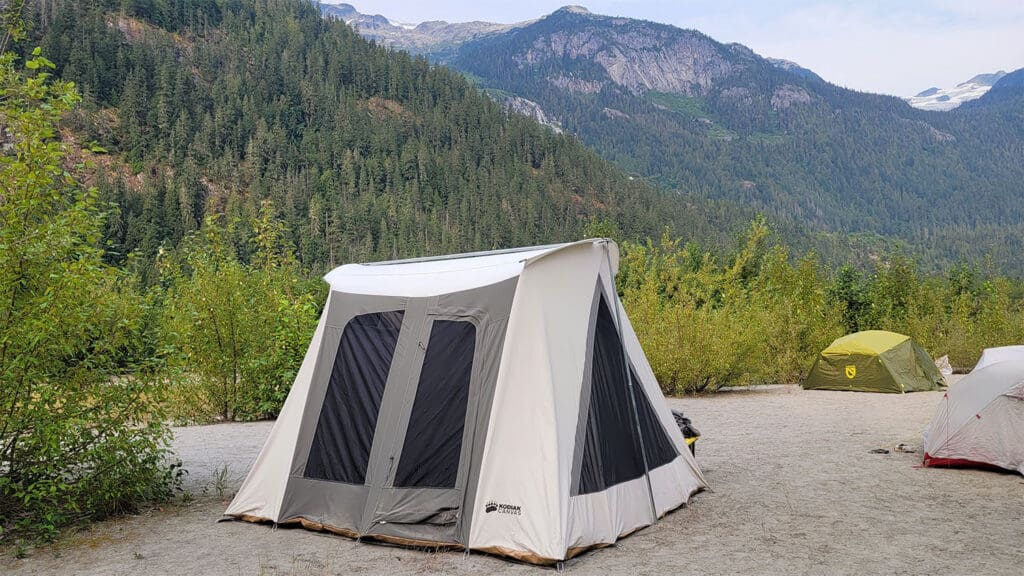
    a kodiak canvas vx tent in the squamish valley of british columbia
    Right at home in the Squamish Valley, BC, Canada