Once in a while, you get to test a totally new innovation and see how it stacks up to the establishment it claims to be beating. I’ve just spent the past three months testing out the Unrestricted cooler on our family adventures: hiking, camping, and biking around the Sea to Sky region of British Columbia. And while the bag isn’t breaking any ice-retention records, it does its job extremely well for a day trip as a mobile snack station and cool-drink provider. It also stays relatively watertight.
Read on for why this earned a spot in our regular rotation as the best low-bulk backpack cooler we’ve tested for day missions.
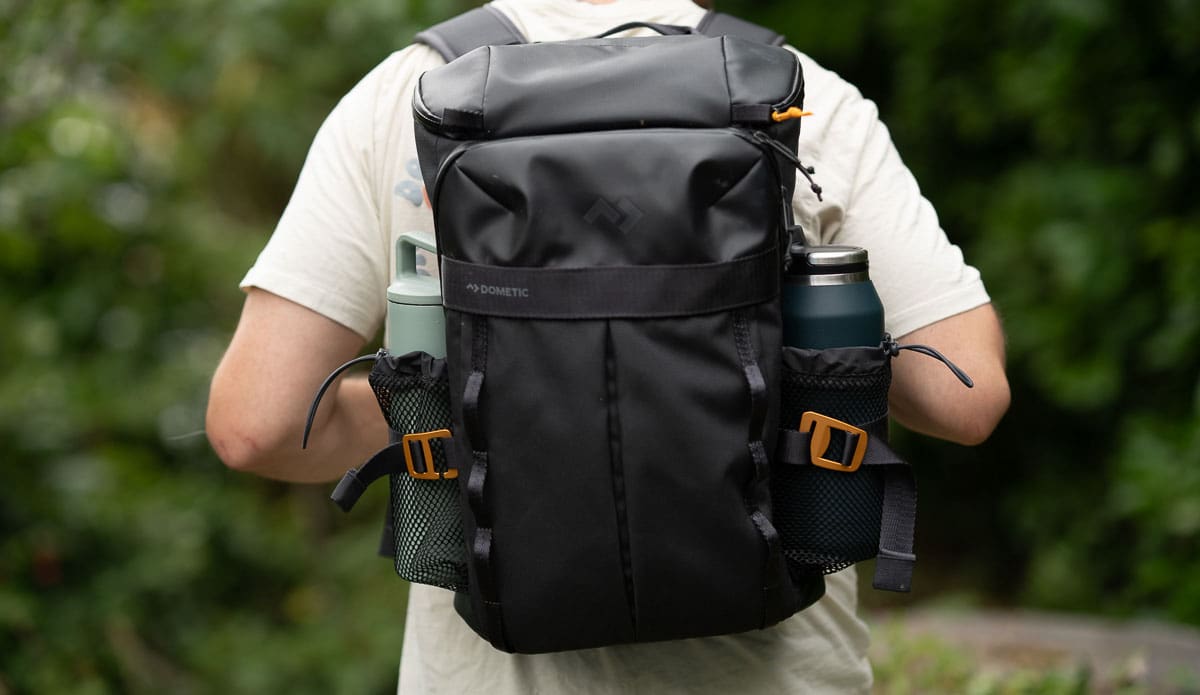
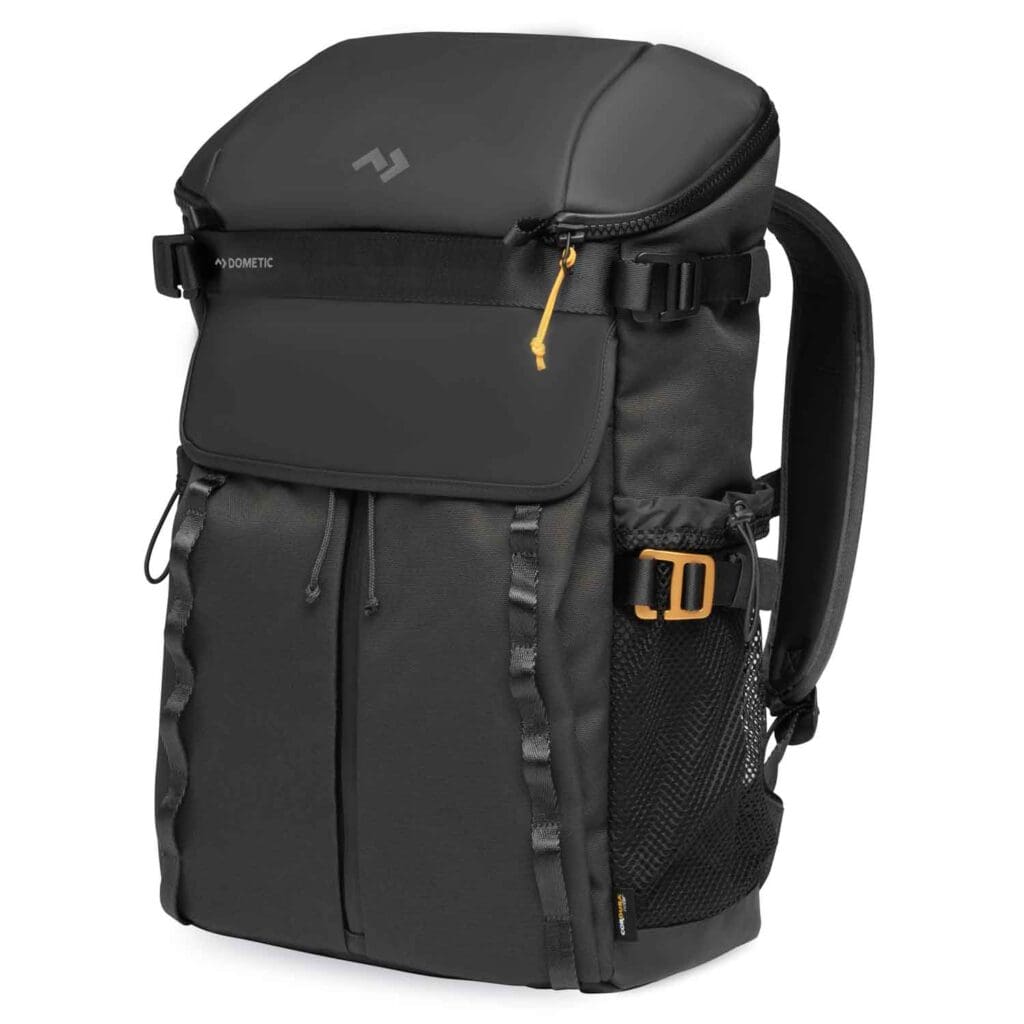
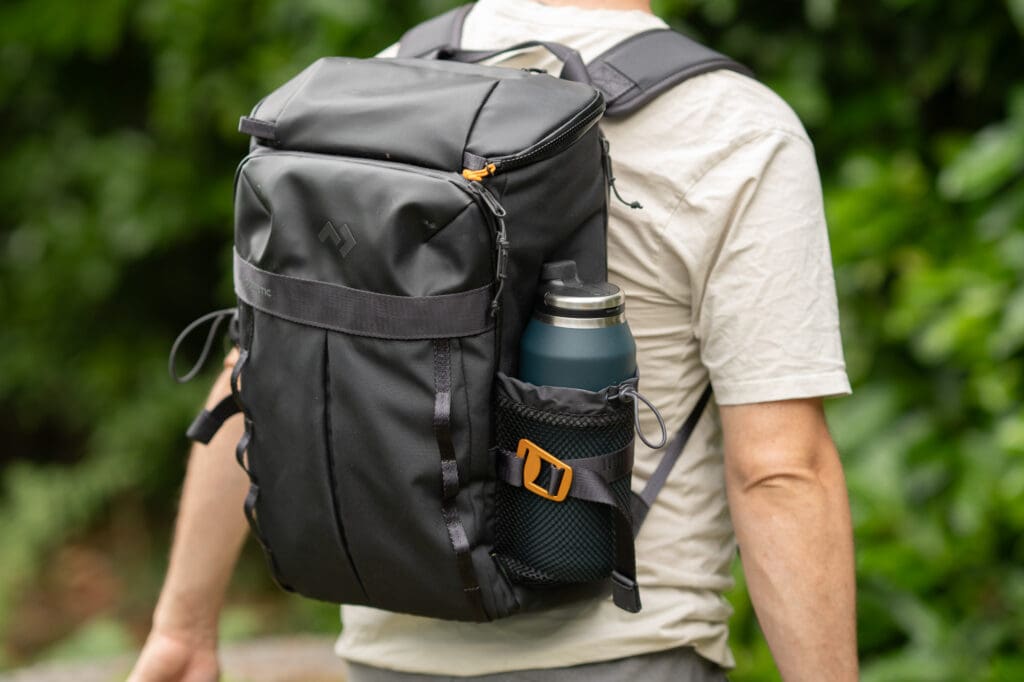
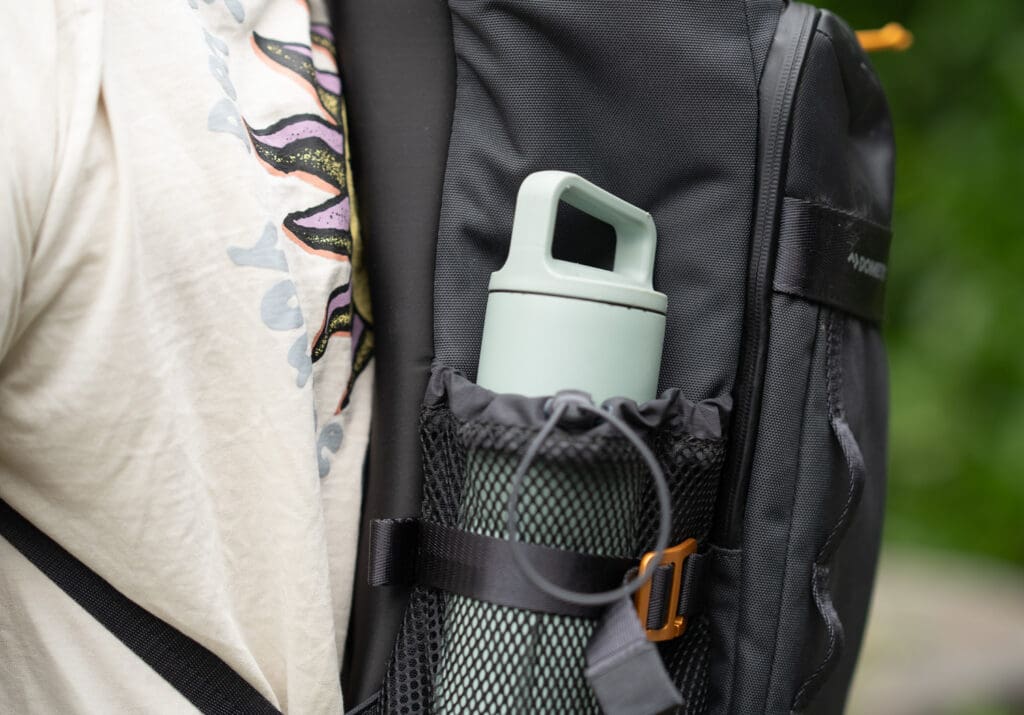
The first thing that struck me about the Unrestricted is that it doesn’t present itself as a backpack cooler. No bulky, boxy shell, no “I’m carrying beer to the beach” silhouette. It reads as a normal daypack, right down to the integrated laptop sleeve, and that’s the whole point: it’ll moonlight as a carry-on or a commute bag on the days it isn’t keeping lunch cold.
You can’t tell it’s a cooler from the outside!
Why I trusted the insulation before I packed it
Before I even knew what it was, I brought a PrimaLoft-lined shirt with me on an expedition to Mount Logan while filming for Nat Geo. One of the older crew members was ribbing me for not having a puffy jacket as a midlayer, but he soon got pretty quiet when I’d stand around camp in comfort without a massive parka on. It was the only thing that worked as a good insulating layer where I didn’t feel overheated, and when I did sweat, it didn’t become a soggy mess. So when I saw the same insulation wrapped around a cooler, I was pretty confident that it’d do well.
How it held up from the car to the trail
Over three months we ran it through a proper Sea to Sky gauntlet: a hot summer car ride up to Whistler, lake-to-lake along the Valley Trail with the Chariot in tow, a few nights camping at Porteau Cove, and a string of day missions to Squamish. Through all of it, our food and drinks stayed properly refrigerated. The catch is that the cold only stays put if you keep it zipped. Leave it gaping open at the picnic table and you’ll feel the difference pretty quickly.
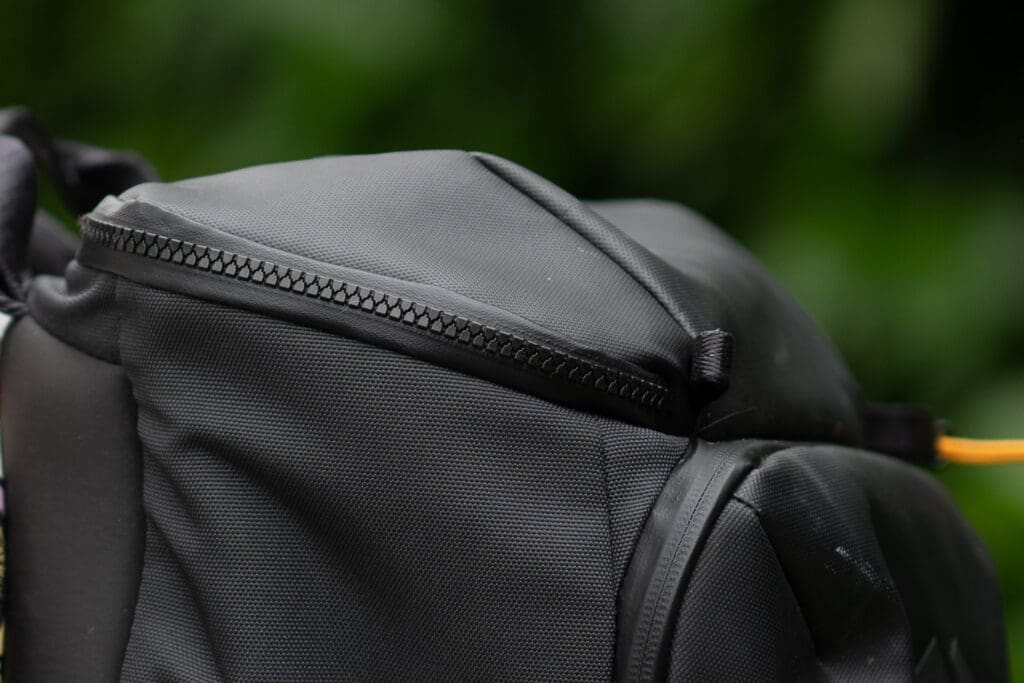
The zippers are robust enough to help seal out the heat, but just make sure you zip them all the way!
The size-to-insulation sweet spot
Let’s be honest about the cold retention: it doesn’t match something like the IceMule Boss, or even a Yeti backpack cooler. But both of those are cumbersome. The Unrestricted has a better size-to-insulation ratio, which makes an excellent sweet spot that’s good for a day, but not so good for a week, if that makes sense. For the kind of day-tripping a family actually does, that trade is the right one, and the compact package is exactly why it ends up coming along.
The ice pack situation
The clip-on Connect Ice pack isn’t that exciting. I usually just used gel freezer packs instead, which did the job for less. That said, if you’re in a pinch and don’t want to pay five bucks for a bag of ice that’s far more than you need, the system is a tidier option than dumping raw cubes in. Just know it’s sold separately, so factor that into the price.
Buy it if you want a day-trip cooler that carries like a normal pack and doesn’t have the bulk of a Yeti or an IceMule. It’s the right call for hikers, bikers, paddlers, and beach-bound families who value a smart size-to-insulation ratio. If genuinely recycled materials matter to you, the PrimaLoft story here is the real thing, not a sticker.
Skip it if you need ice to survive a multi-day trip. This is a day cooler, full stop, and a hard-sided chest will serve you better for car-camping a week out. Ultralight backpackers counting grams will find it heavier than they’d like for the volume, and bargain hunters will balk at the premium price. And if you assumed the cooling packs came in the box, know up front that they don’t.
Final Thoughts
The Dometic Unrestricted is the soft cooler that finally solved the problem of looking and carrying like a soft cooler. For day missions a little further out of reach, it’s a fantastic mobile snack station and cold-drink provider. It’s versatile enough to double as an everyday pack, built from materials I’m happy to stand behind, and watertight enough to trust. It won’t win an ice-retention contest against a hard cooler, and the separately sold ice packs aren’t anything special, but for a family that wants one civilized way to keep food and drinks cold on the trail without the bulk, this one earns its spot on trips a little further out.
Heads up: This review contains affiliate links. If you buy through one, I may earn a small commission at no extra cost to you — it helps keep these reviews free to read. It never changes my verdict. Read my Gear Review Policy. — Steve
I’m not as big of a football fan as I once was. Family life has certainly cut into leisure time. So when I heard that OluKai, a brand known more for the waterman’s ethos of Hawaii, was collaborating with NFL stars Travis and Jason Kelce, I kinda went “meh,” and wondered if this collab was genuine.
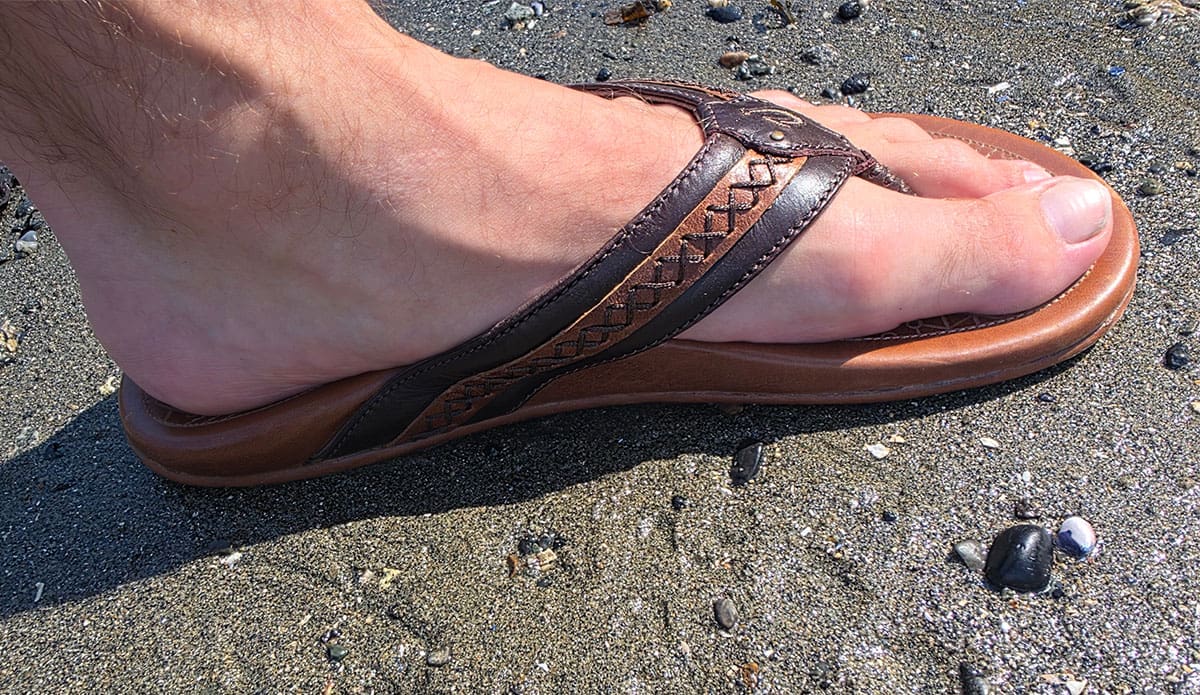
Then I tried the sandals out. And whatever the reasoning behind the collab aside, the reality is that it’s a damn fine pair of flip flops. The leather is what you’d expect with OluKai, but the big difference is the footbed. Maybe having some of the top athletes in a sport that has them abusing their feet designing some leisure footwear wasn’t such a strange idea, after all.
As a dad, comfort is key, and so is quality, although both come at a premium. So were they worth the $160 price tag? Read on to find out!
Bottom line: It’s a lot to spend on a sandal, but the full-grain leather and rugged outsole mean it’ll last. It’s the type of sandal that gets better with age, as long as you aren’t the amphibous type.
Pros
✓ Full-grain leather that softens and shapes to your foot instead of wearing out
✓ The footbed is noticeably more supportive underfoot than a flat foam flip-flop
✓ Grippier than it looks: rubber traction pods set into a leather-wrapped outsole
✓ The football details stay subtle, but is a nice touch.
Cons
✕ $160 USD is a lot of money for a pair of flip flops
✕ It’s a beach sandal you shouldn’t swim in. OluKai builds the Mea Ola for dry sand and shorelines, not soaking
✕ Sizing guidance conflicts between OluKai’s own page and its Amazon listing (see The Facts, below)
Dark Java / Tan (single limited-edition colourway)
Sizes
Men’s US 7–15, whole sizes
Upper
Full-grain leather
Lining
Soft microfiber
Toe post
Handsewn
Footbed
Contoured leather footbed with laser-etched New Heights artwork and embroidered logo accents
Midsole / outsole
Compression EVA midsole, with spotted rubber outsole on top of leather.
Fit
OluKai’s product page lists it true to size, standard width, standard arch. OluKai’s own Amazon listing for the same sandal says it runs small and narrow with a high arch, and recommends sizing up. See the sizing note below.
Weight
17 oz (pair)
Water use
Built for dry sand and shorelines; prolonged water contact can damage the leather
Warranty
1 year from date of purchase
Availability
Limited edition, while supplies last
Specs verified August 3, 2026. Prices drift — check before you buy.
A note on sizing
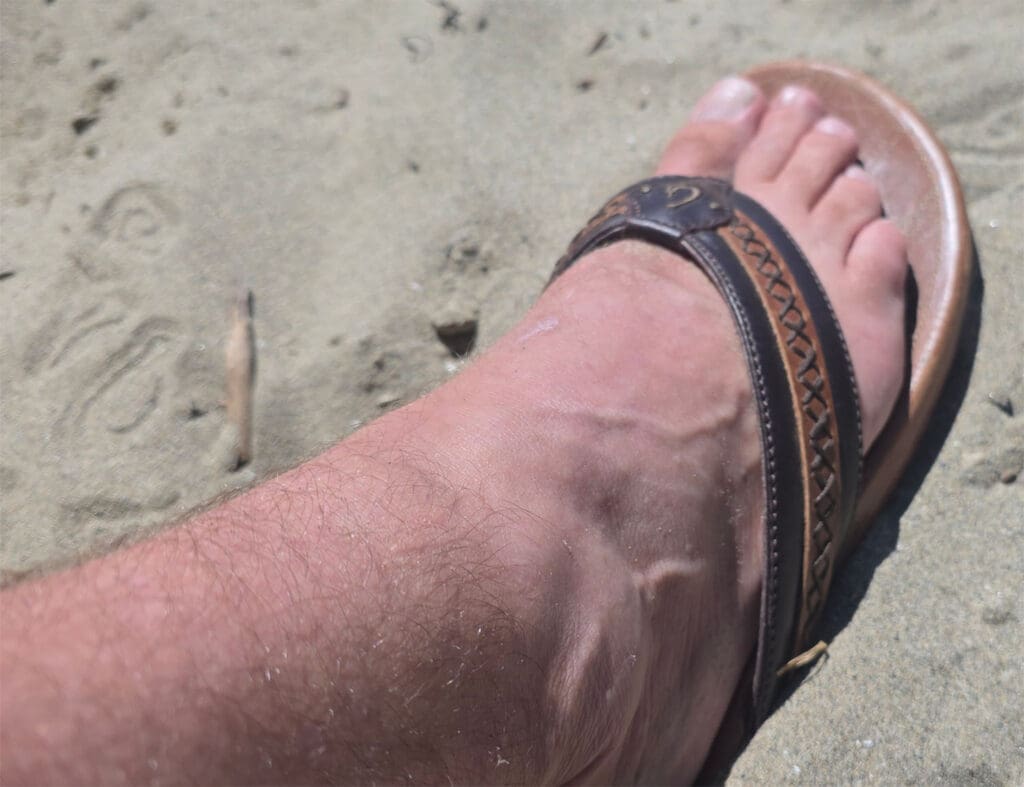
OluKai gives two different answers depending on where you shop. The product page on olukai.com says the Mea Ola Nuʻu fits true to size with a standard width and arch. OluKai’s own Amazon listing for the same sandal says it runs small and narrow with a high arch, and tells you to order a size up. I found it to be fairly standard for me, and ordering a size up would have been way too much underfoot. As someone who oscillates between a size 10 and 9.5, the 10 was actually slightly big, but a 9.5 would probably have my toes creeping over.
How I tested them
I’ve been wearing these over the past few months in a classic west coast summer. I’m not taking them hiking or anything, but wearing them on the day-to-day when it suits. I try to not
Notable Features of the Mea Ola Nuʻu
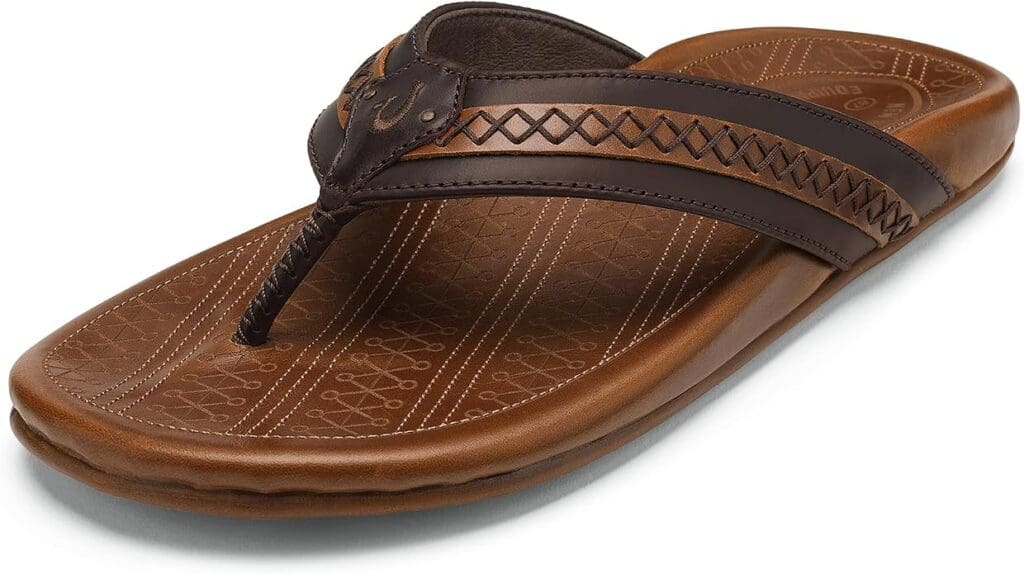
Full-grain leather upper. It breaks in rather than breaks down, and darkens where your foot touches it. OluKai says the leathers here nod to vintage pigskins and old-school helmets. It’s a nice touch.
Contoured footbed with real arch shape. This is what separates it from a $20 rubber flip flop: there’s structure under the arch, so your foot isn’t doing all the work. The result? I can wear these all day without the usual foot pain from cheap sandals.
Leather-wrapped outsole with rubber traction pods. The outsole truly is grippy and a step above (no pun intended) a cheap, flimsy plastic outsole. But the sporadic use of it means you still get some flex in the step, and it doesn’t feel clunky. It’s a great compromise.
Handsewn toe post and microfiber lining. The toe post is the first thing to fail on a cheap sandal. This one is stitched, not glued, and lined so it doesn’t saw at your foot.
The New Heights details. Laser-etched footbed artwork, stitching that echoes football lacing, gold foil signatures from both brothers, and a “New Heights Equipment Co.” stamp. Subtle enough that nobody at the beach is going to clock it as merch. But it’s there for the fans who appreciate some details.
One-year warranty, and a B Corp behind it. A portion of every purchase goes to Hawaiian nonprofits through OluKai’s Ama foundation.
The pigskin stiching on top is the big standout feature that separates this version from the standard Mea Olua Nu’u
Drawbacks
The price. $160 USD buys a lot of sandal, and it also buys a lot of other things. This only makes sense if you’re the kind of person who keeps footwear for years and takes care of it along the way.
It’s leather, so it needs care. Rinse it in the ocean all summer and you’ll get a fraction of the life out of it. OluKai is explicit that the Mea Ola is made for dry sand and shorelines, not swimming.
Sizing is a coin flip online. Two official sources, two different answers. Order from somewhere with free returns, just to be safe.
Limited edition. One colourway, men’s sizing only, and when it’s gone it’s gone.
Not vegan, not synthetic. Leather upper, leather footbed, top to bottom. The only rubber is at the very bottom of the outsole.
Who This Is For
Buy them if you want a sandal that will still be in the rotation in five years. This isn’t the typical “dad shoe.” It’s a notch above and is perfect for a gift to show you really care about a guy. If they’re a football fan, and especially a fan of the Kelce brothers, it’s a no-brainer. If they aren’t the type to change out of their workboots… even better, and maybe this set of premium leather slippahs will help them do the trick.
Yes, it’s expensive, but a lot of things are these days, and it’s got more utility than a fancy golf shirt that probably costs around the same.
Who Should Skip This
Skip them if your sandals live in the water. If you’re spending the summer at the lake, launching a boat, or handing them to a kid who will absolutely wear them into the ocean, buy something synthetic and stop reading. Leather will lose that fight to water, especially over time. Skip them if you don’t use animal products, because there’s no synthetic version of this sandal. And skip them if you’re the kind of buyer who replaces flip flops every June for twenty bucks and is perfectly happy doing it: the whole argument for the Mea Ola Nuʻu is longevity, and if you don’t care about longevity, you’re just paying for leather.
Final Thoughts
I went in skeptical about a celebrity collab and came out with a sandal that gets more comfortable with each wear. The Kelce details are probably something peole will eithe gravitate to or avoid, but they’re not the reason to buy it. The leather, the footbed and the outsole are and those are all OluKai’s, collab or not. Make no mistake, it’s a lot to spend on a sandal. But the quality craftsmanship and rugged outsole means it’ll last.
Leather isn’t for everyone, but it’s the type of sandal that will only get better with time, and should last for a very long time if you know how to take care of them.
Are the OluKai Mea Ola Nuʻu sandals worth the money?
At $160 USD they cost roughly eight times a drugstore flip flop, so the math only works if you keep them for years. The full-grain leather, contoured footbed and stitched toe post are built to be kept. If you’re hard on sandals or you swim in them, you won’t see that value.
Do the OluKai Mea Ola Nuʻu run true to size?
OluKai recommends sizing up, however I found them to be pretty true to size, or even a hair larger than usual. Shopping for foot sizing is always a bother, but if you can’t try them out in person before buying, make sure you can return them. Amazon is a clear winner here for that reason… love ’em or hate ’em, their return policy allows you to give them a try.
Can you wear OluKai leather sandals in the water?
Not really. OluKai describes the Mea Ola as built for dry sand and shorelines, and warns that prolonged water contact can damage the leather. If you want an OluKai you can soak, look at their synthetic or water-ready models instead.
Did Jason and Travis Kelce actually design the sandal?
It’s a collaboration, not a ground-up design. OluKai built it on its existing Mea Ola platform. It’s a sandal Jason Kelce has worn for years, and they reworked the materials and detailing with football references: vintage pigskin leathers, lacing-style stitching, gold foil signatures and a “New Heights Equipment Co.” stamp. The comfort underfoot is OluKai’s, not the Kelces’. Like any collab, it’s more just a way for a brand to reach a new market. Whether or not it’s enough for you to want to pony up dough for depends on if you like the style or not.
Is the New Heights x OluKai collab still available?
It launched in June 2026 as a limited edition, sold while supplies last, in one colorway and men’s sizing only. Check current stock before you get your hopes up.
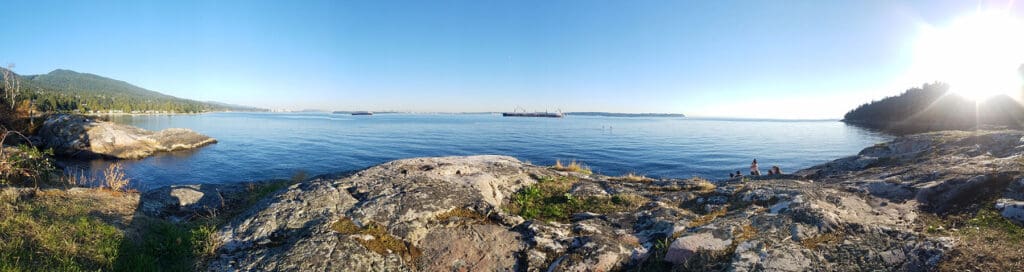
Locals may not want this known, but it’s not exactly a secret. We’re on the coast, after all. And while our summers aren’t long, they do get hot: It’s not uncommon (and getting even more common, for better or for worse) to have 30 degree days.
With an array of beaches and only so many good days in the summer, it might seem daunting to figure out which beach is best to take your family. These are our favourites due to the ability to park the car, nearby amenities, beauty, and aren’t too city-fied where you worry about what the kids might find underneath the sand.
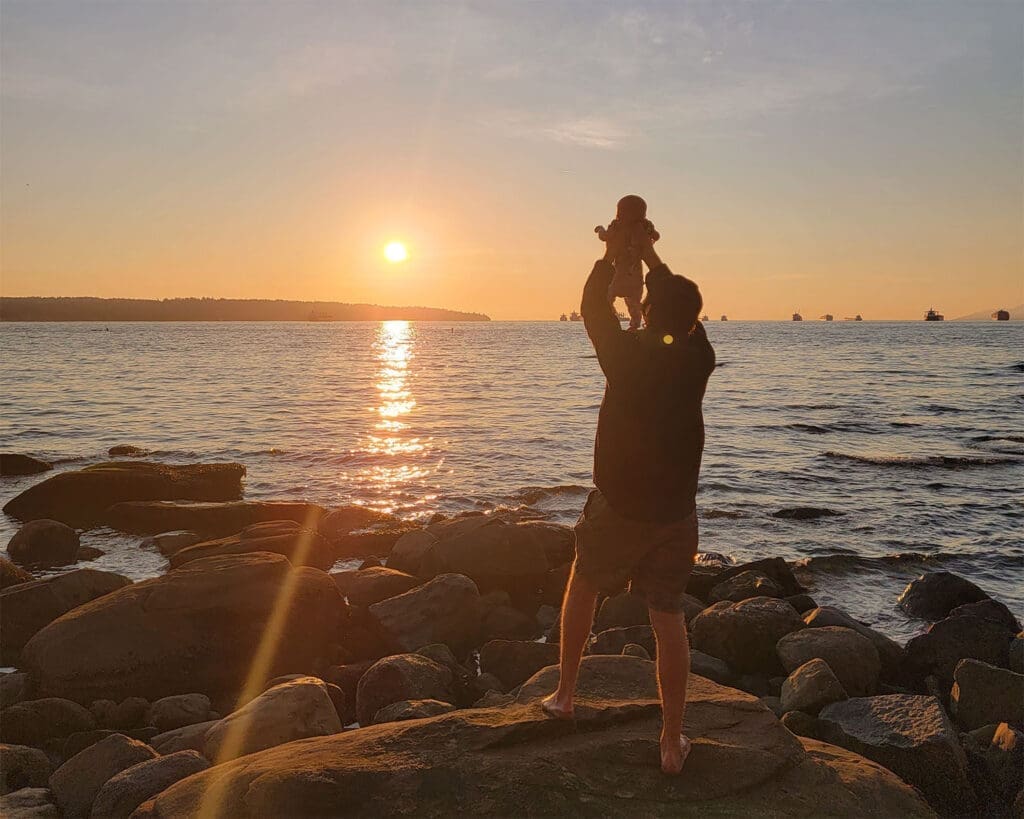
Every dad has at least one “Lion King” shot… right?
English Bay is probably the most popular beach in Vancouver due to its proximity to downtown and west-facing sunset views. But that also means that it’s incredibly busy and noisy, which doesn’t make it the best to have small kids playing in the sand.
But just a little further down the road—or more preferably, the seawall—Second Beach provides a much more mellow experience. Housed inside Stanley Park, this beach has southwest views of Point Grey The beach itself isn’t much in comparison to the size of English Bay but it’s all the other amenities nearby that really entice the kids, such as a pool, two playgrounds, a giant field, and concessions.
Third Beach
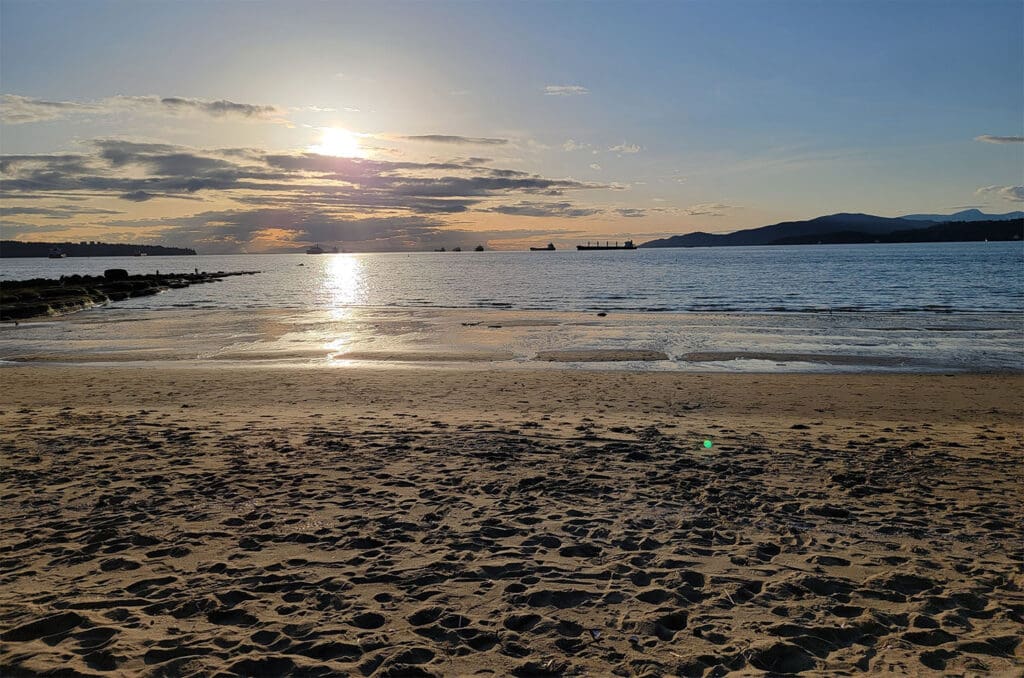
Just a little bit further down the seawall (or closer on the right hand, if you’re driving on Stanley Park Drive) is Third Beach. This is the farthest west you can go on the downtown Vancouver peninsula, and thus, the best place to watch the sunset. In the summer the sun stays out late into the evening, giving Third Beach a warm vibe and great destination to kick off the warm summer nights.
Tuesday nights are home to the legendary drum circle, which is kid-friendly although a ceremonial flower is burned and consumed often. And while its legal in Canada, some visitors might still be taken with surprise at its prevalence. But the smell of weed aside, the drums are a fun way to collectively and spontaneously groove with a large number of people. This is something that needs to happen more often in day-to-day life, in our opinion. But once a week in the summertime is a good start.
Ambleside Park
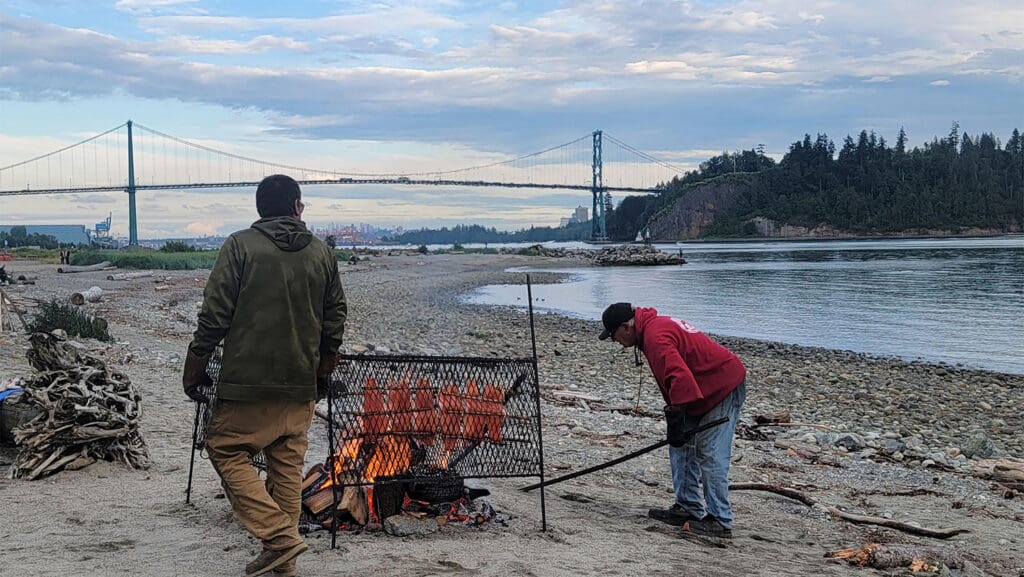
The Squamish Nation hosted a salmon cookout on the beach for Indigenous People’s Day.
Just across the Lions Gate Bridge from Stanley Park is Ambleside Park, which borders the Squamish nation’s Capilano reserve (or “rez” as the locals call it). In fact, teh border between the two lands is nonexistent on the beach, hopefully signifying a bit of a metaphor to our ongoing reconciliation efforts between nations.
The beach extends from 13th street in West Vancouver to the Capilano River on the rez. The water will fluctuate between calm mornings and windy afternoons with associated waves. Nothing is too big though because Vancouver Islands blocks any open ocean swell. Still, you might not want to wear loose hats on a day in the sun.
The playground here is good for various ages, although sometimes the merry-go-round can get a bit chaotic in numbers. If the big kids outnumber the little kids you might want to opt for the group swing that might be a bit more mellow for the crew.
The park also has a really fun pitch and putt course where the smaller kids can at least have a few putts while the big kids and grown ups take their shot at this par-3 seaside classic.
There is also a cafe nearby as well as a skate park, basketball court, and soccer fields that are only busy on weekends and pretty mellow the rest of the time.
Caulfield Park
This one is a bit hidden and off the radar, and risking getting a wincy eye from the people who live nearby, we have to recommend this beach for something different. It’s hidden away on a tiny turnoff from Marine Drive in West Vancouver, and opens up a park with some nice seaside shore-walking trails. On one end is Caufield cove which has a nice sandy beach that fluctuates in size with the tides.
It’s nice and quiet (most of the time) and gets excellent afternoon sun, but peak times mean parking is impossible. Taking a bus is probably the best option for the least headache.
Hot Tip: For situations like these we have a whole list of the best beach bags so that riding a bus to the beach doesn’t seem like a chore.
At the far end of Marine Drive, past the village at Horseshoe Bay and winding past some quite impressive estates, is La Fin Du Monde… the end of the North American continent, the Coast Mountains, and Whytecliff park. This municipal park has a forested area on the far side of Marine Drive and a seaside area as well.
There are so many good things to say about this park, not only because it’s close to home for us and we are regulars, but because it truly is a gem. Many people know this though, and it gets quite busy on summer weekends—so much so, that Marine Drive gets blocked off for residents only to help control the traffic. So get there early, if you can.
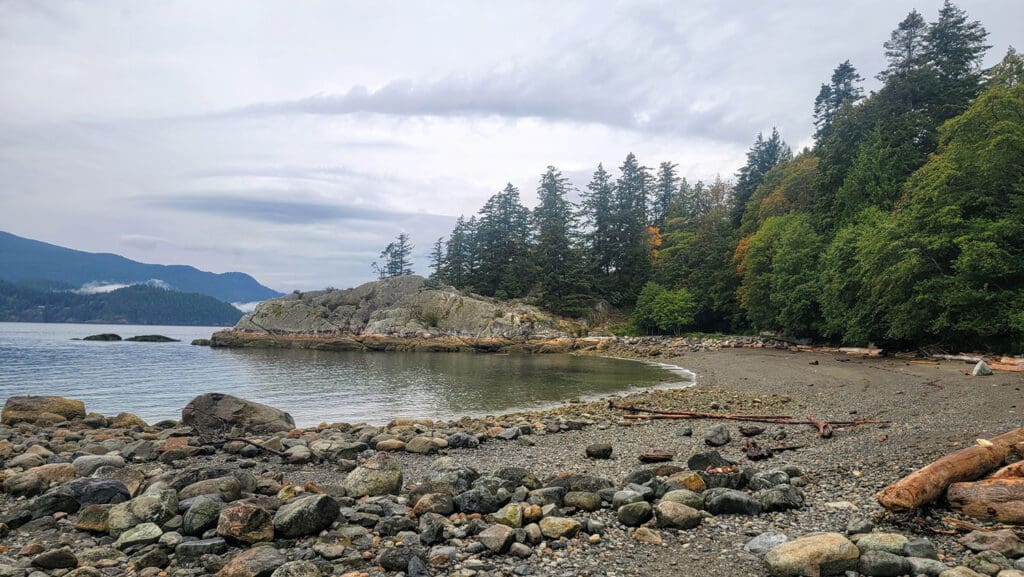
The beach itself is fairly rocky but has perfect southern exposure to the Salish Sea and Vancouver Island. Whyte Islet is a fun little excursion that becomes an island at high tide, so plan accordingly. It’s also a popular scuba diving spot that excites our kids.
If you’re really lucky, you’ll spot whales right from the beach. Orcas, Humpbacks, and Gray whales are often sighted here.
Lions Bay Beach
This beach is just a 10 minute drive from Horseshoe Bay at the beginning of the Sea-to-Sky Corridor, which is a region straddling highway 99 up towards Whistler and beyond. It’s easily one of the most beautiful drives on Earth, and we are lucky that it is also in our backyard.
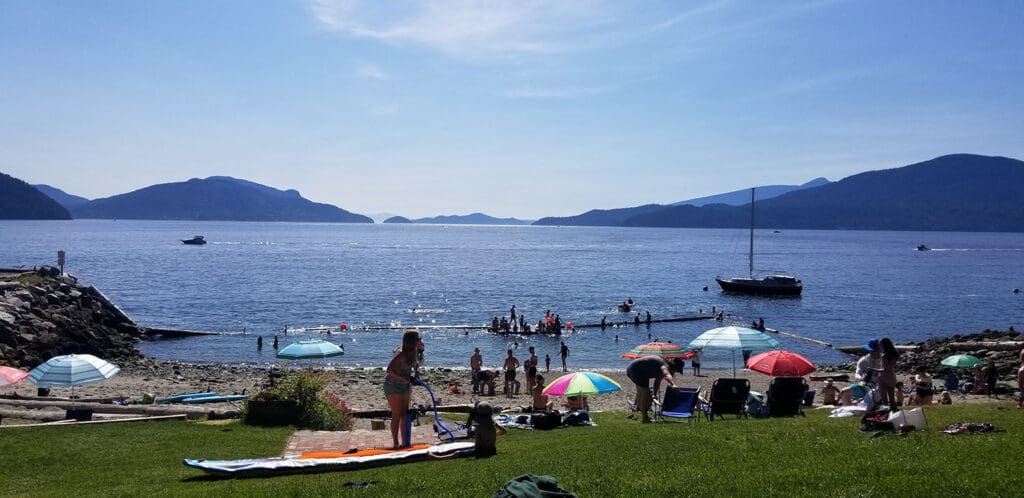
Lions Bay beach is a gem of a location and while the sand is trucked in, the views are au natural and oh-so inspiring, especially late in the afternoon. This beach was recently renovated with upgrades to the bathrooms and acessibility, making it even easier to make a nice setup for several hours while the kids have a safe place near the water to play in.
Like everywhere else, it can get pretty busy on the weekends so get there early if that’s all you can swing. But mid-week it’s pretty mellow, especially in the mornings or early afternoon.
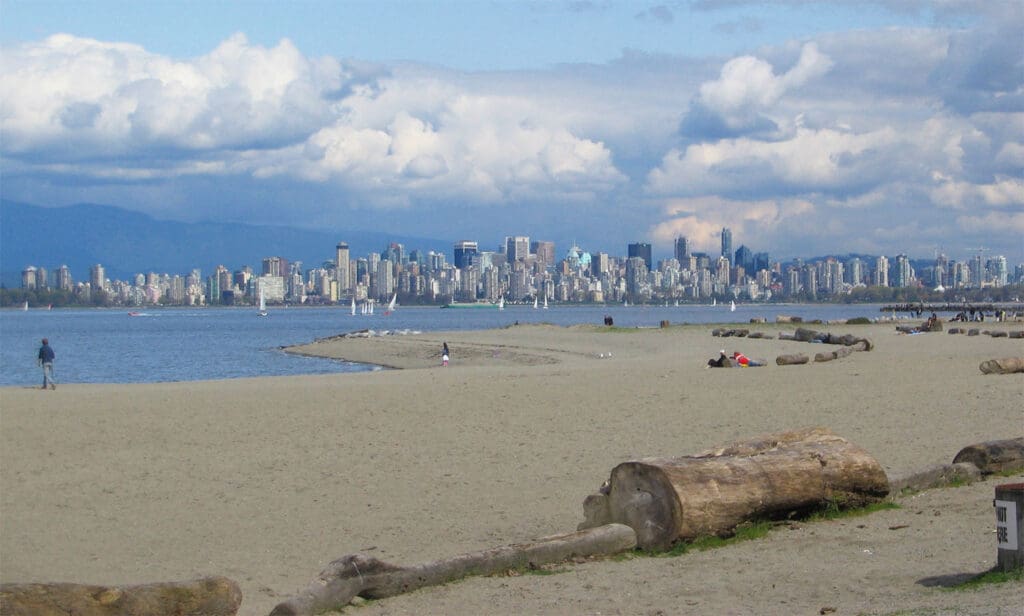
Way out on the northwestern end of Point Grey, past the more popular (and more crowded) Kitsilano and Jericho beaches, is Spanish Banks. Space is the name of the game here with an expansive beach that ends up being pretty vast when the tide is out, thanks to the shallow tidal flats that extend several hundred meters from where the water comes in at high tide.
This is the beach you want to get to for large gatherings, or just to post up a shade tent, barbecue, and make a day out of it. The shoreline is safe and shallow for kiddos to play around in without fear of getting swept out. Although, that said, please use caution if it’s really windy out, which can happen!
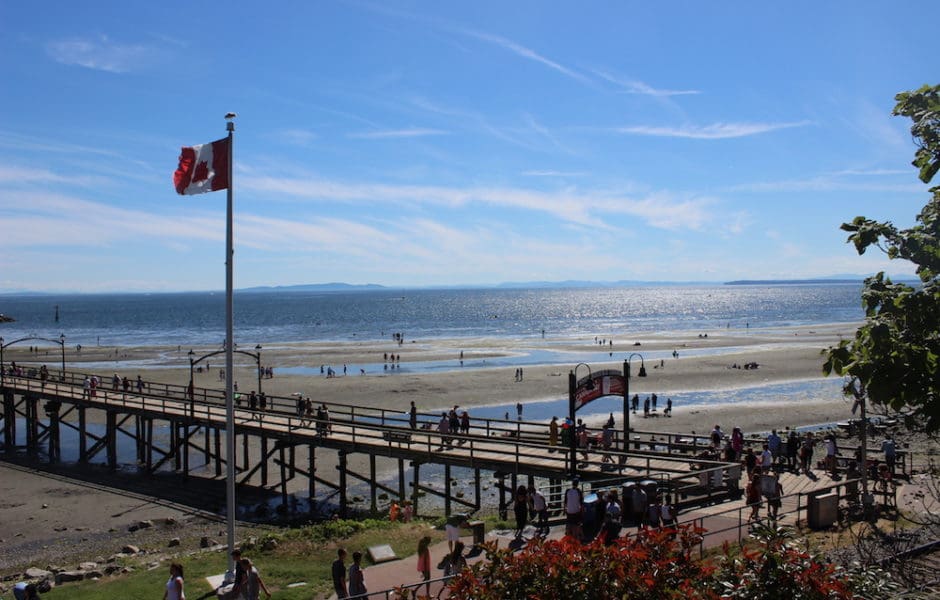
If long, expansive tidal flats are your thing, then White Rock is the place to go. It’s about an hour south of downtown Vancouver next to the US Border, which makes it a perfect first-stop for those coming up from the states. The little beachside village vibe is worth a stroll and a few scoops of ice cream, of which you’ll have several options. The pier makes for a nice part of the walk too, as is the barefoot squish out into the distance when it’s low tide. Just don’t go too far lest the border guards from the USA take interest in your whereabouts! It’s pretty clearly marked, though.
Practical Tips for Visiting Vancouver Beaches
Get there early
We really don’t get a ton of summer months in Vancouver, so when the sun shines, people flock to the beaches. So it can get crowded, which is why you want to get there early, post up, and make a day of it, if possible.
Avoid driving if you can
Ideally you will want to take public transit, because parking is always an issue in Vancouver (not to mention expensive). So if you can pack a good beach bag, all the better for getting around.
Water shoes are handy
Because we don’t get open ocean swell, many of the beaches truck in their sand. This means that below the tide line, the sand disappears quickly and the shore becomes rocky, so it can be a bit of a danger on the feet. Water shoes solve this problem. We love the ones from Native shoes for the kids. They stay on pretty easy and are great both in and out of the water.
Keep Exploring!
We have a ton of other great recommendations for families who want to get the most of adventuring in and around Vancouver. Check out some of our favourite posts for hiking with toddlers in the Sea to Sky, driving up further to visit Whistler, or camping at Porteau Cove. Whatever you do, remember to be excellent to each other!
Right off the bat, let’s say it: if you want to do a most excellent hike in Squamish and you have the stamina to go up and down 800m in a single session, The Chief is bar none the best route around. But this is a page about family adventures—and more specifically, families with little ones. This hiking guide is for those who want to get the taste of a good coastal BC hike but either don’t have the time or the wherewithal to get too gnarly.
But if you want righteous views, bodacious groves of old-growth trees, and just enough sweat to remind your heart that a little exercise is most excellent, then may we present to you Murrin Park, just a few kilometers south of Squamish. It’s located right at the top of the hill between Shannon Falls and Britannia Beach, making it a must-stop spot along the Sea to Sky highway.
Why This Trail Builds Resilient Kids
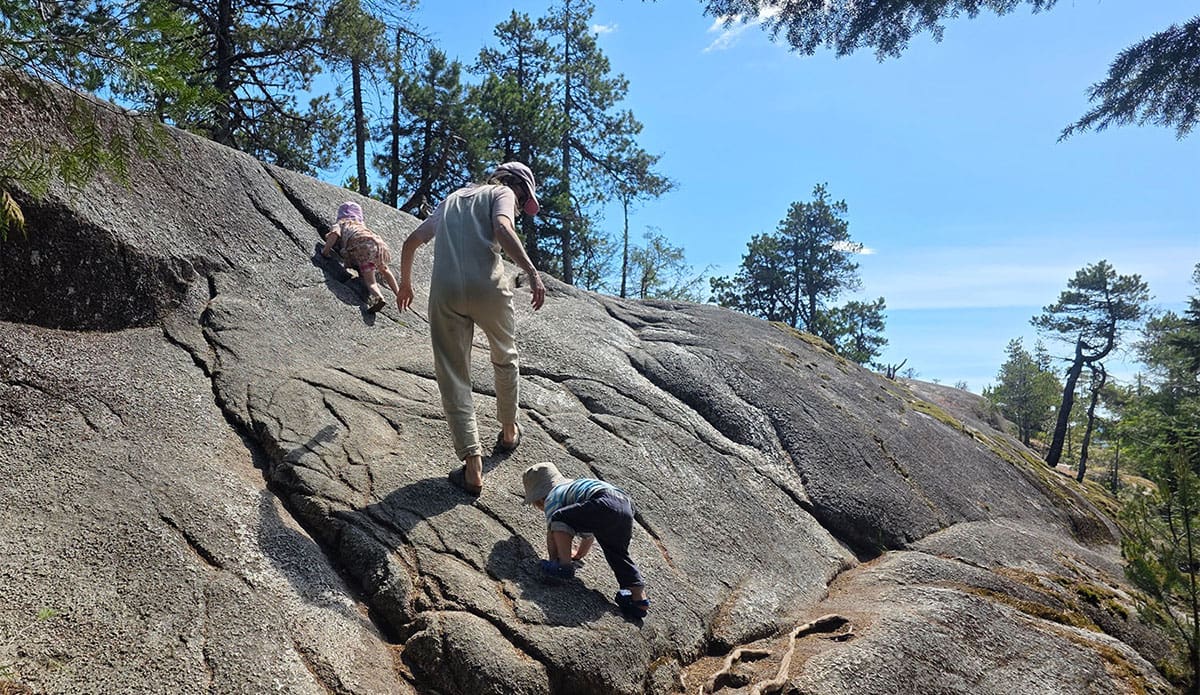
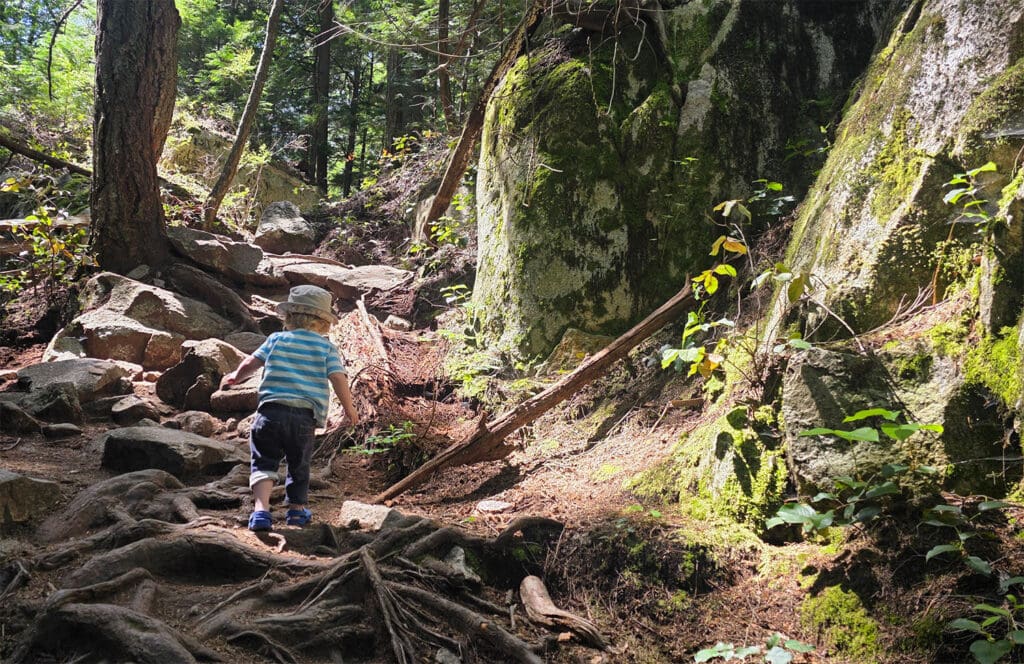
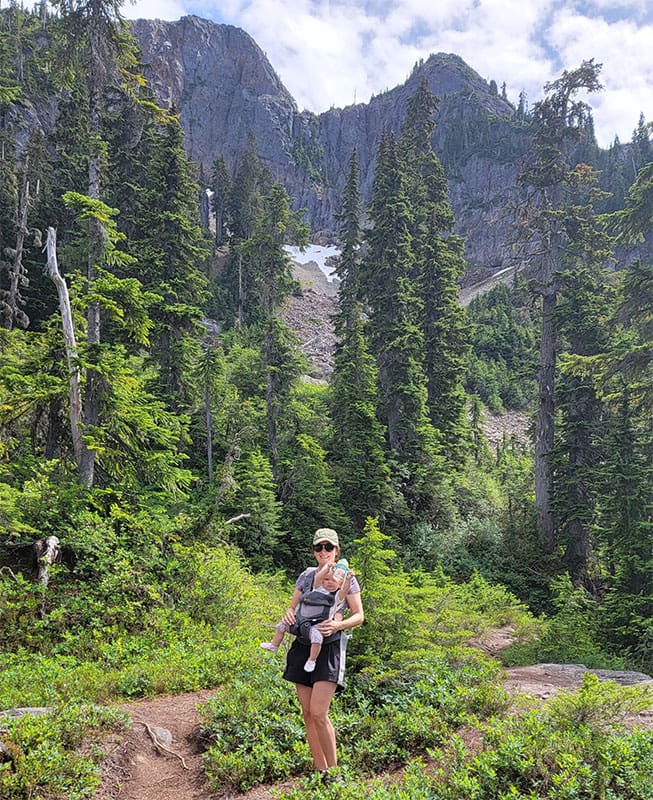
Living in the Sea to Sky corridor for nearly two decades, I’ve found that getting kids stoked on the outdoors is about finding that perfect reward-to-effort ratio. Taking our kids out here has proven that short, punchy trails followed by a world-class view are the best recipe for building resilience. They get to scramble over roots, navigate varied terrain, and learn the basic life skills of foot placement and pacing, all without the exhaustion that leads to meltdowns.
It’s also an incredible place to introduce a culture of mountain safety early on. As a backcountry guide, I treat these summer hikes as foundational training. We practice staying together, observing our surroundings, and making smart decisions on uneven ground, which hopefully will stay with them for the rest of their lives.
The Route & The Rocks
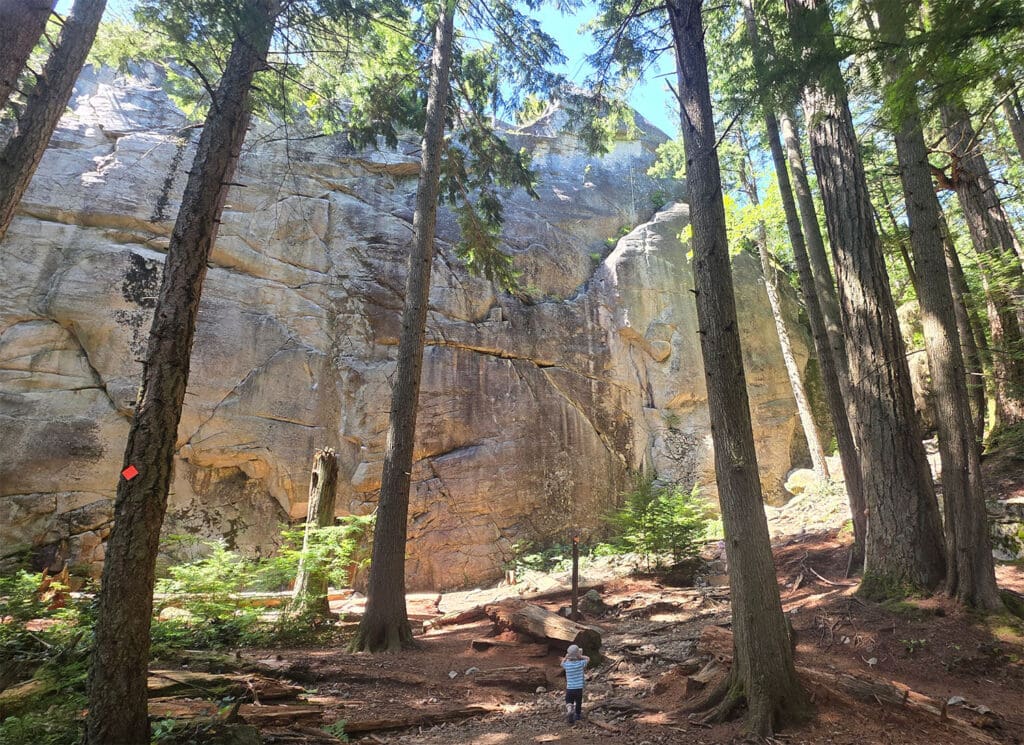
Rock climbing is regarded as religion in the park. As long as the kids keep a safe distance, there is usually a friendly climber who will happily answer questions from curious minds about their gear and what they are doing. It’s a fantastic way to expose little ones to different outdoor pursuits.
The loop trail offers excellent panoramic views of Howe Sound, but a quick heads up: if you’re not used to hiking, the way down can be a bit steeper than expected, especially if the kids are tired and want to be carried. It’s not impossible, but it does take some slow, deliberate walking to ensure safety. Strollers are fine at the lake, but you’ll soon want to ditch them for a hiking backpack if you want to get anywhere good.
The Hard Data: Logistics & Amenities
Distance & Elevation: The loop is roughly 1.8km with about 160m (524 ft) of elevation gain. Expect it to take 1 to 1.5 hours.
Amenities: There are no running water or food facilities here, so stock up before arriving. There are standard pit toilets located right by the parking lot and halfway along the loop trail.
Post-Hike Vibe: There are plenty of picnic tables next to Browning Lake right at the base. Bring snacks or a lunch and make an afternoon of it.
Parking: Parking can get pretty nuts on the weekends. Your best bet is to come before noon midweek. (Note: Do not park on the highway shoulder; you will be towed).
We also have a ton of gear reviews to help you explore in comfort and practicality, and love to hear from other families who are out there doing it. Or learn more about us where you can also get in touch.
Visiting the Sea to Sky? Check out our free app
We made an app to help families visiting the Sea-to-Sky corridor plan their trip more efficiently. Filter by activity, location, and your kid’s age and effort level. Check it out and let us know what you think!
We care about the recommendations we make. We sometimes (not all the time) use affiliate links to help keep the site running. Learn more about our Gear Review Policy here.
Packing for the beach is a chore. Add kids to the mix and it becomes so daunting that it might even be overwhelming enough to not want to go. We’ve definitely been there, and we live a five minute walk from the beach. It’s more than half the battle to even get out the door when you have to think of all the snacks, diapers, toys, sunscreen, towels, etc. that make a beach day run smooth.
Enter the Beach Tote. What was once a simple bag has now evolved to a handy, durable mobile command station for essentials on the go. What makes a beach tote better than other bags is the speed at which you can toss gear into it and be on your way—and vice versa when you get there.
As a family of four, with one still in diapers, it’s amazing how much we need to pack for a successful day at the beach. But we’re getting the hang of it, living a five-minute walk from the beach at home and doing a few trips to warmer climates each year, complete with our beach kit in a duffel bag. But the tote still reigns supreme for day missions. Read on to see what has passed the test over the years of testing these professionally for different outlets, and now bringing you our favourites on our home site.
Bottom Line: This thing is a beast, and is meant for those who know how to pack well. the multitude of accessory loops provide virtually unlimited customization. The bag also comes with a lifetime warranty.
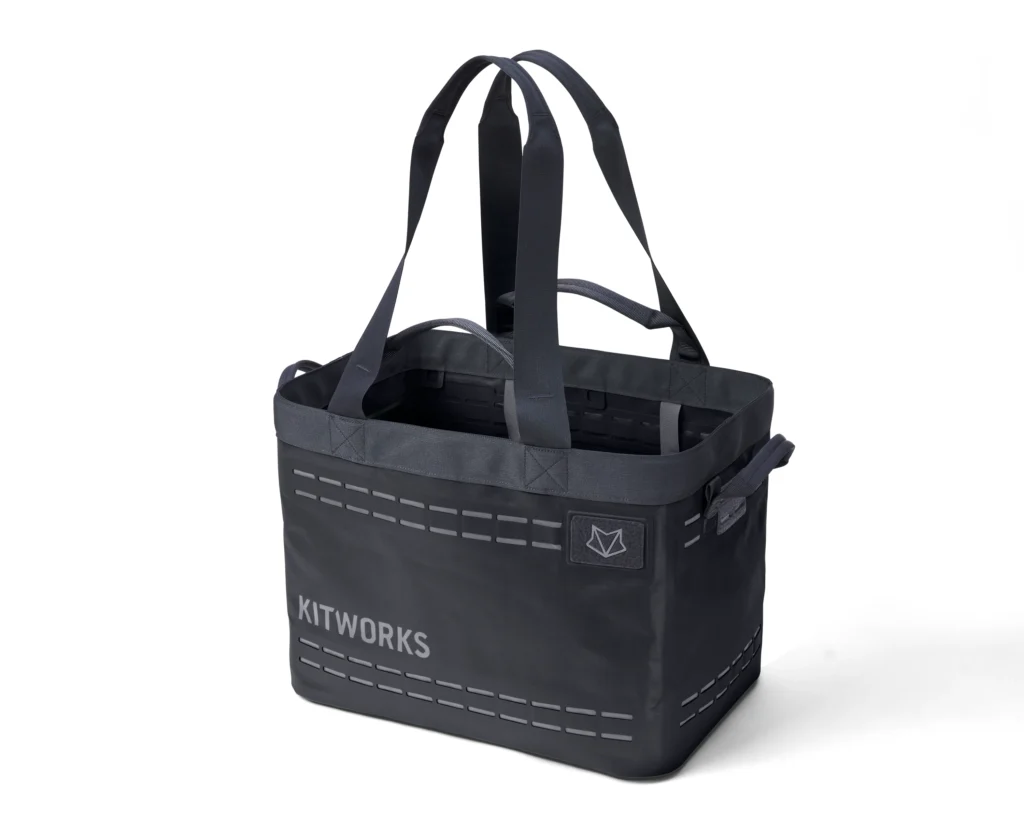
Kitworks is a new brand that launched early 2025. Founder Greg Mills designed the Gear Tote (among other bags) based on his own experience dealing with outdoor gear and never having something that matched his obsession over organization. As someone who lacks a similar affinity, I’ve gotta say that I really appreciate how much detail and care went into the system. This is not for people who just toss their gear in and throw it out, or at least strive to be more. The multitude of slats—both inside and outside—combined with additional accessory compartments make this tote a dream for making life easier. It’s also the only tote that had a separate, removable wet gear storage ($15 extra) that you can stash neatly out of the way that hooks on with ease.
For those with MOLLE enabled accessories, you’re in luck. The loops on the inside and outside will give you even more opportunity to customize this bag to your heart’s content, giving this bag far too many uses beyond a beach tote to list here in our review of beach totes.
The bag is marketed more for a single sport such as climbing, skiing, or mountain biking, and all the accessories that come with it. And there’s no question—this tote can do the trick in any of those situations as well. But for family beach adventures, it’s a solid (both literally and to use the parlance of our times) unit that will withstand years of abuse. I try to stay out of tech talk but the bag features 900D ripstop TPU on the exterior, which is the highest-numbered denier rating I’ve seen out there for a bag like this. It’s rugged, and can take a beating, and do it all again the next day.
On top of all that, Kitworks uses (mostly) recycled materials and donates 1% of profits to causes promoting responsible recreation. If you enjoy rooting for the smaller companies, this one is now on your radar.
Pockets: Internal water-resistant zip pockets, fold-out side pockets for water bottles
Attachments: 16 External Gear Loops, large
Closure: G-Clip
Self-Standing: Yes
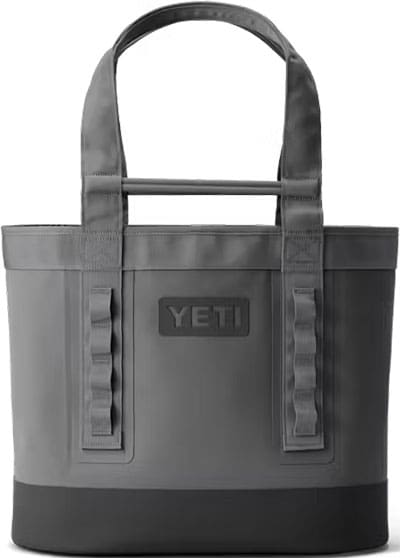
Bottom Line: This was our favourite tote for when you’re in a hurry and need to just toss everything in and GTFO of town. It’s solid and rigid, and is just big enough to toss a day’s worth of supplies without getting too large and cumbersome.
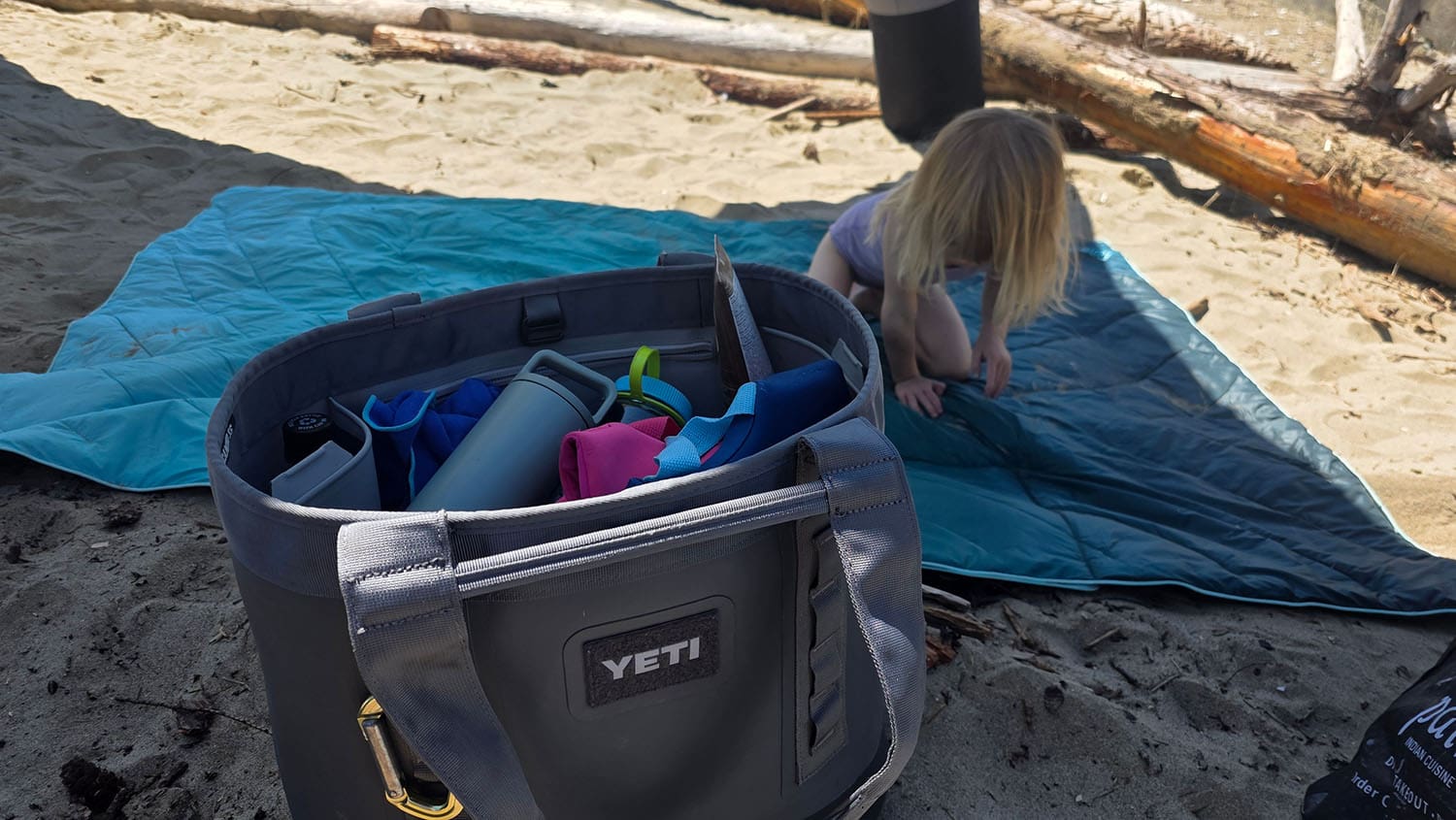
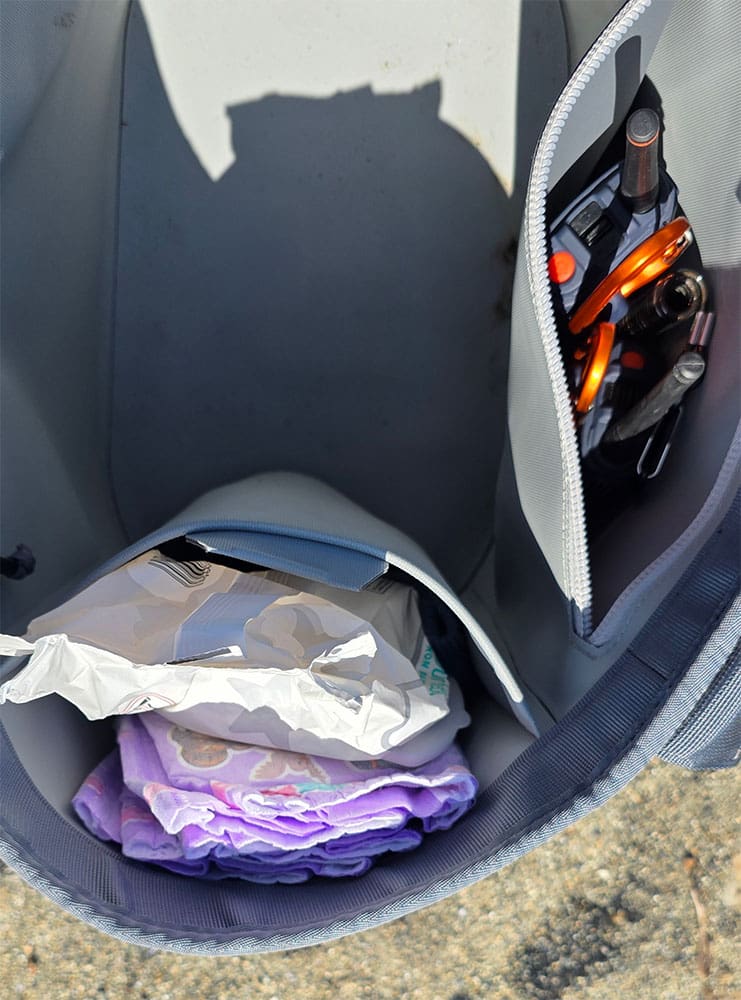
The inside pockets of the Yeti Camino
When most people think of Yeti, durability comes to mind. And we can get that part out of the way really quick: This bag has been tested at 300lbs. We didn’t test that as it’s pretty hard to find anything that small that weighs 300lbs (unlike Yeti who probably had a few spare gold bricks laying around by now). So I guess we will have to take their word for it. The construction certainly is solid, though.
But the construction isn’t what stood out the most. The main thing is just how easy the grab-and-go portability really is. Of all the totes we tested, it holds its shape the best. This is good if you have a lot of storage space, but it doesn’t exactly store well. But the idea is that you’ll be using this enough to not be stashing away in the basement any time soon.
The bag itself is waterproof and can take a pretty good beating. Inside the bag, there are two zippered pockets on either end, and two collapsible compartments on either end for stashing a water/wine bottles or anything that you want to keep easy tabs on. Outside the bag are enough gear loops to attach plenty of extra items, should you need it.
Closure: Roll top and buckle (dry bag), G-clip (tote)
Self-Standing: Yes
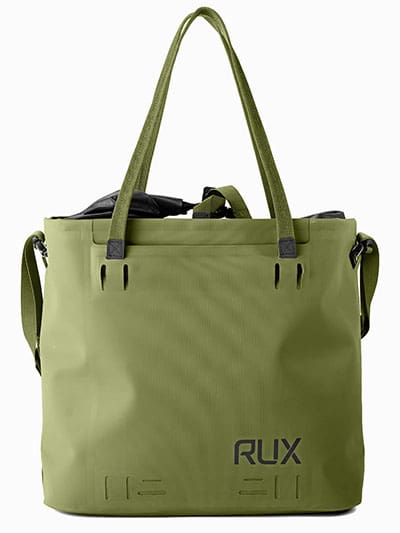
Bottom Line: This essentially a dry bag moonlighting as a tote. If dryness is preferable above having customization or compartments, this might be the top pick.
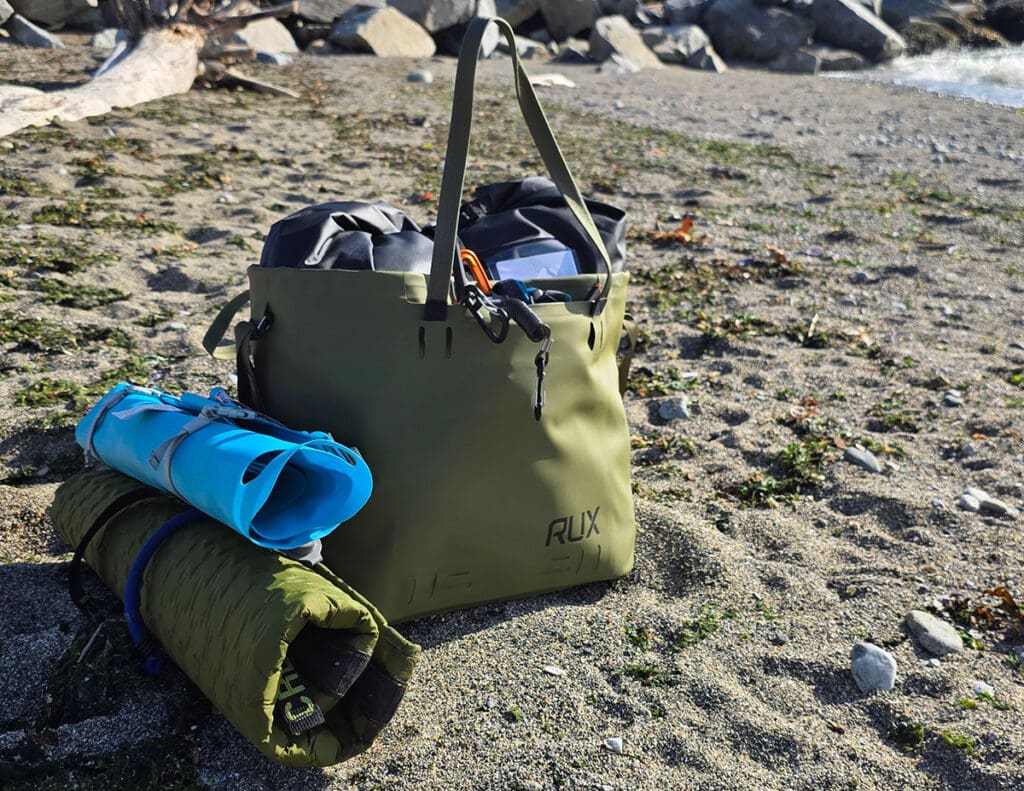
We live in coastal British Columbia, meaning it rains. And by rains, I mean it rains a lot. So if you are only a fairweather adventure family around here, you won’t be doing much half the year. RUX is a brand just up the highway from us, in not-so-sunny Squamish, BC. And what would you know? They made a tote bag that is pretty much a fancy dry bag, but with the convenience of a rugged tote.
Their waterproof bag is advertised at 30L, but when you extend the roll-top dry enclosure, it can fit much more than that. We were able to put everything but our waterproof gear inside it, and have it still be effectively waterproof.
Although great for keeping water out, the bag does fall short in some of the other areas where the extra organization comes in handy—especially when you’re talking about diapers and other baby-related accessories. The bag does have two internal pockets, but they don’t have any enclosures.
Handles: Small and large handles in center, side handles for easy grabbing/moving
Pockets: Several mesh pockets on inside, weather resistent zipper pocket on outside
Attachments: External gear loops
Closure: Two buckles
Self-Standing: No
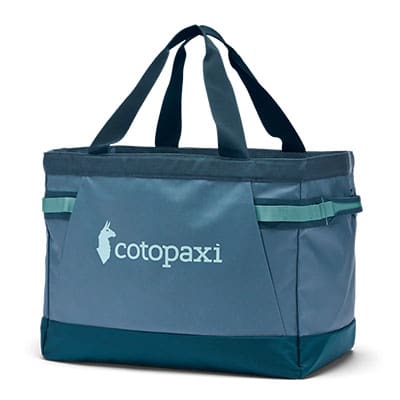
Bottom Line: This tote is just as good as anything else we tested, and a fraction of the price. There wasn’t anything that stood out as above the rest, but is rugged, durable, and well-designed.
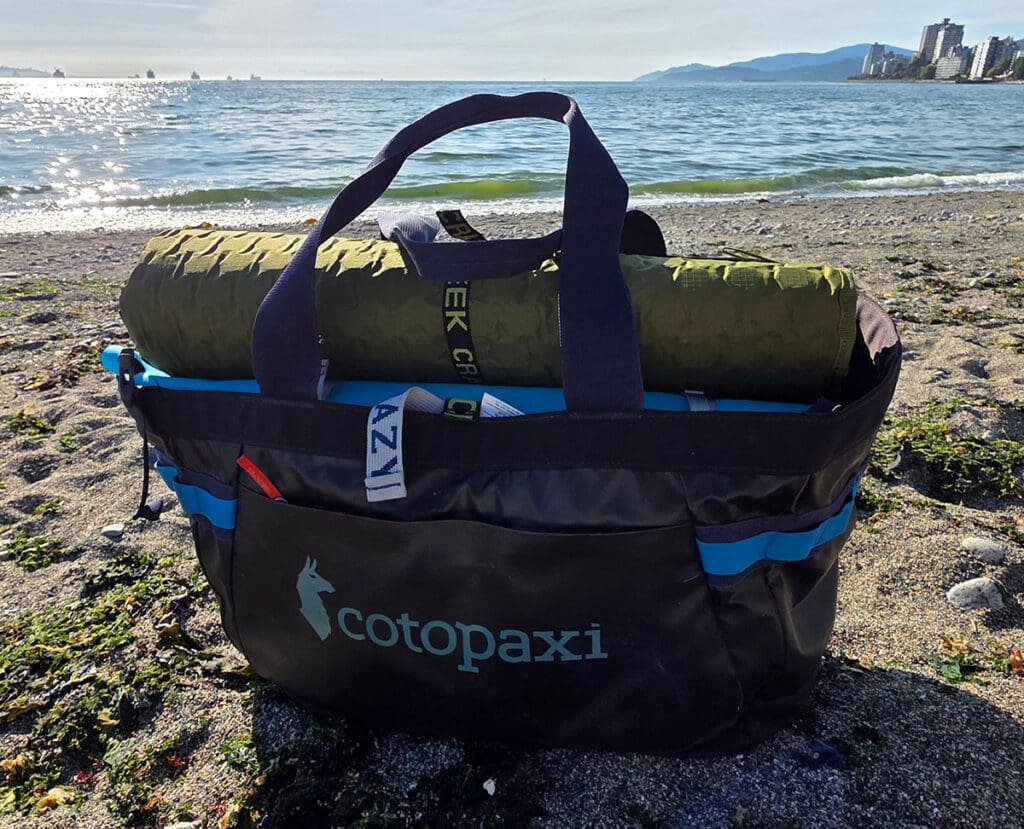
Cotopaxi is a brand that we enjoy giving good press to, simply because they are a company that values a whole lot more than profit. For that reason, it’s worth directing your hard-earned money to a company that is doing a lot to care. But feel-good PR aside, it’s a great bag. It’s spacious enough to throw a day’s worth of gear in it, with room to spare—with more than your average organization that comes standard. The inside is all lined with pockets that were perfect for stashing diapers and the kids’ spare clothes.
On the outside, you have an array of gear loops that make for easy tying-on or down, allowing for much more than the 60L inside. We’ve been using this tote for 2 years and while there’s some signs of being used, none of the wear is damaging to the integrity of the bag. We loved it on our trip to The Twin Fin in Waikiki for the ease of tossing things in and out quickly, but with a multitude of pockets to organize the essentials, cash, phone, etc along with everything else.
It’s a great all-arounder that, despite not being self-standing, allows for easy packing and unpacking thanks to the wide opening.
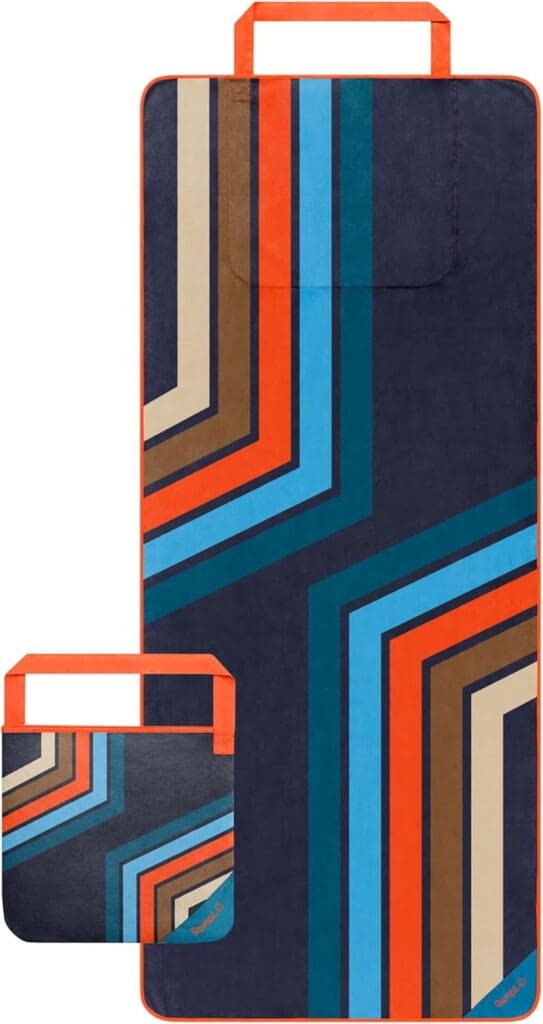
For a totally minimalistic approach where you just want a few items, this new tote/towel from Rumpl is a fantastic option. It also might be a pure fantasy to be in a review page for families, but hey, there are hopefully times where mom or dad can duck away for their own time, and if so, a minimalistic approach might be well received. The towel itself is quick-drying and antimicrobial. It’s great to be able to flip it inside out and toss in a few extras, as well as a zipper pocket for phone/keys/wallet. Sometimes, a towel is all you need!
It’s not everything, but most things we bring on a beach day…
Beach totes have become a big part of our beachgoing experience lately. There’s something far less stressful about them when trying to get out the door with two little minions who, regardless of mood, still need us to dress them, put sunscreen on, get them in and out of the car, all while packing for mom and dad…
We’re starting to get more dialed with it, and when I’m feeling super on it I’ll have it pre-packed for when we are able to go on a moment’s notice after a change in weather or circumstance. We live in Vancouver where there are a plethora of kid-friendly beaches close to us. But even still, getting out the door with all the necessary accessories can seem daunting on a good day.
Once life could be lived with spontaneity it opened up a world of possibilities as a family. This was especially true on summer days after work, when the thought of getting ready to go to the beach felt daunting. Now, the impulse has far greater strength when we know that the bag’s already packed. And thanks to using a beach tote, it’s super easy to throw things in last minute as you’re walking out the door.
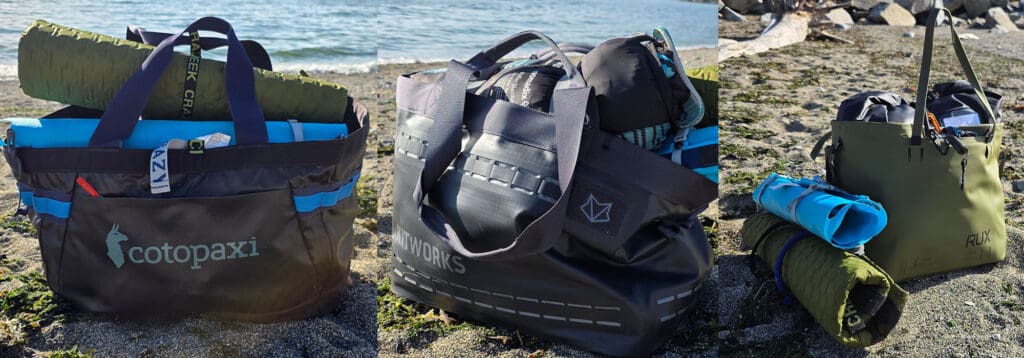
So we’ve been using these totes for the past two summers, learning more about packing smart and being able to have a beach kit handy to go. Starting with a wider range of bags we narrowed it down to the four you see here, and really got to know them better.
That way, we can really test these four bags in more depth and find out what really makes each one stand out, or not measure up. It also helped us really appreciate the idea of grab-and-go portability, which is where beach totes and their ilk seem to rise above other bags for this particular purpose.
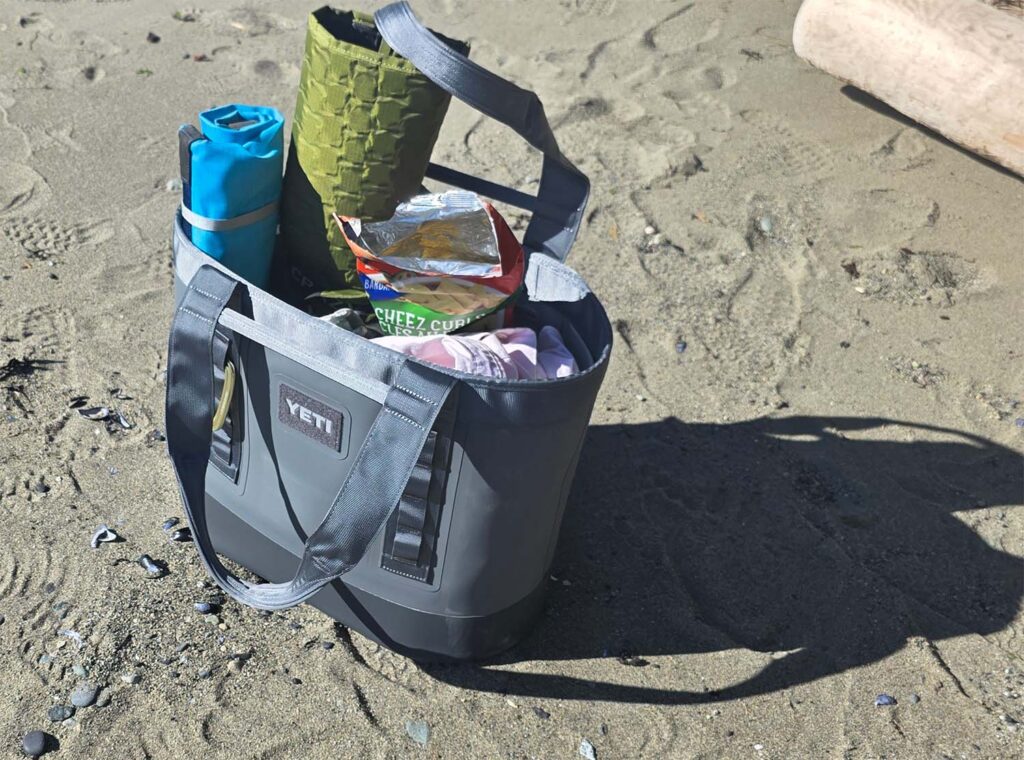
The self-standing option of the YETI camino comes in handy with an open bag of snacks!
Testing Criteria for Determining The Best Beach Totes
To make things more fair and uniform, I did a separate test beyond everyday use so that there was a bit of consistency in what I was testing. It could have been a bit more comprehensive in retrospect. You’ve got to give me a bit of a break as I needed to get this done in the short period between after work and dinnertime, while still having time to enjoy the kids. It might have been hasty but it’s thorough and objective, something that all online gear reviewers unfortunately can’t say. You know who you are…
But that’ s another story altogether. For now, here’s what we included in the test:
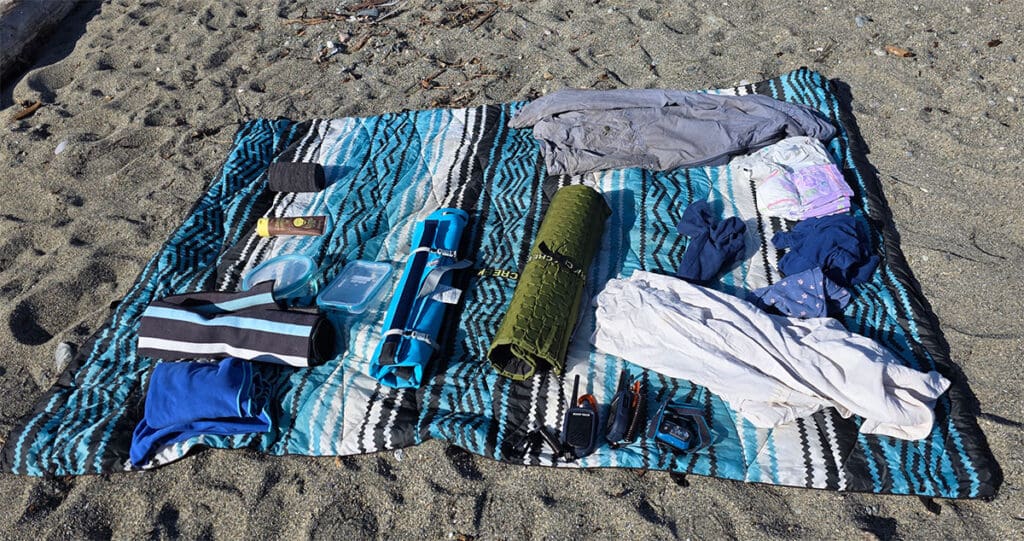
Blanket: Nomadix Puffy Blanket
Dad’s Jacket: Patagonia Waxed Cotton
Mom’s Warm Shirt:
Diapers
Wipes
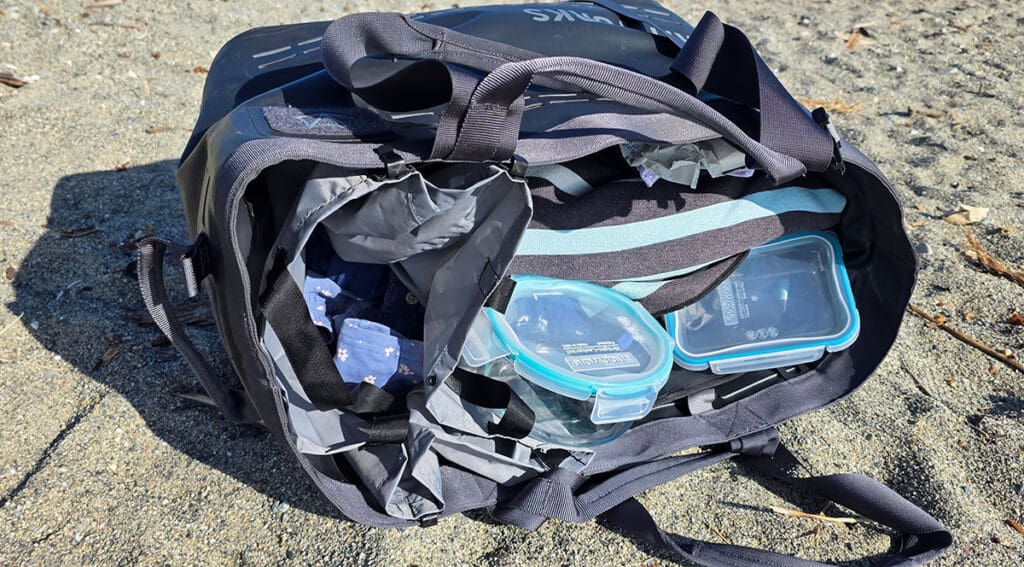
Two Snack containers (Snapware)
Sunscreen
Headlamp, just in case
Car keys
Two Chairs: Crazy Creek Hex 2.0 Longback and Aircliner
Two Rockie Talkie 2 Watt radios
2 Towels
Spare clothes for the kids
This list is obviously not exhausting, as mentioned above. We’re missing a water bottle, some of those applesauce pouches, a stuffed animal or two, and the all-important beach toys. None of the bags were stuffed full though, so one can assume that
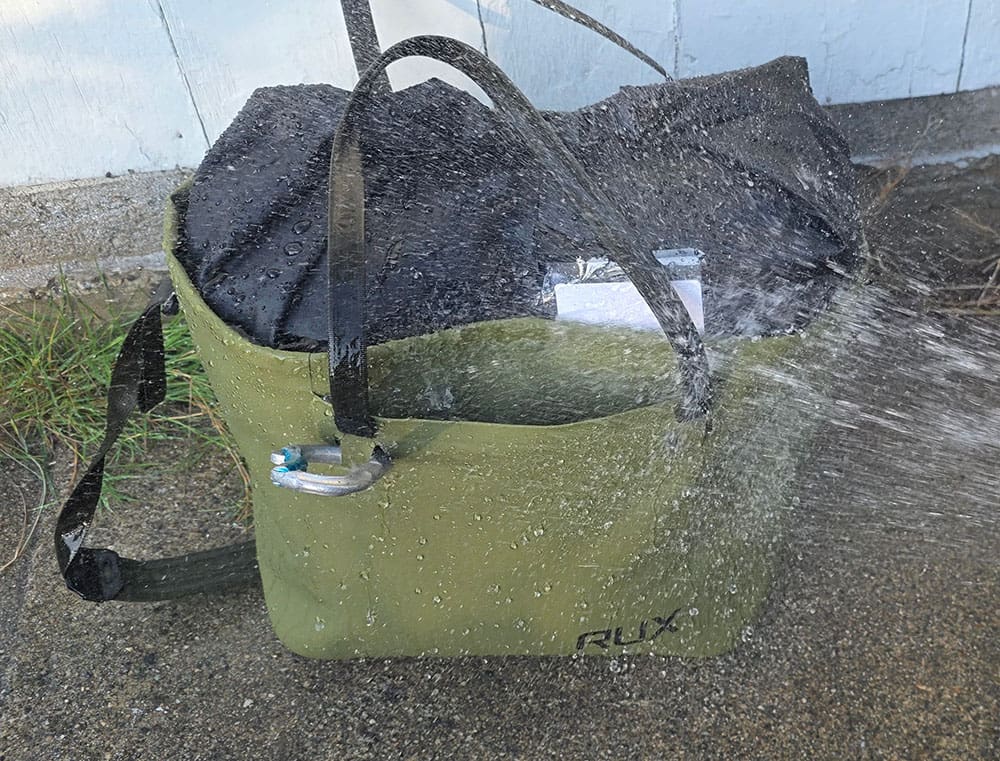
Hosing down the bag for a few minutes to simulate rain… everything stayed dry!
How to Choose The Ideal Beach Bag
Everyone’s family operates a bit differently, so you probably know what type of beach tote suits you better than anyone else. Maybe it’s even a basic reusable grocery bag, and that’s totally fine. This guide is to help people get something a little more premium and long-lasting, as well as with a bit more organization to help make beach missions with children just a little bit easier.
So have a look at this guide to hopefully help you have a bit more in your day enjoying the beach, and less time preparing for it.
Durability
This is a major factor for choosing a beach tote. After all, if the bag won’t hold up under abuse, you might as well not invest your hard-earned dollars in it. Many bags are made from some type of oil-based material like Polyester or nylon, with a TPU (Thermoplastic Polyurethane) coating for waterproofing and extra rigidity.
If you see a product boast about a number with a D following, that relates to the Denier rating. Basically, the higher the D-rating, the thicker the fiber used in weaving it. This is not the same as a thread count, which measures how tight a weave is. Generally speaking, given everything else equal, the material with a higher number will be more durable.
Gear Loops
All the beach bags we reviewed have a space to attach extra gear through loops. There are two different kinds in this review. One is with sewn-on loops (Cotopaxi and Yeti) and the other is the MOLLE style loops that are cut out of the material (RUX and Kitworks).
Sewn-on loops generally have more space to work with, and are easier for tying a rope/cord around, or to clip a carabiner onto in a hurry. The cutout loops are more of a lower profile, so have a lesser chance of getting caught onto something. It’s also a bit tougher to thread a piece of rope or cord onto. Not that it can’t be done, but it will just take some extra time.
Pockets
Yes, a beach tote can be considered one giant pocket. But aside from that, it helps to have a few extra smaller pockets on hand to avoid digging through a black hole when you really need something.
Some pockets have an enclosure such as velcro or a zipper. This is more important if you’re trying to stash valuables such as a wallet, keys, or a phone—basically anything that would ruin your day if it went missing at the beach.
If you’re the type that doesn’t throw their gear around too much and leaves the tote upright (and your kids do too), then having pockets that close isn’t as big of a deal. But make sure you know what and how much stuff you want to give extra protection, as it could affect what bag you end up buying.
Clean-ability
Families on the go are guaranteed to make a mess. It’s pretty much inevitable. But how quickly can that mess disappear? We rated the different totes on hose-ability, and how quick a wipe with a rag can do the trick.
The RUX Waterproof tote was the easiest. The TPU-coated nylon wipes clean in seconds.
The Yeti Camino took a bit more effort due to the weave pattern in the material. Stubborn stains would take a bit more scrubbing. The inside was all good, though. The Kitworks tote cleaned well but the handles weren’t so easy for cleaning stains. Same with the Cotopaxi bag, with the added hassle of the inner lining not being the easiest to clean.
We hope this review helped make your decision a bit easier. If you love beach getaways and want to pack the whole kit and caboodle, check out our recommendation for the ultimate beach duffel setup for your checked baggage. We have many more Gear Reviews for you to check out, hope it helps somehow! See you out there!
There are very few activities around Vancouver, BC that offer real outdoor adventure with a few local comforts. Sure, there are pretty parks such as Stanley Park and Lighthouse Park, or activities such as Grouse Mountain or the Capilano Suspension Bridge, but our favourite spot to take our little ones is the Sea to Sky Gondola, just outside Squamish, BC.
About 45 minutes from downtown Vancouver, the Sea to Sky Gondola offers people of all ages and abilities the chance to experience the beauty of the BC coast mountains without the usual heavy effort to get there. Within 10 minutes the gondola whisks visitors up the mountain to over 800m above sea level, offering views of Howe Sound, the Squamish Valley, and a beautiful panorama of the Coast Mountains.
At the top of the Gondola is the Summit Lodge. In actuality it’s nowhere near the summit; but those semantics are for another day. The lodge is beautifully crafted, with everything you’d expect in a tourist destination: A cafe, bar, and of course, a gift shop. Everything is kept pretty clean and the staff are friendly. It’s a great start and finish point for some fun on the mountain.
The star of the Summit Lodge is the patio that offers sweeping views of Howe Sound and Sky Pilot mountain. Fridays in the summer become a ton of fun with live music and the sea to sky community getting out to enjoy the late afternoon/evening.
Sky Pilot Suspension Bridge
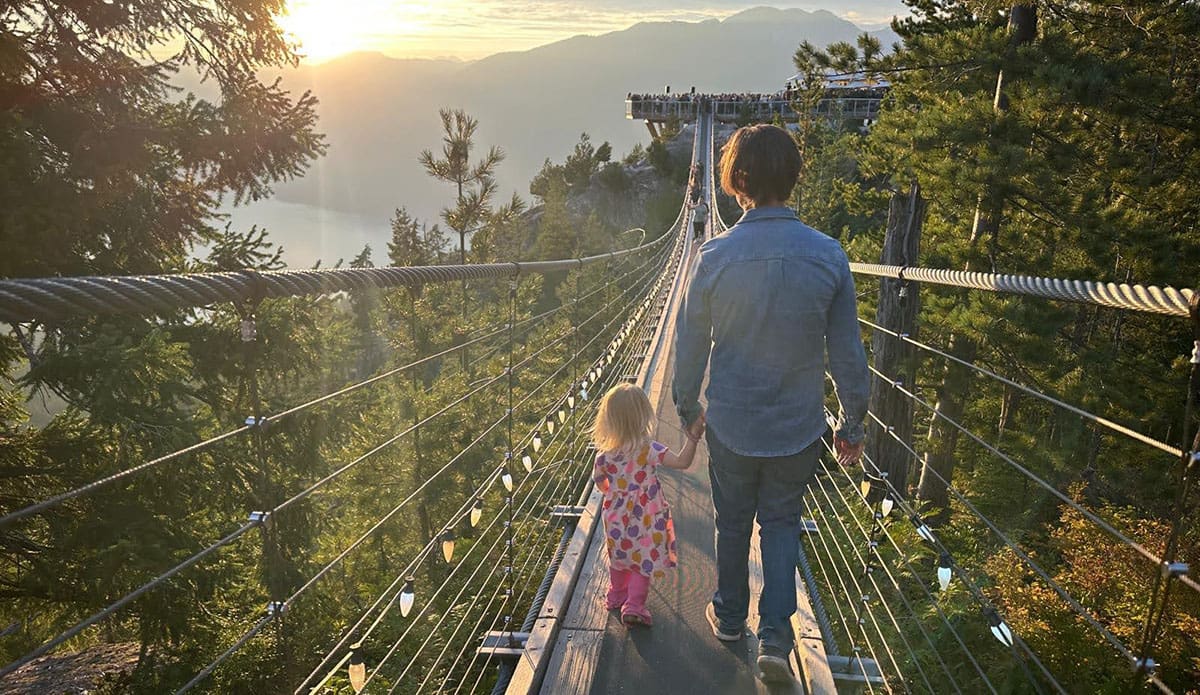
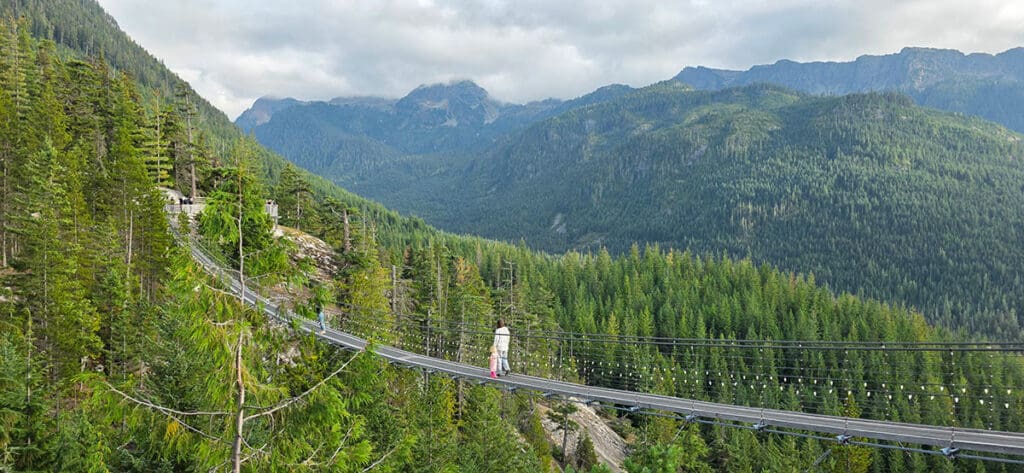
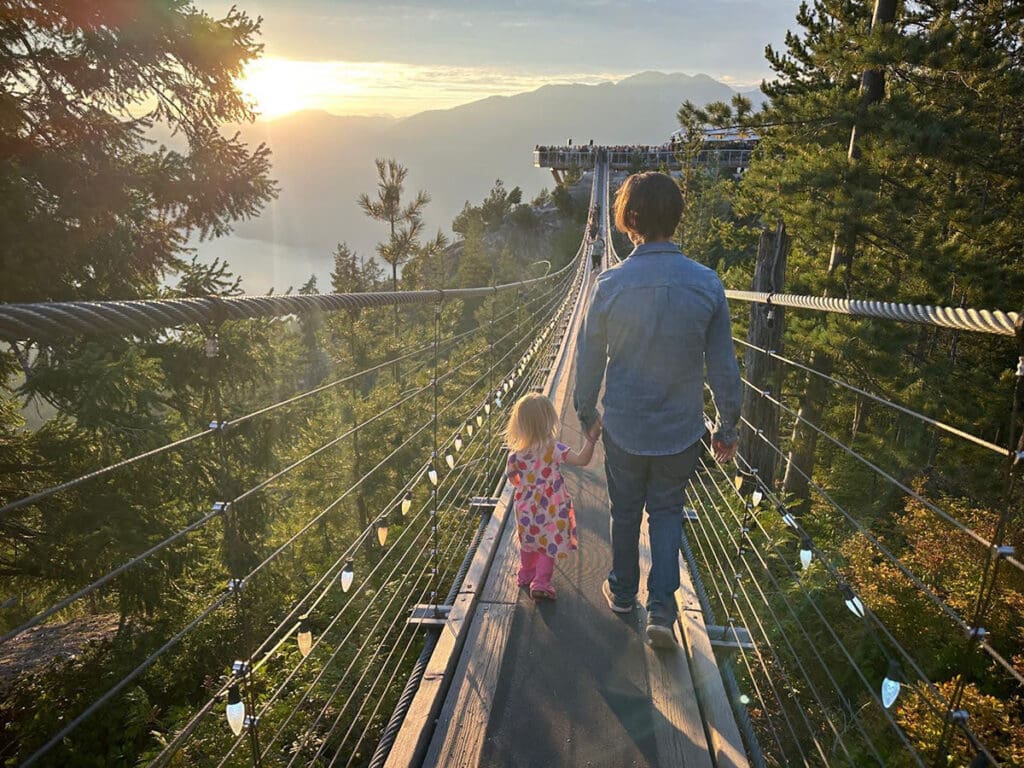
Right at the patio is the suspension bridge offering a beautiful view of sky pilot mountain. It’s nowhere near the vertical drop of the Capilano suspension bridge, but it still offers enough to look down upon as you walk over the tree tops. But the views in the distance are the real treat, especially late in the afternoon as the sun begins to hide behind the mountains.
The suspension bridge with Sky Pilot mountain in the background.It’s worth it to wait for the right time to go across the bridge.
From there, it’s a short loop to get back to the base, where a variety of other hiking trails are available. There are also a few play structures for kids to play on; as well as a picnic area. As I’m sure you all know, when you have kids, it’s important to break up an outing with snacks, and the folks here have designed a great zone to break up each hiking loop with some other activities—including eating.
Front Country Hiking Trails
There are several trails within the patrolled boundary of the Sea to Sky gondola that all loop back to the gondola. They are much more mellow and suit the more casual crowd who isn’t a hardcore hiker.
Alpine Alley
This is the best hiking trail for kids is Alpine Alley, which is a simple loop trail with a few (fake) furry surprises. The trail starts and ends right next to the gondola, allowing for an easy exit if emotions get the best of a little one (or their adult). There are a few challenging sections for the bigger kids, but all the steep bits have a walkaround section if it’s a bit too much.
You can get a specialized map for Alpine Alley at the entrance to the trail, which also offers clues to all the different items you can find along the way. If you have only one trail to do with the kids, this is the one.
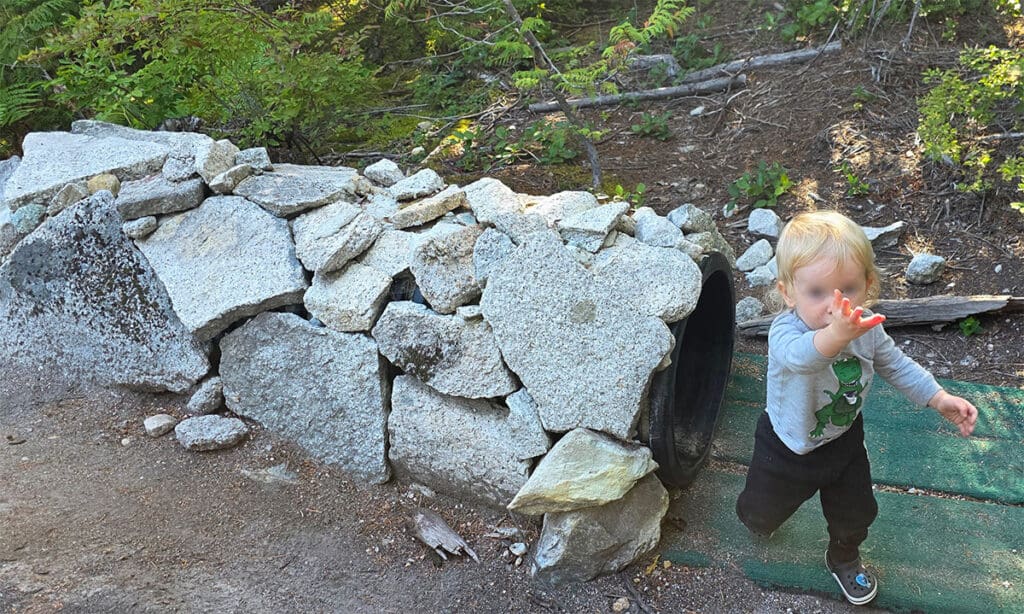
This tunnel was a hit with our 1 year old.
Panorama Trail
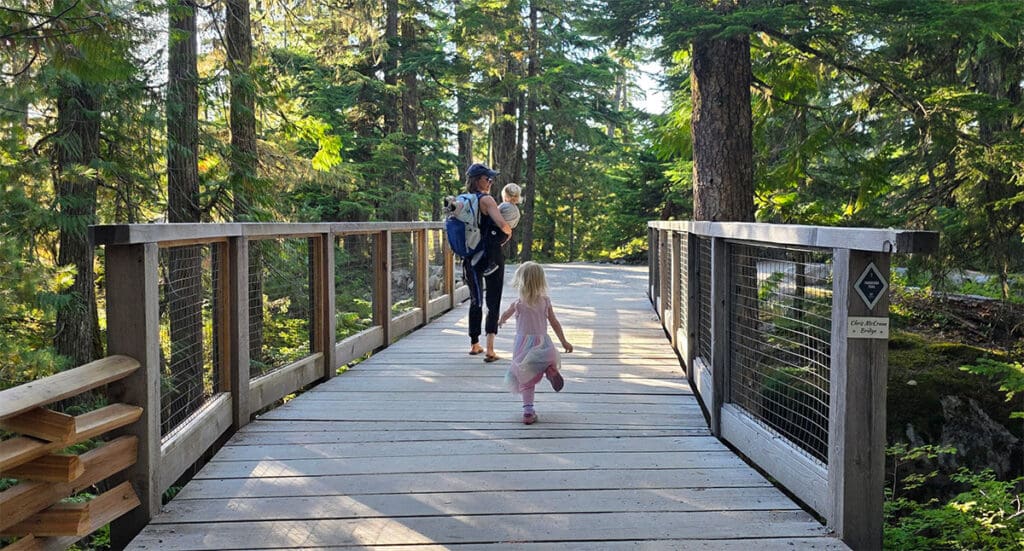
This trail is a bit longer, so smaller children might get bored, but it’s doable. It’s well graded and has nice construction along the bridges, offering a beautiful lookout before returning back. It’s still more of a walk thank a hike, but perfect for bringing little ones along without too much fuss.
Cruising along at the Panorama trail
Backcountry Hiking Trails
While I don’t have any official statistics, I’d guess that at least 90% of the guests at the Sea to Sky Gondola don’t venture beyond the main area and manicured front country trails. Those trails are nice and will suit an outing very well, with most people being more than satisfied for a day trip.
BUT… if you’re the type who wants to venture a bit further, then it’s well worth a bit of extra effort to go up the backcountry trails to make a whole day (or longer) out of it.
There are two mountains within a short jaunt of the top of the Sea to Sky gondola: Mt. Habrich and Sky Pilot. Habrich is very similar to what you find on The Chief: big granite cliffs that point straight upward. Sky Pilot, on the other hand, has much more jagged rock and is a different landscape altogether. It’s pretty remarkable that these mountains are so different and coexist right next to one another. But that’s the amazing varied geology of Squamish. You get a lot in a relatively short amount of space.
Mt. Habrich
Al’s Habrich trail is a fantastic loop that is similar to the Chief, only much larger in scale. The loop to the subalpine meadows takes about 5-6 hours at an intermediate pace, but you can go much higher than that. The peak is another story altogether and we wouldn’t recommend that for a family adventure. But you can get a bit further up from the “Neverland Loop” which is well worth the extra effort for the views.
This is only one angle but there are many more worth seeing from high up on Habrich.
Sky Pilot Mountain
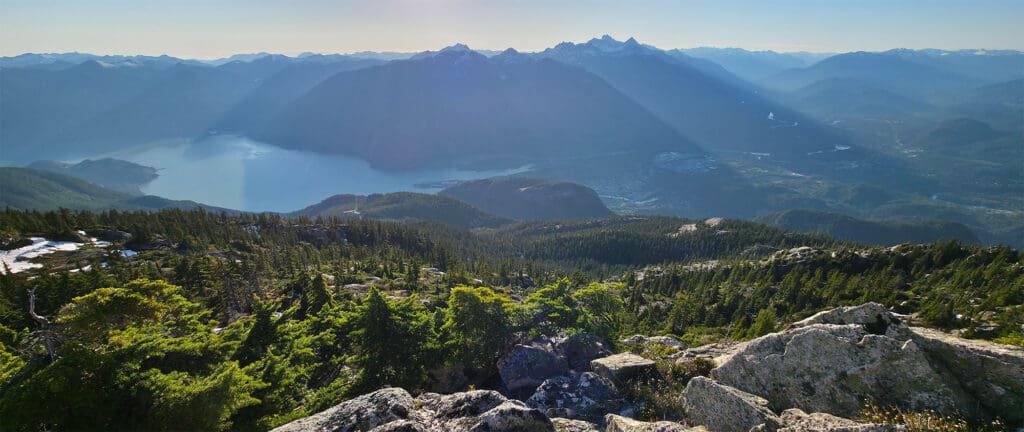
This hike is definitely a bit more technical, and one we don’t recommend taking young kids on. That said, we took our daughter here when she was about 10 months old. Smaller babies are actually easier since they aren’t mobile, but we didn’t make it to the alpine since that would be a bit too dangerous for our liking. But the views still made it worth it.
Allow yourself a few hours as the trail (once the logging road ends) is a bit steep. But once you get to the subalpine you get a fantastic subalpine environment to explore.
Bottles up!
Events and Activities
The other beauty of the Sea to Sky Gondola is the programming they have. It seems as though there are always fun organized events happening. One regular event worth going to with a baby is the parent and baby hike. This can be a great way to meet local parents (mostly moms) and have a casual walk around without much pressure to push it, yet still get some exercise. Those happen on Thursday mornings, but it’s best to check with them for sure.
We already mentioned it but it’s worth a second nod: in the summer months, Fridays are hoppin’ with live music. The legendary Hairfarmers usually play a few times a year, but those events are so popular they eventually stop letting people up. So make sure you get up early for that one if so.
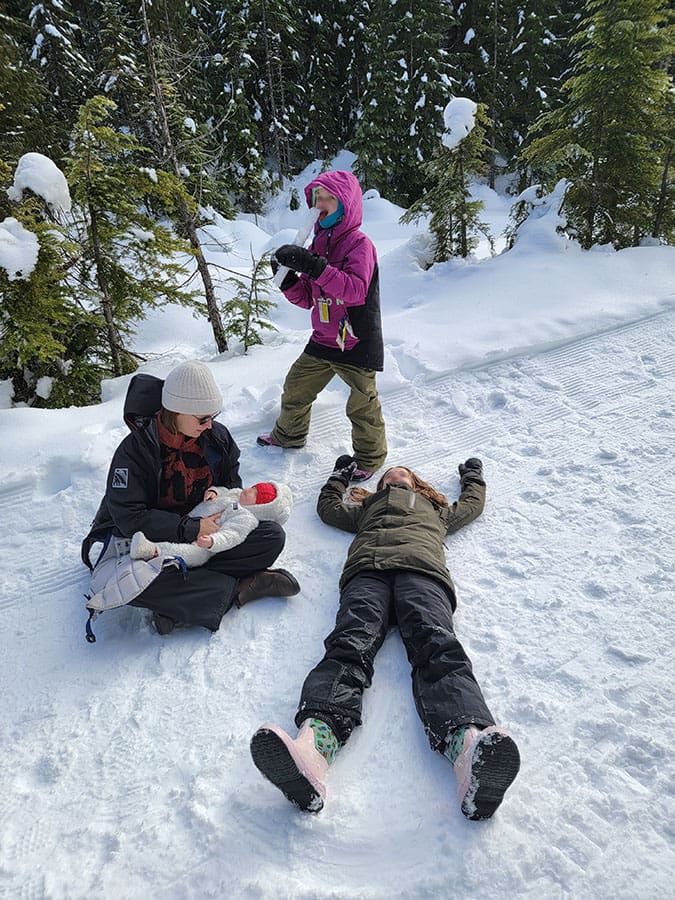
Winter is also a great time to visit the Sea to Sky gondola. Not only do you get out of the rain at sea level to (usually) a snowy mountain scene, but you will also find some of the best easy access backcountry skiing available. The 2km road to Sky Pilot is groomed, making for some quick access to the vertical. It’s easy to do a half day here and still get your fill for powder with such an easy turnaround.
For the kids, there is a tubing hill that costs $5 (at the time of posting) and is actually pretty thrilling—it’s easy to pick up some speed. It’s not suited for smaller children but bigger kids and adults will definitely get their money’s worth.
For those who want some softer activity, there is always snowshoeing and you can rent snowshoes from the summit lodge.
More Great Stops on the Sea to Sky
The corridor is packed full of fun stops between Horseshoe Bay and Whistler. Right next door to the gondola is Shannon Falls, which is worth the quick stop, and there is even a trail right from the gondola parking lot to save you the mess of dealing people fighting over the limited spots.
For a fun, interactive app showcasing the best of the sea to sky corridor, check out the Sea to Sky Family Navigator. It’s totally free and our gift to families both local and from afar!
Helpful Links
Here are some links that will make your visit to the Sea to Sky gondola a bit easier:
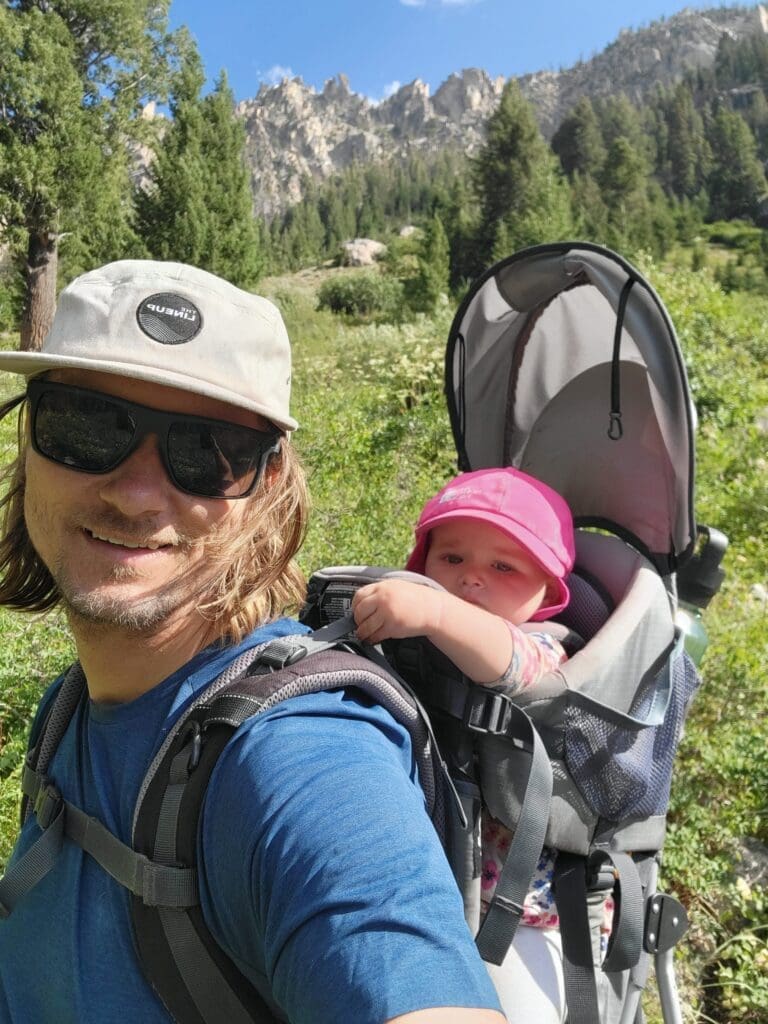
Hiking in the Sawtooth Mountains is an incredible experience. The alpine scenery, lush forests, and crystal-clear lakes are just some of the main reasons why this place is a gem for family adventures. We spent a week here in the summer of 2023 when our little girl was just 11 months old. There were three trails we hiked with her that will serve any family looking to get away from distractions and reconnect to nature.
Fishhook Creek
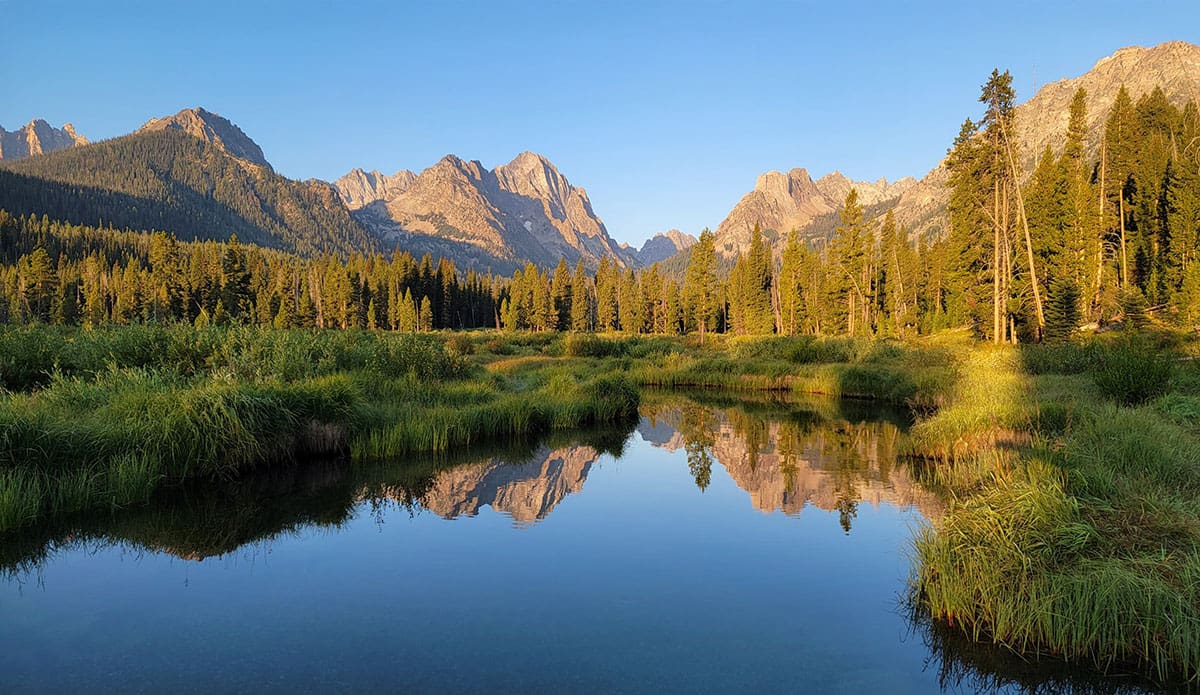
A simple trail that has a small elevation gain, winding through aspen and pine forests until you reach the edge of the Sawtooth wilderness. It’s relatively easy, but the reward at the end is a stunning view of the Sawtooths and a pristine valley. We recommend going in the morning to beat the crowds and heat, and to get some of that magical early morning light.
To get here: Head towards Redfish Lake Lodge. Before you get to the main lodge parking lot, you’ll see an overflow lot on the left. The trailhead starts right next to the creek. If you get to the lodge, you’ve gone too far.
Alpine Lake
This is an all-day hike but well worth the effort. It takes you from the far side of Redfish Lake up a valley and into a mountain pass, where you are rewarded with a stunning alpine lake, aptly named. Adventurous people can use the lake as a basecamp for even deeper adventures in the backcountry, or you can turn around and enjoy the evening by the shore at Redfish Lake Lodge.
To get here: Take the boat shuttle ($22) from the Redfish Lake Lodge. The boat drops you off a the trailhead and signs are clearly marked. Plan on a full day – 8-10 hours will be a good hike with rest breaks along the way.
Hell Roaring Lake Trail
This trail is fairly easy with minimal elevation gain. I didn’t pack the phone on it but you can find some sweet images on AllTrails to whet your appetite. It’s also dog friendly, as long as your pooch stays on a leash.
To Get Here: Turn off from highway 75 a few miles south of Redfish Lake onto Decker Flat road. Merge with Hell Roaring Creek road and follow it to the trailhead. The trail is well-marked and takes you into the mountains.
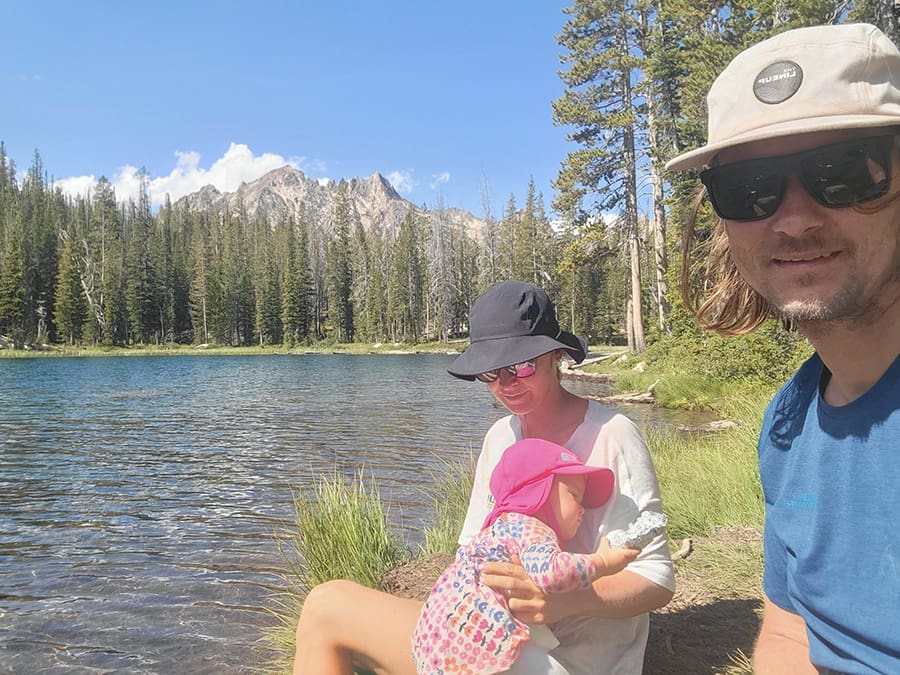
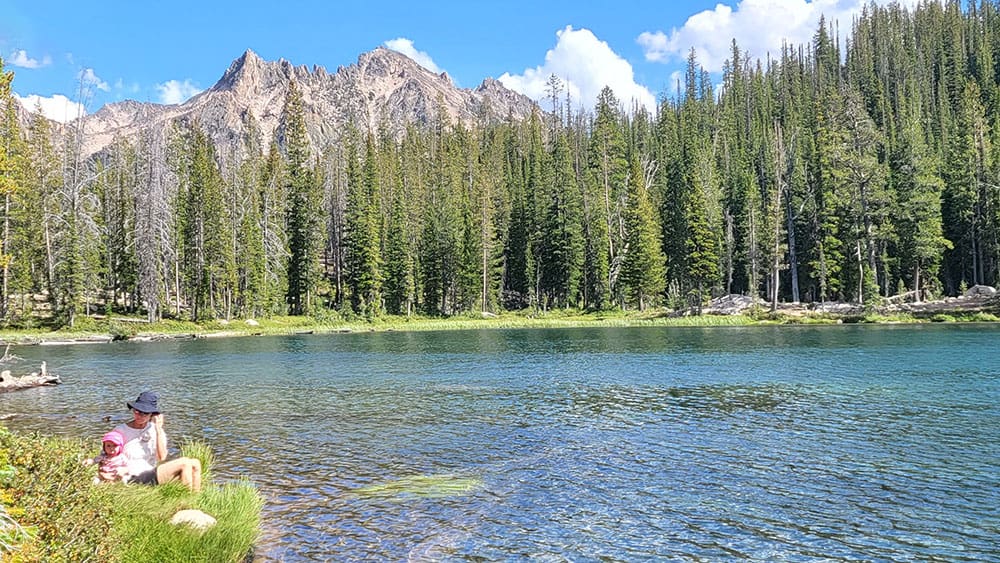
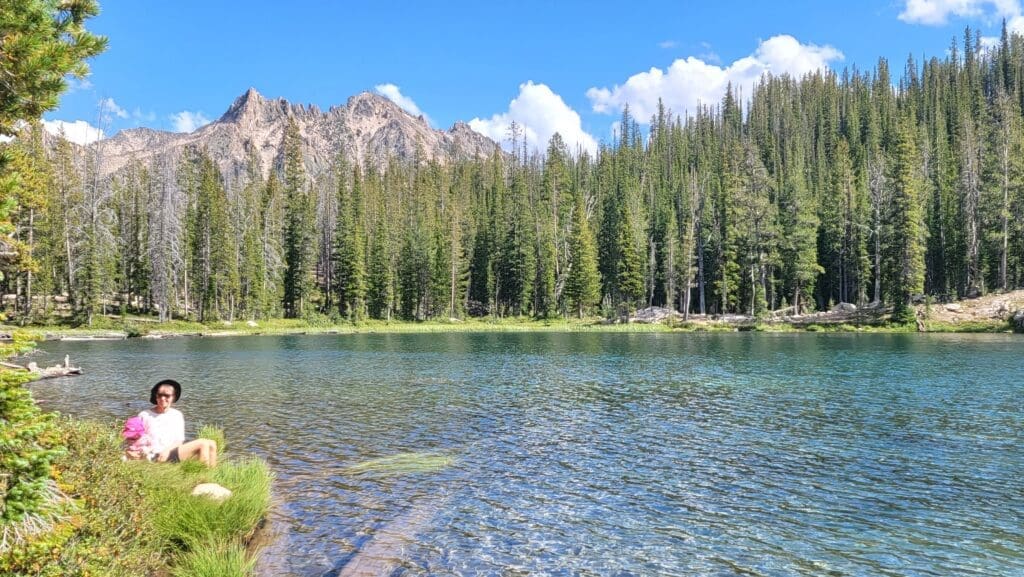
Cooling off at Alpine Lake, Sawtooth Mountains, Idaho
Exploring The Sawtooth Mountains With a Baby
The Sawtooth Mountains in Idaho just may be the best kept secret for outdoor adventure in the United States. Despite going during peak season (Mid August), we were able to score a beautiful campsite at Redfish Lake and have an amazing week exploring the mountains with our 11-month old. We didn’t have an RV, we just had a nice tent and a love of hiking to bring us there. We highly recommend this area for adventures big and small, and for kids both younger and older. We learned a few tricks along the way, which we are happy to share with you below.
Scoring a campsite
Redfish Lake Lodge
The ranger station
Some of our favorite hikes
Stanley, ID
Other activities in the area
Scoring a Campsite
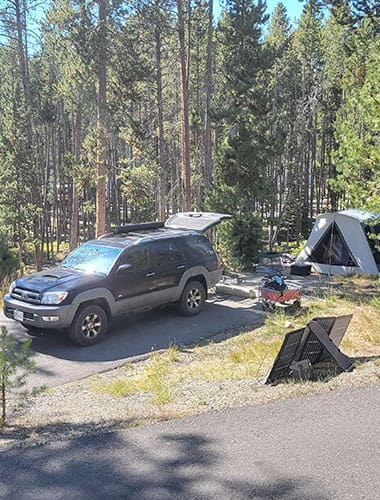
The Sawtooth National Recreation Area has over 30 campgrounds and over 700 sites. Being that it’s a national recreation area, it has some advantages to a national park yet still gets major federal funding to be nice. This results in some of the finest public campgrounds I’ve ever seen. In some of the more popular areas you get incredible privacy in large sites that include a dining area, fire pit, parking zone, and tent pad. The site you see in this image was part of the Sockeye campground which is the furthest campground along Redfish lake that is accessible by car. I think it was only $22 per night.
The beauty of this campground was that it’s first-come, first-served so if you get there early in the morning, chances are you’ll get a spot. You might have to come back a day or two later or go to a neighboring site, but chances are good you’ll find a spot nearby. Or, you can plan months ahead and get one online. But if you’re like us, timing exactly which day you’ll arrive isn’t the easiest feat.
Redfish Lake Lodge
Sitting on the far end of Redfish Lake, the Redfish Lake Lodge is the epicenter of activities in the area. Home to a beautiful lodge with surprisingly good value food and drinks, the lodge also serves as an activity hub for both land and water play. But the best feature is the boat launch, where you can book a boat shuttle to the far end of the lake to drop you off for the day and get into the heart of the mountains. It’s well worth the fare to get you into some of incredible terrain. The Redfish Inlet Campground serves those who are self-sufficient will be even closer to the amazing trail network that begins right at the campground.
The scene at Redfish Lake Lodge on a busy Saturday evening. Live music, food, and drinks are open to the public.
The lodge has live music every Wednesday and Saturday night in the summer and is open to the public. It’s the perfect way to wind down after a long day exploring the mountains or sunbathing by the lake.
The Trails
You will find countless trails of all shapes and sizes throughout the Sawtooth mountains. Being that this was our first big trip as a family, we opted for day hikes only. But those more seasoned to backpacking with little ones will find ample opportunities for overnight camping in the wilderness. There is always another saddle to crest, another lake to swim in, and another peak to conquer if so inclined. Visit Idaho has a good Beginner’s Guide to Hiking the Sawtooth Mountains, and we are happy to share our experience below.
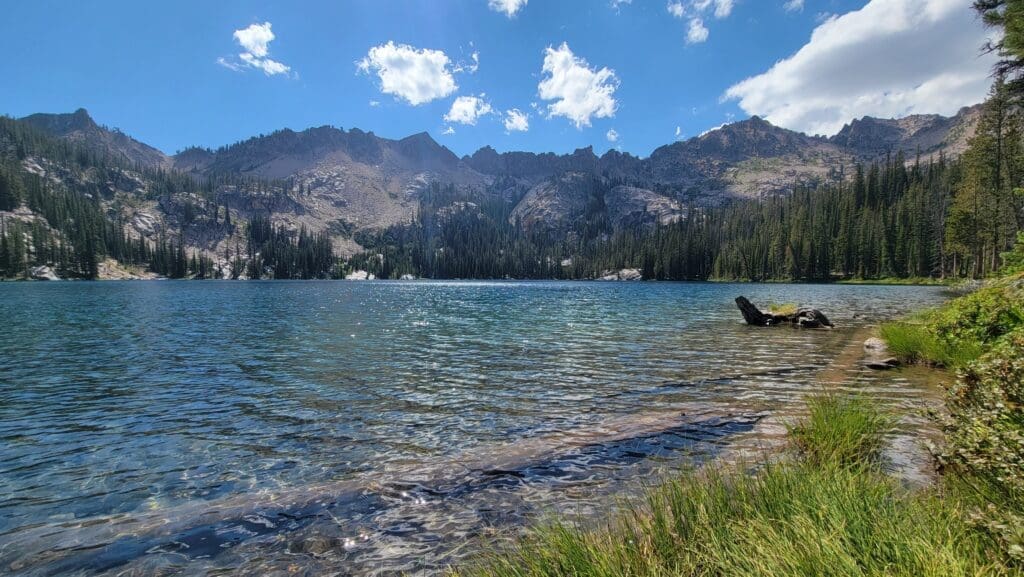
Alpine Lake is a demanding, full-day hike, but even casual hikers can accomplish this. We saw people crushing beers on the boat ride over at 9 a.m. and wearing tennis shoes! No judgment, just stating that you don’t need the latest and greatest gear!
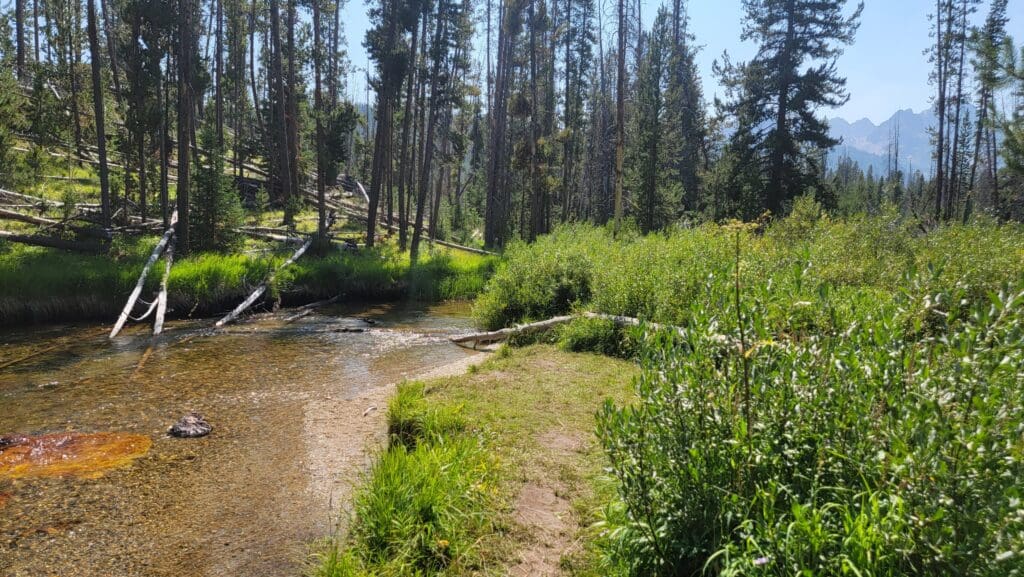
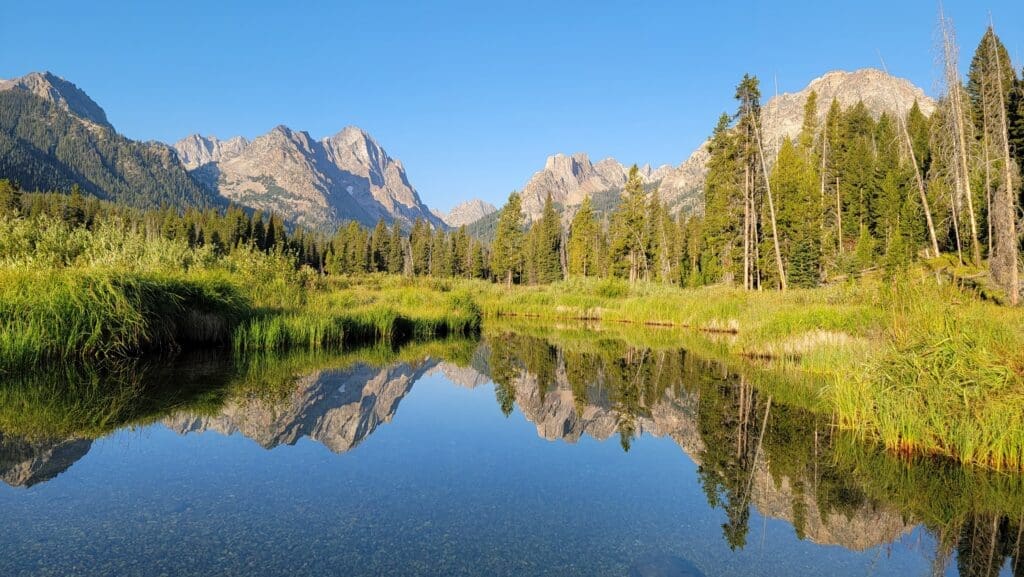
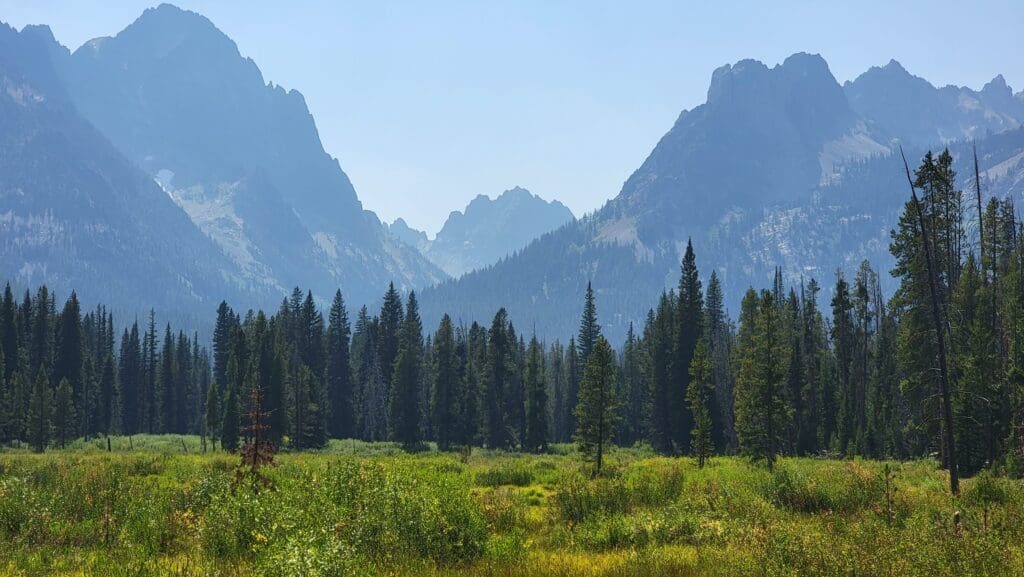
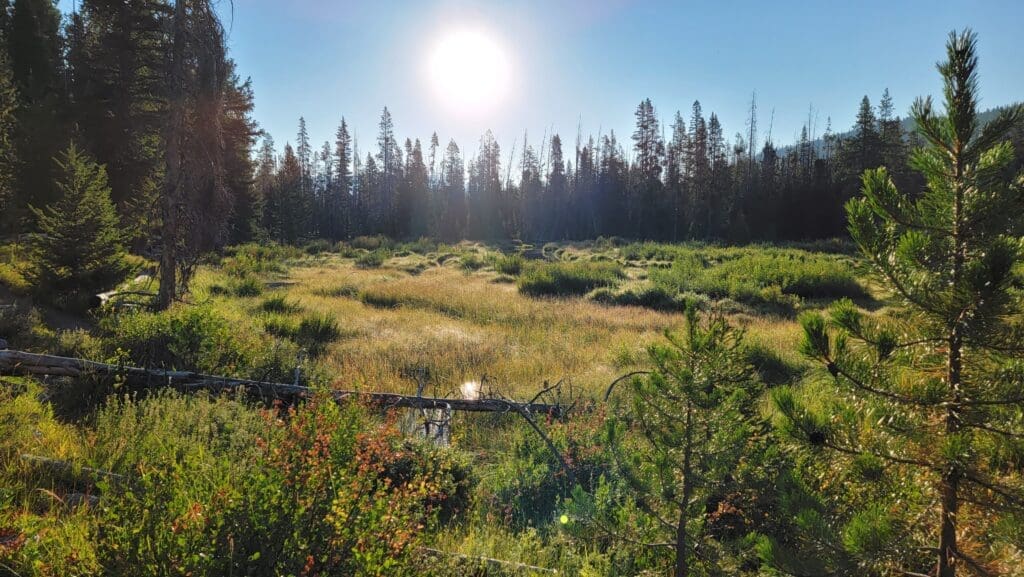
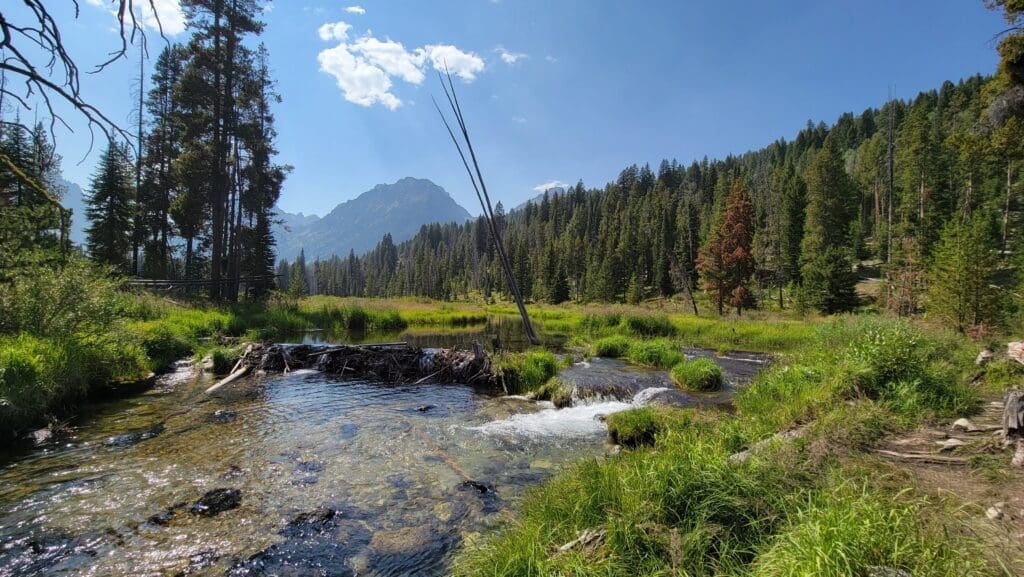
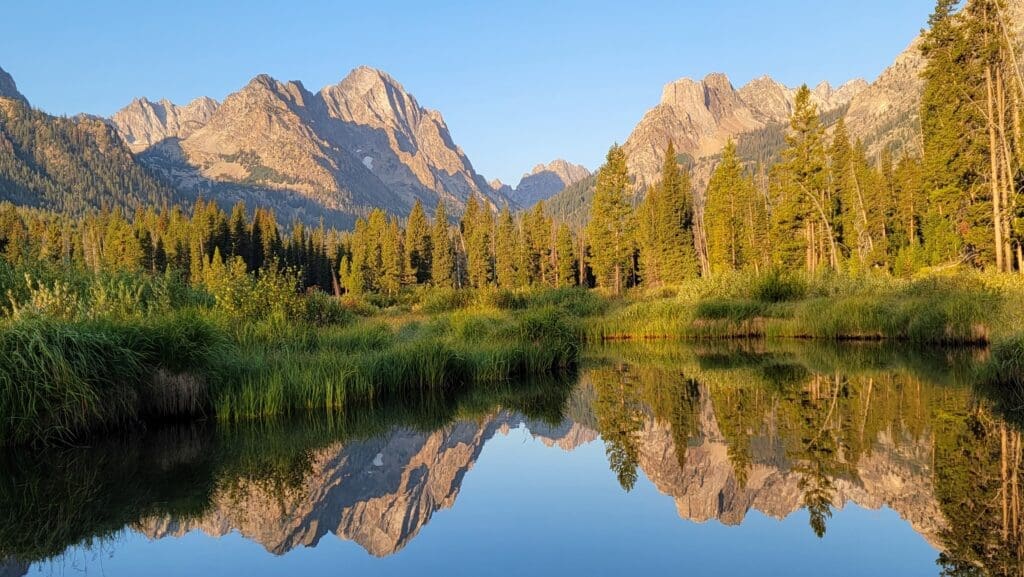
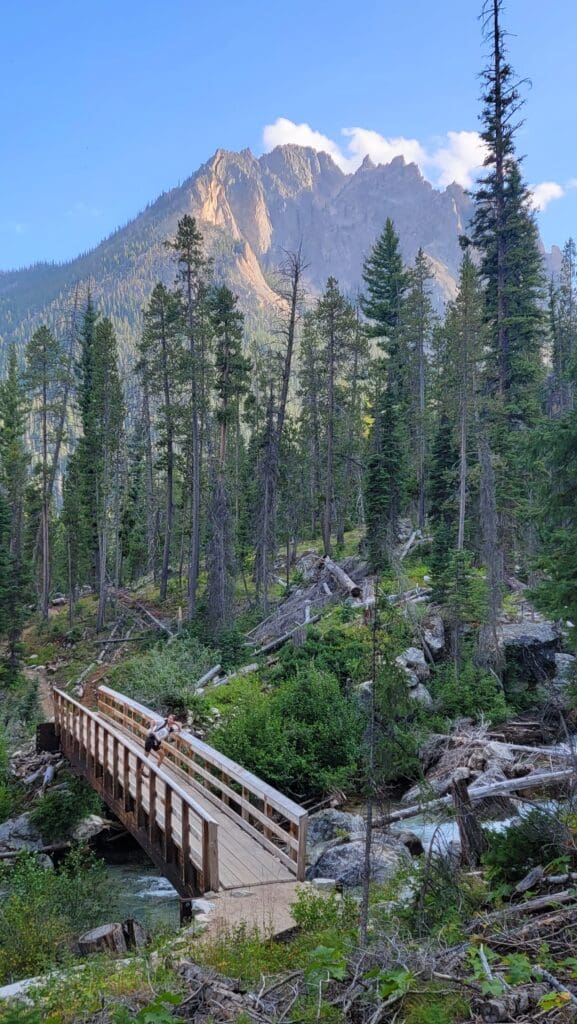
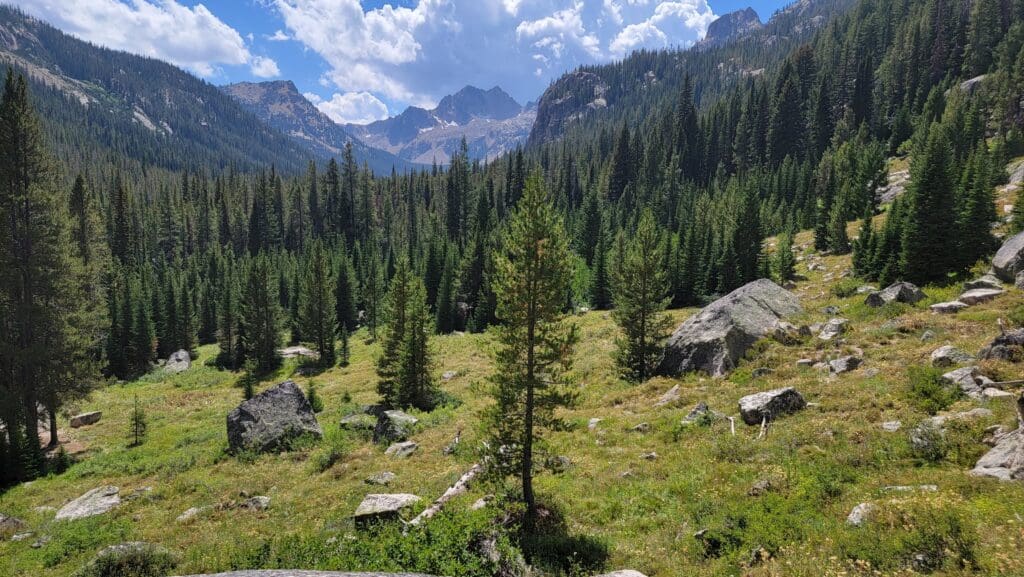
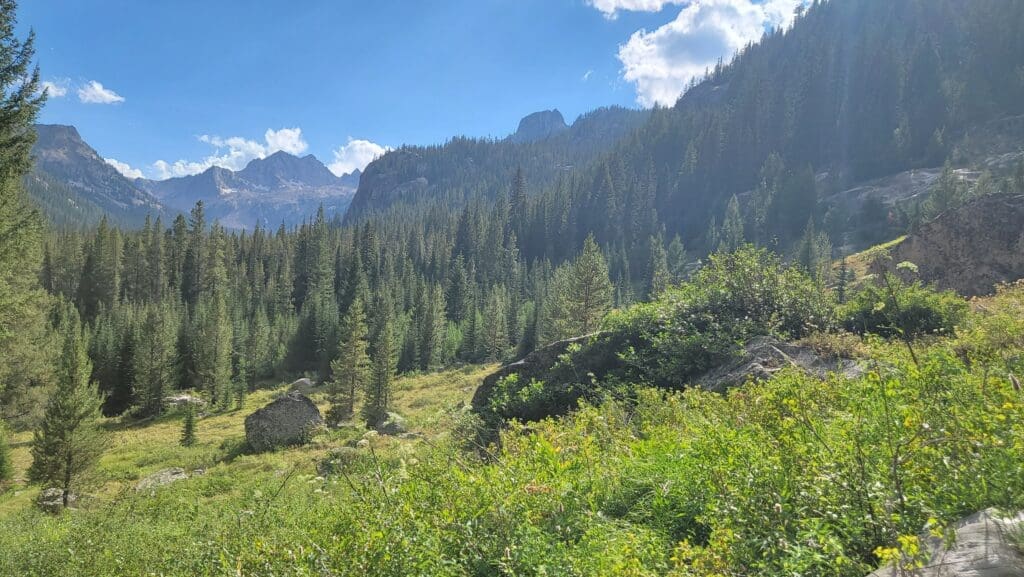
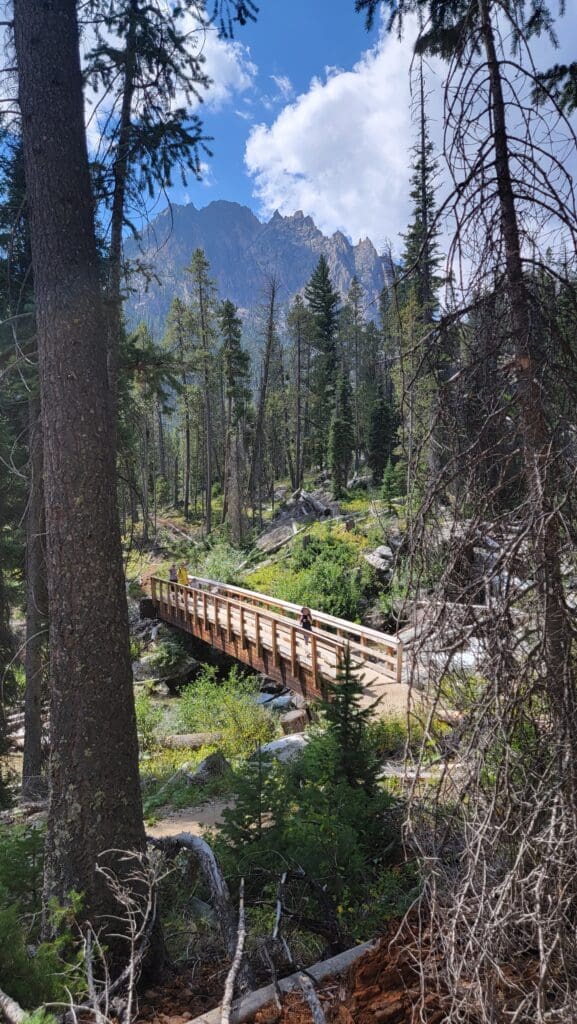
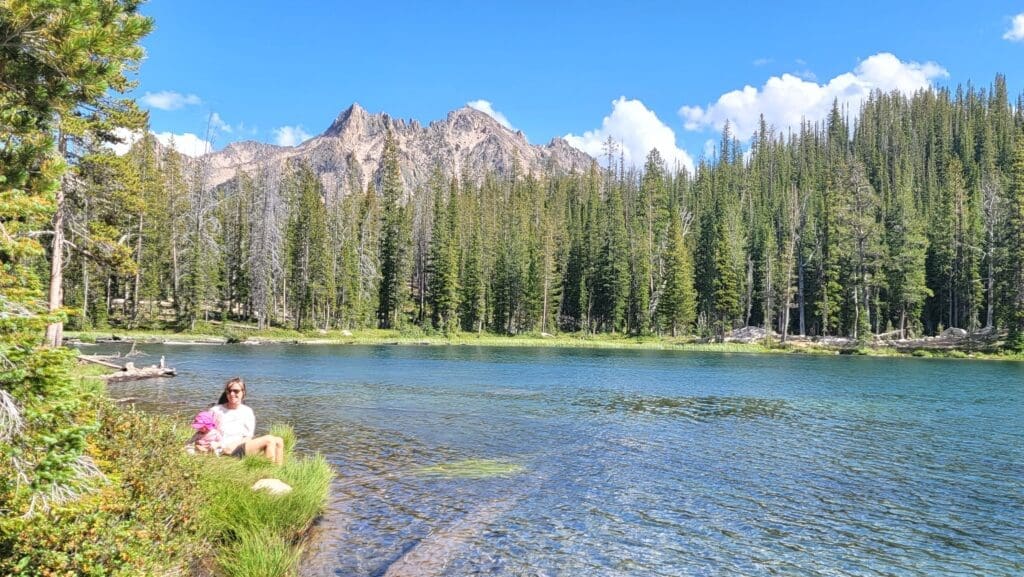
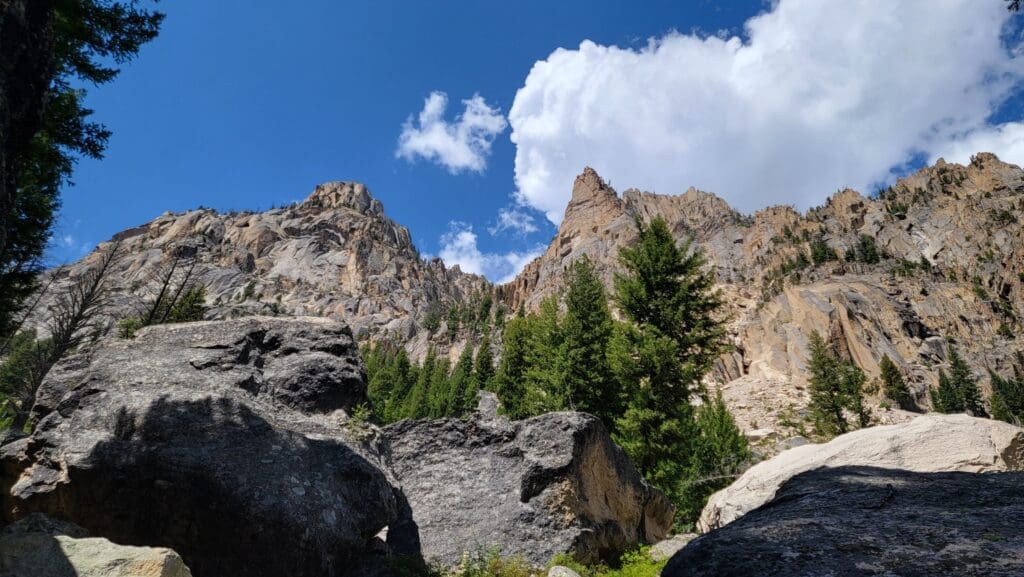
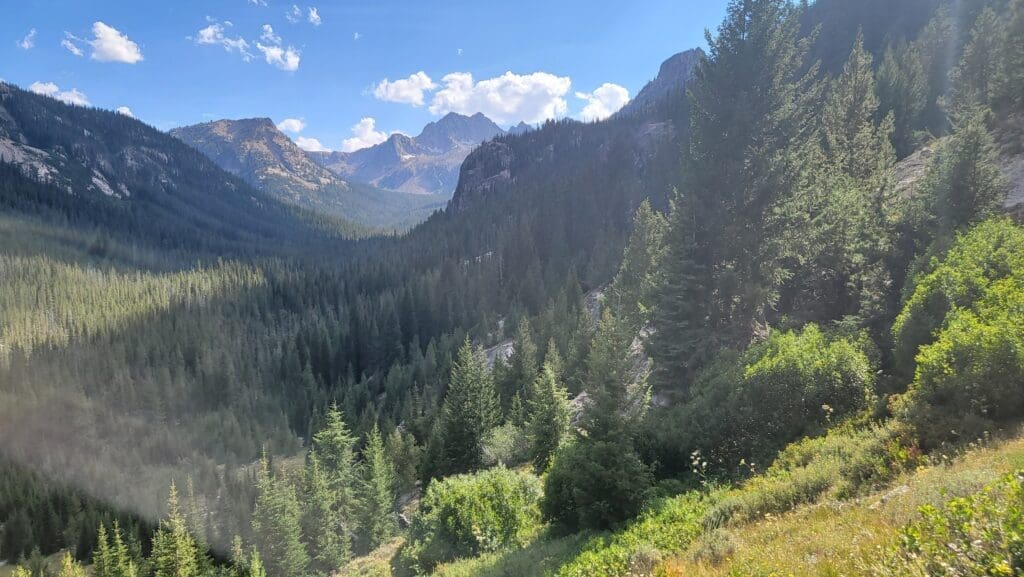
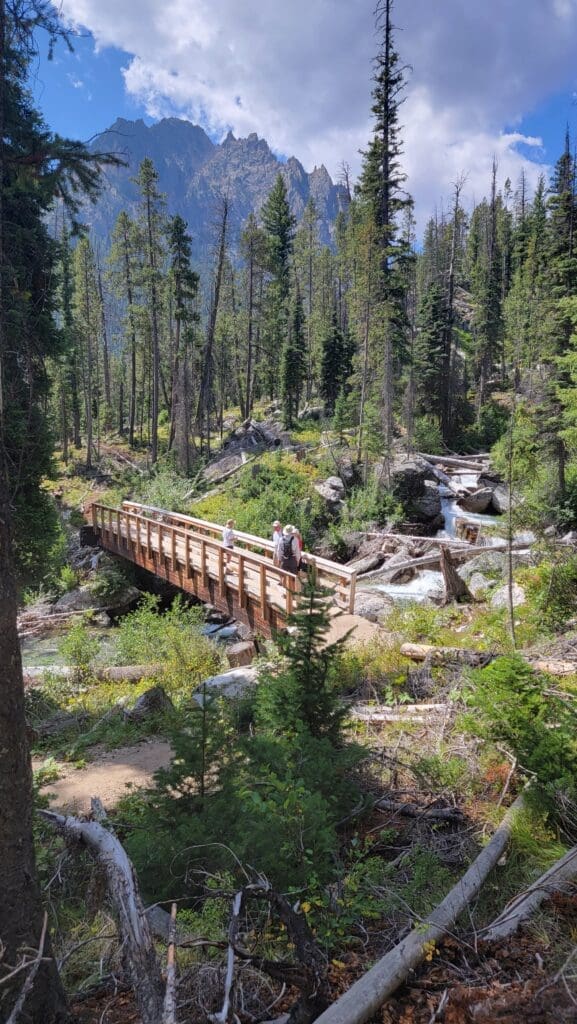
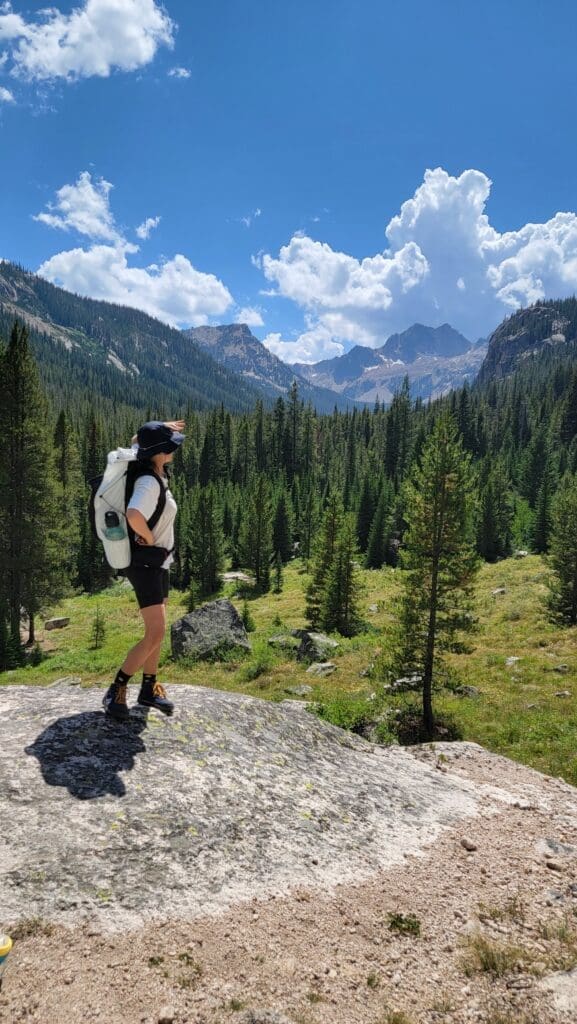
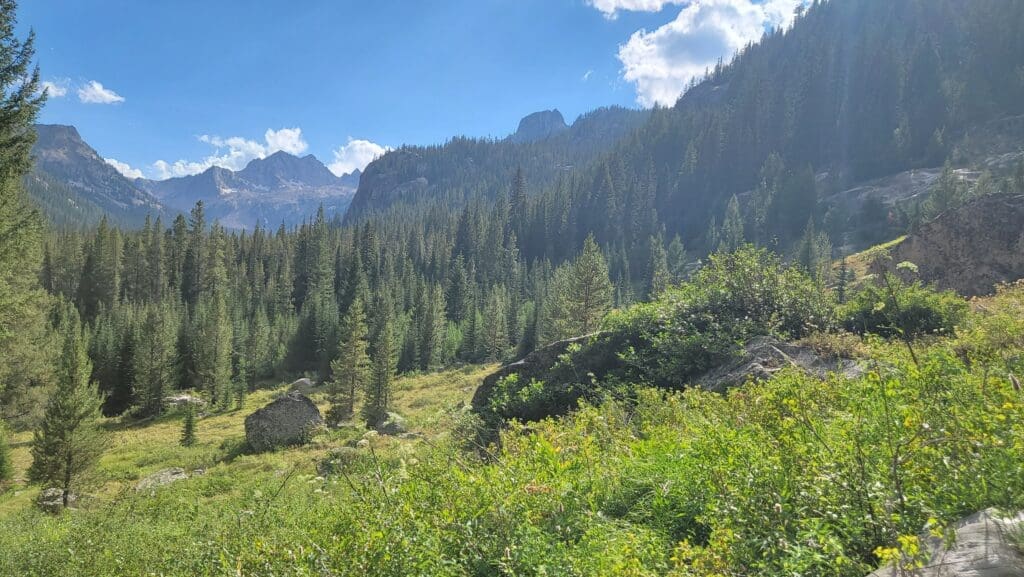
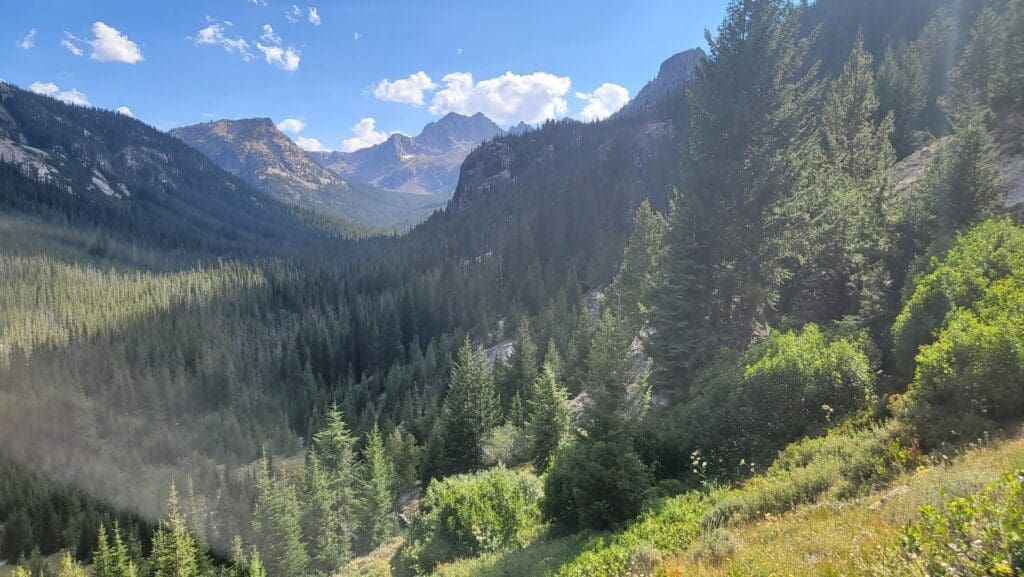
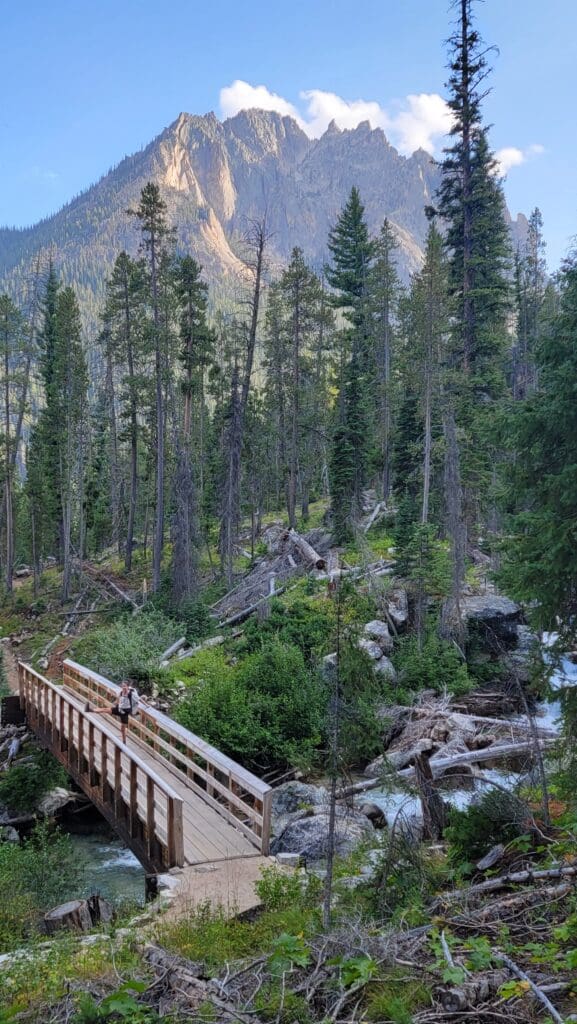
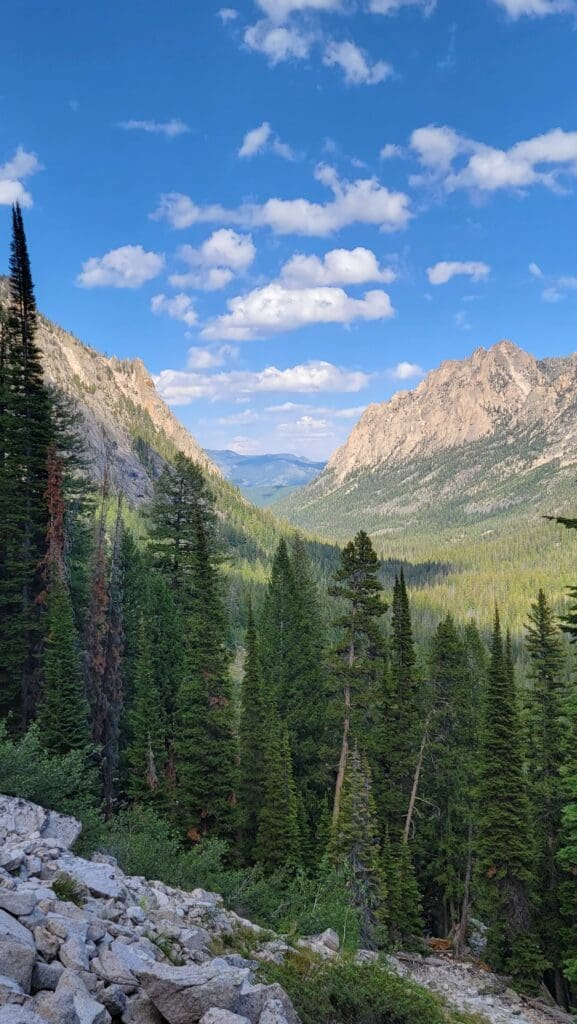
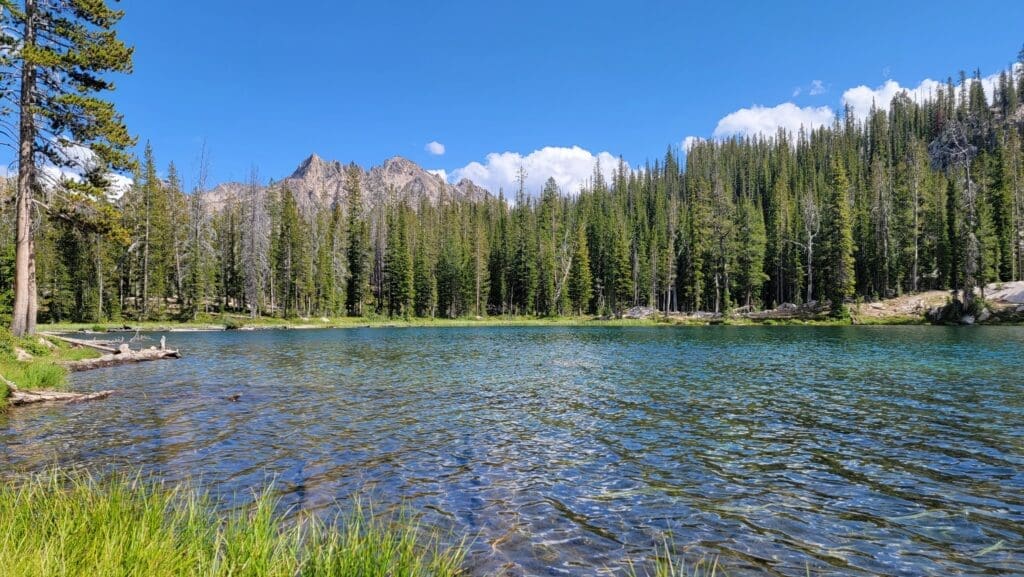
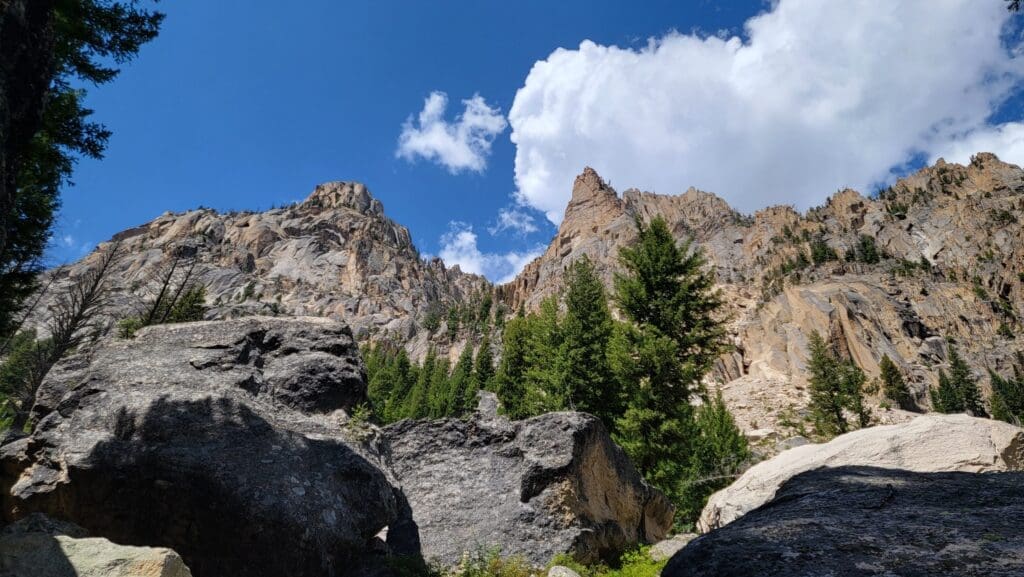
The hike starts in the forest and follows the Redfish Lake inlet valley up toward the treeline. You’re in the subalpine for the majority of the hike with incredible views the entire way. Here are a few images that showcase some of the beauty we saw:
Final Thoughts
The Sawtooth Mountains are a gem of a destination for adventurous families of all types. You can camp in plush conditions right by the lake, go backpacking in the backcountry, or roll up with your RV with the whole kit n’ caboodle. The Redfish Lake Lodge is a great base of operations to start or end your day, and the surrounding mountains and lakes will keep you busy for a trip of any duration. Don’t forget to pack water and snacks!