
Tag: sustainability

  • Every Day is Earth Day

    Every Day is Earth Day

    Can we just go ahead and declare everyday as Earth Day? Our beautiful home that homes us all, cares for the diversity of the animals, mammals, insects, humanity. She gives without asking for anything in return, provides the plants that nourish us, the beauty that sparks our imagination and feeds our soul. She cares deeply, and she hasn’t given up on us yet.

    Photos by Steve Andrews

    Not a day passes where I don’t think about my personal impact, and now, as a mother, our entire family’s. With two extra people in tow, I’m hyper-aware of the essentials required to keep us healthy and safe (gosh, what happens when they become ravenous teenagers?!). But at what point do “essentials” become simple desires for more in this commercial paradise? When do our untamed desires of today become the burden of our children’s tomorrow?

    When do our untamed desires of today become the burden of our children’s tomorrow?

    Many would say it’s already too late, but we need to hold onto hope. Now, more than ever, we are trying to cull our spending and hone in on true necessity. In my humble opinion, less is certainly more.

    We do our best to reward our children with experiences vs things. To get their developing brains excited with time outside, going to the park, the beach, the mountains, the pump track, the slopes. When birthdays come along, I accept donations from neighbours, hand me downs from friends and family, and sometimes buy things from local kids consignment and/or second-hand shops and/or fb Marketplace (and I’m all ears for a good alternative ). If we need to buy something new, we do our research to support companies that share our bottom line – earth first.

    Where’s Captain Planet When You Need Him?

    This makes me think of the 80/90’s campaigns geared towards kids, to Reduce, Reuse and Recycle. This one is worth a watch. It worked, it’s ingrained in me, and I sure hope kids are learning the same today. Although, with convenience culture at the forefront, acting on impulse with a touch of a button, with same day delivery trucks running rampant about the neighbourhood (the city, the country, the continent, the world(!), it may not be so.

    Can we cancel Amazon already? What would Bill and Ted, Socrates and Joan of Arc think of all this? Bogus, heineous! Most non-triumphant. Morally and for the longevity of our loving planet and our children, quit these companies that we know are run by inhumane, royal ugly dudes!! Okay, rant over.

    Part of the Solution

    Once things that can’t be passed down have collected enough dust in our garage, we do our best to research how to recycle responsibly. Carseats for example, seems bonkers that they have such a short expiration, but we need to keep our children safe, I get it. All that plastic, polyester, foam and metal, ugh, it hurts to think of how many are sitting in landfills. Look out for specialized local recycling programs which separate plastic, metal, and fabric components.
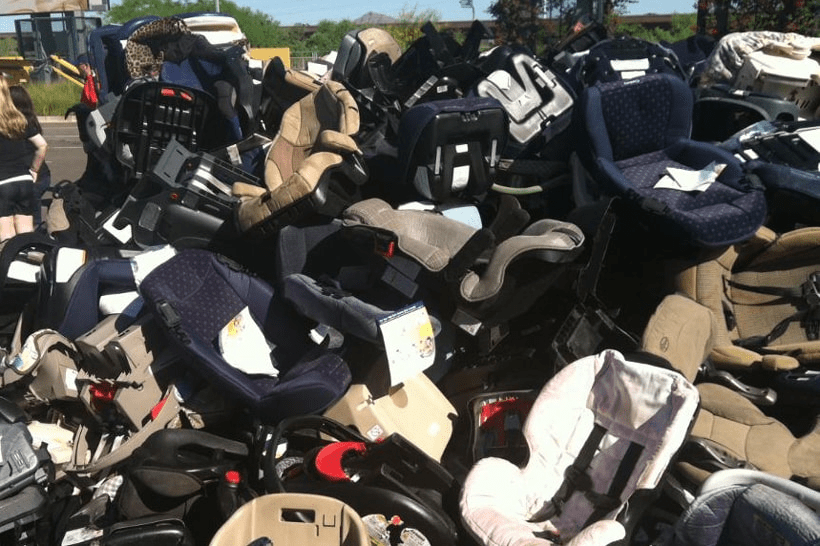
    a pile of old car seats headed for the landfill

    The “Ugh” of expiring car seats

    Check with your local municipality for community zero-waste recycling events that may accept car seats. Also, some retailers offer trade-in programs where you can bring back old car seats for recycling when buying a new one. You can also manually disassemble the seat, removing fabric, padding, and metal buckles to dispose of the components separately, the plastic shell is often recyclable.

    I know how busy we all are as parents, but efforts must be made! Markers that have gone dry? Save them up and bring them into Staples where they’ll recycle them for you.

    Get creative

    Also, with clothes that have been stained and have lost their capacity to be passed down, I use them for cleaning rags. I have also just dusted off my sewing machine, brushed up on my sewing skills (with a local class close to home) and am thinking of using the well loved collection to make bunting for the kids birthday decorations, to make custom blankets/quilts/duvet covers, doll clothes, you name it! Bring on the creativity. 

    Many communities have sharing libraries. We used to live in Whistler, and the tool library that they had, housed out of my fave thrift shop maybe ever, the Whistler Re-Use it Centre, was clutch.

    Our rainy-day sanctuary

    It’s safe to say that our kids most loved physical items are books. We spend many-a-rainy-days here in the Pacific Northwest at our local library, the kids love it, and there’s usually story time and different gatherings that help to feel immersed in our community. We also make a point when travelling to search out libraries for that community connection along with fun books to borrow.

    Companies we can get behind

    There are many responsible companies that are creating their own way, putting earth at the forefront of their decision making. Patagonia is an obvious example, as a certified B Corp and founding member of 1% for the Planet, its hefty investments into environmental organizations and generating of awareness through it’s content creation and film work is commendable. If other companies could follow suit with their unique ownership structure, declaring Earth as its only shareholder, with profits paid as dividends to protect the planet, the earth would certainly be a better place for future generations. Patagonia has a Worn Wear program that allows you to buy and trade used namesake gear, they’ll even repair your gear, no questions asked. They have created fabrics made from ocean waste, recycled and natural materials.

    Outerknown, a purpose-driven surf brand built on transparency, circular design and fair labour is another brand to take notice. I also love our local Parade Organics for kids and mama matching cozy jammies.

    Earth Day deals

    And if you must buy something new this Earth Day, think of these good to do/earth companies. We love Jungmaven, known for using the incredibly resilient natural sustainable fibre of Hemp in all its goods, they’re offering 20% off everything until Sunday with code EARTH2026, and if you want $30 off your first order, use this link (that in turn helps us 😁 ).

    One of our absolute favourite brands is PAKA, for so many reasons, primarily the thought and due diligence they take to make quality, natural fibre goods whilst taking care of their communities, the alpaca’s and the planet. This Earth Day, PAKA is offering 20% off sitewide on orders over $150, giving consumers an opportunity to experience the performance and sustainability of natural fibers firsthand.

    When in doubt, get out.

    As our children grow, we will continue to prioritize getting their dopamine hits from the outdoors, teaching them to wear their badges of dirt under their fingernails and bruises and scrapes on their knees with pride. More time spent outside equals more time caring about what matters most. Nothing, absolutely nada, can ever top the feeling that comes from being immersed in the absolute wonder and magic of the outdoors. 
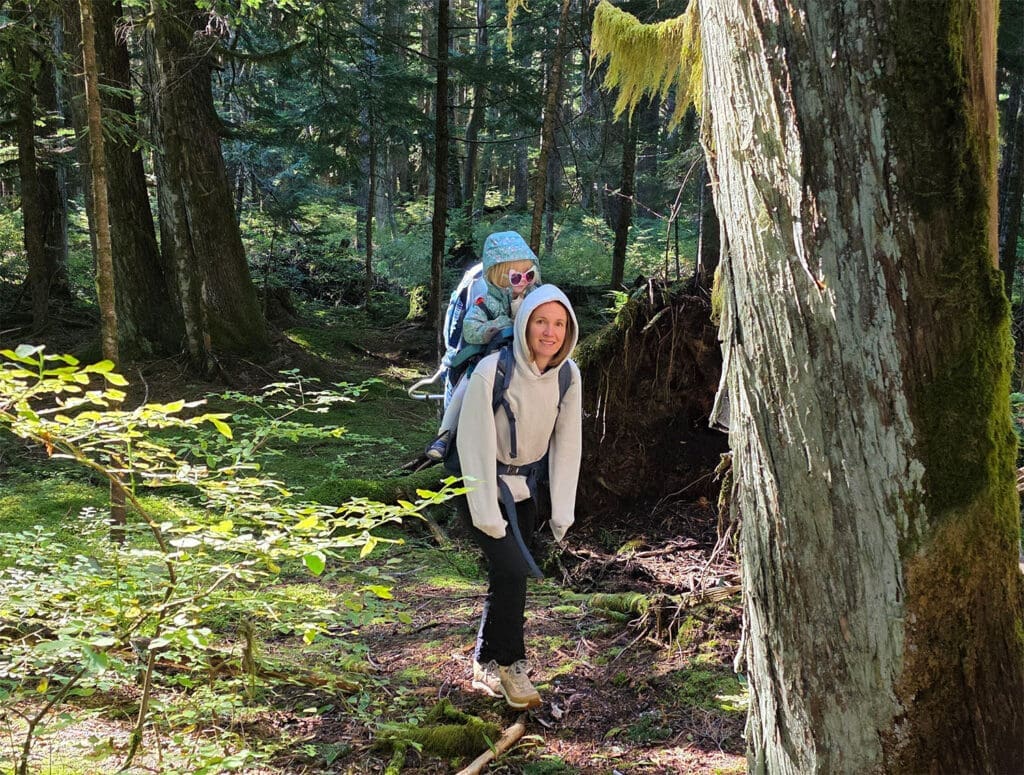
    me and my girl 😉
  • Aurora Heat Fur Handwarmers Review

    Aurora Heat Fur Handwarmers Review

    What does it mean when someone tells you to “vote with your wallet”?

    It’s an important phrase in this day and age, and yet I believe the power of voting with your wallet is far undervalued. Based on the way our system is set up, It’s one of the only ways that consumers can have a say in how society is shaped. The catch is, it needs the collective actions of many individuals for any meangful change to occur.

    But, if done mindfully, we the people can enact a different idea of consumption altogether if we simply buy certain products more mindfully. And handwarmers just may be a prime example of that, as trivial as it sounds. But when you think about those who use single-use handwarmers regularly, the envioronmental costs add up.

    Why Single-Use Handwarmers are Bad For The Environment

    Love it or hate it, our economy is based on consumption. Many of the most successful corporations in the past 100+ years know this fact, and give us packaged food, toothpaste, and all kinds of other products meant to be discarded after consumed. This is a fact of our day and age and a result of the endless pursuit of profit. As such, the disposable hand warmer industry is actually big business: Current studies value the hand warmer industry at 1.45 billion, trending upward to be worth nearly 2.23 billion by 2033.

    This would be all well and good if these were sustainable, but they’re not. Most use iron ore and are wrapped in plastic. For us, as a family trying to do our best to preserve this planet for the next generation, it’s a non-starter to have something you only use once — especially if you need to use it repeatedly. But thankfully, there is indeed another option.

    Aurora Heat’s Solution: Reusable Fur Insulation

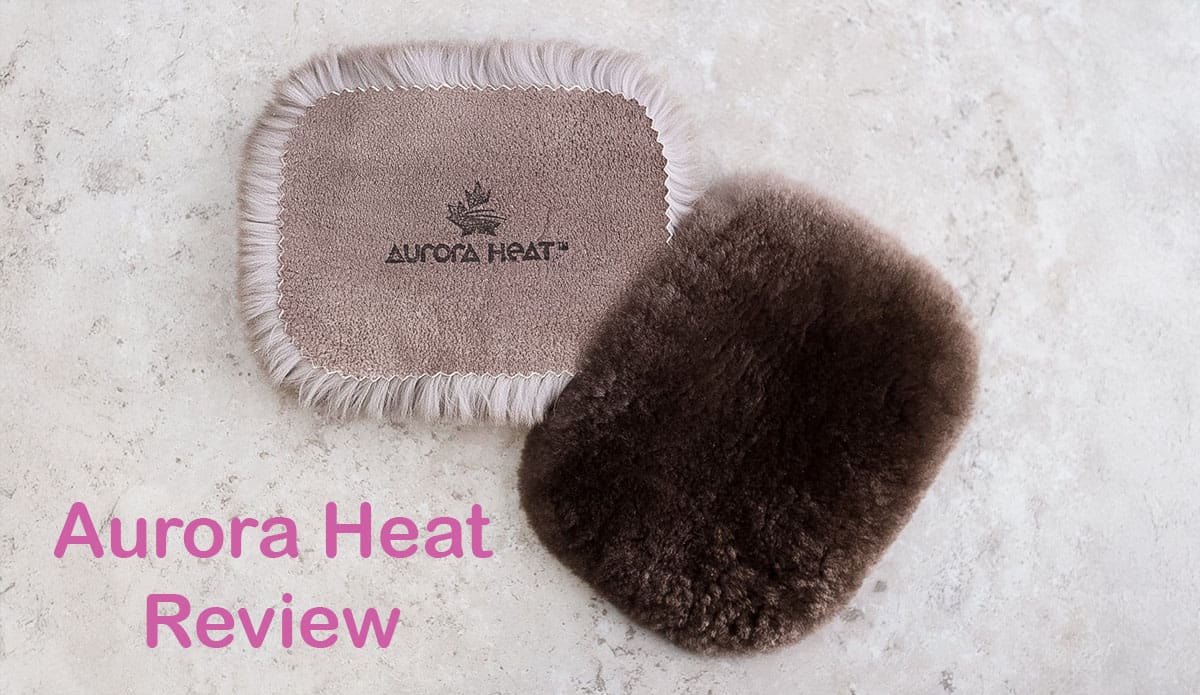
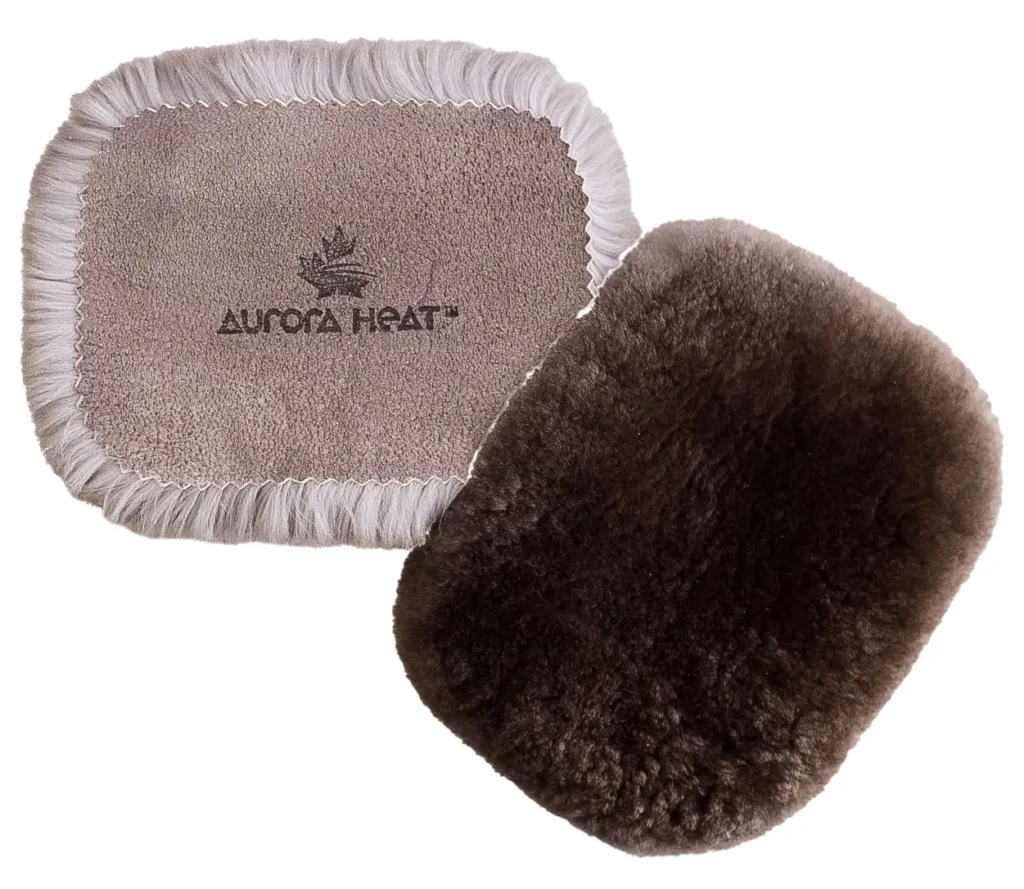
    the beaver fur handwarmers from Aurora Heat

    Aurora Heat sent us a sample test of their beaver-fur handwarmers to try out . And while the “heat” part of the name isn’t entirely accurate, there is some truth to it. The hands do, in fact, feel warmer after putting them in your glove or your pocket. But they don’t supply any heat other than reflect the heat you have in your own hands. So, a more accurate name might be insulators rather than warmers. However, if you look at the heat we supply within, the name can be understood a bit better.

    That said, I don’t think you can find something more in sync with the circle of life than a pair of these. And that’s because these are made from only one material – beaver fur.

    For those who don’t know (and we didn’t before learning it after reading up on it) beaver fur is not only one of the world’s best natural insulators, but it’s one of the most sustainable, as well. This might not be true everywhere, but these furs are harvested in the Mackenzie Valley in northern Canada under a program run by the government. It’s important to point out that beavers reproduce with litters, leaving more each generation if predators don’t take them out. Since human activity scares predators away, and beaver activity can severely impact how a watershed operates, there is a reasonable amount of culling that can take place without affecting the population.

    While some people may lament this practice, the reality is that the environmental effects of beaver hunting are far less impactful than mining ore to use for one time. As long as the efforts are kept in check (and the GMVF fur program does so), then enough animals will replenish the ecosystem year after year.

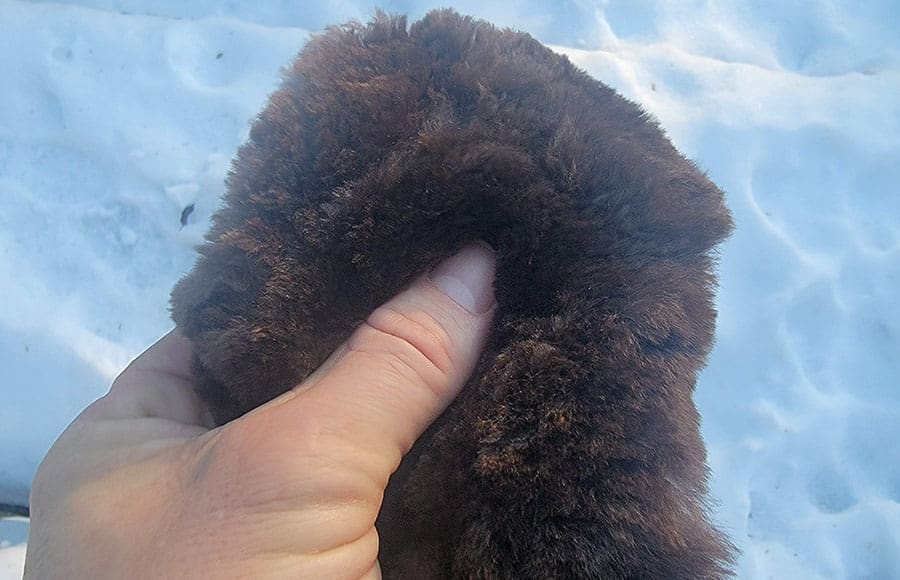
    a sample of beaver fur used as a handwarmer
    Sustainable and soft, the beaver fur works as an incredible insulator.

    Fur Hunting: A Time Honored Tradition

    The fur trade in Canada goes back centuries for the settlers. In fact, it’s one of the primary reasons Canada was settled by Europeans from coast to coast to coast, due to the efforts of the Hudson’s Bay Company, almost 200 years before Canada became a nation. But when you speak with the First Nations who were in the area for thousands of years before that, it has been happening long before recorded history.

    The fur trade remains integral to the cultural identity and economic well-being of many communities in the Mackenzie Valley. For Indigenous trappers, beaver fur harvesting is not only a source of income but also a practice deeply rooted in tradition. Programs like the GMVF support these communities by providing access to markets, ensuring fair compensation, and promoting the cultural heritage associated with trapping. By choosing products made from locally sourced beaver fur, consumers can support sustainable practices that benefit both the environment and the Indigenous communities of the NWT.

    Advantages to the Aurora Heat Handwarmers

    Aurora Heat works, but they don’t supply heat. They kept our hands warm, with the caveat that we had good gloves as well. But the time for the hands to feel warmth accelerated compared to putting on cold gloves. The same was true for in the pocket.

    The big differentiator here is the soft feel of the fur. It is truly some of the softest material you will ever touch, and we’re confident enough to say that and stand by it. We did not receive any compensation for this review and hold our ethics very seriously when we recommend products, and we can say that, without a doubt, these are softer than any disposable or even reusable electronic handwarmers you will ever try.

    Speaking of reusable hand warmers, most of these are battery operated, meaning two things: it will expire quicker in colder temps, just when you need it most. You also have to put the battery somewhere, adding bulk to the unit.

    So both single-use and reusable, battery-operated hand warmers won’t be useful longer than a few hours, especially when it’s really cold out. I don’t know about you, but if I’m stuck out in the cold with some type of emergency situation and one of those is rendered useless, I’d be pretty bummed that I didn’t have one that didn’t require anything other than its own natural insulating properties.

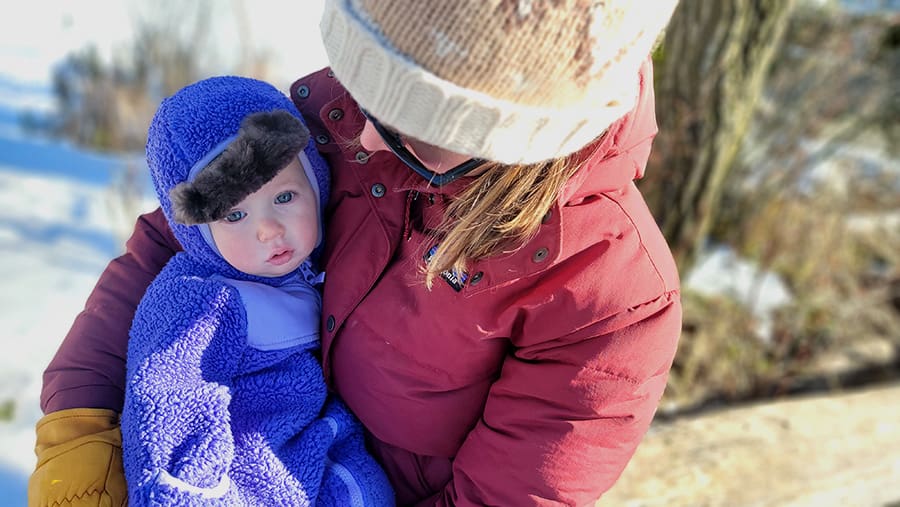
    a baby is bundled up in the winter with a beaver pelt sticking out of his bunting cap. he is held by his mother.
    It also worked to warm our baby’s forehead and kept the sun out of his eyes.

    Disadvantages to Aurora Heat

    The main thing that is hard to overlook is the price. At $80, It’s an investment with an upfront cost. But depending on how often you will use them, that investment pays off quickly, considering you get 24/7 warmth without needing to charge it or buy more.

    Also, since it doesn’t actually provide any heat, it’s probably not the best to use in a situation where you are dealing with frostbite. For that it would be good to have another heat source. Surely it would help more than if you had nothing… but for emergencies it might be good to have something that actually emits heat onhand.

    Final Thoughts

    Aurora Heat is an investment in sustainability. As a business owned by an Indigenous woman, you are making a direct effect on the livelihoods of people up north who can find work sharing the abundant beaver furs with the world, and not have to rely on a job that involves resource extraction or any other destructive vocation that is prevalent up north.

    So to tie it back to the original statement, purchasing Aurora Heat is voting for sustainability through your purchasing power. It’s not a “warmer” per se, but rather an insulator, but a darn good one, as a matter of fact. So, if you want to have a natural product from an Indigenous-owned small business from Canada’s North that will last for many years, this is a wise purchase.

    And seriously, the softness is next level.